FrackNation Blu-ray Movie
HomeFrackNation Blu-ray Movie 
Magnolia Pictures | 2013 | 77 min | Rated PG | Jun 24, 2014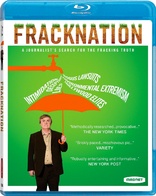

Movie rating
7.4 | / 10 |
Blu-ray rating
| Users |  | 0.0 |
| Reviewer |  | 2.5 |
| Overall | | 2.5 |
Overview
FrackNation (2013)
A reporter attempts to discredit the Oscar-nominated documentary GASLAND and the anti-fracking movement in general.
Starring: Phelim McAleerDirector: Phelim McAleer, Ann McElhinney, Magdalena Segieda
| Documentary | 100% |
Specifications
Video
Video codec: MPEG-4 AVC
Video resolution: 1080p
Aspect ratio: 1.78:1
Original aspect ratio: 1.85:1
Audio
English: DTS-HD Master Audio 2.0
Subtitles
English SDH, French, Spanish
Discs
25GB Blu-ray Disc
Single disc (1 BD)
BD-Live
Playback
Region A (B, C untested)
Review
Rating summary
| Movie |  | 2.0 |
| Video |  | 4.0 |
| Audio |  | 3.5 |
| Extras | | 2.0 |
| Overall | | 2.5 |
FrackNation Blu-ray Movie Review
More Heat than Light
Reviewed by Michael Reuben June 26, 2014Reporter Phelim McAleer is an Irish Michael Moore—a similarity that McAleer has acknowledged—except that his preferred targets are environmentalists rather than industrialists, gun enthusiasts or the wealthy. Like Moore, McAleer raises provocative questions worthy of inquiry, but he rarely pursues them in a manner that inspires confidence in his analysis. Ambush interviews, selective evidence, leaps in logic and a relentless focus on the filmmaker as a personality pervade FrackNation, which rests on the dubious proposition that the entire anti-fracking movement is attributable to the 2010 documentary, Gasland. Only another documentarian would be so optimistic as to attribute such clout to a film that grossed less than $50,000 at the worldwide box office (although it did garner an Oscar nomination). But this is not new territory for McAleer. With his previous film, Not Evil Just Wrong (2009), the muckracking crusader demonstrated the value of hitching his wagon to a film with a higher profile by attacking it. In that instance, the target was the Oscar-winning An Inconvenient Truth, which McAleer used as a springboard to question the science behind climate change. Gasland, which arrived the following year, must have been irresistible for McAleer and his wife and colleague Ann McElhinney, who splits directing, writing and producing duties. (FrackNation also has a third director, Magdalena Segieda, a Polish documentary filmmaker, whose participation appears to have been necessary for the European segment of the film.) FrackNation was funded by a Kickstarter campaign, and McAleer has stated that any contributions from the energy industry were returned. After the film was completed, AXS TV acquired the broadcast rights, and the film is being released on Blu-ray by the channel's affiliate, Magnolia Home Entertainment.
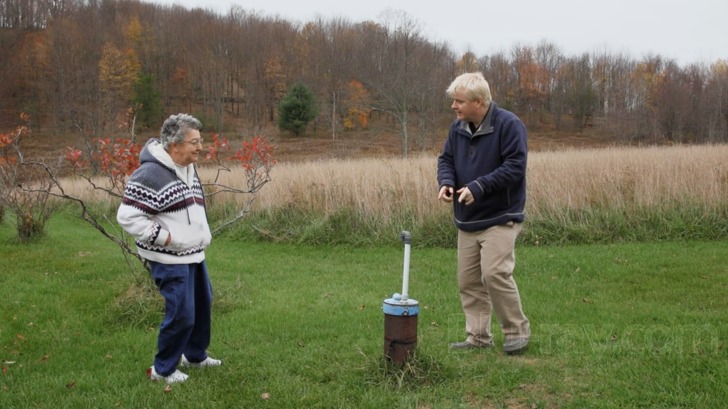
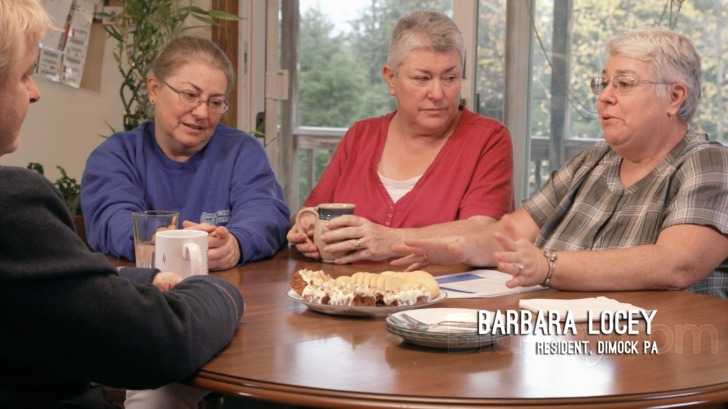
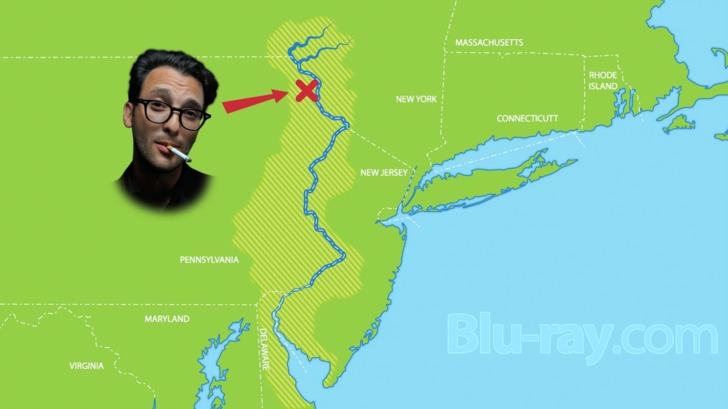
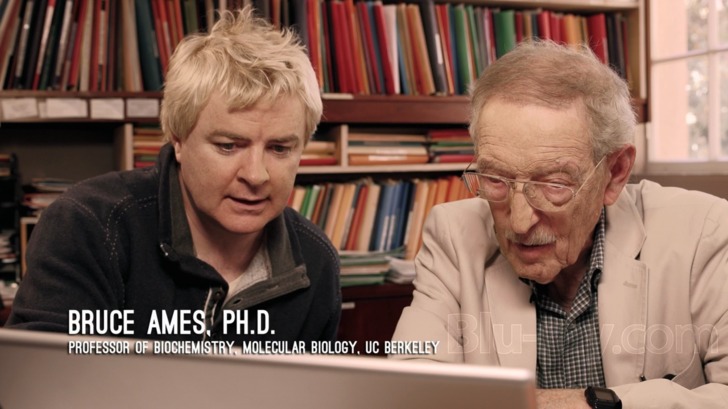
Although McAleer disputes multiple elements in Gasland, his point of departure and chief bone of contention is a much-replayed scene in which a Colorado resident ignites the water from his kitchen faucet, because it is contaminated with methane gas as a result of fracking. According to McAleer, Gasland misleads its viewers by not disclosing that incidents of flammable methane gas in water have occurred in nature for decades. FrackNation's Kickstarter campaign video featured footage of McAleer questioning Gasland director Josh Fox on this point during a promotional tour, with an account of the subsequent battle between McAleer and Fox over the posting of that footage on YouTube and Vimeo. Now, I haven't reviewed Gasland for this review, but as I recall, Fox's point, and that of the Colorado residents interviewed in the film, was that their tap water never ignited before fracking operations commenced in their vicinity. In other words, this wasn't a naturally occurring phenomenon, which is why Fox responded to McAleer that incidents in nature weren't relevant. A substantial technical debate has ensued between the Colorado Department of Natural Resources and the makers of Gasland over the origin of the methane gas that burns so dramatically in Fox's film, but to listen to McAleer, you'd never know there was even an issue about the potential leakage of methane gas from fracking into previously uncontaminated well or ground water. Nor does McAleer seriously explore any of the issues raised by Gasland about contamination of water by chemicals used in the fracking process. Indeed, his description of the process downplays chemical additives, and he makes no effort to interview people who have obtained settlements from gas companies or sought injunctions against further drilling or who have documented contamination of their water. His initial "refutation" on this issue is to interview several Pennsylvania families whose well water is naturally full of minerals and, in one case, methane gas—failing to note the irony that some of these same families complain that Gasland hasprevented fracking in their community. He also spends a lot of time with one flagrant phony who is angling for a settlement, but in whose water the EPA can find no contaminants. Later, McAleer interviews an elderly scientist with no demonstrated expertise in the area who watches a portion of Gasland, then opines that all government classifications of chemicals as "carcinogenic" are suspect, because they are based on feeding lab rats massive quantities of each substance. Not only does this beg the question of other health hazards besides cancer, but it's also a definition under which cigarettes don't "cause" cancer. If McAleer wants to dispute the science in Gasland, he needs to do better. Instead of responding effectively to the arguments against fracking, McAleer prefers to focus on its benefits, but here he takes an odd tack. Substantial arguments in favor of extracting gas from shale deposits can be advanced, including increases in energy independence, more efficient use of fossil fuels and a reduction in greenhouse gas emissions (assuming, of course, that the fracking process itself doesn't result in releasing methane into the atmosphere, which is a hotly debated issue). McAleer chooses, however, to highlight the economic benefits to the farmers who could collect lease payments from energy companies drilling below their land. Once again borrowing from Michael Moore's playbook, he tugs at the heart strings as small farm owners recount their frustration at losing out on royalties when fracking operations are halted by demonstrations, regulatory interference or legislative action. Don't these do-gooders and bureaucrats realize that our farms will go broke unless we can strike deals with the gas companies?

FrackNation Blu-ray Movie, Video Quality
Detailed information about the shooting format of FrackNation wasn't available, but it is obviously an HD digital video production, with the Blu-ray presumably sourced from digital files. The cinematographer was Ben Huddleston, who is a veteran of such documentaries as Ben Stein's Expelled: No Intelligence Allowed . Magnolia's 1080p, AVC-encoded Blu-ray is a basic, serviceable affair that represents the run-and-gun nature of the documentary's shooting style with the clarity that today's portable HD cameras are capable of capturing. Detail, black levels and color saturation vary depending on shooting conditions, but they are always at least decent and often much better than that. Video noise was minimal, except for situations when sudden and unexpected motion jarred the camera. Archival footage has been integrated into the production at whatever level of quality was available. Although Magnolia has placed the film on a BD-25, it's 77-minute running time and the brevity of the extras has allowed an average bitrate of 25.30 Mbps, which is more than sufficient to avoid compression errors for material of this nature.
FrackNation Blu-ray Movie, Audio Quality
FrackNation has a basic stereo track that is presented in lossless DTS-HD MA 2.0. Dialogue and narration are the primary components, and they are delivered with clarity. The modest musical score is by Deeji Mincey and Boris Zelkin, who have numerous TV credits.
FrackNation Blu-ray Movie, Special Features and Extras
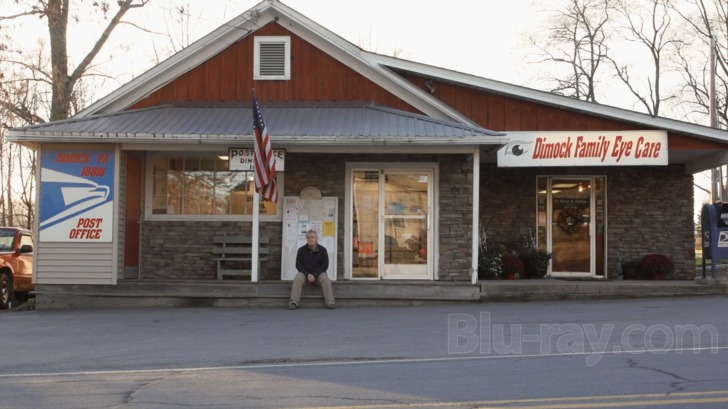
- Deleted Scenes (1080p; 1.78:1; 18:49): The scenes are not separately selectable or titled. It's easy to see why some of these scenes were cut, because they take up significant time exploring some of the jobs created by the fracking industry (e.g., maid service for rig workers), which is interesting but strays too far from the film's central argument. However, several scenes would have been worth keeping, such as one where a fracking engineer explains the security and safety measures used at a storage reservoir for the water used in a fracking operation.
- Kickstarter Video (2:55): McAleer appears with co-directors McElhinney and Magdalena Segieda, where they show excerpts from their raw footage and make a pitch for support.
- TV Spots (1080i; 1.78:1; 1:36): There are three spots, all for AXS TV. The third is quite funny, as McAleer edits together various hostile reactions, mostly to him. It's an entertaining compilation plucked directly from Michael Moore's bag of tricks.
- Also from Magnolia Home Entertainment: The disc includes trailers for Blackfish, A Place at the Table, Countdown to Zero and Food, Inc., as well as promos for the Chideo web service and AXS TV. These also play at startup, where they can be skipped with the chapter forward button.
- BD-Live: As of this writing, attempting to access BD-Live gave the message "Check back for updates".
FrackNation Blu-ray Movie, Overall Score and Recommendation
FrackNation will no doubt cheer the like-minded, but it adds little to the debate over fracking, which is an important topic on which genuine illumination would be much appreciated by people (like me) who are far from expert on the matter. One subject about which I do have some expertise is advocacy, and people often reveal themselves by the opponents they choose. Josh Fox chose to investigate a wealthy and powerful industry overseen by a regulatory structure that, as we learned from the BP Deepwater Horizon oil spill, is often too cozy with the companies it is supposed to police. Fox undertook this task with no expectation that the fruits of his labor would ever be seen, let alone attract any acclaim (though Gasland is probably more widely known than actually watched). McAleer, by contrast, chose a much easier target: namely, Fox, a young filmmaker who had already built the audience for McAleer's project by having the good/bad luck to have his film attract attention. As Fox is now learning, success comes at a price, and part of that price is a gaseous free-rider like McAleer. Buyer's choice.