Forks Over Knives Blu-ray Movie
HomeForks Over Knives Blu-ray Movie 
Virgil Films & Entertainment | 2010 | 95 min | Rated PG | Aug 30, 2011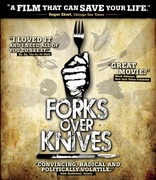

Movie rating
7.1 | / 10 |
Blu-ray rating
| Users |  | 5.0 |
| Reviewer |  | 4.0 |
| Overall | | 4.0 |
Overview
Forks Over Knives (2010)
Examines the claim that most, if not all, of the degenerative diseases that afflict us can be controlled, or even reversed, by rejecting our present menu of animal-based and processed foods.
Narrator: Lee FulkersonDirector: Lee Fulkerson
| Documentary | 100% |
Specifications
Video
Video codec: MPEG-2
Video resolution: 1080p
Aspect ratio: 1.78:1
Audio
English: Dolby Digital 5.1
English: Dolby Digital 2.0
Subtitles
English
Discs
25GB Blu-ray Disc
Single disc (1 BD)
Playback
Region A, B (C untested)
Review
Rating summary
| Movie | | 4.0 |
| Video |  | 3.5 |
| Audio |  | 3.0 |
| Extras |  | 2.0 |
| Overall | | 4.0 |
Forks Over Knives Blu-ray Movie Review
Yes, you really are what you eat.
Reviewed by Jeffrey Kauffman August 31, 2011I have been a vegetarian for virtually all of my adult life, having “fallen off the wagon” just a couple of times since I was a teenager and my then-girlfriend convinced me the no-meat lifestyle was healthier. I did in fact have a spell of loving pastrami and Canadian bacon for a few months in my twenties until while channel surfing one night I stumbled across a documentary called The Animals Film, a horrifying piece narrated by Julie Christie which depicted the inhuman (no pun intended) treatment of animals which had the misfortune to become ensnared in what can only be termed the mass production farming industry. The almost surreal sight of baby hatchlings being trundled along a sort of assembly line, which in this case might be called a disassembly line, being de-beaked and then, later, hung upside down to be slaughtered without mercy was enough to get me off chicken forever right there. A similarly grisly sequence showing pigs being led into small chambers where the floors were fitted with elements which electrocuted the poor animals put me off pork permanently. Now this was all sometime before vegetarianism was even as relatively accepted as it is today, and I suffered many slings and arrows from people through the years who seemed almost violently opposed to my dietary decisions. One of the oddest things I’ve experienced, even as vegetarianism has become more and more mainstream over the past few years, is just how apopleptic some meat eaters become when confronted with vegetarians. I know I certainly have never proselytized anyone and have always adopted a “live and let live” (or perhaps an “eat and let eat”) philosophy, but I have frequently not been accorded that same respect from my carnivore friends. This may be the same sort of guilt-fear response that started to surround cigarette smokers as they became more aware of the health dangers involved in their consumption of tobacco. Medical science has become increasingly aware of health risks posed by at the very least too much meat eating, and Forks Over Knives takes a rather alarming look at how the American diet has changed, arguably much for the worse, through the 20th century, especially in the post-World War II years, when fast food and convenience processed foods became the norm for Baby Boomers. Is it mere coincidence that cancer rates have skyrocketed since the introduction of these foods? Forks Over Knives makes the compelling argument that it most certainly isn’t.

Forks Over Knives arrives at many of the same conclusions as Morgan Spurlock’s superb Super-Size Me, though from the completely opposite direction. While Spurlock took it upon himself to immerse (perhaps immolate would be a better term) himself with a daily dose of McDonald’s fare, leading to a complete disruption and degradation of his personal health, Forks Over Knives’ Lee Fulkerson takes the directly opposite approach. He drives to two medical researchers’ office, having consumed a couple of Red Bulls along with a couple of Cokes (more or less his regular diet), and then submits to a series of eye opening tests which reveal elevated cholesterol levels and an alarmingly high chance of heart attack in his future. He then adopts a plant-based diet, one espoused by two well known American physicians and researchers, Caldwell Esselstyn and T. Colin Campbell. Lest anyone think these now elderly gentlemen are mere soapbox screed producing radicals, they both grew up on farms and were raised on typical “meat and potatoes” diets, along with huge amounts of dairy, including voluminous gallons of milk, then thought to be “nature’s perfect food.”
No doubt those who respond less than charitably to vegetarians, as well as those employed by what can only be termed a kind of food industry sibling to the military industrial complex (and, no, I’m not kidding, as will be explained in a moment), will insist that Forks Over Knives is alarmist hoohah at best, and a dangerous attempt at sociopolitical engineering at worst. Except that Esseltyn and Campbell have two lifetimes of very highly regarded research and clinical trials under their plant-only diet belts. In fact one of the most incredible sequences in Forks Over Knives details the long clinical trials held in China (China!), starting at the behest of Chou En-Lai after he discovered he had terminal bladder cancer, which began to uncover environmental and dietary causes for increased incidences of cancer and, perhaps just as troublingly, increased mortality rates from certain types of cancer. Campbell built upon that study with one of the largest field studies ever done of general populations, one which was extensively cross-referenced among literally hundreds of variables. The conclusions were staggering: eating animal products (including dairy) causes cancer. There are too many scientific pointers to be effectively argued with.
But of course science painted from that broad of a brushstroke may be inarguable, but it also isn’t very visceral, and therefore not all that convincing or compelling. What Forks Over Knives also brings to the table (sorry) is a number of fascinating personal stories by a number of people who have come under the aegis of either Campbell or Esseltyn and whose lives have not just been changed—they’ve been prolonged. Several people involved in a study had late stage coronorary artery disease, had already failed one or more bypass attempts, and one woman who is interviewed extensively had been given a few months to live. Over twenty years ago. That kind of first hand evidence is often the most emotionally relevant and it helps to give this documentary a real firsthand component that is quite amazing at times. (Unfortunately recent Campbell-Esseltyn devotee Bill Clinton either couldn’t, or wouldn’t, be interviewed for Forks Over Knives. It would have been great to have heard “Bubba” talk about exchanging his two cheeseburger a day habits for adzuki beans and rutabaga).
The only fault to be found with Forks Over Knives is its resolute insistence that diet can radically alter any number of conditions and can in fact cure disease and promote healing. While that generally may be true, I can state unequivocally that it isn’t always true. I had very few dietary reasons why my cholesterol was off the charts, and in fact once I and my doctor realized just how high it was (it was in the “you should be dead by now” range), I in fact took even more steps, completely cutting out all dairy, upping my exercise regimen considerably, and adding a number of natural supplements like red yeast rice, fish oils, guggul and countless others, all to no avail. Only being put on a generic cholesterol medication made any difference, and after researching other members of my family it’s clear there can be genetic components to at least some of the ailments Forks Over Knives talks about which the documentary tends to gloss over.
On the whole, though, this is a bracing and actually shocking piece at times. I alluded to the military industrial complex above, and Forks Over Knives makes a rather cogent case that there is a “government-farming” complex of sorts, based on generations of subsidies which the government doles out, which keeps people eating the wrong foods. One segment actually provides ample scientific evidence that increased intake of milk and other dairy foods actually promotes osteoporosis, not the other way around as has been so relentlessly advertised over the past several decades. This documentary may make you think twice—and hopefully eat and/or drink a bit less—the next time you see an ad for “the other white meat” or when you come across a print ad featuring a well known star with a milk mustache asking if you’ve had your daily dose yet.
Forks Over Knives Blu-ray Movie, Video Quality

Forks Over Knives won't give ardent videophiles much to chew on with a sometimes less than spectacular looking MPEG-2 encoded 1080p transfer largely in 1.78:1. (Some brief window- or pillar-boxed elements within graphic elements are in other aspect ratios). Lots of archival footage is utilized here, some of it not looking very spry, but even contemporary interview segments don't offer a lot of pop, though they are a good deal sharper than the older footage, as is to be expected. This has the low budget look of a Frontline episode, with acceptable color and detail. It seems evident that a number of different cameras were used even for some of the more contemporary elements, and the interview segments with Fulkerson in attendance with Campbell and Esseltyn are the best looking of the bunch. Some of the brief animation sequences do look nicely sharp, though they're rudimentary at best.
Forks Over Knives Blu-ray Movie, Audio Quality

No lossless audio here, and really no compelling reason even for the Dolby Digital 5.1 mix. The Dolby Digital 2.0 mix also included gets everything done that needs to be, since this is almost exclusively a talking heads or voiceover piece that has very few opportunities for surround sound. There are a couple of on location farming sequences, all very brief, where we get some semblance of ambient environmental noise like rustling wind or animal noises, but otherwise Forks Over Knives is all front and center (literally, channel-wise), with all voices being easy to hear. Nothing remarkable here, but nothing to complain about either.
Forks Over Knives Blu-ray Movie, Special Features and Extras
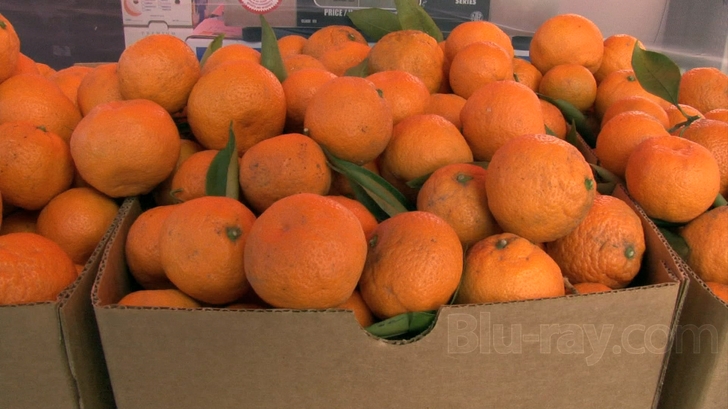
Additional interview segments with Campbell and Esseltyn, as well as other talking heads utilized in the documentary like Dr. Neal Barnard and Dr. Pam Popper, are included as supplements. The titles pretty much sum up what each segment is about:
- Food as Medicine (HD; 1:51)
- What About Organic Meat and Dairy? (HD; 1:32)
- The Latest on Diabetes (HD; 2:31)
- Benefits from the Plant Based Diets (HD; 2:54)
- Tax Dollars for Dairy (HD; 2:47)
- Filmmakers Discuss Forks Over Knives (HD; 4:02). Executive Producer Brian Wendel and Writer-Director Lee Fulkerson discuss what they were trying to achieve by making the film.
Forks Over Knives Blu-ray Movie, Overall Score and Recommendation
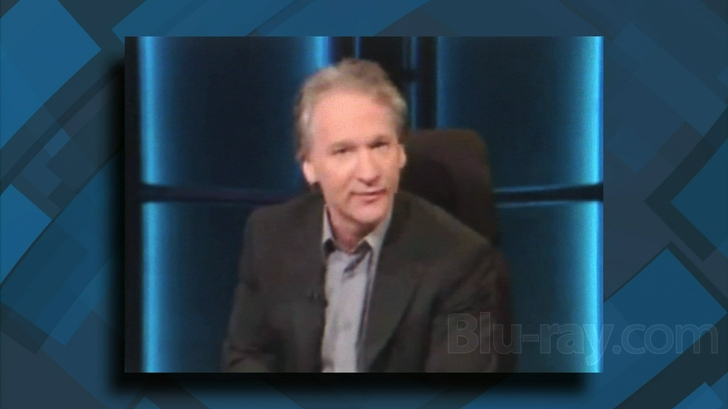
Since I, unlike my meat loving friends with me, never argued with or attempted to change their dietary choices, I suppose I can't say, "See? Told ya so!" (Though truth be told, I might be thinking it). Forks Over Knives should open multitudinous eyes, while simultaneously closing as many mouths, with its audacious but scientifically sound theses about eating animal products and resultant health issues. That may be heresy to those of you who think McDonald's is haute cuisine, but you owe it to yourselves (and especially your children if you have any) to see this remarkable documentary. Highly recommended.
Similar titles
Similar titles you might also like
(Still not reliable for this title)

An Inconvenient Sequel: Truth to Power
2017

Why We Fight
2005

An Inconvenient Truth
2006

In Search of the Last Action Heroes
2019

Fahrenheit 11/9
2018

The Late Great Planet Earth
1979

RBG
2018

Pandas 4K
2018

I Am Not Your Negro
2016

Where to Invade Next
2015

The Wolfpack
2015

Citizenfour
2014

Dinosaur 13
Director's Cut
2014

Visitors
2013

Tim's Vermeer
2013

Roger & Me
1989

A Place at the Table
2012

More Than Honey
2012

The Gatekeepers
2012

This Is Cinerama
Deluxe Edition
1952