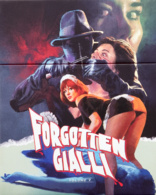
Forgotten Gialli: Volume 9 Blu-ray Movie
HomeForgotten Gialli: Volume 9 Blu-ray Movie 
Limited EditionVinegar Syndrome | 1991-1994 | 3 Movies, 4 Cuts | 271 min | Not rated | Mar 31, 2026
Price
Movie rating
Movie has not been rated yetBlu-ray rating
| Users |  | 0.0 |
| Reviewer |  | 4.5 |
| Overall | | 4.5 |
Overview
Forgotten Gialli: Volume 9 (1991-1994)
The 1990s proved to be a curious and complicated era for the giallo, with many films made for export markets and direct-to-video, while the form itself was tested with directors attempting new ideas and folding modern trends into their plots. Nevertheless, around the rise of the erotic thriller and despite the contraction of the Italian genre film market overall, the true spirit of the genre soldiered on, still alive and vibrant in the three rare gialli assembled here, all seeing their Blu-ray debuts.
| Foreign | 100% |
| Horror | 89% |
| Mystery | 25% |
| Erotic | 17% |
| Thriller | 3% |
Specifications
Video
Video codec: MPEG-4 AVC
Video resolution: 1080p
Aspect ratio: 1.67:1
Original aspect ratio: 1.66:1
Audio
See individual releases
Subtitles
English
Discs
Blu-ray Disc
Three-disc set (3 BDs)
Playback
Region A, B (C untested)
Review
Rating summary
| Movie |  | 2.0 |
| Video | | 4.5 |
| Audio |  | 4.0 |
| Extras | | 4.5 |
| Overall | | 4.5 |
Forgotten Gialli: Volume 9 Blu-ray Movie Review
Reviewed by Brian Orndorf June 15, 2026Vinegar Syndrome returns to their exploration of little-seen thrillers with "Forgotten Gialli: Volume 9," which brings 1991’s “Murder in Blue Light,” 1993’s “Bugie Rosse,” and 1994’s Madness” to Blu-ray.
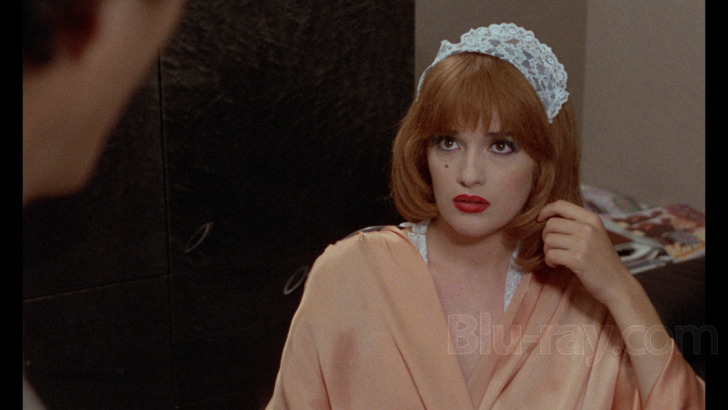
Click here for a review of Murder in Blue Light
Click here for a review of Bugie Rosse
Click here for a review of Madness
Forgotten Gialli: Volume 9 Blu-ray Movie, Video Quality
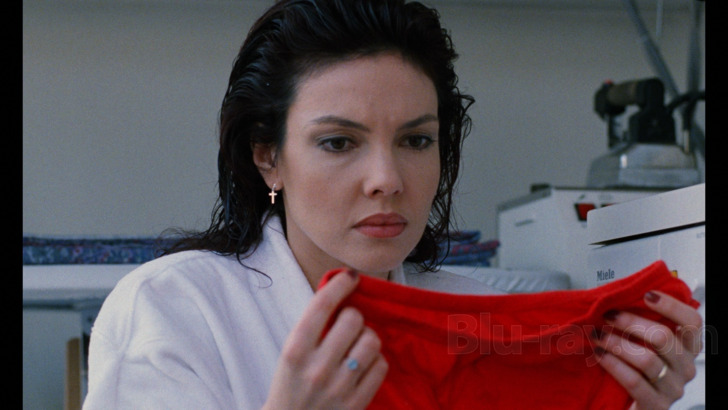
See above for reviews.
Forgotten Gialli: Volume 9 Blu-ray Movie, Audio Quality
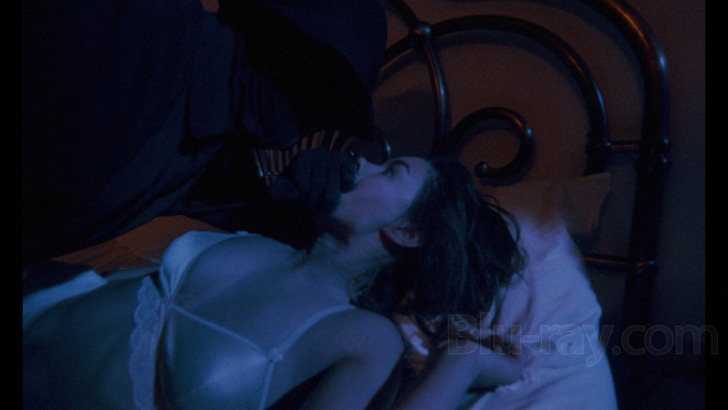
See above for reviews.
Forgotten Gialli: Volume 9 Blu-ray Movie, Special Features and Extras
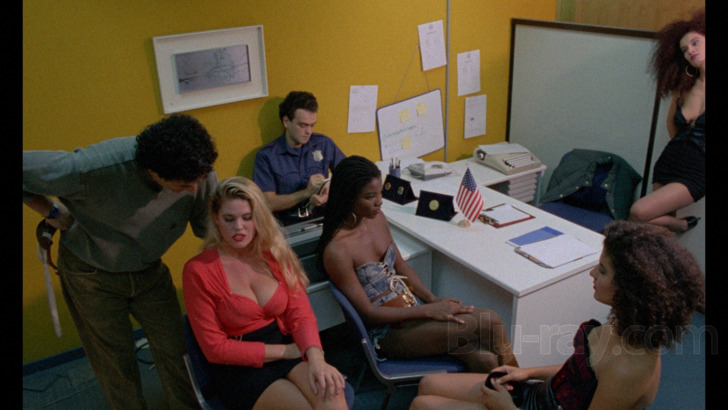
Murder in Blue Light
- Alternate Home Video Cut (94:50, SD) for "Murder in Blue Light" is included.
- Commentary features film historians Troy Howarth and Eugenio Ercolani.
- "Florence, Ma Cherie!" (21:57, HD) is an interview with actress Florence Guerin, who caught the acting bug while visiting the Cannes Film Festival in 1980 as a teenager, branded "Miss Cinema" in the process. Making connections, Guerin made her way into television and eventually movies, beginning her career in the mid-1980s, quickly getting bored by the parts offered to her before breaking through with better roles. Career highlights are analyzed, reflecting on production experiences and co-stars. The conversation reaches "Murder in Blue Light," and the interviewee shares anecdotes about the shoot, including tales of star power and co-stars with poor eyesight. The discussion takes a sharp turn when Guerin details her experience with a miscarriage while making the picture, electing to work through the pain to finish the job.
- "Blue Light Topaz" (31:33, HD) is an interview with actress Sonia Topazio, who worked her way into acting via modeling, recalling her experience in 1997's "Top Girl," which was being shot concurrently with an adult film, giving the young actress an unusual gig. Theater work soon followed, along with a return to filmmaking, eventually cast in "Murder in a Blue Light," meeting her handsy director, Alfonso Brescia. Despite such behavior, the interviewee describes the set as one of "great professionalism." Topazio examines her relationship with director Dario Argento, ignoring a 30 year age difference, eventually ending up in "The Stendhal Syndrome," tasked with enduring a heavy special effects sequence and Argento's intense anger issues. More career interactions are shared, and Topazio's push into erotic entertainment is tracked, including participation in a Playboy photo shoot.
- "The Highly Dependable Mister Bradley" (25:43, HD) is an appreciation piece by film historian Eugenio Ercolani.
- A Trailer has not been included on this release.
- "Red Heat" (29:24, HD) is an interview with writer/director Pierfrancesco Campanella, who developed the idea for "Bugie Rosse," and found financial support for the project when "Basic Instinct" turned into a global hit film. Casting is examined, including the addition of Alida Valli, whose weakening health led to the dubbing of her entire performance. The interviewee highlights a few technical achievements, and admits that making the movie wasn't a happy experience, frustrated with the process. Talk of an alternate ending is provided, and Campanella shares his thoughts on the controversy surrounding the release of "Bugie Rosse," feeling claims of homophobia from the gay community were unfair, and he remains stung by the picture's bad reviews, claiming himself to be a "craftsman of film."
- "The Last Temptation" (13:38, HD) is an interview with actor Tomas Arana, who responded to the script for "Bugie Rosse," soon caught between two productions that wanted to cast him, eventually committing to the Pierfrancesco Campanella picture. Arana enjoyed playing someone a little different, but discusses certain challenges found during the shoot, including maneuvering around a sex scene. The interviewee shares his memories of co-stars and Campanella, who was a young filmmaker trying to make things work for the endeavor, battling frugal producers. Some discussion of the controversy surrounding "Bugie Rosse" is offered, with Arana standing with the production, explaining his feelings about outrage and film interpretation.
- "Naked Lies" (11:57, HD) is an interview with actress Giola Scola, who befriended writer/director Pierfrancesco Campanella and wanted to support his vision for "Bugie Rosse," becoming a producer on the endeavor as well. The interviewee shares her disagreements with the visual presentation of the picture, but celebrates the writing's complexity. Casting is analyzed, with Scola admitting she wouldn't have hired star Tomas Arana due to his villainous looks, and she highlights Campenella's abilities. She closes with thoughts on participating in erotic scenes and the fate of "Bugie Rosse," which struggled with controversy.
- "Red Eros" (18:13, HD) is an interview with composer Natale Massara, who worked his way through the film business, receiving his big break on 1972's "Treasure Island," eventually forming a lengthy collaboration with Pino Donaggio. Friendly with writer/director Pierfrancesco Campanella, Massara was hired for "Bugie Rosse," and he details his technical labor on the feature, managing synths to help create a Brian De Palma sound the helmer was hunting for. Additional instrumentation is analyzed, putting the interviewee to work generating different tones for the film. Massara also shares deep love for Campanella, hoping his oeuvre will be discovered by a new generation of movie fans.
- "Lady in Red" (13:46, HD) is an interview with Barbara Scoppa, who was originally trained as a theater actress before finding movie employment appealing. Building a name for herself, Scoppa agreed to be in "Bugie Rosse" to work with her friend, writer/director Pierfrancesco Campanella, soon dealing with erotic scenes with co-star Tomas Arana, who proved to be as icy as his character. The interviewee also explores her feelings on sexuality and nudity in movies, sharing her own experiences with various directors and personal comfort levels.
- A Theatrical Trailer has not been included on this release.
- Commentary features The Hysteria Continues.
- "Seeing Madness" (19:48, HD) is an interview with producer Giovanni Paolucci, who enjoyed a longtime friendship with writer/director Bruno Mattei, formed while making 1987's "Strike Commando," lasting right up to the moviemaker's death in 2007. Paolucci celebrates Mattei's life and determination, keeping busy until physical pain ended his career. Talk turns to "Madness," which was shot right after "Dangerous Attraction" to save money, and the interviewee recalls the mid-1990s in Italian filmmaking, still working with film while the digital revolution was just beginning to take over. Cast and crew are assessed, and Paolucci offers some excitement when considering "Madness" as a cult picture.
- "Through the Eyes of Madness" (12:38, HD) is an interview with actress Monica Carpanese, who recalls her first audition experience for director Bruno Mattei, responding positively to his warm spirit, commencing a "platonic love" that carried all the way to his 2007 passing. The interviewee recalls her hiring for "Madness," handed a script and an immediate offer from Mattei after he had a falling out with the woman originally cast in the lead role. Co-stars are analyzed, with Capanese celebrating total professionalism from others, and she shares some honesty about Mattei, who showed kindness to her, but not always to others. The actress also provides a few thoughts about working with nudity and eroticism, and she exits with happiness that Mattei's work is being reassessed.
- A Theatrical Trailer has not been included on this release.
Forgotten Gialli: Volume 9 Blu-ray Movie, Overall Score and Recommendation
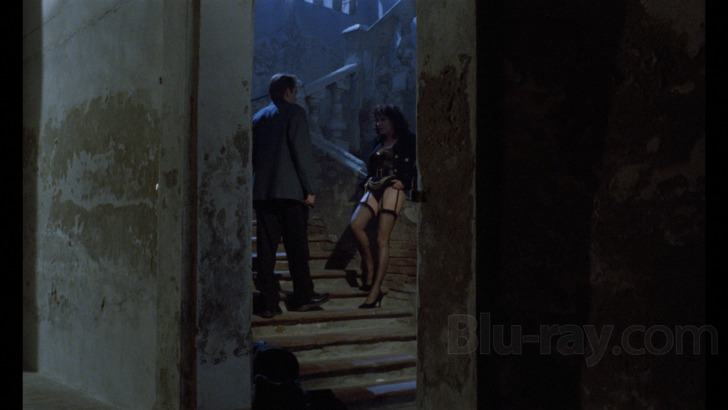
As with the other collections in the "Forgotten Gialli" series, visual elements are excellent, supplying richly film-like viewing experiences with refreshed chillers. Extras are also plentiful, supplying candid appreciations for production achievements from cast and crew.