Fernando Di Leo: The Italian Crime Collection Vol. 2 Blu-ray Movie
HomeFernando Di Leo: The Italian Crime Collection Vol. 2 Blu-ray Movie 
Shoot First Die Later/ Kidnap Syndicate/ Naked Violence | Il Polizziotto e’ Marcio / La città sconvolta: caccia spietata ai rapitori / I ragazzi del massacroRaroVideo U.S. | 1969-1975 | 3 Movies | 291 min | Not rated | Jul 30, 2013


Movie rating
Movie has not been rated yetBlu-ray rating
| Users |  | 0.0 |
| Reviewer |  | 3.5 |
| Overall | | 3.5 |
Overview
Fernando Di Leo: The Italian Crime Collection Vol. 2 (1969-1975)
| Foreign | 100% |
| Crime | 10% |
| Drama | 8% |
| Action | Insignificant |
Specifications
Video
Video codec: VC-1
Video resolution: 1080p
Aspect ratio: 1.88:1
Original aspect ratio: 1.85:1
Audio
See individual releases
Subtitles
English
Discs
25GB Blu-ray Disc
Three-disc set (3 BDs)
Playback
Region A, B (C untested)
Review
Rating summary
| Movie | | 3.5 |
| Video | | 3.5 |
| Audio | | 3.5 |
| Extras | | 3.5 |
| Overall | | 3.5 |
Fernando Di Leo: The Italian Crime Collection Vol. 2 Blu-ray Movie Review
Di Leo goes dark.
Reviewed by Brian Orndorf August 4, 2013Naked Violence
1969’s “Naked Violence” doesn’t waste any time digging to extremes of violence and character. The picture uses its main title sequence to detail a sexual assault and murder, taking time poring over the details of lustful gazes and bodily harm. It’s blunt and coarse, attempting to establish unease in record time before the material chases more investigative interests, and its effectiveness is questionable at best. Despite a troubling opening, “Naked Violence” does manage to locate a dramatic equilibrium, embarking on a satisfactory dissection of police procedure and teenage indifference before it plunges back into the deep end of exploitation.
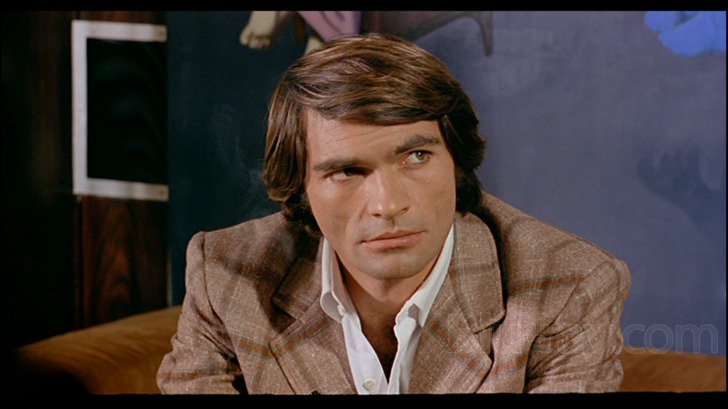
At a school for troubled boys, a gang of teens have collaborated on a crime. Raping and killing their teacher in class, the kids have managed to avoid prosecution through a chain of denials, with each personality refusing to “rat” out his pals. The police are stymied, yet Detective Lamberti (Pier Paolo Capponi) is determined to make the punks confess, using unusual methods of interrogation that emphasize the strong alcohol found at the crime scene, hoping reminders of ungodly intoxication will loosen their tenacity. Getting nowhere, Lamberti and social worker Ussaro (Susan Scott) team up to break one of the accused, introducing an alien concept called domestic stability to help unsettle the boy, thus establishing enough trust to expose the real culprit behind the foul crime.
Adapted from the novel by Giorgio Scerbanenco, “Naked Violence” is perhaps the most rigidly arranged picture of Di Leo’s career. Broken down into three distinct acts, the feature settles into an interview mood after the opening attack, observing Lamberti bring in every member of the defective little rascals for questioning, with each entrance accompanied by an orchestral sting that’s omnipresent throughout the movie, as though triggered by some type of tripwire. Lamberti is mad as hell, and the kids are poked and prodded with questions, with the cop hoping to inspire a confession from one of the greasy, hairy punks. Di Leo spends a considerable amount of time on the interrogations, getting to know the suspects and appreciate Lamberti’s commitment to justice, though there’s disappointment from the veteran cop when he’s informed that simply beating a confession out of the teens isn’t allowed. Dammit.
Act two brings us to those who influence the juveniles, finding adults generally dismissive of the boys, while Lamberti stumbles across a strange connection to Switzerland and a smuggling plot. The final act concerns Lamberti and Ussaro’s manipulation of a suspect, coaxed into submission with extravagant meals, homey comfort, and trust. Despite its incendiary title, “Naked Violence” is a talky feature, boosted by Capponi’s exceptionally passionate performance, taking command of a movie that needs all the direction it can find. Pacing is minimal at best, with a mystery building during the story that doesn’t take dramatic command as securely as it could, keeping the picture in a routine of exposition that’s not quite as compelling as simply watching Lamberti berate the boys. A subplot concerning the sexual orientation of one teen adds much needed narrative flavor, but it amounts to little more than sting of victimization common in the era.
Di Leo oversteps boundaries in the climax, reviewing the rape scene for a prolonged period of time, making the moment less about violence and more about flashes of nudity from the actress playing the teacher. It’s pretty shameless, with a pretense of hallucinatory horror that’s difficult to swallow considering the amount of screentime set aside to leer at sexual assault. The ultimate reveal of the mastermind behind the ordeal also leaves much to be desired. “Naked Violence” is best in rage mode, watching those in charge of carrying out justice employ their gifts and manage their frustrations to crack the case. The rest is sleaze from a filmmaker who would go on to hone his unsavory tastes in a most agreeable manner.
Shoot First, Die Later
A full review of the “Shoot First, Die Later” disc can be found here.
Kidnap Syndicate
“Kidnap Syndicate” is a shockingly cold-blooded feature. In its attempt to successfully motivate the lead character into a design of revenge, the screenplay elects severity to encourage action, making the picture unpredictable as it maneuvers around formulaic events. Passionate and dark, “Kidnap Syndicate” finds Di Leo in an unforgiving mood, out to make life hell for everyone involved in the story.
Mario (Luc Merenda) is a former motorcycle racing champion who had to put his success on hold after the death of his wife, leaving him in charge of young son Fabrizio (Marco Liofredi). At school, Fabrizio witnesses the kidnapping of a friend, jumping in to protect his pal, only to be taken as well. Stunned by the news, Mario meets with the boy’s father, Filippini (James Mason), a wealthy man unable to calm his distraught wife, Grazia (Valentina Cortese). With Commissioner Magrini (Vittorio Caprioli) trying to make sense out of the abduction, the kidnappers eventually make a monumental ransom demand, leaving Mario stuck as Filippini is the only one with a bank account big enough to pay off the crooks. Scheming to bring the price down, Filippini waits too long, leaving a livid Mario in charge of taking down the kidnappers, assuming their mindset of profit as a way to infiltrate their ranks.
“Kidnap Syndicate” finds personality in the class struggle between Mario and Filippini, two men at opposite ends of the income spectrum brought together by a common need to retrieve their children during a time of routine abductions in Italy. Snatching people is big business to these underworld types, who only planned to take a rich man’s son, ending up with a motorcycle mechanic’s as well, complicating the situation for everyone involved. Mario wants action but can’t afford the price of release, frustrated with Filippini’s reserved manner concerning ransom demands. This conflict is sharply realized by the production, playing up financial and social tensions as Mario is rendered powerless during the negotiation process, finding his say marginalized due to his limited income. Merenda plays the rejection with intensity, and the feature’s highlights are often focused on Mario’s growing agitation and resentment of Filippini, observing the wealthy man play God with the lives of two children to save money.
To make a point about sacrifice and unfairness, the plot takes a remarkably tragic turn midway through, hitting Mario with a reality that forces him to crack the kidnappers by himself. While Di Leo teases an organized scheme of violence for the character, Mario plans otherwise, trying to play up greed as a way to encourage curiosity and eventually access from the villains. It’s a smart reworking of the typical revenge scenario, providing the movie with a memorable plan of attack when the rest of the picture is prone to linger on repetitive confrontations, hinting at a mystery source of evildoing that’s rendered moot by the extremity of Mario’s drive to strike back at those who ruined his life.
Performances are strong, with Caprioli adding a dash of comedy to an otherwise sobering picture. Mason’s work is more decorative, but there’s a functional sense of antagonism in scenes with Merenda, charging moments between Mario and Filippini. “Kidnap Syndicate” fluctuates between static and sincere, creating an uneven but undeniably powerful viewing experience, especially when Di Leo elects a few turns of drama that are striking in their finality, creating a honest sense of revulsion to almost justify revenge.
Fernando Di Leo: The Italian Crime Collection Vol. 2 Blu-ray Movie, Video Quality
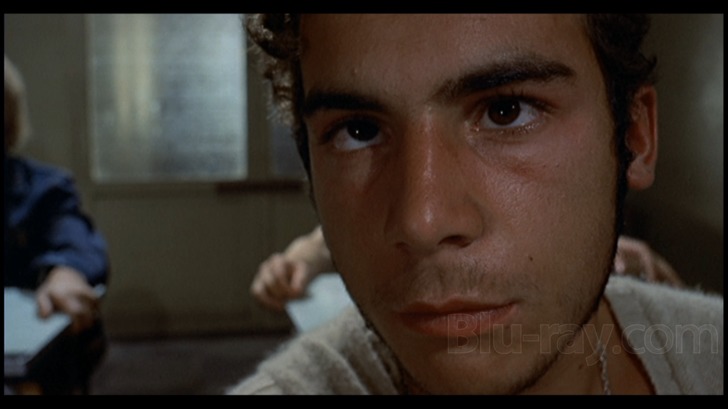
The VC-1 encoded image presentations on "Naked Violence" and "Kidnap Syndicate" (1.88:1 aspect ratios) are quite different in appearance. "Naked Violence" reveals a damaged print with scratches and debris, while filtering is detected, resulting in ringing and an occasional waxy flatness to the viewing experience. Fine detail is rare for this softly photographed film, while colors generally look faded, keeping skintones drained in a feature that prizes facial reactions. Black levels are murky, solidifying image depth. "Kidnap Syndicate" looks surprisingly fresh with healthy colors that bring snap to reds, while skintones here are very human. Textures from wardrobe and locations are preserved to satisfaction, and grain is tastefully managed, creating a filmic look that's appealing. Shadow detail loses step in heavy darkness, but the presentation remains communicative and crisp. Print damage, ringing, and shake is also present here.
Fernando Di Leo: The Italian Crime Collection Vol. 2 Blu-ray Movie, Audio Quality
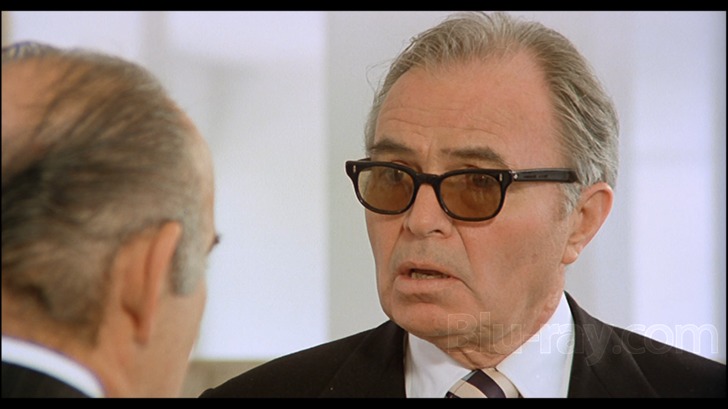
The 2.0 Italian LPCM sound mixes on the two pictures are roughly the same quality. Hiss and pops are more pronounced on "Kidnap Syndicate" (though age is detected on both films), heard consistently throughout the presentation, though music shows more life during this movie. Both tracks create a frontal assault of sound that's a little on the thick side, but far from impenetrable. Dialogue exchanges are dubbed for maximum clarity, managed securely with musical accompaniment. Highs are shrill, but that seems par for the course with obscure titles such as these, offering listening experiences that are more functional than dynamic.
Fernando Di Leo: The Italian Crime Collection Vol. 2 Blu-ray Movie, Special Features and Extras

- Booklet devotes 23 pages to essays on the three movies, with analysis of "Shoot First, Die Later" taking top priority.
- "Those Good Fellas" (18:49, SD) is a scattershot discussion of the picture from 2004, featuring Di Leo, Capponi, and various writers and appreciators. Skipping around various topics concerning the making of the film, the featurette contains a few valuable nuggets of information, including a revelation that Di Leo cast real juvenile delinquents as the offending kids, ultimately refusing to assist their newly formed dreams of screen stardom. Again, the discussions are randomly organized, but remain interesting, helping to appreciate the movie.
- "Fernando Di Leo at the Cinematheque" (15:13, SD) takes the adventure to France, where a pair of programmers from the famed film archive discuss the power, complexity, and texture of Di Leo's work, and how it all fits into Italian genre appetites of the 1970s.
- A Theatrical Trailer has not been included.
- "Violent Cities: The Other Fernando Di Leo Trilogy" (28:17, SD) chats up actor Luc Meranda and a few other collaborators in 2005, discussing a career arc for the filmmaker that resulted in the release of "Kidnap Syndicate," "Nick the Sting," and "Shoot First, Die Later." Reverential talk about Di Leo and his impeccable on-set professionalism is included, along with reflections on the work from these key personnel. Di Leo himself joins the conversation late in the featurette.
- A Theatrical Trailer has not been included.
Fernando Di Leo: The Italian Crime Collection Vol. 2 Blu-ray Movie, Overall Score and Recommendation
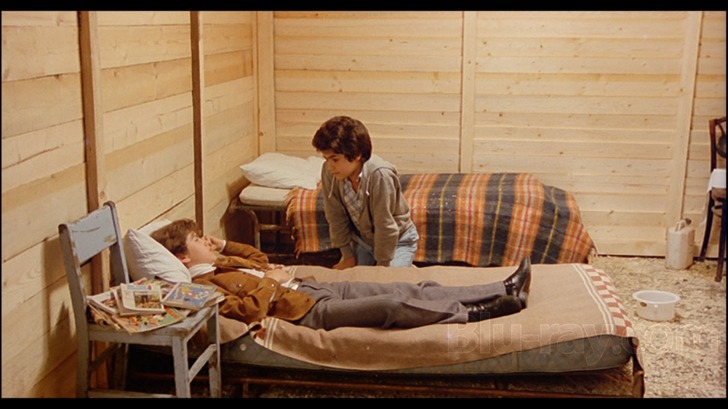
Adding to the original box set's examples of Di Leo's directorial interests and impulses, this new collection of features bring fresh dimension to the helmer's legacy. Kick back, break out the J&B, and reenter a forbidding universe of cops, crooks, and Italian culture, extending the Di Leo education for three more efforts.