Fauré: Requiem Blu-ray Movie
HomeFauré: Requiem Blu-ray Movie 
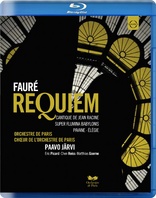
Paavo Järvi & L’Orchestre de ParisEUROARTS | 2012 | 72 min | Not rated | Apr 24, 2012

Movie rating
7 | / 10 |
Blu-ray rating
| Users |  | 0.0 |
| Reviewer |  | 4.0 |
| Overall | | 4.0 |
Overview
Fauré: Requiem (2012)
| Music | 100% |
Specifications
Video
Video codec: MPEG-2
Video resolution: 1080i
Aspect ratio: 1.78:1
Audio
English: DTS-HD Master Audio 5.1
English: LPCM 2.0
Subtitles
English, French, German
Discs
25GB Blu-ray Disc
Single disc (1 BD)
Playback
Region A (B, C untested)
Review
Rating summary
| Movie | | 4.0 |
| Video |  | 3.0 |
| Audio |  | 4.5 |
| Extras |  | 1.5 |
| Overall | | 4.0 |
Fauré: Requiem Blu-ray Movie Review
Reviewed by Jeffrey Kauffman April 30, 2012Though the fine cut facets of the intricate diamonds of Debussy or the gargantuan gossamer structures that Ravel frequently offered are often thought of as the most iconic French music of the late nineteenth and early twentieth centuries, there was another, perhaps slightly more stolid, figure contributing mightily to French music, and indeed leaving an indelible imprint that no doubt influenced both Debussy and Ravel (especially the latter, as he was a student of this third master). While Gabriel Fauré is perhaps not as widely remembered as either Debussy or Ravel is, several pieces of his have entered the public lexicon of well recognized material, probably none more than his haunting Pavane, which has been recorded by countless classical orchestras and even covered by such jazzmen as Hubert Laws. Fauré lived from 1845 – 1924, overlapping both Claude Debussy (1862 – 1918) and Maurice Ravel (1875 – 1937). Fauré is perhaps unfairly thought of as being less innovative than either Debussy or Ravel, but his music is full of inspired harmonic brilliance within a strong formal structure, and so in a way is reminiscent of one of Fauré’s German counterparts, Johannes Brahms. Fauré’s unique approach can be easily understood by listening to Pavane, a piece which starts resolutely diatonically in F# minor, essaying an unforgettably nostalgic melody that remains one of the purest solos for flute (with a little help from oboe and clarinet) in the orchestral repertoire. But then listen to what Fauré does in the B section. Cascading, modal strings descend over a typically lush melody which nonetheless resists any easy efforts to codify it in any given key. It’s a bracing moment and one which temporarily throws the listener for a loop, casting him adrift in what had been a firmly anchored tonal framework. Fauré’s penchant for quietly pushing the envelope is also on display in this particular performance of Pavane, which includes the rather outré choral setting the composer added to his piece after its purely orchestral premiere.
"Just a quick nap before the concert starts, okay?"
While the smaller scale (no pun intended) charms of Fauré’s Pavane may be the composer’s overall best known work, it’s no doubt followed rather closely by what is his most remembered larger outing, the glorious Requiem in D minor, Op. 48. Once again Fauré’s penchant toward just ever so slightly skewing the formal landscape is on display in this lovely, properly elegiac piece which nonetheless omits two of the standard (and probably not so coincidentally rather apocalyptic) elements of traditional requiem masses, the “Dies Irae” and “Tuba Mirum”. Fauré’s Requiem is an interesting piece to compare with any number of other similar pieces, from Brahms’ A German Requiem to Mozart’s iconic Requiem Mass to, perhaps most appropriately, the equally haunting Requiem by Fauré’s compatriot Marcel Duruflé, a composer who came in the wake of not only Fauré, but also Debussy and Ravel, and who was obviously influenced by each of them in his own way. Fauré’s Requiem, like that of Duruflé’s, is an almost weirdly calm piece, huge yet languid, with long, ruminative phrases that seem to echo the innermost yearnings of an intelligence questioning the immortality of the soul.
There’s of course another famous French Requiem, which is in its own way the “elephant in the room” (in more ways than one), Berlioz’s massive piece which was premiered in 1837. Fauré evidently detested the size and scope of the Berlioz work, and in some ways his more restrained Requiem was an overt response not only to Berlioz’s humongous forces but also to his focus on purgatorial suffering (hence another reason for Fauré’s exlusion of the “Dies Irae” and “Tuba Mirum” elements). While this performance is in the more widely known orchestral setting, it’s interesting to note that Fauré’s original orchestration was a deliberately chamber-esque setting for four violas, four cellos, solo violin and organ.
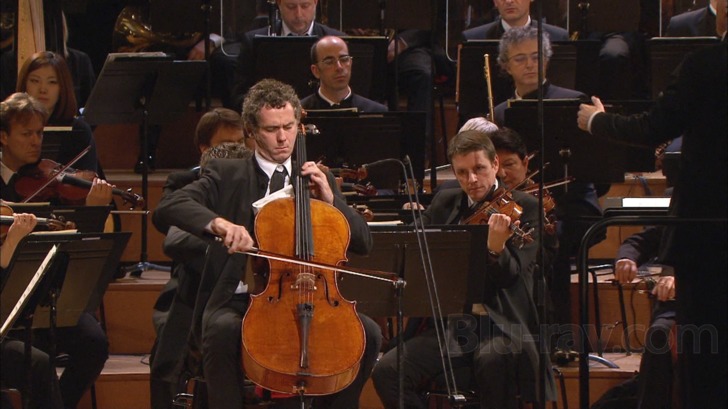
Fauré’s love of more intimate settings is also on display on the other items included on this program, three pieces which are among the lesser known compositions in his oeuvre. These include the lovely and extremely lyrical quasi- concerto for cello and orchestra, the Élégie in C minor, op. 24, here given a rapturous reading by soloist Eric Picard; Super flumina Babylonis, a setting of Psalm 137, scripture that has inspired a wealth of musical outpourings from an incredibly disparate group of composers which include everyone from Palestrina to Harry Partch to Stephen Schwartz; and Cantique de Jean Racine, one of Fauré’s earliest pieces and one which helped to cement his reputation when he was still a teenager.
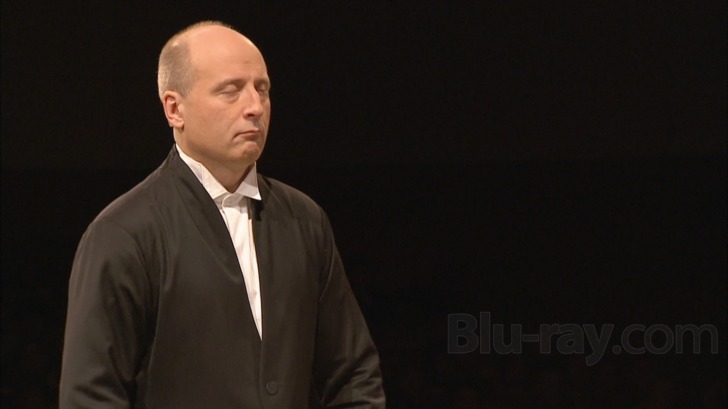
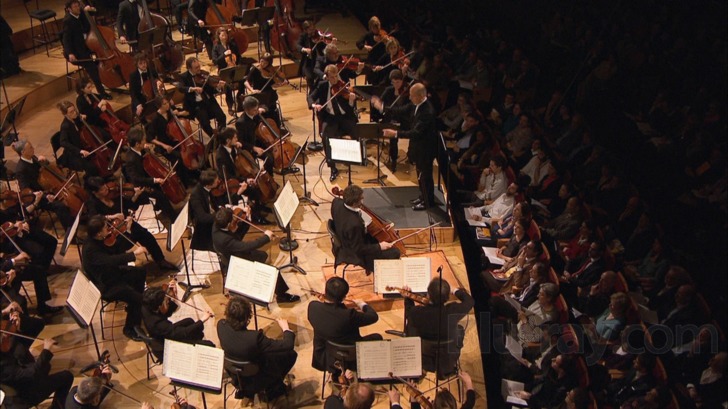
The Orchestre de Paris has only relatively recently appointed Paavo Järvi its new musical director, but the youngish Estonian-American conductor already seems to be firmly in control of the situation. He’s a relatively low key conductor, not very flashy on the podium, but he has an excellent grasp of Fauré’s always spectacular architecture. It’s kind of fun to see Järvi mouthing along with the pizzicatti during Pavane, just one of several moments where the conductor seems to be singing to himself as Fauré’s inimitable melodies weave their magic. The concert is a wonderful combination of two of Fauré’s best known and most celebrated pieces along with a trio of frankly lesser known works that nonetheless deserve far greater recognition. Hopefully this Blu-ray can help rectify the strange lack of remembrance often accorded to Fauré, certainly one of the all time titans of French composition.
Fauré: Requiem Blu-ray Movie, Video Quality
Fauré: Requiem is presented on Blu-ray courtesy of EuroArts with an MPEG-2 encoded 1080i transfer in 1.78:1. Whether or not this is due to this release's relatively ancient codec is anyone's guess, but this high definition presentation never really pops the way most classical musical lovers have come to expect from their live concert recordings. Colors are not especially robust, and flesh tones are on the peach colored side of things most of the time. Some of the close-ups of the players do offer more than adequate fine detail, but overall this has a slightly upscaled video look to it, at least in the wider shots that encompass Järvi and the entire (or at least most of the) orchestra. There's lack of sufficient shadow detail and the choir's black apparel tends to simply merge into one huge inchoate mass in midrange and far shots.
Fauré: Requiem Blu-ray Movie, Audio Quality
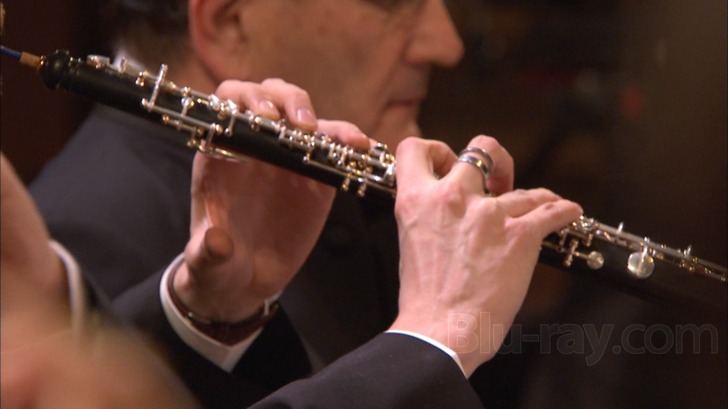
Fauré: Requiem features two nicely lustrous lossless audio options, a DTS-HD Master Audio 5.1 surround mix and an uncompressed LPCM 2.0 stereo fold down. For the record, the Requiem is of course performed in Latin, not English, though Järvi's interview is in (sometimes slightly halting) English. The sound here is full and rich, though Fauré was a master of restraint, so there is little of the bombast that some may expect from something like a huge set piece of a requiem mass. The balance between the soloists, whether vocal or instrumental, and the main orchestral masses is excellent, and fidelity remains very strong throughout all frequency ranges. There isn't a wealth of dynamic range here, again at least partially due to Fauré's inherent restraint, but there are dynamics across a perhaps smaller range, effectively handled by Järvi and his forces and very well represented by both of these lossless audio tracks.
Fauré: Requiem Blu-ray Movie, Special Features and Extras
- An Interview with Paavo Järvi (1080i; 13:06) is a fairly interesting sit down with the conductor, where he discusses the unusual form of Fauré's Requiem, which Järvi feels is very Catholic feeling despite having been written by a less than overtly religious composer. The conductor also rightly states that this Requiem is rather strangely happy. Järvi also talks about the differences between some of the orchestras he's conducted, as well as the change he sees in his musician when they're involved in a live recording situation such as this one.
Fauré: Requiem Blu-ray Movie, Overall Score and Recommendation
Fauré: Requiem is a wonderful introduction to this magnificent composer's work for those who may not be acquainted with him. Fauré builds his power slowly, through the steady accretion of ideas, rather than sudden forceful outbursts or manic depressive fits of euphoria followed by melancholia. He is a remarkably fluid melodist, one who just seems genetically incapable of writing a less than memorable "tune", and that facility has sometimes led to critics thinking he's less than profound. Anyone who has ventured into Fauré's music at a technical or structural level knows that to be manifestly not the case. This is music of supreme intellect and heart, lovingly crafted and gorgeously wrought. These performances are splendid and capture the Gallic charm of the composer. While video quality is really not what it should be, that's somewhat ameliorated by superior audio and a decent interview with Järvi. Recommended.