Fade In Blu-ray Movie
HomeFade In Blu-ray Movie 
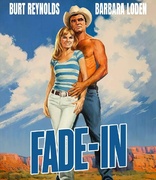
Imprint #431Via Vision Entertainment | 1968 | 93 min | Rated ACB: PG | No Release Date
Price
Movie rating
7 | / 10 |
Blu-ray rating
| Users |  | 0.0 |
| Reviewer |  | 4.0 |
| Overall | | 4.0 |
Overview
Fade In (1968)
A sophisticated film editor falls in love with a womaniser she meets while making a new Western movie on location.
Starring: Burt Reynolds, Barbara Loden, Patricia Casey (I), Noam Pitlik, James HamptonDirector: Jud Taylor, Alan Smithee
| Drama | Uncertain |
| Western | Uncertain |
| Romance | Uncertain |
Specifications
Video
Video codec: MPEG-4 AVC
Video resolution: 1080p
Aspect ratio: 1.85:1
Original aspect ratio: 1.85:1
Audio
English: LPCM 2.0 Mono
Subtitles
English SDH
Discs
Blu-ray Disc
Single disc (1 BD)
Playback
Region free
Review
Rating summary
| Movie | | 4.0 |
| Video | | 4.0 |
| Audio | | 4.0 |
| Extras |  | 3.0 |
| Overall | | 4.0 |
Fade In Blu-ray Movie Review
Reviewed by Dr. Svet Atanasov September 28, 2025Jud Taylor's "Fade-In" (1973) arrives on Blu-ray courtesy of Imprint Films. The supplemental features on the release include new audio commentary with critics Nat Segaloff and Daniel Kremer, and a video program with producer/screenwriter Judd Bernard. In English, with optional English SDH subtitles for the main feature. Region-Free.
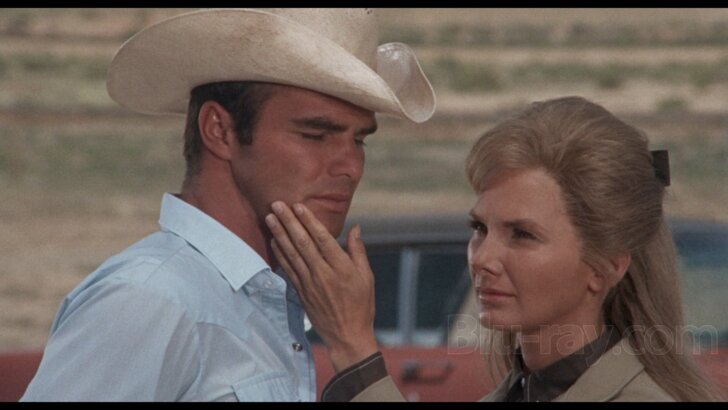
It is unclear how Burt Reynolds would have ranked Fade-In if it had been given a chance to impress those who flocked to see his films in theaters across the country. We only know that Reynolds thought highly of it because it was unlike the rest of the films he had made, and that for years after Paramount shelved it, he tried to acquire it and give it a new life.
However, the film Reynolds made with Barbara Loden under the direction of Jud Taylor is not the film that Paramount refused to screen theatrically, and it is not the film that eventually was sold to CBS. The original version of Fade-In that Taylor shot was heavily edited and cut, which is the main development that prompted him to remove his name from its credits, and the version that ended on TV was reedited and recut, too. Also, Reynolds fans and film collectors who managed to see Fade-In on VHS and DVD releases that emerged from the bootleg markets many years later were treated with amateur reconstruction jobs. So, Fade-In has a rather wild history, and those who may have seen the film over the years almost certainly know different versions of it.
This release presents a gorgeous new version of Fade-In sourced from a recent 4K master created at Paramount. Which version of Fade-In is this? I do not know. Before receiving the release in the mail, I had had only one other experience with Fade-In made possible by a bootleg DVD many years ago, and from the little I recall from it, I cannot tell if the new version is a copy of the old version. I can only confirm that Fade-In looks incredible now, nothing like the bits of it I seem to remember.
The story Fade-In tells is multi-layered and still unique. A large film crew from Los Angeles arrives in the sleepy town of Moab, Utah, and local residents immediately line up to get cast as extras. The handsome cowboy Rob (Reynolds) and a couple of his buddies are hired as drivers. Shortly after, Rob meets Jean (Loden), a beautiful film editor, and in the days ahead, while driving her to and back from the outdoor areas where a famous Hollywood director shoots his newest western, the two fall madly in love. However, as the shooting process nears completion, their romantic relationship begins to disintegrate, too.
The western that the Hollywood director shoots in Moab is a real one, titled Blue. It was directed by Silvio Narizzano and featured several big stars, like Terence Stamp, Karl Malden, Joanna Pettet, and Ricardo Montalban. Blue also had a rough history, but for completely different reasons, the biggest of which was the decision to cast Stamp as its star and several specific problems with his ‘foreign’ personality. So, Fade-In uses footage from the shooting of Blue, and while Rob and Jean’s romance flourishes, in a few places borrows bits of the real footage that Narizzano had done. It is a very unique concept for an American romantic film set in rural Utah.
The gorgeous new version of Fade-In has a couple of spots with rough transitions, virtually all of which are towards the middle of it, but it is still a pretty striking film, often recreating the moods and poetic beauty of Michelangelo Antonioni’s The Passenger. Also, Reynolds and Loden are so different yet their romance so authentic, it is very easy to understand why the former tried hard to rescue Fade-In and let people see it theatrically. Reynolds looks great in a way that he does not in any of the films he had made before it.
So, what is left to be said about Fade-In? It is a shame that years ago none of the people at Paramount whose opinion mattered could grasp that Taylor had shot a film with distinct European aesthetics that had to be judged and promoted differently to succeed. In it, William Fraker’s lensing is as good and possibly even better than that the likes of Luciano Tovoli (The Passenger), Vittorio Storaro (The Sheltering Sky), and Ennio Guarnieri (A Brief Vacation) are remembered for. There is even an astonishingly good soundtrack created by Ken Lauber that is perfectly matched with it, making the significance of the previously mentioned aesthetics unmissable.
The popular alias Alan Smithee was used for the first time in Fade-In after Taylor removed his name from its official credits.
Fade In Blu-ray Movie, Video Quality
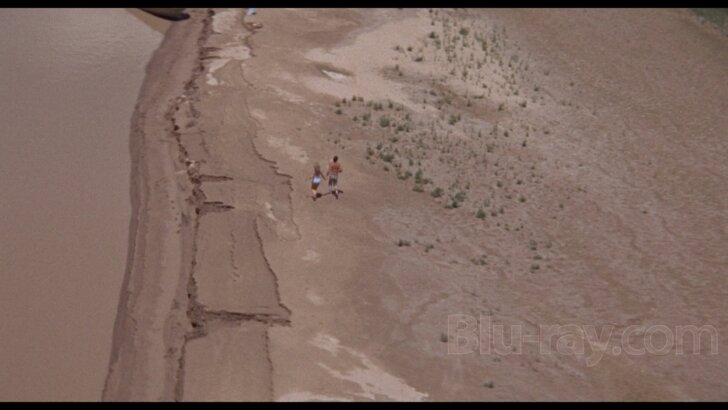
Presented in its original aspect ratio of 1.85:1, encoded with MPEG-4 AVC and granted a 1080p transfer, Fade-In arrives on Blu-ray courtesy of Imprint Films.
This release brings to Australia the same recent 4K restoration of Fade-In that in America Kino Lorber introduced with this earlier this year. While ideally Fade-In can look better, I think that it has a very attractive, faithful, organic appearance, and I like it a lot. In the review linked above, I mentioned that the master produces visuals exhibiting a quality that a good interpositive can typically ensure. However, I do not know if an interpositive was used to source it. Also, while there are some small nicks and blemishes, the surface of the visuals remains healthy. There are no traces of problematic digital corrections. Color balance is good and convincing. I think that in some places select primaries and supporting nuances can look more vibrant, perhaps even healthier, but clearly the existing elements have limitations, and they are retained. I liked what I saw on my system a lot. There are no traces of any problematic digital corrections. In summary, given the troubled history of Fade-In, the current restoration is quite the revelation. (Note: This is a Region-Free Blu-ray release. Therefore, you will be able to play it on your player regardless of your geographical location).
Fade In Blu-ray Movie, Audio Quality
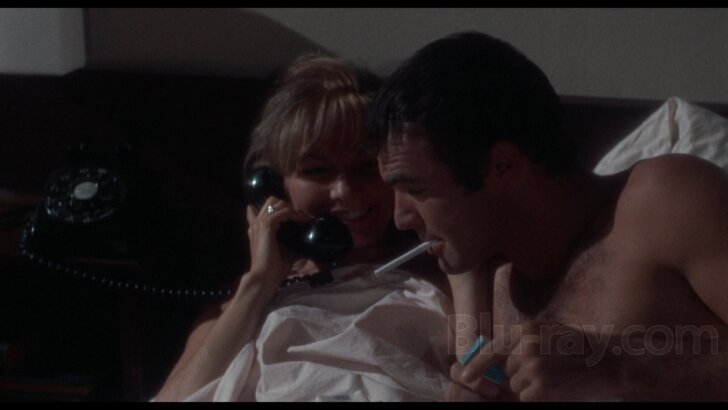
There is only one standard audio track on this Blu-ray release: English LPCM 2.0. Optional English SDH subtitles are provided for the main feature.
I do not have any new comments to add about the quality of the audio. All exchanges are clear and easy to follow. However, in different areas, there are small yet noticeable fluctuations. Given the troubled history of Fade-In, it is difficult to know if all are part of the original sound design, or if some, or all, are introduced by source limitations or aging. The bottom line is this: there is absolutely nothing that will affect your viewing experience negatively.
Fade In Blu-ray Movie, Special Features and Extras
- Commentary - this audio commentary was recorded by critics Nat Segaloff and Daniel Kremer. I liked this commentary a lot. It is casual yet full of interesting information about Fade-In and its relationship to Blue, as well as how both were (mis)managed by Paramount. Additionally, the commentators share good information about Burt Reynolds' involvement with Fade-In, some awkward details about his character ("If he owns a ranch, why does he have to get a job as a driver?"), and his romantic relationship with Barbara Loden's editor. Again, if you enjoy Fade-In as much as I did, find the time to listen to this commentary.
- Road to Cinema - in this program, producer/screenwriter Judd Bernard discusses his career with critic Geoffrey Freedman. In English, not subtitled. (18 min).
- Cruel, Usual, Necessary: The Passion of Silvio Narizzano - this recent documentary about the life and legacy of Silvio Narizzano was produced by Daniel Kremer. In English, with optional English SDH subtitles. (135 min).
Fade In Blu-ray Movie, Overall Score and Recommendation
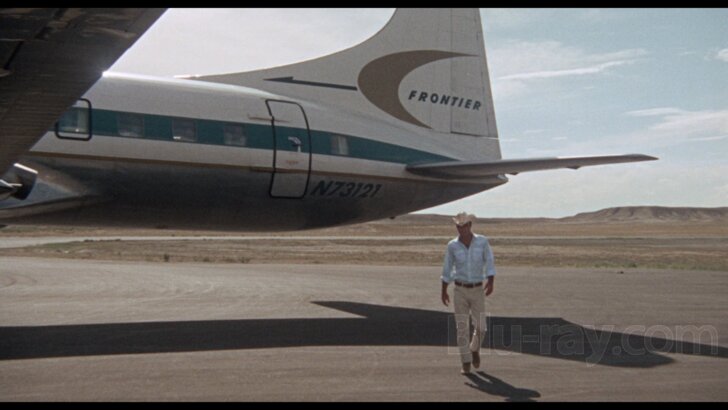
Top brass at Paramount did not get the type of film Jud Taylor and the great cinematographer William Fraker attempted to deliver with Fade-In. It was a unique mosaic of poetic visuals and moods, quite similar to the ones that defined the work of Michelangelo Antonioni and Valerio Zurlini. This was almost certainly the key reason Fade-In was edited, cut, and then denied a theatrical release, which is most unfortunate. While it is unclear what version of it is on this Blu-ray release, Fade-In is still worth seeing because parts of it are brilliant. Kudos to Paramount for remastering it in 4K. HIGHLY RECOMMENDED.
Similar titles
Similar titles you might also like
(Still not reliable for this title)

Great Expectations
1946

Chinese Box
Imprint #63
1997

Oasis
오아시스
2002

An Autumn's Tale
Chau tin dik tung wa / Qiu tian de tong hua / 秋天的童話 / Imprint Asia #29
1987

May December
2023

The Dead Don't Hurt
2024