Dziga Vertov: The Man with the Movie Camera and Other Newly-Restored Works Blu-ray Movie
HomeDziga Vertov: The Man with the Movie Camera and Other Newly-Restored Works Blu-ray Movie 
Flicker Alley | 1924-1934 | 279 min | Not rated | Jun 02, 2015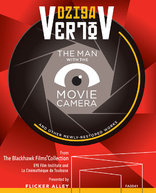
Price
List price:Amazon: $36.99 (Save 38%)
Third party: $36.99 (Save 38%)
Only 14 left in stock (more on the way).

Movie rating
Movie has not been rated yetBlu-ray rating
| Users |  | 4.5 |
| Reviewer |  | 5.0 |
| Overall | | 4.8 |
Overview
Dziga Vertov: The Man with the Movie Camera and Other Newly-Restored Works (1924-1934)
A cameraman travels around a city with a camera slung over his shoulder, documenting urban life with dazzling inventiveness.
| Foreign | 100% |
| Documentary | 15% |
| Short | 12% |
| History | 4% |
Specifications
Video
Video codec: MPEG-4 AVC
Video resolution: 1080p
Aspect ratio: 1.33:1
Original aspect ratio: 1.33:1
Audio
French: LPCM 2.0
No spoken dialog (sound track is labeled "French"); only music and sound effects based on Vertov's notes, by Alloy Orchestra in 1995; Quality: 48kHz/16bit which wan't an option
Subtitles
English, French
Discs
Blu-ray Disc
Single disc (1 BD)
Playback
Region free
Review
Rating summary
| Movie | | 5.0 |
| Video | | 4.5 |
| Audio | | 4.5 |
| Extras | | 5.0 |
| Overall | | 5.0 |
Dziga Vertov: The Man with the Movie Camera and Other Newly-Restored Works Blu-ray Movie Review
A masterpiece that pioneered the documentary landscape
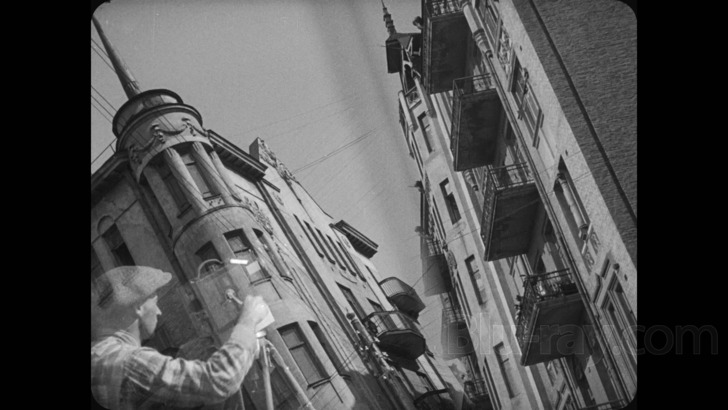
Reviewed by Neil Lumbard April 4, 2020The Man With the Movie Camera is regarded as one of the greatest achievements in the history of cinema. A breathtaking acheivement which pulls viewers in with ease, the silent film is simplistic at first glance: the entire production revolves around the city explorations of an adventurous cameraman (Mikhail Kaufman) as he traverses around the land that surrounds him (while documenting his strange journey). Despite the lack of a traditional plot-line, the filmmaking is engaging from start to finish. The film is about the journey. As in life itself, the journey is full of surprising wonder.
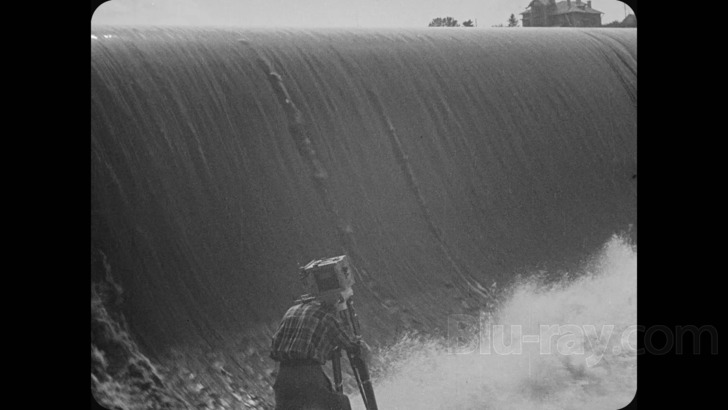
Written and Directed by Dziga Vertov, the pioneering filmmaker pushes the envelope of cinematic techniques with this experimental documentary. There are so many compelling sequences in the film which showcase remarkable camera-angles and unique stylistic shots that are surrealist and sublime. The cameraman films the movement of vehicles (showcasing the action in all of its glory), the splendor of waterfalls (with astonishing photography), and even the movement of a train (in which the cameraman sits on steadily with camera in tow). These scenes (and so many others) are so cutting-edge that one might forget they are watching a silent film.
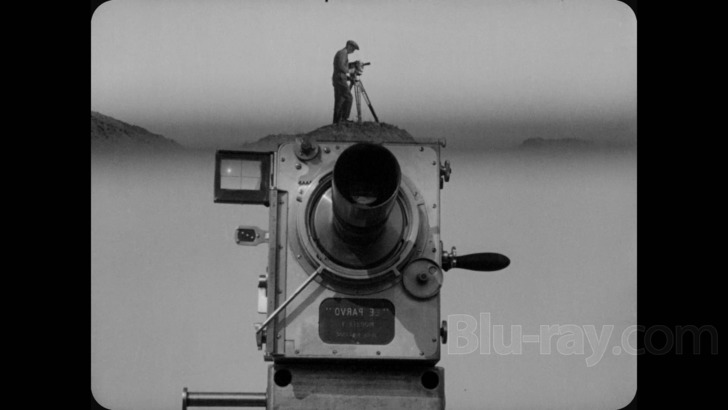
The heart of cinema: the human condition.
The music certainly helps. The Man with the Movie Camera features a spectacular score which is equally experimental with the setting of the filmmaking. The score by Alloy Orchestra is unlike compositions for traditional documentaries (or silent features). The unique style of the musical landscape makes the experience even more compelling with sonic wonder from beginning to end.
While cinema has come a long way since the days of The Man with the Movie Camera (as our technology and techniques have advanced), to see a film with such a remarkable style and vision produced in 1929 is simply breathtaking. The film stands head-and- shoulders above many modern productions and is simply undeniable in its innovative construction. Film enthusiasts with a love for experimental filmmaking should consider this a must-see masterpiece. For those few viewers who haven't yet experienced it, consider putting the film at the top of your to-see list. A gem.
Dziga Vertov: The Man with the Movie Camera and Other Newly-Restored Works Blu-ray Movie, Video Quality
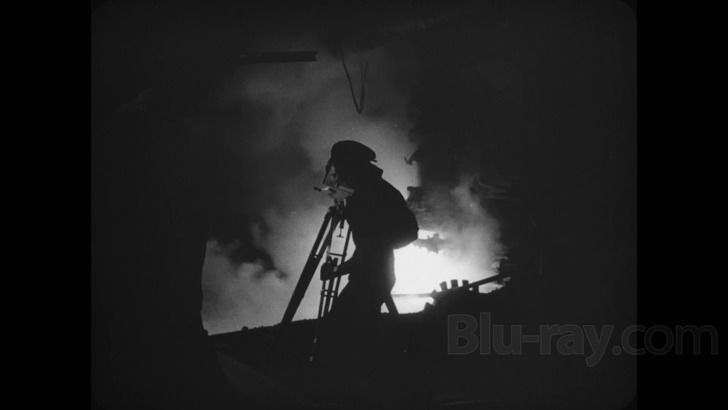
Arriving on Blu-ray from Flicker Alley, The Man with the Movie Camera (Dziga Vertov) features a 1080p MPEG-4 AVC encoded high definition presentation. The presentation features a downright stunning digital restoration. The film received extensive digital restoration from a 35mm print. A remarkable effort by the EYE Film Institute in Amsterdam, the print looks remarkable and often managed to make me feel awed. The clarity and detail is terrific. The black levels are better than expected. The print is clearly in exceptional condition. Though there are still brief moments of slight wear to the print and minor scratches) it's a nearly-pristine presentation. Truly outstanding restoration work. The Man With a Movie Camera is the perfect example of how silent film restorations should be done: with the upmost attention to providing the footage with love and care.
The remaining features included on the Blu-ray release (which are discussed in greater detail in the supplemental section of the review), are less impressive from a presentation standpoint and are not factored into the video-grade given to the release. Kino-Eye has a faded and often blown-out looking print. The presentation is certainly watchable but it is also underwhelming. Enthusiasm: Symphony of the Donbass is (ironically) a transfer I met with much less enthusiasm. The print was inconsistent with more scratches and clear drawbacks to the image- quality. Lastly, Three Songs About Lenin has a somewhat faded but clear presentation without too much major print damage (though some thin scratches remain on the print). Each feature-film included on the release is presented in the original 4:3 (full frame) ratio.
Dziga Vertov: The Man with the Movie Camera and Other Newly-Restored Works Blu-ray Movie, Audio Quality
The Man with the Movie Camera is presented with a lossless uncompressed PCM 16 bit 2.0 soundtrack. The music score has surprising vitality and energy which keeps the experience thoroughly engaging throughout. The original French intertitles include optional English subtitles. The track is simply outstanding with an exceptional level of clarity throughout. The score is absorbing and fits the atmosphere of the filmmaking perfectly. A terrific effort on every level and an audio track that absolutely deserves accolades.
Please note that the audio score reflects the sound-quality for The Man with the Movie Camera (which is the main feature on the release). The other supplemental films included are of varying sound quality. The audio track for Kino-Eye is certainly impressive and potent. The track for Enthusiasm: Symphony of the Donbass is reasonably impressive sounding but still has a thin layer of hiss (though there are no pops, cracks, or serious detriments to report). Three Songs About Lenin sounds reasonably effective as well but is no match for the pristine clarity of the main-feature presentation.
Dziga Vertov: The Man with the Movie Camera and Other Newly-Restored Works Blu-ray Movie, Special Features and Extras
The release comes packaged in an attractive clear case and includes a printed booklet featuring an essay about The Man with a Movie Camera and production credits. In addition to the main feature, The Man with the Movie Camera, the release includes the following other works:
Kino-Eye (HD, 1:18:29) is an experimental documentary which explores the daily loves of Soviet people and their normal experiences. The documentary follows the people around town and has a inquisitive element to the filmmaking. One of the most interesting things about this documentary becomes the experimental aspect of its filmmaking.
There are several sequences in the film which reverse photography and play events backwards: a woman walking away from a building, the reverse slaughterhouse killing of a bull (which is extremely graphic – those sensitive to such footage should be aware), and divers jumping off of diving boards into the crisp waters below. The experimental aspect of the filmmaking is surrealist and not at all what I had expected when starting the film. Viewers who cherish creativity in documentary filmmaking will find this experience enormously gratifying.
Enthusiasm: Symphony of the Donbass (HD, 1:06:15) is the first sound film produced by the great Dziga Vertov. The documentary might not be as well-known as the iconic Man with a Movie Camera is. Nonetheless, the film explores realities in Soviet lives in a way that is rarely seen in cinema. The filmmakers focus on coal miners and their daily strife while working.
The images are complex, compelling, and sometimes mystifying. Vertov draws viewers directly into the world of the industrialization occurring during the 5 Year Plan of Stalin. The historical context is quite significant and those with an interest in Russian history will find the filmmaking especially eye-opening. Enthusiasm plays out with an experimental blend of visual and auditory components which ultimately make it a unique effort by Vertov.
Three Songs About Lenin (HD, 1:01:10) is a documentary exploring three key songs celebrating the life and legacy of Lenin. The production can sometimes feel like that of a standard propaganda film at first glance yet upon reflection it becomes apparent there is more going on beneath the surface of the filmmaking (especially when the production time-frame is taken into consideration). Three Songs About Lenin arrived in 1934 - a decade following the passing of Lenin.
Given that many Russian citizens had a deep love and affection for the former leader, the documentary is more a celebration of his legacy than an outright example of propaganda. The element of personal reflection felt in the documentary makes it one of the most personal efforts by Vertov. Having loved learning about Lenin and his leadership as a college student, the documentary was eye-opening and insightful. A must-see.
Lastly, the release also includes Kino Pravda #21: Newsreel Footage (HD, 23:20) dated January 21 1924 to January 21 1925. The footage was produced as a commemoration following the passing of Lenin.
Dziga Vertov: The Man with the Movie Camera and Other Newly-Restored Works Blu-ray Movie, Overall Score and Recommendation
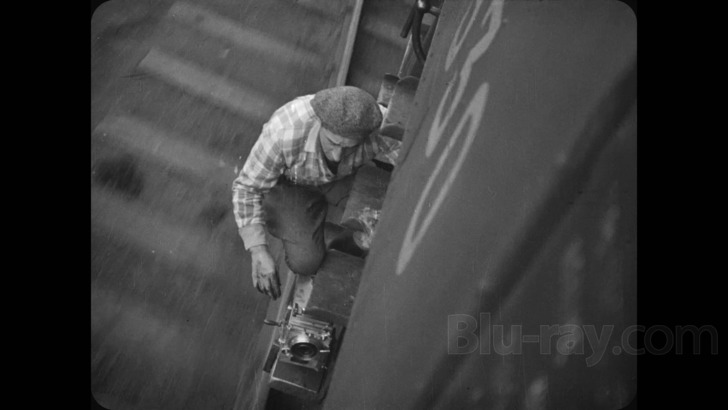
There is something deeply profound and inspiring about The Man with a Movie Camera. The fast-paced filmmaking feels ahead of it's time and the enthusiasm and excitement for what was still a growing medium is something to remind us all how far cinema has come in the decades since. A breathtaking documentary (named as the best documentary of all time by Sight and Sound) is an outstanding achievement. The Blu-ray features a stunning restoration of The Man with a Movie Camera, a superb lossless soundtrack, and a number of accompanying documentaries which are absorbing and essential. Without a doubt, an outstanding release. Highly recommended.