Dragon Tattoo Trilogy Blu-ray Movie
HomeDragon Tattoo Trilogy Blu-ray Movie 
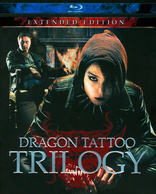
Extended Edition / The Girl with the Dragon Tattoo / The Girl Who Played with Fire / The Girl Who Kicked the Hornet's NestMusic Box Films | 2009 | 3 Movies | 540 min | Rated R | Dec 06, 2011

Movie rating
Movie has not been rated yetBlu-ray rating
| Users |  | 4.0 |
| Reviewer | | 4.0 |
| Overall | | 4.0 |
Overview
Dragon Tattoo Trilogy (2009)
The Dragon Tattoo Trilogy: Extended Edition, at 9 hours, is the most complete film version of Stieg Larsson's international best-selling books available, including over 2 hours of additional, never-before-seen feature content. This unique and extended mix of the original Swedish footage includes additional character development and narrative that more faithfully tracks the books. Previously only available in Europe, this final version is a must-see for Dragon Tattoo and Lisbeth Salander fans in the US.
| Thriller | 100% |
| Crime | 80% |
| Drama | 56% |
| Mystery | 49% |
| Foreign | 13% |
Specifications
Video
Video codec: MPEG-4 AVC
Video resolution: 1080p
Aspect ratio: 1.78:1
Original aspect ratio: 1.78:1
Audio
Swedish: DTS-HD Master Audio 5.1
English: Dolby Digital 5.1
Subtitles
English
Discs
25GB Blu-ray Disc
Four-disc set (4 BDs)
Playback
Region A, B (C untested)
Review
Rating summary
| Movie | | 4.0 |
| Video | | 4.0 |
| Audio | | 4.0 |
| Extras |  | 3.0 |
| Overall | | 4.0 |
Dragon Tattoo Trilogy Blu-ray Movie Review
Does size matter?
Reviewed by Jeffrey Kauffman December 4, 2011Nothing screams Christmas like murder, rape, misogyny and revenge tattooing, so it’s completely understandable why the powers that be chose December 21 for the upcoming release of the hotly anticipated English language version of The Girl With the Dragon Tattoo, directed by David Fincher and starring Daniel Craig. The publishing world had never seen anything quite like the Dragon Tattoo trilogy, and certainly not the fairly small and insular Swedish publishing industry, which found itself at a rather unlikely epicenter of worldwide fascination when Stieg Larsson’s “Millennium Series” became a sensation of unparalleled proportions. Larsson’s unexpected and untimely death (weirdly similar to another Larson’s—Jonathan— who experienced similar posthumous success with Rent) only seemed to up the interest level in the series, which had become such a phenomenon by the time the first filmed adaptation was in production that what had initially been planned as three long form made for television movies was rethought as three separate feature films. When the original novels were optioned for (small) screen adaptation, no one had any idea what a literary phenomenon they would become, but as soon as The Girl With the Dragon Tattoo stormed international best seller lists, the originally announced longer unedited versions of all three films were soon greenlit for broadcast in a number of European and Scandinavian countries. With the overwhelming success of the theatrical cut of The Girl With the Dragon Tattoo, the television films became a “must see TV” event which perhaps can only be appropriately compared (despite the obvious differences) to the United States’ fascination with Roots decades ago. Perhaps because the two other telefilms in the series were released prior to the theatrical cuts, the theatrical versions didn’t quite attain the overwhelming success that the first film did. The original theatrical versions were released on Blu-ray both separately and as a boxed set early in 2011, and now the really original extended television movie versions are being released to capitalize on the press which the Fincher film will no doubt generate once it hits multiplexes in a couple of weeks.
My colleague Dustin Somner did a great job summarizing the theatrical cuts of each title here:
The Girl with the Dragon Tattoo Blu-ray review
The Girl Who Played with Fire Blu-ray review
The Girl Who Kicked the Hornet's Nest Blu-ray review
This review will deal not only with general thoughts about the series but perhaps more importantly with at least some of the salient differences between the theatrical and the extended cuts. There are no doubt a couple of semi-spoilers included below, so those who aren’t familiar with the stories of the three films might want to jump to the technical aspects of the review if they don’t want any secrets to be divulged.
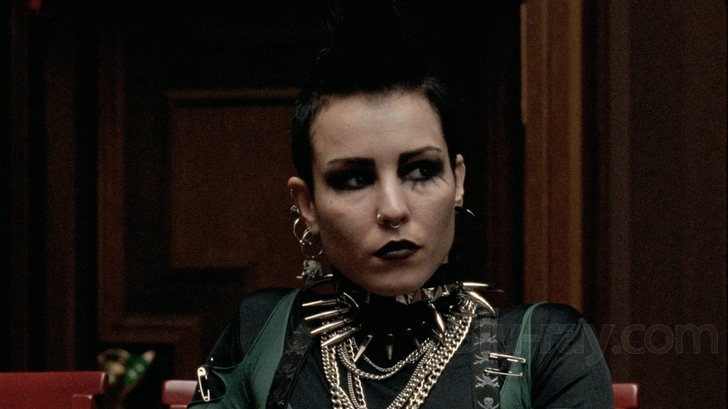
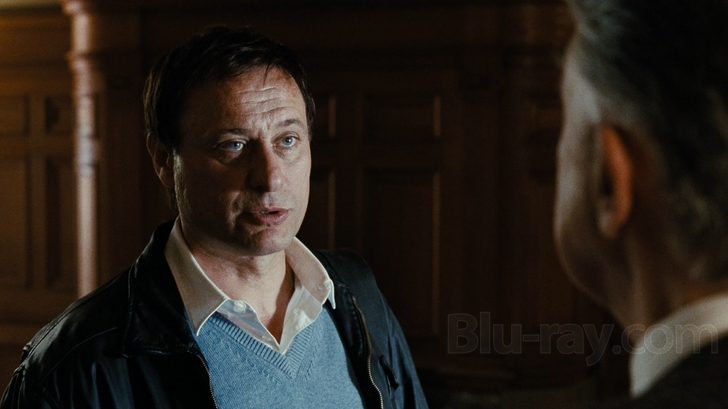
The two main characters of the Millennium Series are muckraking journalist Mikael Blomkvist (Michael Nyqvist), who as the trilogy gets underway finds himself in quite a bit of legal hot water after he's set up in an investigation and is found guilty of libel. Meanwhile professional computer hacker and undercover investigator Lisbeth Salander (Noomi Rapace) has been working to ferret out what really happened to Blomkvist. The two lives intersect when Mikael is hired to find out what happened forty years ago to a young girl who just mysteriously vanished one day. Blomkvist and Salander end up working together to disentangle two generations of family lies and duplicity as they attempt to understand what may be a massive cover-up of a serial murderer's horrific "career." The relationship continues to evolve and change through the subsequent films in the series.
The Girl With the Dragon Tattoo
Fans of the Millennium Series know that the original title of The Girl With the Dragon Tattoo was actually Men Who Hate Women, and without divulging any major secrets about the first outing’s plot, both the main villain of the piece as well as a character who takes advantage of heroine Lisbeth Salander certainly fit into that misogynist category. What is fascinating about this new longer cut of The Girl With the Dragon Tattoo, though, is how hero Mikael Blomkvist might be at least tangentially shunted into a class of women disrespecters if not outright haters as well. This telefilm's two episode version runs a total of 3:06:00 more or less (as do the other two outings), a little over a half hour than the already fairly long theatrical cut, and at least some of that time is taken up detailing Mikael’s less than chivalrous behavior with regard to Lisbeth. As the excellent overview documentary included on the fourth disc of this new set makes clear, Stieg Larsson probably wanted to be a character like Blomkvist, and so he created a dashing investigative journalist who had a way with women, but some of the behavior on display in this longer version borders on the cavalier, at the very least, and subtly recolors his burgeoning relationship with Lisbeth when compared to the theatrical cut.
The fascinating thing here is that the whole issue of trust between Lisbeth and Mikael (and really, between Lisbeth and anyone) is at the heart and soul of the Dragon Tattoo trilogy, for Lisbeth is one of the most fascinatingly complex, deeply scarred characters in contemporary fiction. Rapace is a marvel in this role, with an icy veneer of steel almost completely masking what is just barely evidently a glimmer of vulnerability inside. But this new extended cut gives Lisbeth some slightly added nuance, especially when she sees Mikael's obvious interest in other women.
There are a couple of other interesting additions here (it should be noted that all of the new "episodes" have different opening credits, much more like a traditional television series or miniseries, and that the second episodes of each of the trilogy feature quick recaps to bring the audience up to speed). The biggest one here, albeit handled fairly quickly, is the presence of a traitor in the ranks of Mikael's magazine "Millennium" (based on Larsson's own magazine "Expo," which you can actually see copies of lying around the offices of "Millennium" in some scenes scattered throughout the films).
The Girl Who Played With Fire
Part of the problem with developing a series which gets off to such an incredible start is keeping interest and logic progressing through the subsequent outings, and there’s a considerable drop-off in the second film. This isn’t to say that The Girl Who Played With Fire isn’t interesting enough, for it is, but it delivers little of the visceral excitement and palpable suspense that The Girl With the Dragon Tattoo did. The biggest issue with this middle outing is that Larsson decides to go a fairly typical “damsel in distress” route, though considering the fact that it’s Lisbeth who is that damsel, it seems a bit odd, given her steely demeanor and at least ostensible lack of vulnerability. Larsson stretches credulity a couple of times in The Girl Who Played With Fire, including a late in the story denouement about the relationship between two characters that seems like something out of an Agatha Christie novel by way of Douglas Sirk.
Despite the overly melodramatic tone which runs throughout The Girl Who Played With Fire, this second iteration does allow the character of Lisbeth to let down her guard—albeit very carefully—in a way which she simply never does in The Girl With the Dragon Tattoo. In one instance, this leads to devastating effects for a supporting character, but in another, perhaps more meaningful way, the relationship between Lisbeth and Mikael blossoms, however fitfully.
Despite this extended version running nearly an hour longer than the theatrical cut, there’s surprisingly little difference between the two versions. Perhaps the biggest difference is the cliffhanger ending given the first episode of the extended made for television version, one which deprives the audience of knowing the fate of two characters, a fate which is more or less simultaneously depicted in the theatrical cut after their lives are placed in jeopardy. There's also more development given to the policeman's involvement and his slow (or at least less inexplicable) change of heart when Lisbeth is sought on murder charges, as well as a bit more time spent on Lisbeth's Caribbean sojourn. The most interesting thing about this version is how scenes are shifted around in different order and cut differently when compared to the theatrical cut.
The fact that Part 1 of the telefilm version of The Girl Who Played With Fire ends with a cliffhanger points out the central issue with the series’ post-Dragon Tattoo offerings. They settle somewhat into formulaic tropes, made all the more odd by virtue of the fact that Lisbeth is such a distinctive and decidedly non-normative character. It’s literally like shoehorning a round peg into a square hole, and there are bound to be some rough edges to make that approach fit.
The Girl Who Kicked the Hornets’ Nest
Larsson descends into Ludlum-esque paranoia in this last installment in his series, and that makes The Girl Who Kicked the Hornets’ Nest in many ways the least credible of the series. Picking up from where The Girl Who Played With Fire left off, we find Lisbeth in less than robust health after her run in with a couple of bad guys, both of whom will continue to haunt her throughout this outing. The central plot arc concerns Lisbeth being put on trial for attempted murder, and yet so much is spinning around the troubled heroine, events which clearly show she’s in danger and is being framed, that it begs the question as to why someone somewhere (other than Mikael and his team, of course) doesn’t wake up and smell the Scandinavian coffee. The Girl Who Kicked the Hornets’ Nest also suffers from the odd dichotomy that plagued The Girl Who Played With Fire, namely that a heroine this obviously self sufficient and defiant could ever be in much peril to begin with.
If you can overcome what amounts to a gargantuan suspension of disbelief, The Girl Who Kicked the Hornets’ Nest is probably actually more viscerally exciting than The Girl Who Played With Fire, if never quite as involving as The Girl With the Dragon Tattoo. Once again, as with the second outing, Mikael and Lisbeth are separated for virtually the entire film, making the iconic match up which made the first film so memorable almost irrelevant in a way. Credulity is certainly strained here: the level of conspiracy enveloping Lisbeth is so over the top as to be positively silly (why not just kill the poor girl and save precious taxpayer dollars?). But once the conspiracy is established Hornets’ Nest is often quite exciting, especially once it moves to the endgame of the trial, when Lisbeth’s many (as in many) tormentors finally get their comeuppance.
As with the second set of episodes, Hornets’ Nest’s changes with regard to the extended version consist largely of reordered scenes, although a couple of subplots are given more development (again like The Girl Who Played With Fire), notably a malicious and threatening email campaign against Mikael’s coworker as well as a break-in at Mikael’s apartment which leads him to hiring the security firm which had once employed Lisbeth. There’s also more time spent detailing the rather massive conspiracy that’s at the heart of the story. A couple of extra beats are quite appealing, especially as the story wraps up. One of these is a quick montage featuring Lisbeth reuniting with her first guardian, and a perhaps more important, albeit discursive, one is the final shot of this version, which posits Lisbeth back in her perch in the bay window overlooking the serenity of the sea. The theatrical cut simply has a long shot of the sea itself, and there’s a certain feeling of resolution and peace for Lisbeth which seeing her ensconced there brings home to the viewer that wasn’t apparent from the theatrical version.
Dragon Tattoo Trilogy Blu-ray Movie, Video Quality
The Dragon Tattoo Trilogy Extended Version is presented on Blu-ray courtesy of Music Box Films, featuring AVC encoded 1080p transfers in 1.78:1. As with the theatrical cuts of these outings, The Girl With the Dragon Tattoo boast the overall sharpest image, with sometimes startling clarity and fine detail, especially in the ubiquitous close-ups of Mikael and Lisbeth, which reveal every pore or crag in their faces. The "new" material in the first episode doesn't suffer from any noticeable quality loss. The good news is that while there's a notable step down in clarity and sharpness with the next two episodes, it does appear that some color correction has been done this time around, for the overly orange tint that hobbled parts of The Girl Who Played With Fire has been considerably toned down for the telefilm version, or at least for this transfer. That said, for some reason grain is much more noticeable in the final two installments (the second two films were evidently done in Super 16mm rather than Super 35), sometimes coming perilously close to digital noise levels in some of the darker scenes. (Super 35 allows for the differing aspect ratios between the theatrical cut, originally 2.39:1 and released on Blu-ray in 2.35:1, and this 16x9 1.78:1 presentation). There is also slight, but sometimes noticeable, sharpness differences in at least some of the material which was not utilized for the theatrical cuts of the films. Overall, though, all three "films" (actually six miniseries episodes) look decently sharp, and in the case of Dragon Tattoo, rather spectacularly so, with excellent color, amazing depth of field and well above average fine detail.
Dragon Tattoo Trilogy Blu-ray Movie, Audio Quality

Unlike the original theatrical cut Blu-ray releases, this time we get lossless DTS-HD Master Audio 5.1 tracks for the original Swedish language versions (along with the same lossy Dolby Digital 5.1 English dub that accompanied the original releases). That's the good news. The surprising, if not overly bad, news is there isn't a whale of a lot of difference between the previously released Dolby Digital 5.1 Swedish tracks and the new lossless tracks simply by dint of the fact that there's not a whole bunch of over the top sonic activity going on in any of these films. There are some noticeable exceptions, and in some of the well placed sound effects, especially with some of the "shock" LFE added to jump cuts, there's a ferocious uptick in low end which helps to solidify the thriller aspect that lurks just beneath the surface of the trilogy. Surround activity is limited to mostly ambient effects like the roar of a motorcycle panning through the channels as it moves across the frame, but occasionally some nice foley effects dot specific channels and add at least a measure of immersion. Fidelity is top notch throughout all six episodes and dynamic range is similarly excellent.
Dragon Tattoo Trilogy Blu-ray Movie, Special Features and Extras
The same bonus disc that was included with the boxed set of the theatrical cuts is included here:
- Millennium: The Story (SD; 48:59) is a fascinating in-depth piece which gives a lot of background on Larsson (including interviews with his father and brother, as well as his publisher and agent) and how the property became such a phenomenon. The popularity of the books has led to an incredible uptick in tourism to Stockholm, and we follow a tourguide around to several of the sites mentioned in the book. Larsson's background as an investigative journalist is also explored, including his work to publicize the nascent neo-Nazi movement in Sweden, something which put his life in danger. There's some chilling footage of attacks on other journalists as well as horrifying anti-Semitic messages left on his home answering machine. Larsson's untimely death put the entire project in disarray, but after a brief break, the publisher went ahead and soon media rights were sold. Casting and production of the films is gone into in quite a bit of detail. The conflict over Larsson's estate after his death is also explored.
- Interview with Noomi Rapace (SD; 19:36). Rapace was an unknown when she was selected for the film, and she talks about her preparation for the role as well as how she needed to not be cowed by how iconic the character had become by the time the film was underway.
- Interview with Michael Nyqvist (SD; 13:06). Nyqvist was at least relatively better known than Rapace and he talks about how the role has catapulted him into the front ranks of Swedish actors.
- Interview with Cast and Crew (SD; 13:59) features Pelle Bolander, Thomas Lindblad, Micke Spreitz, Paolo Roberto, Georgi Staykov, Love Larsson, Kerstin Sundberg, Knut Pedersen, David Gylje, Peder Svensk, Anja Davidson, and Anna Carin Lock.
- Nidermann vs. Roberto (SD; 9:43) shows some fight scenes being staged.
- Trailers (HD; 6:19)
- Posters
Dragon Tattoo Trilogy Blu-ray Movie, Overall Score and Recommendation
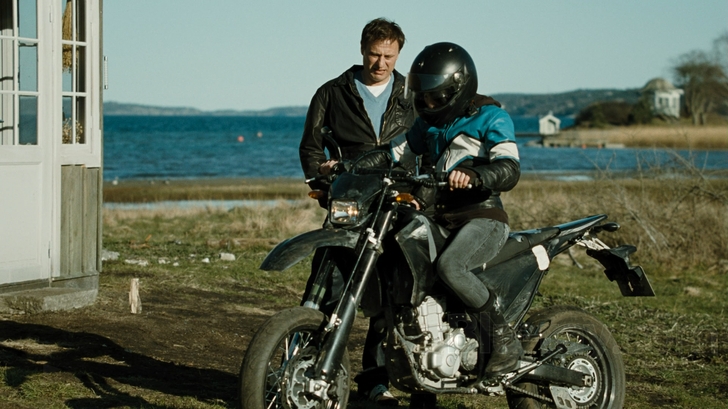
So let's cut to the chase: are these new extended versions worthwhile? That is going to depend largely on your point of view, not to state the obvious. Several people felt the first and third films in their theatrical cuts were too long already (each of them clocks in at around two and a half hours), so the added material in these extended versions is likely not to go down easily for those people, no matter what the intrinsic worth of the material itself. On the other hand those who read the original novels and missed at least some salient plot points are going to be delighted to find some of those points anyway addressed in these longer versions. As much as an intellectual exercise as it may be, what is really interesting for film buffs here is how the two versions utilize the same material in different ways, with completely reordered scenes and different edits within those scenes. If you're a rabid fan of the Dragon Tattoo franchise, chances are you're going to like if not love these extended versions. If you're just passingly interested in these films, you might want to stick with the theatrical cuts for relative brevity's sake. In terms of this release, while the dearth of any new supplemental material is a bit disappointing, the addition of lossless soundtracks is a plus, and overall this set comes Recommended.