Despiser Blu-ray Movie
HomeDespiser Blu-ray Movie 
Visual Vengeance | 2003 | 105 min | Not rated | Oct 22, 2024

Movie rating
6.7 | / 10 |
Blu-ray rating
| Users |  | 0.0 |
| Reviewer |  | 3.0 |
| Overall | | 3.0 |
Overview
Despiser (2003)
Having just been fired and dumped by his wife, life couldn't possibly be worse for independent artist GORDON HAUGE (Mark Redfield)--until he wrecks his car and finds himself in purgatory that is. Once there, he is attacked by fanatic Shadowmen and legions of Ragmen--souls being enslaved and bent to some dark purpose. Gordon is rescued by an eccentric band of freedom fighters, people from different times of history who lost their lives in noble sacrifice. They recruit the reluctant and befuddled Gordon and set off on a wild adventure through the surreal landscapes of purgatory to battle the Despiser--an evil being who now reigns in this seemingly God-abandoned halfway house north of hell and south of heaven. Dealing with shifting reality, annoying monsters, armies of Ragmen and hair-raising car chases across bridges spanning oceans of lava our heroes battle their way to the dark macabre fortress of the Despiser.
Starring: Mark Redfield, Enrique Castillo, Philip J. Cook, Greg Cooper (I), Richard DortonDirector: Philip J. Cook
| Horror | Uncertain |
| Fantasy | Uncertain |
Specifications
Video
Video codec: MPEG-4 AVC
Video resolution: 1080p
Aspect ratio: 1.33:1
Original aspect ratio: 1.33:1
Audio
English: Dolby Digital 2.0
Subtitles
None
Discs
Blu-ray Disc
Single disc (1 BD)
Playback
Region A (B, C untested)
Review
Rating summary
| Movie | | 3.0 |
| Video | | 3.0 |
| Audio | | 3.0 |
| Extras |  | 4.5 |
| Overall | | 3.0 |
Despiser Blu-ray Movie Review
Reviewed by Neil Lumbard October 23, 2026Despiser is the kind of ambitious, rough-edged genre experiment that makes underground science-fiction and horror cinema fascinating to explore. Blending cosmic horror, apocalyptic imagery, grotesque creatures, and an uncompromising independent filmmaking sensibility, the film takes up a strange corner of late-1990s cult cinema. Its appeal does not come from the typical polish one would expect, but rather its willingness to enter into the strange, embrace surreal imagery and an end-of-the-world atmosphere that the mainstream genre productions rarely reached for.
A release from Visual Vengeance allows you to revisit the unusual piece of independent filmmaking presented in a format designed for cult-film enthusiasts. The label's focus on preserving and presenting obscure genre titles makes Despiser one worth examining for those who appreciate ambitious low-budget filmmaking, practical creature effects, and films that take chances where their limitations are on display.

Written, directed, produced, and shaped by filmmaker Philip J. Cook, Despiser follows Gordon Hauge (Mark Redfield), an artist who has his life thrown into disarray when he loses his job and his wife. After a car accident, Gordon finds himself in a surreal version of Purgatory, where he is surrounded by monstrous beings, embattled souls, and a resistance movement determined to oppose a terrifying entity known as the Despiser. Gordon joins the fight, discovering that the struggle between these forces has consequences that extend well beyond his own immediate circumstances.
The premise provides Cook with an opportunity to blend several genres into one unusual cinematic experience. There's elements of apocalyptic science fiction, supernatural horror, post-apocalyptic action, dark fantasy, and even a little bit of offbeat humor. Gordon's afterlife experience allows the filmmaker to disregard the normal rules of physical reality and create a world where historical figures, bizarre creatures, supernatural threats, and heavily armed warriors can exist together.
What makes Despiser interesting is its ambition. This is not a production trying to conceal its modest resources by telling an intimate story in a handful of locations. Cook imagines a sprawling supernatural conflict, complete with otherworldly environments, elaborate digital backdrops, and fantastical creatures. The scale of the concept is far larger than the resources one would expect from a microbudget independent production, and that disparity between ambition and available resources is integral to the film's identity.
Gordon's personal crisis gives the story a human point of entry. Finding himself in Purgatory, Gordon is thrust into circumstances that are far more extraordinary than the problems that initially overwhelmed him. The narrative then gradually transforms his misfortune into an adventure involving sacrifice, survival, and the potential to find renewed purpose. Despite being uneven, the central concept gives the picture a recognizable emotional foundation beneath its extravagant genre trappings.
Cook's approach is deliberately unconventional. The dialogue, performances, editing, and transitions between environments are not always of the quality one would expect from larger productions. Certain scenes feel like they belong to different kinds of movies, and the shifts in tone can be startling. However, the unpredictability is part of its cult appeal, and Despiser has a restless quality, constantly introducing another creature, location, conflict, or visual idea before the previous one has settled down.
The performances are earnest, even as the material becomes outlandish. Mark Redfield anchors the picture as Gordon, while Doug Brown, Gage Sheridan, and the supporting cast help populate the strange world around him. The actors approach the supernatural conflict with a seriousness that allows the story to move forward. The dramatic delivery is often theatrical, but this fits the production's heightened, almost comic- book sensibility.
Ultimately, Despiser is a film whose imagination is more consistent than its execution. Some ideas work better than others, and the technical limitations are impossible to ignore. However, there is something admirable about a filmmaker attempting to realize such an expansive vision without the resources normally associated with this kind of science-fiction spectacle. For cult-film collectors, that creative determination is part of the appeal.
The visual effects are central to Despiser, and they will be the reason viewers either embrace or reject the film. Cook relies heavily on computer-generated imagery, green-screen photography, and digitally constructed environments to create his version of Purgatory. These techniques give the picture an unmistakably early-2000s appearance, particularly with respect to modern digital effects work.
The computer graphics are frequently crude by modern standards. Some creatures have a distinctly artificial appearance, while certain backgrounds lack the depth and integration that audiences have come to expect. The compositing can also make the actors look disconnected from their surroundings. Viewers accustomed to photorealistic digital environments may find these shortcomings to be distracting.
However, judging Despiser purely in the context of modern blockbusters misses an important part of its appeal. Cook is using the digital tools at his disposal to imagine a world that would have been difficult to achieve with conventional location photography. His approach is an experimental mix of independent filmmaking, video-game imagery, and graphic-novel aesthetics. The artificiality is conspicuous, but it also gives the movie a strange visual identity.
There is a certain fascination in watching a filmmaker attempt to create an entire supernatural mythology through a mix of modest physical sets and digital environments. Rather than limiting the story to what could be easily photographed, Cook repeatedly reaches for something bigger. The results are inconsistent, but the ambition remains evident.
The production's action sequences benefit from this anything-goes approach. Armed resistance fighters, supernatural adversaries, and fantastical landscapes provide the picture with an energetic, sometimes chaotic rhythm. Its world is not always fully realized, but it rarely feels ordinary.
The most rewarding way to approach the effects is to consider them within the context of independent genre filmmaking at the time. Despiser is a fascinating artifact of an era when accessible digital tools were opening up possibilities for filmmakers who could not afford traditional Hollywood-scale effects. Its limitations are part of its historical interest, while its more inventive moments showcase what determination and experimentation can do with limited resources.
Despiser Blu-ray Movie, Video Quality
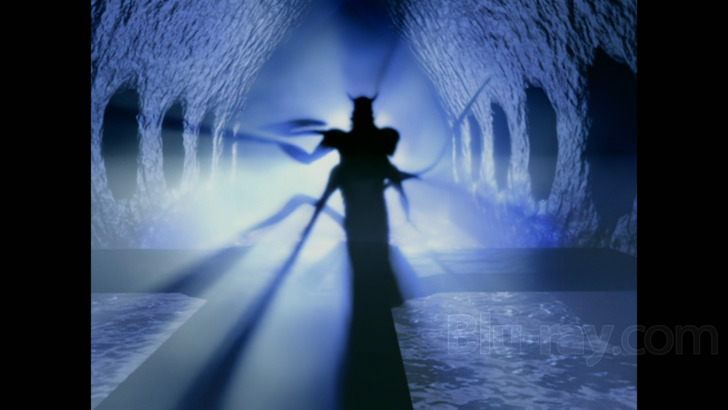
Visual Vengeance presents Despiser using a director-supervised standard-definition master prepared from the original tape elements. Although the release is encoded on Blu-ray in high definition, this is not a new high-definition scan of film elements. The underlying source remains standard- definition video, and the presentation retains the characteristics of the original production.
That distinction is important when evaluating the transfer. Blu-ray provides a more convenient and potentially stable means of preserving and presenting the material, but it cannot restore picture information that was never captured by the original source. Fine detail is therefore limited, and the image can look soft compared with material shot on film or produced using more advanced digital cameras.
Nevertheless, the transfer offers a worthwhile opportunity to revisit the film. The colorful, artificial environments are represented reasonably well, with the production's deliberately exaggerated visual palette remaining key to the experience. Black levels are serviceable, and the overall presentation is watchable within the constraints of the source material.
The effects-heavy sequences also present their own challenges. Digital backgrounds, green-screen compositions, and computer-generated creatures already expose the shortcomings of the production's original techniques. A Blu-ray presentation cannot eliminate those issues, and the underlying standard-definition material limits the image's ability to deliver the fine textures and definition associated with a native high-definition master.
This is not a release to purchase for reference-grade image reproduction. Viewers expecting razor-sharp detail, exceptional dimensionality, or the kind of visual refinement that comes with a modern restoration would need to adjust their expectations. The important consideration is that the disc is preserving the film's existing visual character and not pretending it was made with resources it did not have.
For a title such as Despiser, source limitations are an important part of the discussion. The movie's visual effects, compositing, and unusual environments are integral to its identity, and a preservation-minded presentation allows audiences to experience those elements as a dedicated physical release while keeping the original production's limitations visible.
Visual Vengeance deserves credit for making the film available on Blu-ray and for working with a director-supervised master. The result is best understood as a preservation-oriented upgrade for an obscure cult title, and its limitations are best understood in that context. Collectors should approach the video presentation with realistic expectations, but those who appreciate independent genre cinema will find value in having the film represented on a dedicated disc.
Despiser Blu-ray Movie, Audio Quality

The Blu-ray includes an English Dolby Digital 2.0 soundtrack. As with the video, the audio presentation reflects the limitations of the original production. This is a stereo presentation rather than a modern multichannel mix, so viewers should not expect expansive surround effects or an elaborate soundstage. Instead, the soundtrack focuses on dialogue, music, and the sound effects that accompany the film's supernatural action.
Dialogue intelligibility is the most important consideration, and the available stereo mix is generally serviceable. The performances remain understandable while the music helps sustain the picture's unusual atmosphere. The soundtrack's more modest presentation is consistent with the production's independent origins, and the stereo format is appropriate to the source.
The music is particularly important to the film's identity. With its mix of apocalyptic imagery, supernatural conflict, and unconventional action, Despiser needs a score that can help unify its disparate elements. The music contributes to the film's momentum, and it adds additional character to its surreal environments.
There are inevitable limitations in dynamic range, spatial presentation, and overall refinement. The soundtrack does not offer the depth or separation expected from a contemporary high-budget production, but that is not a reasonable benchmark for this title. The more useful question is whether the audio is listenable, and whether the disc provides a dependable way to experience the original soundtrack. The audio sounds decent considering source limitations.
Visual Vengeance delivers a functional presentation, and the inclusion of a French-language option and English subtitles also provides viewers with additional ways to experience the film. For collectors, the audio is a practical preservation feature rather than an example of high-resolution sound.
Despiser Blu-ray Movie, Special Features and Extras

A substantial collection of archival material, commentaries, and physical collectibles are included.
One of the strongest reasons to consider the Visual Vengeance Blu-ray is the generous selection of bonus material. The label has compiled a package that treats this obscure production as more than a disposable curiosity, offering viewers the opportunity to explore how the film was conceived, produced, and completed. The release's extras are documented in contemporary reviews and the distributor's announcement.
The disc's principal supplements include:
Commentary with Director Philip J. Cook and Actors Mark Redfield and Gage Sheridan
The director and cast members discuss the production, their characters, the filmmaking process, and the creative decisions behind the finished movie.
Commentary with Sam Panico of B&S About Movies and Bill Van Ryn of Drive-In Asylum
The genre-film commentators offer a separate perspective on the movie and its place within independent cult cinema.
2023 Interview with Director Philip J. Cook and Actor Mark Hyde (HD, 14:15)
This interview provides additional retrospective insight from the filmmaker and one of the film's performers.
The Making of Despiser (SD, 15:36)
An archival featurette that examines the production, including the use of green screens, the digital effects, and the challenges of creating the film's unusual environments.
Deleted Scenes (SD, 10:14)
Additional footage that allows viewers to explore material omitted from the final cut.
Blooper Reel (SD, 4:12)
A lighter look at the production and the moments when the cast and crew did not quite maintain the film's supernatural seriousness.
Outtakes Reel (SD, 12:43)
Further behind-the-scenes material for viewers interested in the filmmaking process.
Despiser: Storyboard to Animation (SD, 2:59)
A short supplement that compares storyboards with the animation and imagery used in the finished picture.
Original DVD Menu Animated Intro (SD, 00:17)
A welcome archival inclusion for viewers interested in the film's earlier home-video presentation.
Behind the Scenes Gallery (SD, 1:19)
Production photographs and related material.
Image and Art Gallery (SD, 1:29)
Additional visual material associated with the film.
Despiser Producer Trailer (SD, 1:44)
Despiser Visual Vengeance Trailer (SD, 1:20)
Outerworld Trailer (SD, 1:08)
Invader Trailer (SD, 1:34)
Promotional material for Despiser, Visual Vengeance, Outerworld, and Invader.
The commentaries are particularly valuable for a film whose production methods are so closely tied to its appeal. Cook's involvement provides the opportunity to understand the practical decisions that were made for the movie's digital environments, while the cast can provide a different perspective on performing within a production built around effects and imaginary surroundings.
For fans of independent filmmaking, the making-of material is arguably the most revealing supplement. The film's ambitious visuals naturally prompt questions about how its environments were created, how the actors worked against green screens, and how Cook brought everything together. Behind-the-scenes footage and retrospective discussion help illuminate the effort that went into the production.
The storyboard-to-animation featurette is another appealing inclusion because it addresses the process of transforming an idea into a finished visual sequence. It provides a glimpse into how the film's imagery was developed, and helps put its unusual effects in the context of the creative process.
The deleted scenes, outtakes, and blooper reel provide less formal but still worthwhile additions. Together, they give the disc a sense of completeness, and allow viewers to spend more time with a production that might otherwise remain an obscure entry in the independent landscape.
Not every supplement will be equally compelling to every viewer. Those looking for extensive historical documentation may find some materials to be relatively brief, and viewers who are familiar with the film will gravitate towards the commentaries and archival footage. Nevertheless, the breadth of the collection is impressive for a title of this profile.
Visual Vengeance understands that a physical-media release can provide more than the feature film itself. For collectors, the packaging and supplementary items are part of the pleasure of owning a release, particularly when the title is an obscure independent production that might be difficult to find.
The Despiser Blu-ray includes several physical extras designed to evoke the era of VHS collecting. These include a folded mini-poster, a reversible sleeve featuring the original VHS artwork, a two-sided insert with alternate artwork, and a sheet of vintage-style VHS stickers. A limited-edition slipcase featuring artwork by Andrei Bouzikov was available with the first pressing.
The reversible artwork is particularly fitting. Despiser belongs to a tradition of independent genre filmmaking in which home-video distribution was essential to finding an audience. Including the original VHS art acknowledges that history, and gives collectors an alternative presentation for their shelves.
The sticker sheet is a playful touch. Rather than treating the release as a generic catalogue title, Visual Vengeance leans into the tactile nostalgia of video-store culture. These items may not affect the movie's technical quality, but they give the physical edition personality.
The first-pressing slipcase is also worth mentioning for collectors, although its availability will depend on the seller and remaining stock. Anyone purchasing the disc specifically for that packaging should confirm what is included rather than assuming that every copy will comes with the limited- edition materials.
The overall package demonstrates why boutique Blu-ray labels are important to physical-media enthusiasts. Their releases can preserve films that might otherwise receive little attention, providing them with the artwork, contextual material, and tangible presentation that help sustain interest in cult cinema.
Despiser Blu-ray Movie, Overall Score and Recommendation
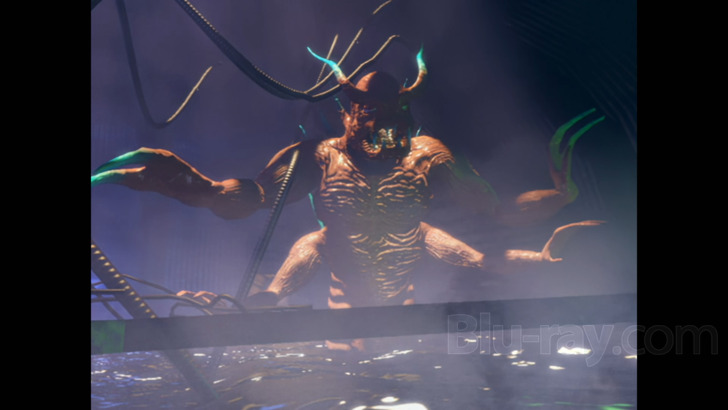
Despiser is a strange, ambitious, and frequently rough-edged science-fiction and horror hybrid that deserves to be considered on its own terms.
The Visual Vengeance Blu-ray is a welcome opportunity to discover or revisit this unusual production. The director-supervised standard-definition master does not turn the film into a high-definition showcase, but it provides a dedicated physical presentation of a title that benefits from being preserved. The stereo soundtrack is serviceable, and the extensive bonus material offers genuine value for anyone interested in independent genre filmmaking.
The special features are a major attraction. The commentaries, making-of featurette, retrospective interview, deleted scenes, outtakes, and archival galleries provide a useful window into the production. The reversible artwork and mini-poster further reinforce the release's appeal to collectors.
This is not a Blu-ray for viewers who demand technical perfection or polished blockbuster filmmaking. It is for those who enjoy exploring the fringes of genre cinema, discovering ambitious productions made outside the mainstream, and appreciating the creative ingenuity that can come out of limited resources.
Similar titles
Similar titles you might also like

Saint Bernard
2013

Black Mamba
2016

Shanks 4K
Standard Edition
1974

Troll
1986

Bad Biology
2008

The Company of Wolves 4K
Collector's Edition
1984

The Boneyard
1991

Tender Dracula
Tendre Dracula / La grande trouille
1974

Rumpelstiltskin
Collector's Edition
1995

Warlock III: The End of Innocence
1999

Warlock: The Armageddon
1993
Dark Floors
The Lordi Motion Picture
2008

Puppet Master 4
1993

Subspecies
20th Anniversary Edition
1991

The Mortuary Collection
2019

Wolvesbayne
2009

Subspecies 4: Bloodstorm
Remastered
1998

Puppet Master 5
1994

Lady in White
1988

The Black Waters of Echo's Pond
2009