Delirium: Photo of Gioia 4K Blu-ray Movie
HomeDelirium: Photo of Gioia 4K Blu-ray Movie 
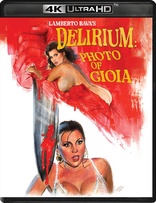
Le foto di Gioia / Slipcover in Original Pressing / 4K Ultra HD + Blu-rayVinegar Syndrome | 1987 | 94 min | Not rated | Sep 09, 2024
Price
List price:Listed on Amazon marketplace

Movie rating
6.6 | / 10 |
Blu-ray rating
| Users |  | 0.0 |
| Reviewer |  | 4.5 |
| Overall | | 4.5 |
Overview
Delirium: Photo of Gioia 4K (1987)
This spaghetti horror's storyline revolves around a former hooker (Grandi) running a successful men's magazine. An obsessed admirer systematically slaughters her models (occasionally increasing the magazine's output) and supplies the mistress with pictures of their disfigured corpses taken in front of her semi-nude posters visible in the background. Is she going to be the psycho's next victim?
Starring: Serena Grandi, Daria Nicolodi, Vanni Corbellini, David Brandon (II), George EastmanDirector: Lamberto Bava
| Horror | Uncertain |
| Foreign | Uncertain |
| Mystery | Uncertain |
| Thriller | Uncertain |
Specifications
Video
Video codec: HEVC / H.265
Video resolution: 4K (2160p)
Aspect ratio: 1.85:1
Original aspect ratio: 1.85:1
Audio
Italian: DTS-HD Master Audio 2.0 (48kHz, 24-bit)
English: DTS-HD Master Audio 2.0 (48kHz, 24-bit)
Subtitles
English SDH
Discs
Blu-ray Disc
Two-disc set (2 BDs)
4K Ultra HD
Packaging
Slipcover in original pressing
Playback
Region A, B (C untested)
Review
Rating summary
| Movie |  | 3.0 |
| Video | | 4.5 |
| Audio |  | 4.0 |
| Extras | | 4.5 |
| Overall | | 4.5 |
Delirium: Photo of Gioia 4K Blu-ray Movie Review
Reviewed by Brian Orndorf December 26, 2024Yes, 1987’s “Delirium” is a giallo. There’s a mysterious killer on the loose. Victims die in increasingly elaborate ways. The filmmakers invest in color and style to bring the feature to life. That’s all well and good, but the production doesn’t seem thoroughly invested in the process of bringing suspense to life. What “Delirium” primarily becomes is a showcase for star Serena Grandi’s physical appearance, as director Lamberto Bava is mostly focused on getting the actress out of her clothes as much as possible. Sure, danger is out there, and business affairs to tend to. But there’s time for sheer outfits and nudity as well, and the supporting cast also contributes bareness to this sexploitation endeavor. The film isn’t the greatest example of thriller moviemaking, but it has the one goal in mind, impressively making sure this display of flesh is handled with care.
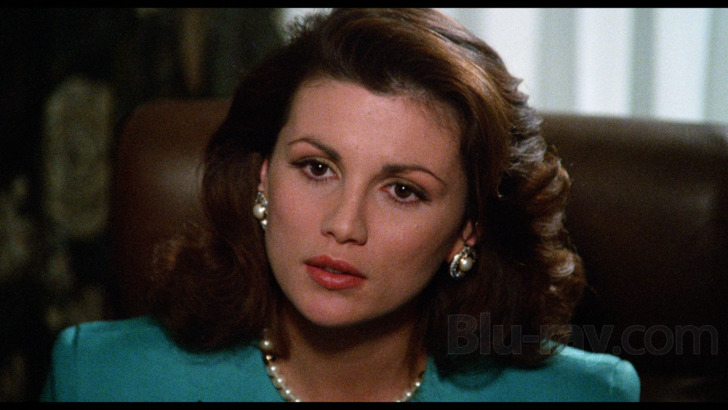
Gioia (Serena Grandi) has inherited control of Pussycat Magazine after the death of her husband. She’s supported by employees, including her brother, Tony (Vanni Corbellini), and manager, Evelyn (Daria Nicolodi), overseeing her empire as it endures attacks from Flora (Capucine), a publishing rival. Gioia is also dealing with Mark (Karl Zinny), a physically disabled neighbor who loves to spy on her and torment the widow over the phone. Making her life even worse is murder, as someone is killing off Pussycat Magazine models, photographing the results. Gioia is tangled up in the mess as police investigate, but she finds time to rekindle romance with Alex (George Eastman), her old lover.
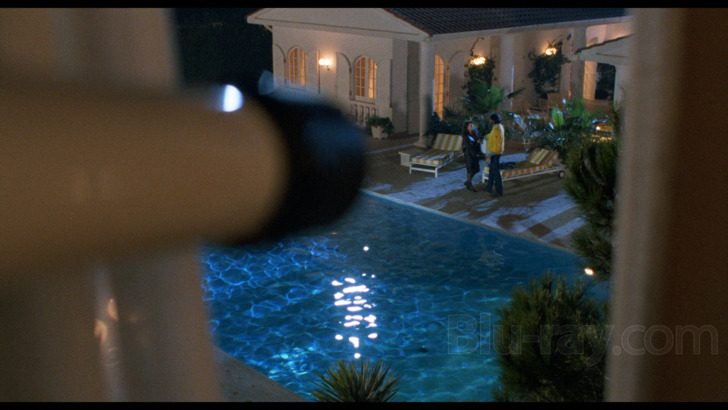
Gioia is having a rough week, but she’s a character who thrives on power, newly achieving dominance after taking control of Pussycat Magazine. “Delirium” spends time on the character’s daily challenges, including the management of staff and business battles with Flora, who’s losing the war in the world of adult periodicals. There’s the Mark situation as well, finding the young creep making lascivious phone calls to Gioia, also watching her through a telescope and occasionally pulling out a rifle, aiming it at her friends and employees. This being an Italian production from the 1980s, she does nothing about the harassment despite being fully aware of Mark’s insanity. He ends up one of many red herrings in the screenplay, as the writing puts in a minimal effort when it comes to misdirection, surrounding Gioia with unhinged people.
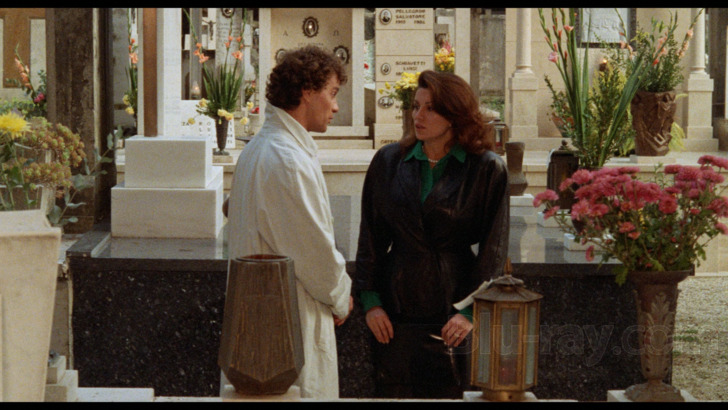
“Delirium” arranges a series of murders meant to shred Gioia’s nerves. Bava delivers thriller set pieces throughout the picture, adding a touch of the surreal via bizarre makeup additions on the victims to convey the killer’s warped mind. It’s an interesting idea that’s not sold with enough emphasis by the production, but weirdness registers in the feature, as one of the models is dispatched via bee attack, making for a memorable moment. Kills are consistent, and Gioia is often tormented by unseen threats, terrified at a cemetery and a movie studio, which is also the setting for her reunion with Alex. The ex-lover’s function in the script is to help Gioia out of her many outfits, and Bava carefully photographs Grandi’s body, almost turning her chest into a supporting character.
Delirium: Photo of Gioia 4K Blu-ray Movie, Video Quality
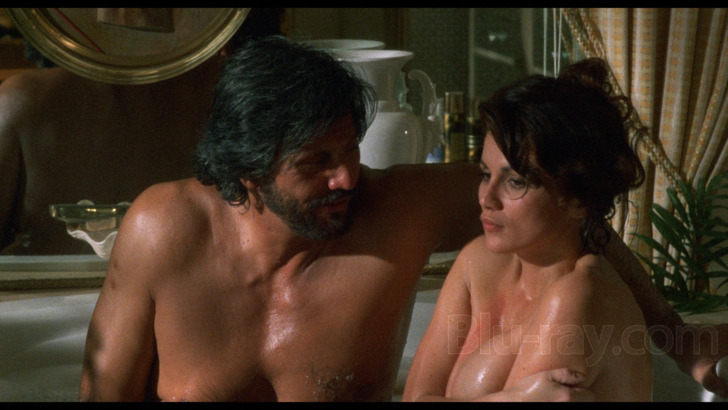
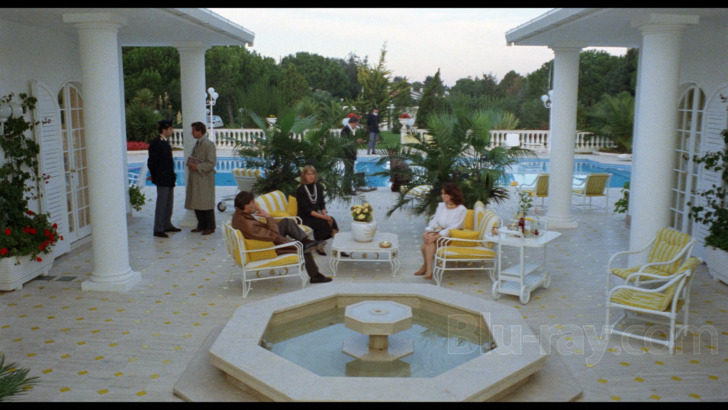
Screencaps are taken from the Blu-ray.
"Delirium" makes its way to a UHD release, listed as "presented in HDR and newly scanned and restored from its 35mm original camera negative." It's
an extremely colorful movie, and hues are vivid during the viewing experience. Lighting efforts are distinct, delivering crisp reds for suspense cues, and
interior design provides a nuanced appreciation for hues, along with clothing choices. Skin tones are natural. Blacks are deep, and highlights are
tasteful. Detail supplies a textured look at skin particulars and costuming, which often retains intended sheerness. Office and living spaces explore
decorative additions, and exteriors are dimensional. Grain is nicely resolved. Some mild damage is observed, resulting in a few slightly focus-challenged
scenes.
Delirium: Photo of Gioia 4K Blu-ray Movie, Audio Quality
The 2.0 DTS-HD MA mix provides an "Italian stereo" listening experience for "Delirium." Dubbed changes are mostly clear, losing nothing to unintelligibility, but some elements of age are present. Scoring delivers a decent synth sound, supporting suspense sequences. Sound effects are blunt but appreciable.
Delirium: Photo of Gioia 4K Blu-ray Movie, Special Features and Extras
- Commentary features film historian Eugenio Ercolani and Troy Howarth.
- "Nightmare Delirium" (40:59, HD) is a making-of, featuring interviews with director Lamberto Bava, actor Luigi Monteflori, art director Antonello Geleng, and cinematographer Gianlorenzo Battaglia. Bava sets the tone of the conversation, admitting he has a "love/hate relationship" with the movie. Star Serena Grandi is analyzed, as a few comment on her less than perfect performance, as she was hired when bigger names passed on the project (Monteflori is definitely not a fan). Artistic choices with color and surreal makeup are identified, and locations are inspected. Monteflori also lays into Bava, describing him as a "half-man" while ridiculing his professional and personal ways. Praise is reserved for the supporting cast, who delivered as promised, including Sabrina Salerno, who was featured in a bee attack sequence, suffering a nasty sting in the process. A few creative achievements are highlighted, and Bava reflects on the cult appeal of "Delirium."
- "Meet the Photographer" (16:34, HD) is an interview with actor David Brandon, who recalls his career in the 1980s, remining in-demand. Describing his character in "Delirium" as "not terribly interesting," Brandon still committed to the role, enjoying time with director Lamberto Bava. Co-star Serena Grandi is remembered, and Brandon is mostly positive about the actress, recognizing her place as a sex symbol. Professional challenges are identified, including stunt work and characterization.
- "Peeping Karl" (16:58, HD) is an interview with actor Karl Zinny, who began acting as a teenager, recalling highlights from his formative years. The interviewee eventually met director Lamberto Bava on "Demons," also detailing the filming experience. Zinny claims he can't "remember any particular anecdotes" about the making of "Delirium," preferring to discuss other offerings from the oeuvre, including "Don Bosco," "Voglia Di Rock," and "Act of Sorrow."
- "Two Meters of Fear" (16:55, HD) is an interview with actor Luigi Montefiori, who recalls his early years of acting, learning from respected instructors, entering a film industry focused almost exclusively on westerns, claiming the pseudonym "George Eastman." More challenging parts entered his life, putting him in contact with respected directors, and Montefiori began a screenwriting career. Professional highlights are discussed, and the topic of "Delirium" is eventually raised, but next to nothing is shared about it outside of Montefiori admitting he made "idiotic films" for easy paychecks.
- "Those Who Bite and Those Who Don't" (23:32, HD) is an interview with first assistant director Roberto Palmerini, who tracks the development of his career in the 1970s, even working on Nicolas Roeg's "Don't Look Now." Thoughts are shared about a number of features, and the interviewee builds to a point about directors, noticing who and who doesn't have the skills necessary to make an interesting movie. For "Delirium," Palmerini was already used to director Lamberto Bava, tasked with becoming an acting coach for star Serena Grandi, and he discusses her co-stars, only abruptly stopping himself before he reaches Sabrina Salerno. Thoughts on technical achievements and the state of the industry are also offered.
- "Dressing Gioia" (19:49, HD) is an interview with costume designer Nicoletta Ercole, who befriended star Serena Grandi, brought on to "Delirium" to help manage her looks in the film. The interviewee explores her relationships with other members of the cast and crew. Inspirations and opinions dominate the conversation, and Ercole discusses changes in the industry over the last 50 years. As for "Delirium," there's not much in the way of enlightenment offered here.
- "Inside Delirium" (12:50, HD) is an archival interview with art director Antonello Geleng.
- "Snapshots of a Murder" (18:51, HD) is an archival interview with director Lamberto Bava.
- "Stories from the Bathtub" (8:58, HD) is an archival interview with actor Luigi Montefiori.
- "Murders in Red and Blue" (8:32, HD) is an archival interview with cinematographer Gianlorenzo Battaglia.
- Additional Archival Interviews (SD) include director Lamberto Bava (12:42), actor David Brandon (12:14), and actor Luigi Montefiori (8:40).
- A Trailer has not been included on this release.
Delirium: Photo of Gioia 4K Blu-ray Movie, Overall Score and Recommendation
"Delirium" stays alive though sharp technical achievements, as Bava keeps color active while exploring interesting sets. And Grandi is never without a new outfit, maintaining style throughout the endeavor. As a chiller, the film doesn't have much intensity, leaving frights limited to strange attacks, and the mystery itself doesn't contain dramatic power. As a sleazy understanding of B-movie experiences, "Delirium" is far more confident, motivating Bava to make sure nudity is prioritized, chased by elements of perversion. It's an uneven mix of shock and sensuality, but it's never boring.


Similar titles
Similar titles you might also like

Tenebrae 4K
Standard Edition
1982
Deep Red 4K
Profondo rosso
1975

The Bird with the Crystal Plumage
L'uccello dalle piume di cristallo | Remastered
1970

Torso 4K
I corpi presentano tracce di violenza carnale | Carnal Violence | Limited Edition
1973

Slaughter Hotel
La bestia uccide a sangue freddo / Asylum Erotica
1971

Sleepless 4K
Non ho sonno / Slipcover in Original Pressing
2001

Who Saw Her Die?
Chi l'ha vista morire?
1972

The Strange Vice of Mrs. Wardh
The Next Victim / Lo strano vizio della signora Wardh
1971

Gore in Venice
Giallo in Venice / Giallo a Venezia
1979

Phenomena 4K
Standard Edition
1985

What Have You Done to Solange?
Cosa avete fatto a Solange?
1972

Death Walks on High Heels
Special Edition | La morte cammina con i tacchi alti
1971

Death Walks at Midnight
Special Edition | La morte accarezza a mezzanotte
1972

Blood and Black Lace
Sei donne per l'assassino
1964

Cat in the Brain
Un gatto nel cervello | Glow in the Dark Cover & Mini Portrait of Lucio Fulci Limited Edition to 3000
1990

Strip Nude for Your Killer
Nude per l'assassino
1975

Inferno
1980

The Cat o' Nine Tails 4K
Il gatto a nove code | Special Edition
1971

Evil Eye
Featuring The Girl Who Knew Too Much / La ragazza che sapeva troppo
1963

Seven Blood Stained Orchids
Sette orchidee macchiate di rosso
1972