Crescendo Blu-ray Movie
HomeCrescendo Blu-ray Movie 
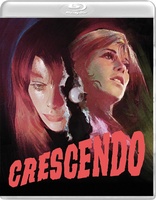
Slipcover in Original PressingVinegar Syndrome | 1970 | 95 min | Not rated | Nov 24, 2026 (4 Days)

Movie rating
5.9 | / 10 |
Blu-ray rating
| Users |  | 0.0 |
| Reviewer |  | 4.0 |
| Overall | | 4.0 |
Overview
Crescendo (1970)
Drawn to the spectacular south of France to research the late composer Henry Ryman, music student Susan Roberts (Stefanie Powers) encounters his son, drug-addicted Georges (James Olson) and his eccentric family. Investigating the haunting strains of an unfinished Ryman concerto leads Susan to discover an empty piano… and a brutally savaged mannequin! Georges tells her she’s the lookalike of his lost love. But Susan may not be the only one at the villa with an eerie doppelgänger. Famous for their gory horror tales, British studio Hammer Films shows a subtler side with this romantic, atmospheric thriller, available here in its Unedited International Version.
Starring: Stefanie Powers, James Olson, Margaretta Scott, Jane Lapotaire, Joss AcklandDirector: Alan Gibson
| Horror | Uncertain |
| Thriller | Uncertain |
Specifications
Video
Video codec: MPEG-4 AVC
Video resolution: 1080p
Aspect ratio: 1.67:1
Original aspect ratio: 1.66:1
Audio
English: DTS-HD Master Audio 2.0 Mono (48kHz, 24-bit)
Subtitles
English SDH
Discs
Blu-ray Disc
Single disc (1 BD)
Packaging
Slipcover in original pressing
Playback
Region A (B, C untested)
Review
Rating summary
| Movie |  | 3.5 |
| Video |  | 4.5 |
| Audio | | 4.0 |
| Extras | | 4.0 |
| Overall | | 4.0 |
Crescendo Blu-ray Movie Review
Reviewed by Brian Orndorf November 19, 2026After building an empire during their run in the 1960s, Hammer Films entered the next decade on shakier creative ground. Audience tastes were changing, and the movie industry was shifting, requiring the company to consider other elements of fright to explore. Part of this journey was 1970’s “Crescendo,” which inspects a young woman’s experience during a research trip to France, coming into contact with the extremes of a family that’s battling mental and physical illness while trying to welcome an outsider. Screenwriters Jimmy Sangster and Alfred Shaughnessy attempt to form a mystery out of only a few elements of confusion, playing the long game with a story of obsession that doesn’t fill the run time, coming up a little short on suspense. Director Alan Gibson (“Dracula A.D. 1972,” “The Satanic Rites of Dracula”) steps up with lively work, putting in the effort to energize as much of the movie as possible, helping to turn something potentially uneventful into a passable chiller that also delves into Hammer’s interest in saucier material to hold viewer attention.
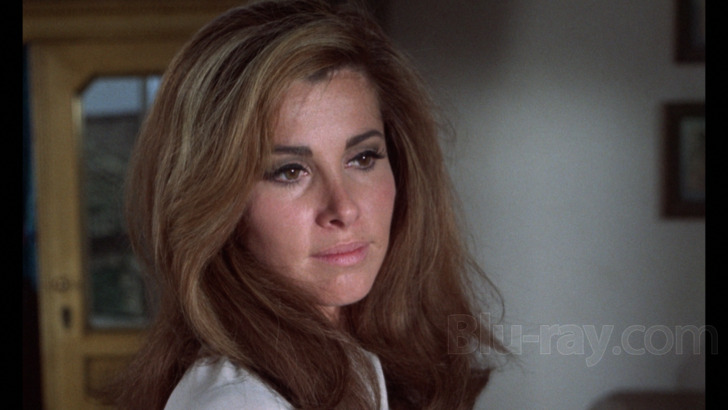
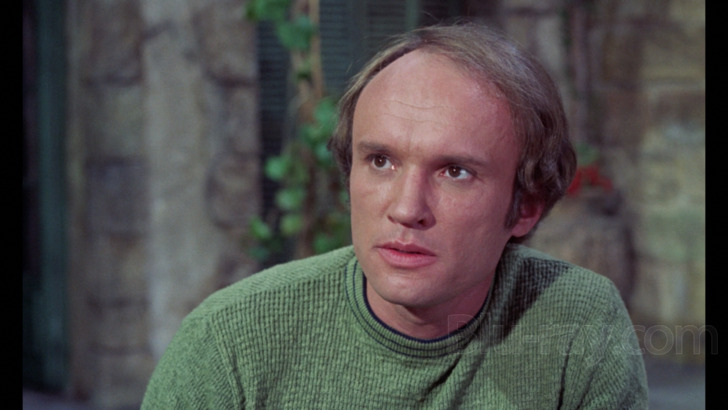
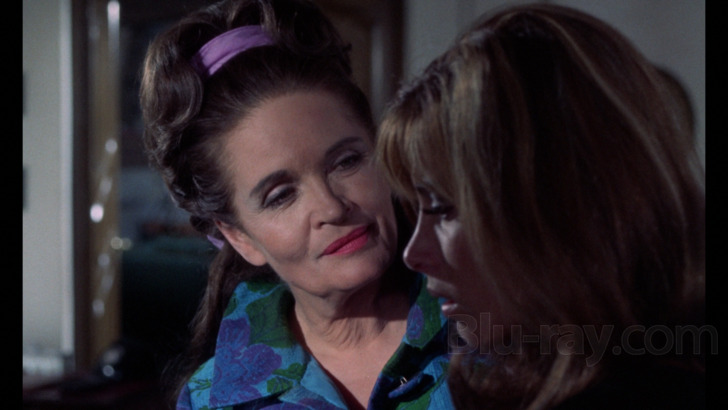
Susan (Stefanie Powers) has traveled to France to continue her thesis work on Henry Ryman, a classical composer with a mighty legacy, hoping to compete her master’s degree with information that could only come from his family. She’s welcomed into his estate, with widow Danielle (Margaretta Scott) excited to have Susan around, helping her to unearth information that could add to her research. Daniella is joined by her son, Georges (James Olson), who is left in a wheelchair after surviving an accident years ago, which claimed the life of his great love, Catherine. Carter (Joss Ackland) is the butler of the house, keeping things in order, and Lillianne (Jane Lapotaire) is the maid, handling daily needs. Susan is excited to be surrounded by so much history, but her trunk of clothes hasn’t arrived, offered old outfits from Danielle, and she’s unsure about the atmosphere of the dwelling, with Georges occasionally playing piano to keep music alive. He’s also interested in getting to know the new arrival, gradually revealing his personal history and pain, which helps to bring Susan in closer. Secrets in the house are gradually revealed to Susan, who’s faced with enigmatic addictions and relationships as she processes all that’s around her, unsure who to trust as her stay continues.
“Crescendo” returns to nightmare imagery throughout the feature, highlighting Georges and his battle with a mystery man pointing a shotgun at him during vulnerable moments with his lover. The sequences provide the makings of a mystery in the picture, keeping viewers in the dark as the writing begins to introduce characters and their backstories. Susan is the outsider, entering a household that initially seems functional, welcomed warmly by Danielle, who’s delighted to have the American in her home. Georges is also gentle with the guest, trying to ease her entrance into the estate, while Carter and Lillianne provide colder reactions to her presence. “Crescendo” sets up a tale of academic inspection, putting Susan on the path to learn more about Henry, offered access to manuscripts and letters by Danielle. However, this aspect of the plot goes away early, replaced by interpersonal issues as Susan is exposed to the reality of various relationships.
“Crescendo” has a decent pull during its opening act, finding tensions in the estate to examine, especially between Georges and his mother, who’s openly critical of his piano playing as he tries to live up to his father’s influence. We learn about his past accident and the presence of Danielle in his life, and Susan is offered fancy clothes to help keep her presentable while her own outfits are seemingly lost. There’s uneasiness to these connections, getting “Crescendo” up and running as Susan investigates more of the property. The second act begins to expose what’s happening, as Georges can’t seem to function without being injected with a mysterious substance, keeping him docile. And Lillianne is much more than a maid, maintaining a master plan for power as she works on her seductive qualities, giving the production a chance to add sexuality and nudity to the endeavor, spicing it up.
“Crescendo” deals with dark pasts and Susan’s curiosity. It’s not a hard-charging thriller in the least, taking an hour before a dead body arrives to make things real for the main character. The writing enjoys detailing toxicity from most of the characters, along with increasing Susan’s fear factor, but it doesn’t apply enough pressure on viewers with dangerous events and reveals. Gibson works hard to keep his camera moving and master interesting compositions, giving “Crescendo” a pleasing visual presence that helps to summon as much energy as possible with writing that eventually disappoints.
Crescendo Blu-ray Movie, Video Quality
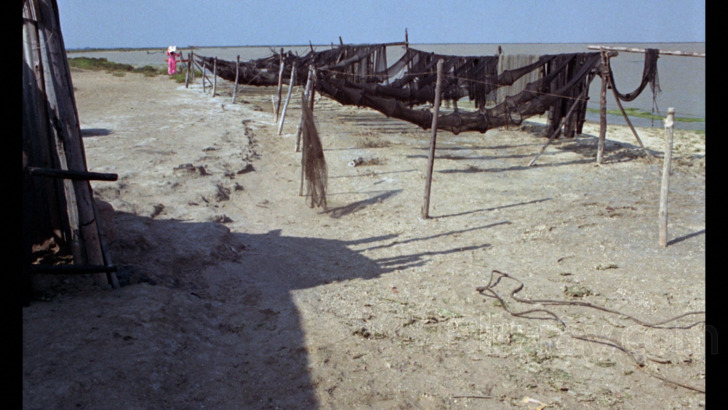
The image presentation for "Crescendo" is listed as "newly scanned and restored in 2K from its 35mm interpositive." Color is especially appealing here, with bright primaries found throughout the viewing experience, including strong blues and reds. Fashion choices bring out sharper pinks, and the cooler appearance of the stone estate is preserved. Greenery is distinct, and skin tones are natural. Detail is agreeable, examining varied skin particulars on the cast and their various states of undress. Wispy hairstyling is also open for inspection. Living spaces maintain depth, along with activity around the central pool area. Exteriors are limited to just a few sequences, but offer dimension. Delineation is satisfactory, handling evening activity. Grain is nicely resolved. Source is in good condition, with some brief areas of damage encountered.
Crescendo Blu-ray Movie, Audio Quality
The 2.0 DTS-HD MA mix provides clear dialogue exchanges, following performance choices and balancing argumentative outbursts, with faint elements of age. Scoring maintains defined instrumentation, leading with jazzier moods. Suspense is also appropriately emphasized. Sound effects are appreciable.
Crescendo Blu-ray Movie, Special Features and Extras
- Commentary features film historians Vic Pratt and William Fowler.
- "Starting Out" (14:12, HD) is an interview with assistant sound editor Geoffrey Mackrill.
- "Coda" (13:34, HD) is a dual interview with clapper loader Mike Brewster and production manager Hugh Harlow.
- "Hammer Time" (22:38, HD) is an appreciation piece from author Matthew Sweet.
- "Notes on a Theme" (32:13, HD) is an appreciation piece from film historian David Huckvale.
- Image Gallery (1:59) collects poster art, press kit pages, and film stills.
- And a Theatrical Trailer (2:41, SD) is included.
Crescendo Blu-ray Movie, Overall Score and Recommendation
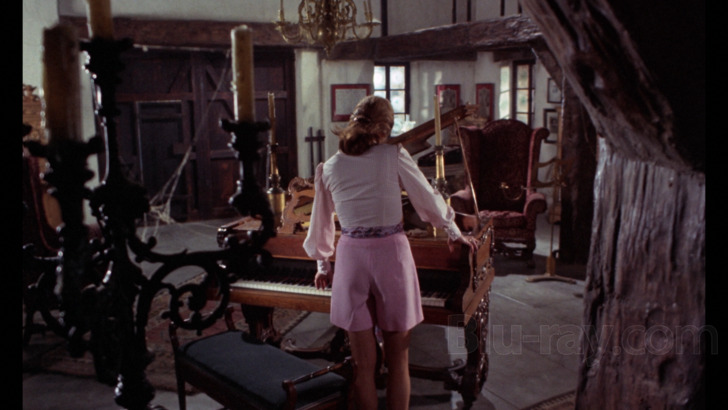
While "Crescendo" doesn't build to a gripping conclusion, it still works for the most part, helped greatly by the performances, with the actors capturing dramatic details and stern looks to assist the writing's interest in forming personality puzzles. Olson is especially capable in his part, asked to play a range of emotions as Georges is particularly troubled by the world around him, and there's chemistry with Powers, who's tasked with playing confused for most of the run time. The ensemble does something with the material, getting "Crescendo" to places of panic, which is interesting to see. It's not a particularly forceful viewing experience, but it locates pockets of misery and domination to liven things up, helping the overall effort achieve periodic cinematic power when dealing with a particularly dysfunctional household.