Child's Play Blu-ray Movie
HomeChild's Play Blu-ray Movie 
Cinématographe | 1972 | 100 min | Rated PG | Jan 28, 2025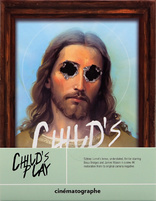
Price
Movie rating
6.6 | / 10 |
Blu-ray rating
| Users |  | 4.0 |
| Reviewer | | 4.0 |
| Overall | | 4.0 |
Overview
Child's Play (1972)
There is an outbreak of violent behavior at the exclusive Catholic boarding school for boys, where Joe Dobbs is a popular English instructor and Jerome Malley is a widely-disliked Latin and Greek teacher. When Malley begins to receive threatening notes and phone calls, he assumes that Dobbs is the caller.
Starring: James Mason (I), Robert Preston, Beau Bridges, Ron Weyand, Charles WhiteDirector: Sidney Lumet
| Drama | Uncertain |
| Mystery | Uncertain |
Specifications
Video
Video codec: MPEG-4 AVC
Video resolution: 1080p
Aspect ratio: 1.85:1
Original aspect ratio: 1.85:1
Audio
English: DTS-HD Master Audio 2.0 Mono (48kHz, 24-bit)
Subtitles
English SDH
Discs
Blu-ray Disc
Single disc (1 BD)
Playback
Region A (C untested)
Review
Rating summary
| Movie |  | 3.0 |
| Video |  | 5.0 |
| Audio | | 4.0 |
| Extras |  | 3.5 |
| Overall | | 4.0 |
Child's Play Blu-ray Movie Review
Reviewed by Brian Orndorf February 15, 2025Of course, the title “Child’s Play” conjures images of a horror franchise that’s arguably carried on for far too long. However, before such genre entertainment arrived in 1988, there was a Broadway play by Robert Marasco, which explored the growing unrest inside a Catholic boarding school as two teachers deal with their differences and the kids have gone a little crazy as the academic year carries on. Screenwriter Leon Prochnik and director Sidney Lumet take on the responsibility of a screen adaptation, and 1972’s “Child’s Play” is mostly content to resemble the stage production, putting focus on the actors as the story surveys darkness creeping into a holy place. It’s an unusual tale of paranoia and torment, sold particularly well by the cast, who truly dig into the disease of the plot and maintain a few of its mysteries. Overall, the endeavor isn’t terribly gripping, but it retains moments of fiery confrontation and ambiguity to keep viewers invested in a central crisis of concern.
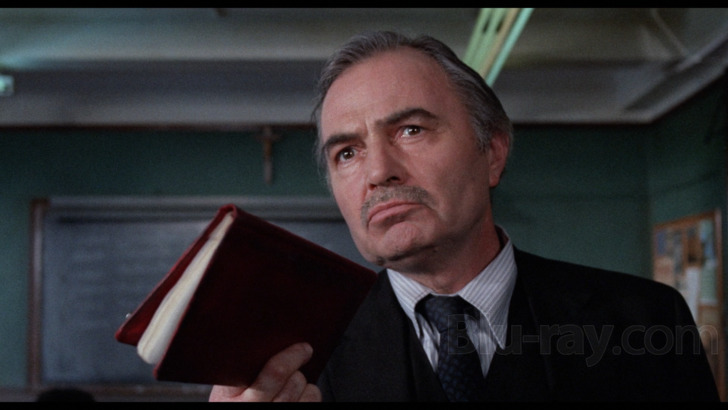
The St. Charles School for Boys usually goes about its business without incident. The juniors love English teacher Joseph (Robert Preston), a charismatic and energetic man who cares for his students, trying to make his work engaging. He’s the opposite of Jerome (James Mason), a troubled Latin teacher who’s earned the nickname “lash” for his strict disciplinarian ways, refusing to take it easy on teen boys who will act up if given any opportunity to do so. New to the staff is Paul (Beau Bridges), a former student at St. Charles who’s back to teach gym and coach the basketball team, excited to be around his school again, refreshing his relationship with Joseph. While Paul settles into his new job, he’s hit by a shocking revelation that the students are engaging in strange violence, attacking certain classmates with escalating aggression, and they refuse to explain why. Jerome also struggles, facing the imminent loss of his elderly mother, and he battles with unknown tormentors who work to make him miserable, believing that Joseph is behind such hostility.
“Child’s Play” introduces school issues during an opening scene that finds the students holding one of their own down in their bed, cutting him with a knife and using the blood to create a cross on their forehead. Why this incident occurred is the first of a few mysteries in the story, as witnesses refuse to talk and victims tend to deny any harm. This tension continues throughout the picture, but more time is spent around the faculty, getting to know Joseph, a dramatic teacher of English who enjoys his relationships with the adolescents, earning their respect as he keeps his classroom lively. He’s the only reasonably trustworthy adult in the school for many of the kids, making him the opposite of Jerome, who carries himself sternly and freely hands out punishments, resulting in detentions and suspensions. “Child’s Play” is most interested in the raw rub between the educators, with Jerome particularly disdainful of Joseph, resenting his permissiveness and protection of teens who show little respect for anything.
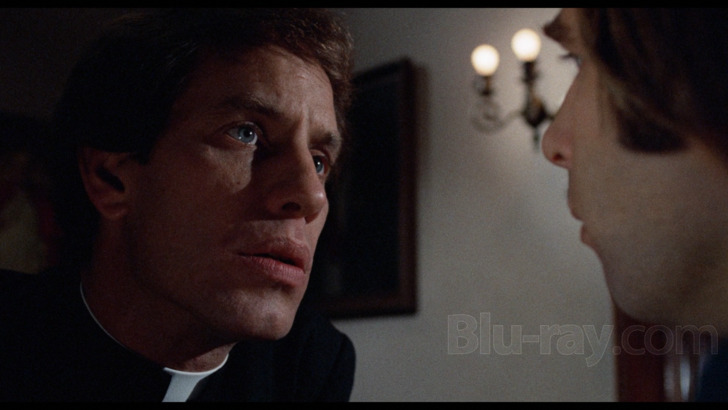
Paul arrives early in “Child’s Play,” becoming something of an audience surrogate as he returns to his school experience, tasked to make a quick impression. Instead of routine, Paul faces moments of shock as attacks continue, including one student who loses an eye after being left alone with his classmates. There’s power in these charged scenes, and Lumet stages with them with welcome strangeness and menace, turning hostility into the most interesting moments of the picture. The opening half of “Child’s Play” gradually builds a sense of threat and it handles the increasing itchiness of Jerome, who’s not taking the loss of his mother well, led to an emotional explosion by unknown pranksters making sure to transform his life into a living Hell. The writing explores additional supporting characters, as the priests at St. Charles aren’t exactly saints, but it primarily narrows down to a look at the relationship between Jerome and Joseph, which carries a lot of resentment and concern to mine as the situation at the school worsens.
Child's Play Blu-ray Movie, Video Quality
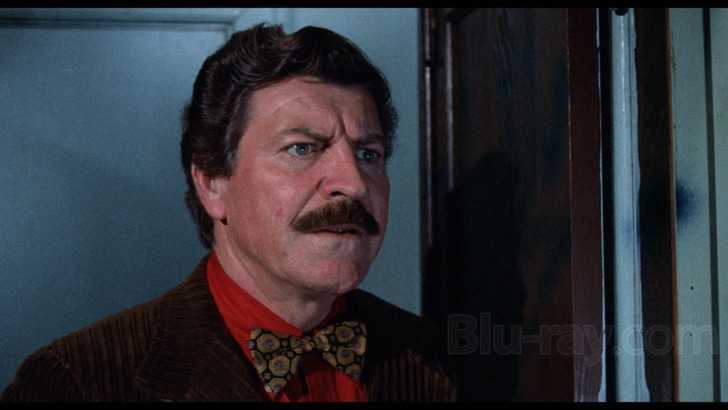
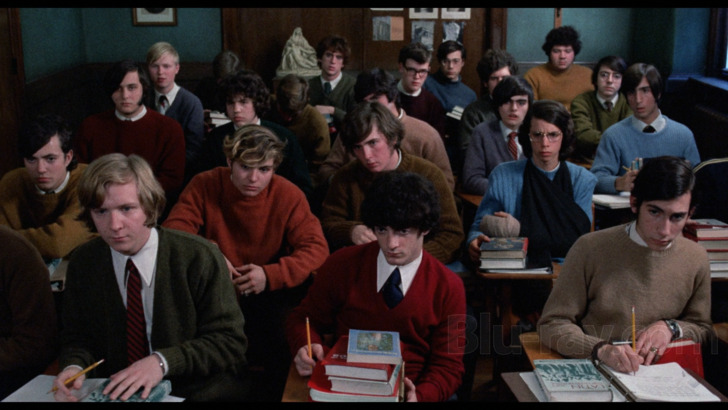
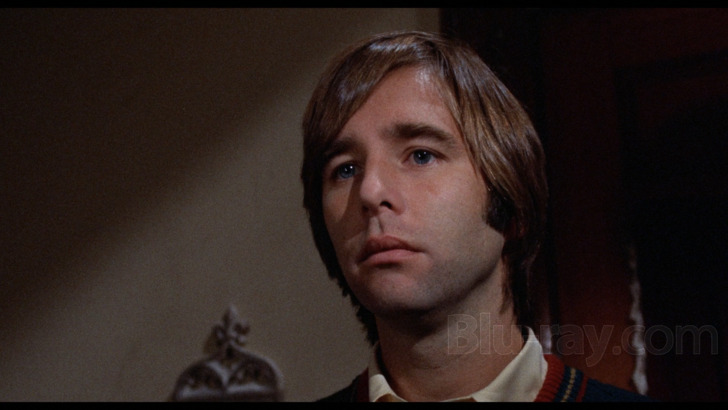
The AVC encoded image (1.85:1 aspect ratio) presentation for "Child's Play" is listed as "a brand new 4K restoration from its original camera negative." The viewing experience retains a wonderfully film-like appearance, offering heavier grain that's pleasingly resolved. Detail is strong, exploring intense skin particulars on the cast and their varied ages and hairstyles. Costuming is fibrous, detailing the thickness of educator outfits and holy uniforms. Exteriors are a rare event, but retain depth. Interiors maintain dimension, permitting a look at room decoration and chapel expanse. Colors are sharp, delivering a cooler sense of school life with grays and browns. Deep reds are memorable with lighting, and skin tones are natural. The blackness of certain outfits is preserved. Delineation is satisfactory. Source is in good condition.
Child's Play Blu-ray Movie, Audio Quality
The 2.0 DTS-HD MA mix secures decent dialogue exchanges. Performance choices and dramatic intensity is preserved, hitting a few very slight level dips, which may be an inherent issues with the sonically chaotic feature. Scoring supports with clear instrumentation, and volume levels involving the music also appear deliberate, often raised to compete with the cast. Sound effects are basic but appreciable.
Child's Play Blu-ray Movie, Special Features and Extras
- Booklet contains essays by Mitchell Beaupre, Patrick Dahl, and Madelyn Sutton.
- Commentary features film historian Adrian Martin.
- "Designing Lumet" (14:46, HD) is an audio interview with production designer Philip Rosenberg, who describes his boss as "supremely intelligent," initially meeting on "The Anderson Tapes," moving quickly to put the production in motion with some level of personality. Winning over Lumet, Rosenberg was offered the "Child's Play" gig, sharing memories of when Marlon Brando was originally attached to star in the film, also challenged to somewhat replicate the original theatrical presentation of the material. The interviewee details his work on locations around Marymount Secondary School, putting in long hours on the feature. Creative choices are identified, finding Lumet attempting to plan out as much of the shoot as possible, also relying on his technical knowledge to maintain pace to the production day.
- "The Charlie Rose Show" (42:29, SD) features guest Sidney Lumet, who's promoting his 2006 release, "Find Me Guilty."
- "One Step Further: Becoming Lumet" (57:01, HD) is a video essay by Daniel Griffith.
- "Play to Strengths" (8:59, HD) is a video essay by Daniel Kremer.
- "One Stop on the Road to 'Serpico'" (8:32, HD) is a video essay by Daniel Griffith.
- A Theatrical Trailer has not been included on this release.
Child's Play Blu-ray Movie, Overall Score and Recommendation
Instead of developing suspense, "Child's Play" sticks with its theatrical foundation and delivers a series of monologues in its second half, which doesn't do much to capture the growing tension in the school. The material deflates as it goes, but it does retain a somewhat puzzling conclusion worth a deeper thematic inspection. And the performances are excellent, unleashing Preston's dramatic energy and Mason's potent portrayal of a full-body unraveling. "Child's Play" has its issues, including an absurdly overbearing score by Michael Small, but it never falters when it focuses on acting.


Similar titles
Similar titles you might also like

Wake in Fright
1971

Secret Sunshine
밀양 / Milyang
2007

Graduation
Bacalaureat
2016

Certain Women
2016

Black Narcissus
1947

Personal Shopper
2016

The Hunt
Jagten
2012

The Class
Entre les murs
2008

Picnic at Hanging Rock 4K
Director's Cut
1975

Burning
버닝 / Beoning
2018

Bigger Than Life
1956

Suddenly, Last Summer
Limited Edition to 3000
1959

The Salesman
Forushande
2016

Equus
1977

Simon Killer
2012

The Servant
1963

Tommaso
2019

The Forbidden Room
2015

The Souvenir
2019

Identikit
The Driver's Seat
1974