Chicago: Quadio Blu-ray Movie
HomeChicago: Quadio Blu-ray Movie 
Blu-ray AudioRhino Music | 1969-1976 | 459 min | Not rated | Jun 17, 2016
Price
List price:Listed on Amazon marketplace

Movie rating
7.1 | / 10 |
Blu-ray rating
| Users |  | 0.0 |
| Reviewer |  | 4.5 |
| Overall | | 4.5 |
Overview
Chicago: Quadio (1969-1976)
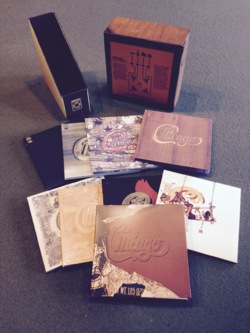
8 Chicago albums plus their Greatest Hits in High Resolution Stereo and original Quadraphonic mixes: Chicago Transit Authority, Chicago, Chicago III, Chicago V, Chicago VI, Chicago VII, Chicago VIII, Greatest Hits, Chicago X. This lavish celebration of the Windy City’s favorite band is housed in a rigid two-piece box, with every album presented in a replica sleeve promised to “replicate the original release down to the last detail, including mini-posters, and the iron-on that came with Chicago VIII.
Starring: Peter Cetera, Robert Lamm, Terry Kath| Music | 100% |
Specifications
Audio
English: DTS-HD Master Audio 2.0 (192kHz, 24-bit)
English: DTS-HD Master Audio 4.0 (192kHz, 24-bit)
Discs
Blu-ray Disc
Nine-disc set (9 BDs)
Playback
Region A (B, C untested)
Review
Rating summary
| Movie | | 4.5 |
| Video | | 0.0 |
| Audio |  | 5.0 |
| Extras | | 0.0 |
| Overall | | 4.5 |
Chicago: Quadio Blu-ray Movie Review
Critic's Choice.
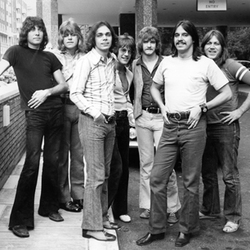
Reviewed by Jeffrey Kauffman June 29, 2016If you’re of a certain age (ahem), you may remember when Chicago (the band, not the city) was Chicago Transit Authority (the band, not the public transportation system), and in fact you may also remember when the band was considered a kind of hanger on to what was then Columbia Records’ “main” brass inflected jazz-rock ensemble, Blood, Sweat and Tears. When the first Chicago album, Chicago Transit Authority, was released in the spring of 1969, the second B,S&T album (named Blood, Sweat & Tears) was already a recording phenomenon, having risen to the top of the album charts and also having produced a number of pop hits (“You've Made Me So Very Happy”, “Spinning Wheel”), as well as a number of nascent “standards” for the then emerging album oriented rock format (their haunting version of Erik Satie's "Gymnopodies" was a radio stalwart back in the day). What a difference a couple of years made, though. By the early seventies, Blood, Sweat & Tears had largely lost its chart mojo, undergoing a series of personnel changes (including the ultimately temporary but initially devastating loss of lead singer David Clayton-Thomas). The slightly renamed Chicago, however, suddenly became the “it” band featuring brass, at least within the burgeoning jazz-rock-pop genre that it is rightly appreciated as having pioneered. Along with the rise of jazz-rock bands featuring a brass section, one of the vagaries of recording history technology turned out to be the simultaneous rise of quadraphonic audio, and Chicago was at the forefront of this once promising, later discarded, and now rediscovered format. Rhino has released a rather stunning set whimsically entitled Chicago Quadio, which offers nine albums which had discrete four track masters (Chicago IV, the multi-album live package from Carnegie Hall, was never available in quad and is not included here).
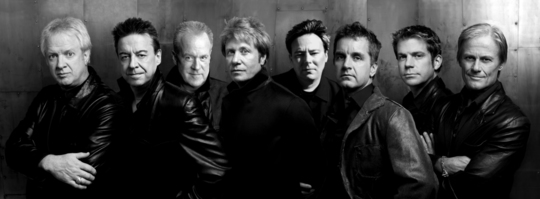
Joel Whitburn’s fantastic Billboard resources make it quite clear what Chicago (and/or Chicago Transit Authority) was up against in its first year or so on the national stage. 1969 saw three of Blood, Sweat and Tears’ singles get to Number 2 on the pop charts (in addition to the two listed above, there was also their ebullient cover of Laura Nyro’s fantastic “And When I Die”), with “Spinning Wheel” also claiming the top spot on the Adult Contemporary (AKA Easy Listening) chart for two weeks. Chicago’s chart success, with singles at least, was considerably less impressive, with only “Questions 67 and 68” cracking the Top 100 at a relatively lowly "high point" of 71 for a mere three weeks. That said, the actual first album managed to get into the Top 20, ultimately going double platinum.
By 1970, however, the bands’ trajectories had begun to change places, and by the time of Chicago III in 1971, the band was a certified smash (it’s no coincidence that during this period Columbia re-released some of the tunes off of Chicago Transit Authority, including “Questions 67 and 68”, to considerably more chart success than they originally encountered). While the Carnegie Hall multi-album set (AKA Chicago IV) may have slightly diffused the band’s momentum, at least from a singles angle, many fans (including this one) find the hat trick of Chicago V, Chicago VI and Chicago VII the high point artistically of the band’s (relatively) early years, providing a glut of pop classics and some very innovative other material.
Chicago had an uncanny knack for plying unforgettable pop hooks while also offering jazz fans at least hints of unusual voicings and arranging proclivities, and there were regular forays into harder rocking material as well, often courtesy of Robert Lamm’s chunky keyboard work. While Peter Cetera later got a bit of blowback for his supposedly homogenized vocal stylings (I still remember MTV video jock Mark Goodman acerbically calling him “danger man” one day), there’s little doubt that Cetera’s clear tenor elevated a lot of Chicago’s most memorable tunes. Terry Kath’s somewhat bluesier vocals gave the band a grittier edge and probably appealed more to those who favored rock.
The albums included in this set are:
Chicago Transit Authority
- Introduction
- Does Anybody Really Know What Time It Is?
- Beginnings
- Questions 67 and 68
- Listen
- Poem 58
- Free Form Guitar
- South California Purples
- I’m a Man
- Prologue, August 29, 1968
- Someday (August 29, 1968)
- Liberation
- Movin' In
- The Road
- Poem for the People
- In the Country
- Wake Up Sunshine
- Make Me Smile
- So Much to Say, So Much to Give
- Anxiety's Moment
- West Virginia Fantasies
- Colour My World
- To Be Free
- Now More Than Ever
- Fancy Colours
- 25 or 6 to 4
- Prelude
- A.M. Mourning
- P.M. Mourning
- Memories of Love
- It Better End Soon: 1st Movement
- 2nd Movement
- 3rd Movement
- 4th Movement
- Where Do We Go From Here
- Sing a Mean Tune Kid
- Loneliness is Just a Word
- What Else Can I Say
- I Don't Want Your Money
- Flight 602
- Motorboat to Mars
- Free
- Free Country
- At the Sunrise
- Happy 'Cause I'm Going Home
- Mother
- Lowdown
- A Hard Risin' Morning Without Breakfast
- Off to Work
- Fallin' Out
- Dreamin' Home
- Morning Blues Again
- When All the Laughter Dies in Sorrow
- Canon
- Once Upon a Time. . .
- Progress?
- The Approaching Storm
- Man vs. Man: The End
- A Hit by Varese
- All is Well
- Now That You've Gone
- Dialogue (Part One)
- Dialogue (Part Two)
- While the City Sleeps
- Saturday in the Park
- State of the Union
- Goodbye
- Alma Mater
- Critics' Choice
- Just You 'N' Me
- Darlin' Dear
- Jenny
- What's This World Comin' To
- Something in This City Changes People
- Hollywood
- In Terms of Two
- Rediscovery
- Feelin' Stronger Every Day
- Prelude to Aire
- Aire
- Devil's Sweet
- Italian from New York
- Hanky Panky
- Life Saver
- Happy Man
- (I've Been) Searchin' So Long
- Mongonucleosis
- Song of the Evergreens
- Byblos
- Wishing You Were Here
- Call On Me
- Women Don't Want to Love Me
- Skinny Boy
- Anyway You Want
- Brand New Love Affair - Part I & II
- Never Been in Love Before
- Hideaway
- Till We Meet Again
- Harry Truman
- Oh, Thank You Great Spirit
- Long Time No See
- Ain't It Blue?
- Old Days
- 25 or 6 to 4
- Does Anybody Really Know What Time It Is?
- Colour My World
- Just You 'N' Me
- Saturday in the Park
- Feelin' Stronger Every Day
- Make Me Smile
- Wishing You Were Here
- Call On Me
- (I've Been) Searchin' So Long
- Beginnings
- Once or Twice
- You Are On My Mind
- Skin Tight
- If You Leave Me Know
- Together Again
- Another Rainy Day in New York City
- Mama Mama
- Scrapbook
- Gently I'll Wake You
- You Get It Up
- Hope for Love
Chicago: Quadio Blu-ray Movie, Video Quality
The only real "video" content on these discs are simple menu screens which reproduce appropriate album cover art along with a track listing and a submenu displaying which audio option has been selected. In fact, no display and/or monitor is even required to enjoy this release. The discs are authored to allow toggling between the two audio options with either the Red (4.0) and Yellow (2.0) buttons, or by simply pressing the Audio button on your remote. Best of all, the discs boot directly to the first track, with no interstitial material whatsoever.
Chicago: Quadio Blu-ray Movie, Audio Quality
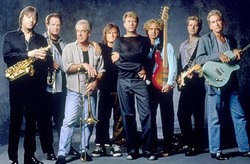
Chicago Quadio features DTS-HD Master Audio 4.0 and 2.0 mixes. The back of this handsomely packaged box set includes the following information:
These discs were mastered using the original 4-track Quad mixes as the source material. The original format of the master was a 4-track, ½ inch analog tape running at 15 ips. There is not a separate or "discrete" LFE (subwoofer) track, although one can hear (or not hear) the lFE channel based on what settings the consumer chooses on their integrated amplifier.I frankly had never heard some of the quad mixes included on this new set before, and some of the differences were really quite interesting, in fact even striking at times. "Critic's Choice", to cite just one example, has a quasi-echo effect in Robert Lamm's vocal in the quad version that is almost completely absent in the "regular" stereo version. What is repeatedly apparent throughout virtually every album is how discretely placed the instruments are in the quad mixes. It's especially noticeable in percussion heavy offerings like "Prelude to Aire" or "Make Me Smile", where elements like shakers are clearly relegated to the rear right channel. Similarly, the brass is often placed in the rear channels, leaving the front soundstage to be filled with vocals, keys and guitars.
These discs can be played back two ways: with Bass Management or without Bass Management. Bass Management sends the sum of the low frequency information (frequencies below 80 Hz) of the four main speakers to the LFE speaker. If your surround speakers are of the satellite variety, you will want to engage Bass Management on your system to hear the full range of the recording. If your surround speakers are the large, full-range type, then we recommend turning Bass Management off.
The increased clarity and distinction between instruments and vocals on the quad mixes is often astounding. Some of the most colorful tunes, like Chicago's collaboration with the Beach Boys on "Wishin' You Were Here", are like new sonic experiences now. I hate to be a curmudgeon, but I also heard just a couple of intonation issues in some of the brass work on various tunes that I've never heard before (and I listened to a lot of Chicago growing up), but in a way that only points out the impeccable clarity of the quad mixes.
There has been some of the (typical) internet controversy about supposed EQ problems, with supposedly overamped bass. As indicated above by Rhino's "instructions", some tweaking of your receiver may be necessary to achieve optimal results, but I have to say on my (almost brand new) Denon 7200, everything sounded perfectly balanced throughout all the discs, with the possible exception of vocals, which to my ears sound a bit too far back in the mix some of the time. That said, just to "play" with things, I also listened to the quad mixes through a soundbar, and there the vocals were definitely almost completely buried and the low frequencies could tend to be overwhelming at times.
Rhino is aware that Chicago (i.e., the second album) has an error on some of its supposed stereo tracks, which are in fact in mono. I'm in touch with Rhino, and they are instituting a disc replacement program. As soon as information is forthcoming, I'll update this review (and will probably post a news item as well).
Update: Those wanting to arrange for a replacement disc are being asked to email: Dr.Rhino@Rhino.com.
Chicago: Quadio Blu-ray Movie, Special Features and Extras
While there are no supplements per se in this impressive box set, the packaging is going to be a minor miracle for anyone who (as I did) grew up with the original LP releases of these albums. Every album is meticulously reproduced, with gatefolds still intact and even "textures" like the ribbed cover of Chicago VI lovingly rendered. The Blu-ray discs are silkscreened to resemble old Columbia LP labels, and each album comes with any/all lyric sheets and other swag (like the iron on which was part of Chicago VIII) intact.
Chicago: Quadio Blu-ray Movie, Overall Score and Recommendation
Blu-ray audio continues to be a niche market, but with releases like Chicago: Quadio I can't help but hope that more and more people will start to realize what an incredible experience revisiting some of these classic albums can be with lossless audio and (in this case) four channel sound. Chicago helped define the sound of the seventies, and this set offers ample evidence of what a winning aggregation the band was during this era, segueing from style to style across albums and in fact sometimes across individual songs. Rhino has done a remarkable job in the production and packaging of this release, and seems to be willing to correct the stereo/mono error (details forthcoming, as mentioned above). Chicago: Quadio comes Highly recommended.
Similar titles
Similar titles you might also like
(Still not reliable for this title)
Radiohead: The King of Limbs - Live from The Basement
2011

Ziggy Stardust and the Spiders from Mars: The Motion Picture
50th Anniversary Edition
1979

Nine Inch Nails: Beside You in Time
2007

David Bowie: The Rise and Fall of Ziggy Stardust and the Spiders from Mars
Dolby Atmos Blu-ray Audio
1972
Depeche Mode: Strange Too
1990
Depeche Mode: Strange
1988

The Cure: 40 Live - Curætion -25 + Anniversary
2018

Kraftwerk: 3-D The Catalogue
Abridged
2017

Pink Floyd: Wish You Were Here
Blu-ray Audio | 50th Anniversary Edition
1975

Pink Floyd: The Dark Side of the Moon
50th Anniversary Atmos Remix / Blu-ray Audio
1973

Steven Wilson - Home Invasion: In Concert at the Royal Albert Hall 4K
2018

Get All You Deserve
Steven Wilson
2012

Nirvana: Live at the Paramount
1991

Tenacious D: The Complete Master Works 2
2008

Prince and the Revolution: Purple Rain
Blu-ray Audio
1984

Pink Floyd: Animals
Atmos Remix / Blu-ray Audio
1977

The Beatles: 1
1962-1970

Muse: Live at Rome Olympic Stadium
2013

Yes: Yessongs
1975

Grace for Drowning
Steven Wilson
2011