Charlotte Rampling: The Look Blu-ray Movie
HomeCharlotte Rampling: The Look Blu-ray Movie 
Kino Lorber | 2011 | 98 min | Not rated | Apr 10, 2012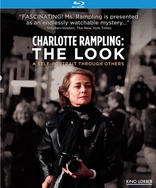

Movie rating
7.1 | / 10 |
Blu-ray rating
| Users |  | 0.0 |
| Reviewer |  | 3.5 |
| Overall | | 3.5 |
Overview
Charlotte Rampling: The Look (2011)
Starring: Charlotte Rampling, Peter Lindbergh, Paul AusterDirector: Angelina Maccarone
| Documentary | 100% |
Specifications
Video
Video codec: MPEG-4 AVC
Video resolution: 1080p
Aspect ratio: 1.84:1
Original aspect ratio: 1.85:1
Audio
English: LPCM 2.0
Subtitles
None
Discs
25GB Blu-ray Disc
Single disc (1 BD)
Playback
Region A, B (C untested)
Review
Rating summary
| Movie |  | 4.0 |
| Video |  | 3.0 |
| Audio | | 4.0 |
| Extras |  | 0.5 |
| Overall | | 3.5 |
Charlotte Rampling: The Look Blu-ray Movie Review
A style icon and sex symbol bares all--but now how you'd expect.
Reviewed by Casey Broadwater April 9, 2012Her costar in Visconti's The Damned, Dirk Bogarde, christened it "The Look"--English actress Charlotte Rampling' piercing and determined gaze, a fiercely independent expression that turns "to steel within a second" before fading "gently to the softest, tenderest, most doe-eyed bracken-brown." Audiences have stiffened and quivered at this Medusa-lite stare for over four decades now, from Rampling's breakthrough role in 1966's Georgy Girl, which found her her playing a hedonistic flatmate, to last year's Melancholia, where she was cast as Kirstin Dunst's bitter, marriage- hating mother. In between, she's become known for her willingness to take on challenging and often controversial roles, like her part as a Stockholm Syndrome-afflicted concentration camp survivor in Liliana Cavani's divisive 1974 film, The Night Porter, which has her perform a sad burlesque for leering Nazi prison guards, singing a Marlene Dietrich number while wearing a topless SS uniform. It's probably one of the most disturbingly erotic scenes ever committed to celluloid. Rampling's never been nudity-averse, and like her compatriot Hellen Mirren--whom she's sometimes mistaken for and compared to--she still smolders at age sixty-six with a matter-of-fact sensuality that's given her seemingly permanent sex symbol status.
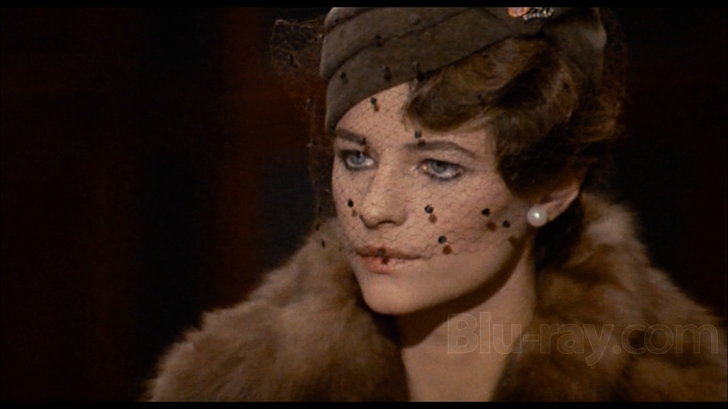
"The Look." Charlotte Rampling in Visconti's "The Damned."
In The Look, an unconventional documentary with the subtitle "A Self-Portrait Through Others," Rampling bares all in a very different sense, exposing her personal philosophies though a series of conversations with friends, colleagues, and collaborators, none of whom are officially introduced. Shot and arranged by German director Angelina Maccarone, the film is divided into nine thematic sections, with bold, all-caps intertitles announcing the topics du jour--Exposure, Age, Beauty, Resonance, Taboo, Demons, Desire, Death, and Love. Otherwise, the biopic-of-sorts is relatively freeform, meandering as conversations do, with Rampling and her chat-mates candidly tackling the big issues of existence. As much as can be tackled, that is, in ten-minute chunks. Interspersed, there are clips from several of her films, from Woody Allen's Stardust Memories and Nagisa Oshima's Max, mon amour--in which she plays a diplomat's wife who has a physical relationship with a chimpanzee--to her career-reviving 2003 turn in François Ozon's sexed-up Hitchcockian mystery, Swimming Pool.
In the opening section, Rampling hangs out in a rustic, naturally-lit studio with her pal, famed photographer Peter Lindbergh, who commends her trend-setting bravery to do photo shoots sans-makeup. "Exposure is what it's all about for people in my profession," Rampling says, but that doesn't mean she's willing to show everything to her audience. She's especially tight-lipped about her private life. Where most celebrity documentaries try to pin their subjects insect-like under a microscope--revealing every detail of their personal histories--The Look leaves Rampling as enigmatic as ever. There are no sordid stories here, no intimate revelations or teary-eyed confessions. I suppose this shouldn't be too surprising; in 2009, the actress pulled out of a book deal for a memoir that would've dealt with her depression following her sister's suicide, her semi-scandalous act of sharing a flat in the 1970s with her agent Bryan Southecombe and model Randall Laurence--she's consistently downplayed rumors of a ménage à trois--and her rocky marriage to composer Jean-Michel Jarre. Instead of the down and dirty on her much-publicized relationships, Rampling spends most of The Look simply offering sage observations on life, along with reflections on the evolution of her career.
Rampling sits down for a cup of tea with novelist Paul Auster, for instance, in the galley of the writer's tugboat--no kidding--to discuss aging, the youthfulness of the soul, and the actress' unlikely status as a sixty-some-year-old sex symbol. Auster suggests that movies "are a medium for men to lust after beautiful women on a big screen," and while Rampling admits later, in the "Beauty" section, that she was put into films almost solely because she was attractive, she says she "then capitalized on that to do other things." Her filmography is a testament to her desire to steer clear from stereotypical screen starlet parts. Despite her occasional appearances in crowd-pleasers like StreetDance 3D and Cars 2, she seems indifferent to films that are strictly entertainment, preferring roles that open up the human and artistic possibilities of what "cinema can do." And that includes breaking boundaries. In "Taboo," which features German artist Juergen Teller--who worked with Rampling on a rather explicit ad campaign for Marc Jacobs in 2004--she talks specifically about nudity and The Night Porter, which was banned in Italy for its uncomfortable commingling of S&M sexuality and Nazi guilt.
The other sections alternate between the heady and the lighthearted. "Demons" includes the recitation of a sobering poem by Frederick Seidel, while in "Resonance," Rampling enters a literal boxing ring to do some figurative sparring--that is, rehearsal--with her son, Barnaby Southcombe, prepping to direct her in the upcoming noir thriller I, Anna. "Death" is appropriately grave, as Rampling wanders through a cemetery with painter Anthony Palliser, speaking of her choice--beyond reason--to hope for some sort of afterlife, but "Love" finds her in high spirits, planting a kiss on a jolly old French pensioner who recognizes her in a park.
What finally emerges in Look is a portrait that's more Impressionist than Realist; we may not get all of the personal, biographical details, but we get a comprehensive sense of who Charlotte Rampling is emotionally, confident and feminine, opinionated and sure of what she wants. "The Look" says it all--come hither, but stay on guard.
Charlotte Rampling: The Look Blu-ray Movie, Video Quality

The Look was shot with what looks to me like an array of small digital cameras, from more pro rigs to HDSLRs to--in a few shots--standard definition camcorders. The picture quality of the Blu-ray, then, is all over the place, with a 1080p/AVC-encoded presentation that's sometimes sharp and sometimes soft. It's never so variable as to be jarring, but you can definitely tell when the interview footage switches to a different source. Almost all of the material is in high definition, though, so you can expect--at the least--a stronger degree of clarity than you'd get from the equivalent DVD. Color is strictly realistic and nicely reproduced, although once again you can easily tell when the sources are switched. (The HDSLR footage, for instance, has higher contrast and shorter depth of field.) There are also some visual artifacts inherent in the types of equipment used. You'll notice bouts of aliasing and moire, along with source noise and occasionally blown-out highlights, but nothing terribly distracting. The clips from Rampling's films are presented in standard definition, and likewise vary in quality. Given the way the documentary was shot and compiled, though, I'm fairly certain this is the best it's ever going to look.
Charlotte Rampling: The Look Blu-ray Movie, Audio Quality

No multi-channel surround mix needed here. The Look comes with a perfectly functional Linear PCM 2.0 stereo track that more than meets the documentary's limited aural demands. Obviously, with material like this--a series of conversations--the highest priority is for the dialogue to be recorded cleanly, clearly reproduced, and balanced at the top of the mix. And it is, on all three counts. The only other audio element of the track is a moody musical cue that seeps into the mix whenever the film changes interview segments, and this sounds just fine. Note that the disc doesn't have any subtitle options for those who might need or want them, but there are forced subtitles for sections spoken in French or, in the case of The Night Porter, sung in German.
Charlotte Rampling: The Look Blu-ray Movie, Special Features and Extras

The only extras on the disc are a series of Kino-Lorber trailers and a stills gallery with eight images.
Charlotte Rampling: The Look Blu-ray Movie, Overall Score and Recommendation

There are some people whose lives are so inherently interesting that it's a joy to simply listen to them in conversation. Charlotte Rampling is one of them, and this unconventional docu-biopic presents a fascinating series of big-issue discussions, covering life, love, death, and everything in between. The Look will definitely appeal to fans of the actress, style-icon, and persistent sex symbol, but even those new to Rampling's body of work will find her dialogues with friends and colleagues interesting in their own right. Recommended!