Carlos Kleiber: Traces to Nowhere Blu-ray Movie
HomeCarlos Kleiber: Traces to Nowhere Blu-ray Movie 
Arthaus Musik | 2010 | 72 min | Not rated | Feb 28, 2012
Price
List price:Listed on Amazon marketplace

Movie rating
6.6 | / 10 |
Blu-ray rating
| Users |  | 4.0 |
| Reviewer |  | 3.5 |
| Overall | | 3.5 |
Overview
Carlos Kleiber: Traces to Nowhere (2010)
Soloists: Plácido Domingo, Brigitte Fassbaender, Otto Schenk, Veronika Kleiber<br> Director: Eric Schulz<br><br> The documentary “Traces to Nowhere” represents the first film dedicated to the enigmatic personality of the conductor. The film follows in the traces of Kleiber’s final journey and, by means of the recollections of friends and other companions – including the first and only interview with his sister Veronika – portrays a manas renowned for his difficult personality as his brilliant work.
Starring: Carlos Kleiber, Plácido Domingo, Otto Schenk, Brigitte Fassbaender, Veronika KleiberDirector: Eric Schulz
| Music | Uncertain |
| Documentary | Uncertain |
Specifications
Video
Video codec: MPEG-4 AVC
Video resolution: 1080i
Aspect ratio: 1.78:1
Original aspect ratio: 1.78:1
Audio
German: LPCM 2.0
Subtitles
English, French, Spanish, German, Italian
Discs
25GB Blu-ray Disc
Single disc (1 BD)
Playback
Region A (B, C untested)
Review
Rating summary
| Movie | | 4.0 |
| Video | | 4.0 |
| Audio | | 3.5 |
| Extras |  | 0.0 |
| Overall | | 3.5 |
Carlos Kleiber: Traces to Nowhere Blu-ray Movie Review
The greatest conductor you may never have heard of.
Reviewed by Jeffrey Kauffman March 12, 2012If you were asked to name the greatest conductor of all time, chances are, depending on your age and classical music background, you’d have a wealth of likely suspects from whom to make your choice. Names like Arturo Toscanini, Bruno Walter, Herbert von Karajan, Leonard Bernstein, Georg Solti, Fritz Reiner, Leopold Stokowski, Pierre Boulez, Seiji Ozawa, Wilhelm Furtwangler and countless others could each be considered at the very least eligible for the title. But Carlos Kleiber? Kleiber was born in Berlin in 1930, the son of conductor Erich Kleiber, a forward thinking man who conducted the premiere of Alban Berg’s Wozzeck, but who resigned from the Berlin Opera in protest when the Nazis decried Berg’s music as “degenerate”. The elder Kleiber then canceled his contract with La Scala when Mussolini started following in Hitler’s footsteps and became more openly and virulently anti-Semitic. This despite the fact that the Kleibers were not Jewish, and were in fact Christian. In the somewhat ironic department, Erich Kleiber decided he wanted to get out of the roiling storm that was then Europe, and made a move across the Atlantic Ocean to a country that would become famous in post-World War II history for its proclivities toward hiding former Nazis, Argentina.
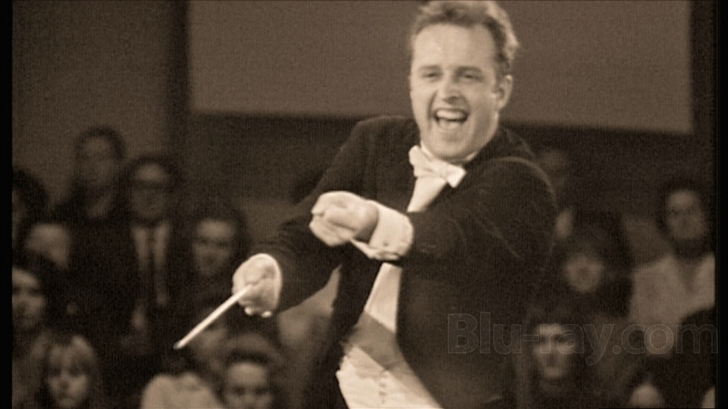
Young Carlos, actually originally named Karl but who Latinized his name upon arriving in Buenos Aires, therefore had a particularly international upbringing, something no doubt aided due to the fact that his mother was an American. Carlos’ musical talents were on display at an early age, allegedly much to the dismay of his father, who preferred that his son attempt to forge a career in something less stressful than a music career. Kleiber fils’ career was relatively minor in terms of actual numbers of performances, and he also became something of an anti-cause célèbre due to his refusal to give interviews, and so it came as something of a shock last year when the erudite BBC Music Magazine named Kleiber the greatest conductor of all time. What is especially noteworthy (sorry) about the appellation is that it was bestowed not by know it all editors, but by a coterie of high profile musicians (many of them conductors) who were polled and asked to name their favorite or who had provided them the greatest inspiration. And Kleiber came in first!
Conductors come in all temperaments of course, with some notably more reserved than others, but the most successful seem to have at least a modicum of gregariousness which ingratiates them to both their orchestras and the paying public. Traces to Nowhere makes a cogent case that Carlos Kleiber, reclusive though he was, had an affable enough persona (certainly much more than his allegedly extremely gruff father did), though he could also be a taskmaster. The documentary is full of interviews with a number of people who worked with him, like Placido Domingo, or those who had a more informal relationship with him (his sister Veronika and his longtime makeup artist), and while the portrait that is painted may shed a little new light on the subject, there’s still an inexplicable enigma at the core of Kleiber that defies easy analysis.
Traces to Nowhere only deals with Kleiber’s upbringing tangentially, skirting around the edges of what seems to have been a somewhat tumultuous relationship between the elder and younger Kleibers, a dialectic which nonetheless did nothing to diminish Carlos’ hero worship of his famous father. In fact there’s a rather interesting comment made by one of the interview subjects in this piece that Carlos would only consider conducting pieces his father had, and then only if he had his father’s original conductors’ scores and/or recordings of performances. There’s something positively Freudian about all of this, and it perhaps helps to at least partially illuminate whatever turmoil was going on in the younger Kleiber’s psyche that may have kept him from a more ubiquitous career.
It’s clear from the many personal reminiscences contained in Traces to Nowhere that Kleiber was admired professionally (something the BBC Magazine poll also makes abundantly clear) and loved personally. That doesn’t mean that Kleiber’s peculiarities and peccadilloes were ignored by his friends and collaborators, though. Several people are on record here stating they found Carlos’ bizarre decisions with regard to his burgeoning conducting career positively mind boggling. This was a man who was offered prestigious positions with such legendary orchestras as the Vienna Philharmonic, accepted them, and then the next day would disappear on long driving trips to Slovenia, shirking his commitments and deciding that he didn’t want to work there, after all. (He did in fact end up working with the Vienna Philharmonic on several occasions and two of the very rare pieces of archival video available showing Kleiber at work come from New Years' concerts there.) On a personal level, Kleiber evidently had a wandering eye despite a long and supposedly happy marriage, something that a couple of the participants in this documentary comment on with a raised eyebrow or two.
Traces to Nowhere takes its title from a Chinese maxim that Kleiber evidently loved which stated “as far as possible you should leave no traces behind in life.” Ironically the documentary traces Kleiber’s last car trip to Slovenia, using little snippets of the journey as interstitials placed between interview segments. A man who seems essentially unknowable finally gives up at least a few of his secrets in the tiny (population 143) town of Konjsica, where the villagers knew him as a man, not a legend.
The one thing that Traces to Nowhere doesn’t really adequately explore is why so many professionals thought so highly of Kleiber. Yes, his attention to detail is mentioned, as well as his almost balletic grace at the podium (the archival film included in this documentary is absolutely fascinating to watch, and Kleiber does indeed often seem to be almost dancing rather than conducting). But don’t all great conductors have demanding standards vis a vis attention to detail? And doesn’t every great conductor have his own particular stick (or hand) technique that sets him apart from his baton (or finger) wielding kin? There has to be something more, and while Traces to Nowhere hints at Kleiber’s genius, perhaps it’s only to be expected that something as ineffable as that intangible quality can’t be adequately summed up in words. It seems perhaps that one of the great pieces that Kleiber never got around to conducting might best sum up his life and career: The Enigma Variations.
Carlos Kleiber: Traces to Nowhere Blu-ray Movie, Video Quality

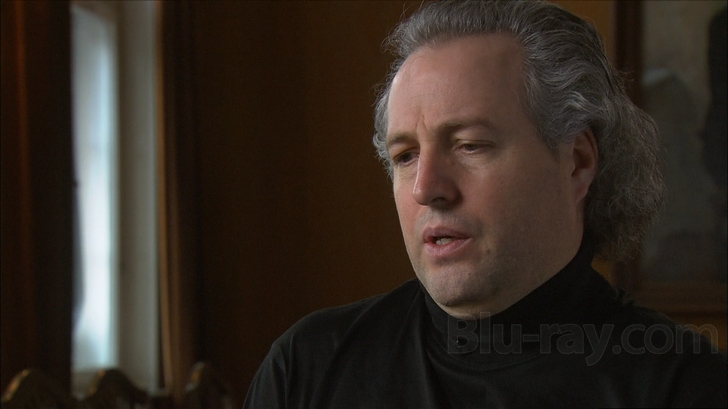
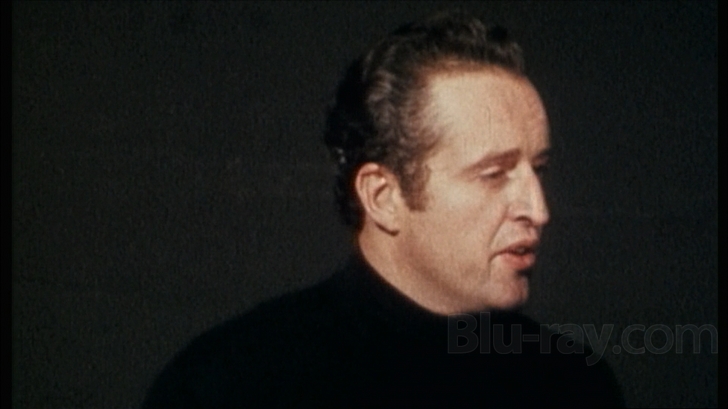
Carlos Kleiber: Traces to Nowhere is presented on Blu-ray courtesy of ArtHaus Musik with an AVC encoded 1080i transfer in 1.78:1 (some of the archival material is in slightly narrower aspect ratios). This television outing has a nicely sharp appearance in the contemporary interview segments, with pleasing if not overwhelming fine detail, good contrast, consistent black levels and accurate looking color. There is a smattering of archival video material featuring Kleiber, some of which looks pretty spry (the famous Stuttgart footage) and some other which is barely tolerable (a video feed off of the pit camera at Bayreuth, which looks horrible but which is mesmerizing to watch). Overall this is a decently sharp and clear picture, at least with regard to the contemporary elements which are far and away the bulk of the documentary.
Carlos Kleiber: Traces to Nowhere Blu-ray Movie, Audio Quality

Carlos Kleiber: Traces to Nowhere has an uncompressed LPCM 2.0 soundtrack mostly in German (Domingo speaks in halting and heavily accented English). For the record, subtitles are available in the languages listed above, but need to be accessed via the Subtitle button on your remote; there is no Setup option on the Main Menu (see screencap 10). The soundtrack here is rather surprisingly fulsome for a stereo track, with especially impressive low end in the orchestral excerpts which are included. Despite the age of some of these recordings (there's even a snippet of the elder Kleiber's work), audio quality is rather good, all things considered. The talking heads segments, which are far and away the biggest elements of the documentary, all sound fine, with crisp and clear audio.
Carlos Kleiber: Traces to Nowhere Blu-ray Movie, Special Features and Extras
The only "supplement" is a collection of trailers for other ArtHaus Musik releases, which I never count in scoring supplements.
Carlos Kleiber: Traces to Nowhere Blu-ray Movie, Overall Score and Recommendation
The BBC Music Magazine caught a lot of people by surprise, but it may have helped to elevate recognition of Carlos Kleiber, certainly one of the most enigmatic conductors of the last century. He comes off in Traces to Nowhere as perhaps manic-depressive, certainly neurotic in his own way, but also incredibly charming and genial. While the documentary can't quite get at this most arcane, opaque individual, it's full of wonderful anecdotes from a coterie of impressive names who worked with him, as well as a couple of people who knew him on a more personal level. This is a fascinating piece of documentary filmmaking about an equally fascinating subject. It would have been nice to have had some supplementary material of unedited archival footage of Kleiber at work (licensing issues probably prevented that), but otherwise this release comes Recommended.