Cameraman: The Life & Work of Jack Cardiff Blu-ray Movie
HomeCameraman: The Life & Work of Jack Cardiff Blu-ray Movie 
Strand Releasing | 2010 | 90 min | Unrated | Aug 09, 2011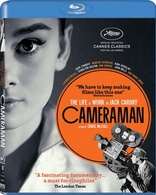
Price
List price:Listed on Amazon marketplace

Movie rating
7.3 | / 10 |
Blu-ray rating
| Users |  | 0.0 |
| Reviewer |  | 3.5 |
| Overall | | 3.5 |
Overview
Cameraman: The Life & Work of Jack Cardiff (2010)
Oscar-winning cinematographer Jack Cardiff had a career that spanned nine decades of moving pictures, providing a number of timeless classics such as "The African Queen" and "The Red Shoes." Through his pioneering use of Technicolor photography, his work behind the camera altered the look of films permanently.
Starring: Jack Cardiff, Martin Scorsese, Lauren Bacall, Charlton Heston, Richard FleischerDirector: Craig McCall
| Documentary | 100% |
Specifications
Video
Video codec: MPEG-2
Video resolution: 1080p
Aspect ratio: 1.78:1
Original aspect ratio: 1.78:1
Audio
English: Dolby Digital 5.1
Subtitles
None
Discs
50GB Blu-ray Disc
Single disc (1 BD)
Playback
Region A, B (C untested)
Review
Rating summary
| Movie |  | 4.5 |
| Video | | 3.5 |
| Audio |  | 2.5 |
| Extras |  | 4.0 |
| Overall | | 3.5 |
Cameraman: The Life & Work of Jack Cardiff Blu-ray Movie Review
The story of a legend with a lens
Reviewed by Brian Orndorf September 12, 2011Jack Cardiff is a certified filmmaking legend, yet a man perhaps few, outside of hardcore movie appreciation circles, have ever even heard of. His name may not be immediately recognizable but his visual touch is unforgettable, working as a cinematographer and director for over 60 years, with show business ties that trace all the way back to his adolescence. Although he passed away in 2009 at the age of 94, his glorious creative spirit lives on in numerous filmmaking efforts and a riveting documentary, “Cameraman: The Life & Work of Jack Cardiff,” a picture that celebrates the lifelong adventure of a man who worshipped color, utilizing his fascination with art to infuse the big screen with an enormity and vibrant passion few could rival.
Shot over an extended period of time, “Cameraman” is director Craig McCall’s valentine to the master cinematographer, though his perspective and relationship with Cardiff is never explored in full. Instead, the documentarian’s obvious fandom takes a backseat to Cardiff’s dynamic life story, asking the titular moviemaking wizard to sit down and recall his vast production history. It’s a lengthy journey and one decorated with amazing experiences working for high profile directors, tempestuous actors, and heroic crews, who braved endless hours and intense elements to assemble some incredible pieces of cinema.
Cardiff began his career as a child actor, following his thespian parents into the industry, spending his formative years on movie sets, observing the machine of film production come to life, soon encouraging further participation as he matured into a young man. After some time as a “clapper boy,” Cardiff found his calling with cameras, developing his gift working as an operator on a multitude of motion pictures that only permitted single takes, requiring a skilled professional able to work fast and creatively. His abilities were quickly noticed. While doing his best to survive a grueling industry, Cardiff received the opportunity of a lifetime when Technicolor announced it was seeking to train a young cameraman capable of comprehending the new landscape of color photography. A tentative Cardiff couldn’t provide the mathematical expertise required by the company, but he understood lighting in a thoughtful way that suggested burgeoning genius.
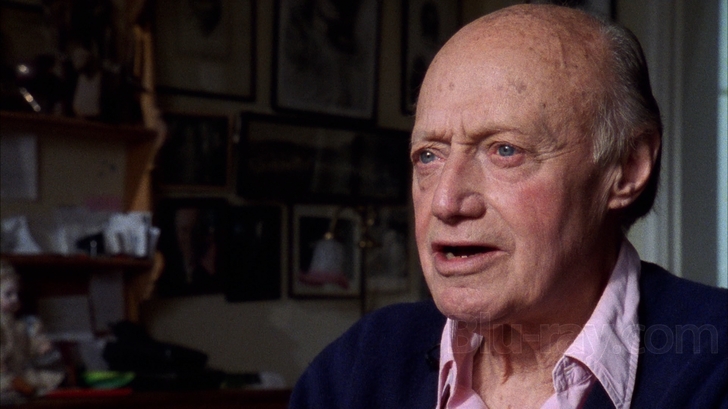
Armed with broad Technicolor knowhow (working with massive cameras roughly the size of Spain), Cardiff found his career positioned in an entirely different direction. Growing from a camera operator (on pictures such as 1937’s “Wings of the Morning”) to a cinematographer, Cardiff rapidly found his footing as a master of light and color, working his way through the industry until two directors decided to promote the man from 2nd unit work, curious to challenge his glowing reputation. With 1945’s “A Matter of Life and Death” and 1947’s “Black Narcissus,” Cardiff imparted extraordinary life into the work of Michael Powell and Emeric Pressburger, elevating their exceptional filmmaking imaginations with a reverberation of color and composition, creating indelible images of distress and desire (work that would eventually nab him a well-deserved Oscar). The collaboration would continue on to 1948’s “The Red Shoes,” a masterful picture of awe-inspiring beauty, bursting with color and elegance, solidifying Cardiff as a master of the medium.
“Cameraman” charts the rise of Cardiff’s career, exploring his time with Alfred Hitchcock (1949’s “Under Capricorn”) and his adventures with John Huston on 1951’s “The African Queen,” soon examining his years as a director throughout the 1960s and ‘70s (“The Girl on a Motorcycle”). While personal photographs and home movies suggest a whirlwind career of artistic creation, the heart of the documentary remains with Cardiff, who embraces this opportunity to share backstage stories (about the likes of John Wayne, Marilyn Monroe, Orson Welles, and Errol Flynn), reflecting fondly on the people he’s worked with and the movies he’s made. McCall invites a host of actors and cinematic technicians to fill out the celebration, offering insight from Martin Scorsese, Lauren Bacall, Richard Fleischer, Kim Hunter, and Kirk Douglas, each mixing affection and reverence for Cardiff. There’s a sensation of love here, but also one of weighty respect, not only for the cameraman’s abilities, but for his appealingly even-keeled charms as well.
Cameraman: The Life & Work of Jack Cardiff Blu-ray Movie, Video Quality
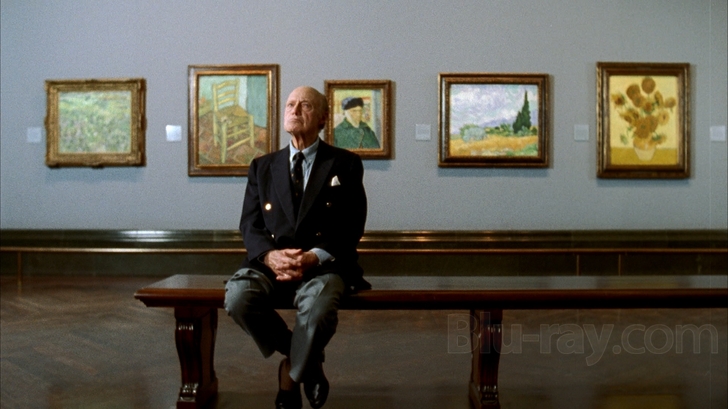
The MPEG-2 encoded image (1.78:1 aspect ratio, 1080p) presentation contains a wealth of film and video sources collected to best survey the work of the master. The primary documentary footage is flecked with minor print damage and some visible banding, while the entire picture is hurt by significant crush issues that solidify blacks during darker footage. Color is key here, and the HD presentation doesn't hold back when it comes to providing a lush, stable range of hues, highlighting nuclear red and blues to reinforce the power of Technicolor. The image provides the expected pop when called upon. Skintones during interviews are natural. The video footage reveals jagged edges, but the interludes are brief. The blending of clips and interviews is smoothly handled.
Cameraman: The Life & Work of Jack Cardiff Blu-ray Movie, Audio Quality
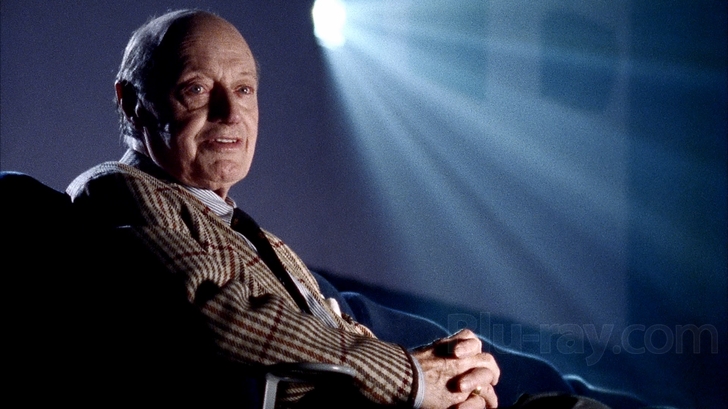
The 5.1 Dolby Digital sound mix holds to the documentary standard, with a sturdy frontal presence for interviews and reflections, delivering clarity on a wide range of accents and speech impediments. It's a simple audio design, but effective, with scoring feeling out the surrounds, providing musical accompaniment with reassuring delicacy, never intruding on the conversations. Low-end is rarely engaged. Trouble arrives with film and television footage, most of which sounds slightly distorted, standing roughly against the relative clarity of the interview segments.
Cameraman: The Life & Work of Jack Cardiff Blu-ray Movie, Special Features and Extras
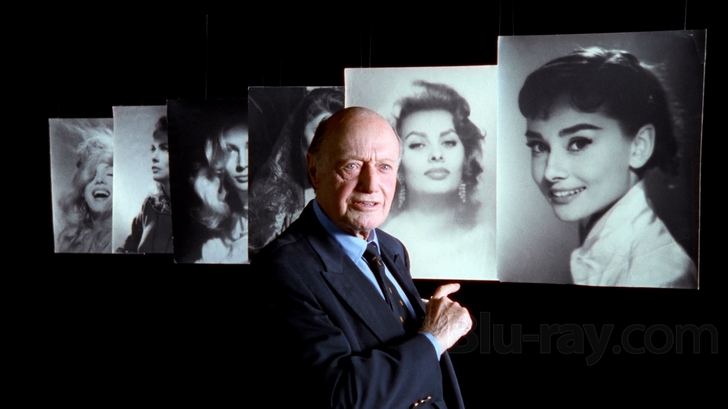
- Interview with Craig McCall by Ian Christie (12:52, HD): This conversation between the director of "Cameraman" and film scholar Christie covers the origin of the documentary and how various interview participants were gathered to celebrate a cinema legend. The chat is direct, hitting all the bullet points of production and reverence, while reinforcing McCall's enormous effort to corral 13 years of work into a single feature.
- Jack's Actress Portraits (4:01, HD) plunges deeper into Cardiff's private pictures of world cinema's leading ladies, permitting the contemplative man an extended opportunity to share his feelings about his subjects and explore the history behind these gorgeous images.
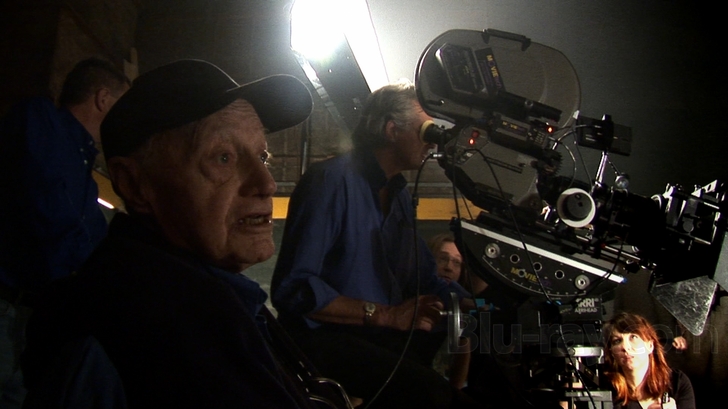
- Jack's Behind-the Scenes Movies (10:01, HD) is a tremendous addition to the Blu-ray experience, featuring Cardiff's commentary on the private footage he shot while on location during "The African Queen," "William Tell," and "Legend of the Lost." The observations are friendly and often shocked, capturing Cardiff slightly unnerved, viewing spunky on-set antics (with a serious Sophia Loren focus) from a lifetime ago.
- Cinematographer and Director Relationship (11:34, HD) is a collection of interviews shot between 1998-2000, asking titans (e.g. Freddie Francis, Alan Parker, Charlton Heston, and Martin Scorsese) of the industry for their thoughts on the delicate relationships between two dominate film artists. Production stories and personal moviemaking preferences are explored.
- Working with Three-Strip Technicolor (4:53, HD) reunites Cardiff with a Technicolor camera, allowing the operator a chance to recall technical challenges, where his used his creativity to test the limits of the format, much to the irritation of the men in charge.
- Photo Galleries offer 18 images from Cardiff's private collection of actress portraits (including Sophia Loren, Marilyn Monroe, and Anita Ekberg), and 24 stills from the making of "Cameraman," along with a few shots of Cardiff with his equipment throughout the years.
- A Theatrical Trailer (2:01, HD) has been included.
Cameraman: The Life & Work of Jack Cardiff Blu-ray Movie, Overall Score and Recommendation
Jack Cardiff continued to work almost to the year of his death, shooting such varied pictures as "Ghost Story" and "Rambo: First Blood Part II" along the way. "Cameraman" presents Cardiff as a man who never abandoned his sense of humor or his faith in beauty, mixing love for the fine arts into his cinematic achievements, creating iconic images as he carried on. While a celebration of the man and his silver screen miracles, "Cameraman" ends on a slightly solemn note, expressing sadness that these practical techniques have been lost to the digital revolution, losing the handcrafted appeal of film to point-and-click post-production math. It's a harsh reality, but one Cardiff takes in stride, refusing to give in to nostalgia, eager to explore the new frontier of moviemaking. His story ends in 2009, but his achievements live on, with "Cameraman" a sublime education on the masterful work of Jack Cardiff.
Similar titles
Similar titles you might also like
(Still not reliable for this title)

Faces Places
Visages villages
2017

David Lynch: The Art Life
2016

Ingrid Bergman: In Her Own Words
Jag är Ingrid
2015

Ray Harryhausen: Special Effects Titan
2011

Hitchcock/Truffaut
2015

The Great Buster: A Celebration
2018

Always Shine
2016

Paris Is Burning
1990

Minding the Gap
2018

Cameraperson
2016

F for Fake
1973

RBG
2018

Go West Young Man
1936

The Salt of the Earth
Le Sel de la Terre
2014

More Than Honey
2012

À propos de Nice
1930

My Way Home
1978

The Wild, Wild World of Jayne Mansfield
1968

Lost Soul: The Doomed Journey of Richard Stanley's Island of Dr. Moreau
House of Pain Edition
2014

Magician: The Astonishing Life and Work of Orson Welles
2014