Brother Blu-ray Movie
HomeBrother Blu-ray Movie 
BFI Video | 2000 | 114 min | Rated BBFC: 18 | Apr 21, 2025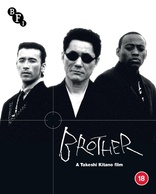

Movie rating
6.6 | / 10 |
Blu-ray rating
| Users |  | 0.0 |
| Reviewer |  | 3.5 |
| Overall | | 3.5 |
Overview
Brother (2000)
A Japanese gangster is exiled to Los Angeles where his brother lives with a small but respectable multi-racial gang, who he inspires to expand their influence.
Starring: Takeshi Kitano, Tatyana Ali, Omar Epps, Noel Gugliemi, Ryo IshibashiDirector: Takeshi Kitano
| Drama | Uncertain |
| Crime | Uncertain |
| Thriller | Uncertain |
Specifications
Video
Video codec: MPEG-4 AVC
Video resolution: 1080p
Aspect ratio: 1.85:1
Original aspect ratio: 1.85:1
Audio
English: DTS-HD Master Audio 5.1 (48kHz, 24-bit)
English: LPCM 2.0 (48kHz, 24-bit)
English & Japanese audio on same track
Subtitles
English, English SDH
Discs
Blu-ray Disc
Single disc (1 BD)
Playback
Region B (locked)
Review
Rating summary
| Movie |  | 4.0 |
| Video | | 3.5 |
| Audio |  | 5.0 |
| Extras | | 4.0 |
| Overall | | 3.5 |
Brother Blu-ray Movie Review
Reviewed by Dr. Svet Atanasov June 17, 2025Beat Takeshi's "Brother" (2000) arrives on Blu-ray courtesy of the British Film Institute. The supplemental features on the release include archival program with Beat Takeshi and cast and crew members; promotional materials; and more. In English and Japanese, with optional English and English SDH subtitles for the main feature. Region-B "locked".
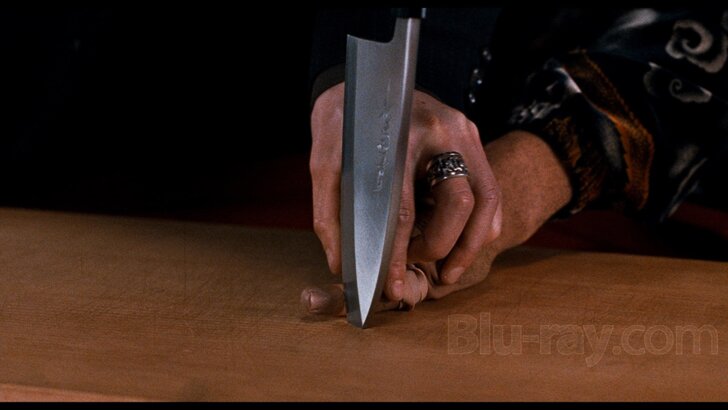
After a violent altercation leaves him on the losing side and with a price tag on his head, Japanese executioner Aniki (Beat Takeshi) acquires a fake passport and arrives in Los Angeles to start a new life with his younger half-brother, Ken (Claude Maki), who also lives on the wrong side of the law. Shortly after, Aniki reorganizes Ken’s gang of street thugs and small-time pushers, and they begin thinking big. Emboldened by Aniki’s efficient guidance, they wipe out the local Mexican competition and start working on a strategy to take down the Italian mafia. The arrival of Aniki’s loyal soldier Kato (Susumu Terajima) and the addition of professional assassin Shirase (Massaya Kato) complete the gang’s makeover, and the war with the Italian mafia begins. But it quickly becomes obvious that the new enemy is too big and too powerful.
Beat Takeshi has stated several times that Brother, which remains his only American film, did not turn out as he wanted. However, as odd as it may sound, this may very well be the reason Brother works so well. Here’s why:
Brother is like the creation of a bold bartender who experimented with several seemingly incompatible flavors and delivered a surprisingly refreshing new cocktail. Indeed, it features plenty of the over-the-top violent material that Beat Takeshi’s classic gangster films are known for, but channels cheeky humor of the kind that is associated with Quentin Tarantino’s cult films. Also, instead of quickly evolving into a conventional contemporary exploitation film, it works hard to create a heavy atmosphere that would have been perfect for a stylish neo-noir film. All this is then effectively assembled into an unusual but very enjoyable genre film. So, Brother does not just rearrange certain things well, it creates fresh material that works well and looks good.
What would have Beat Takeshi’s proper version of Brother looked like? It is rather easy to tell. The more recent Outrage films work with the same blueprint, which gives them the familiar identity of Beat Takeshi’s classic gangster films. These are genuinely serious films that dissect yakuza reality with an unmistakable authority. They do have room for humor too, but it is not a lot, and it is always of the darkest kind that would not work in a contemporary exploitation film. In other words, the proper version of Brother would have looked a lot like an Outrage film but shot in America.
Something else that surprises but proves effective too is Beat Takeshi’s willingness to share the spotlight with other stars who do not look inferior. For example, Omar Epps is a very odd choice to play Beat Takeshi’s closest associate, but their interactions are wonderful. The two are so different that the strange between them, which is explored in great detail, always looks legitimate. Interestingly, the same cannot be said about Beat Takeshi’s relationship with his aging Japanese girlfriend, who remains an utterly meaningless ornamentation.
Beat Takeshi worked with frequent collaborator Katsumi Yanagijima, who also lensed the previously mentioned Outrage films. The two share an identical grasp of the importance of location and movement, which is why all the films they have made together, regardless of whether they are gangster films or melodramas, look very elegant. Brother, with all of its unusual overlapping of contrasting material, does too.
The last surprise is a stunning soundtrack by Joe Hisaishi, which is like a jazz lover’s wet dream. It is incredibly stylish, the type of soundtrack one would listen to while enjoying a glass of Yamazaki fifty-five-year-old single malt whiskey after a long and exhausting day.
Brother Blu-ray Movie, Video Quality
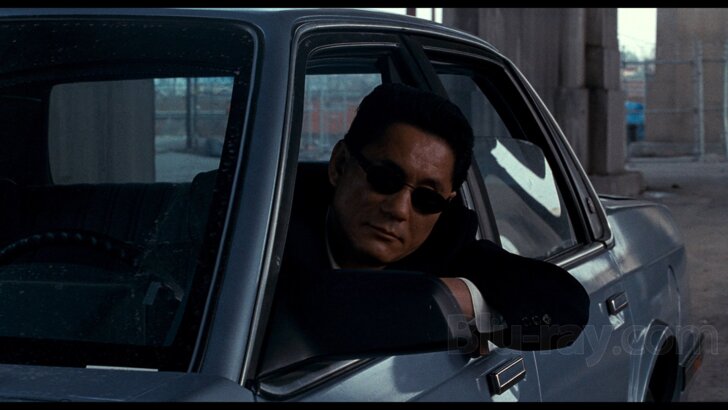
Presented in its original aspect ratio of 1.85:1, encoded with MPEG-4 AVC and granted a 1080p transfer, Brother arrives on Blu-ray courtesy of the BFI.
Last year, we reviewed this Australian Blu-ray release of Brother, produced by local label Imprint Films. It is the only other Blu-ray release of the film that I have in my library.
I spent quite a bit of time comparing the two releases. They do not offer identical presentations of the film, and I like how certain things are handled on both. However, in the end, I think that the Australian release will remain the one I use to revisit the film. Here's why:
On this release, there is quite a bit of material where the blacks either approach crushing or become crushed. Also, with the elevated blacks, often times I saw classic edge-enhancement. Some close-ups can hide or avoid it, but there is a lot of material where its presence is very obvious. I think that anyone with a large screen is guaranteed to be distracted by it. On the positive side, this release is a little better encoded, so some visual can appear stronger on large screen. However, this is a trade-off that is very unfortunate, and I think that the more natural appearance of the previous presentation from the Australian release is preferable. Of course, it has to be acknowledged that both presentations still have various inherited source limitations, which a proper new 2K or 4K master will easily eliminate. Image stability is good. My score is 3.25/5.00. (Note: This is a Region-B "locked" Blu-ray release. Therefore, you must have a native Region-B or Region-Free player in order to access its content).
Brother Blu-ray Movie, Audio Quality
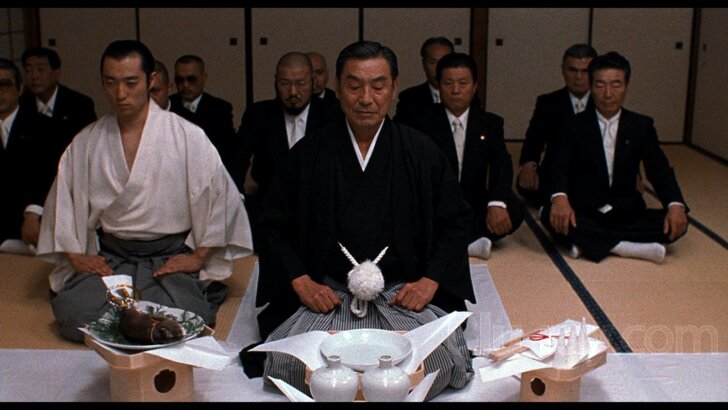
There are two standard audio tracks on this Blu-ray release: English DTS-HD Master Audio 5.1 and English LPCM 2.0. Optional English and English SDH subtitles are provided for the main feature.
I think that the 5.1 track is the best option for Brother, so it is the one I used again to revisit it. It is excellent. All of the action material sounds great, and the dialog is very clear and easy to follow. There is a fantastic jazzy score that sounds terrific as well. So, I have to repeat that at the moment I do not believe a new 5.1 track is needed.
Brother Blu-ray Movie, Special Features and Extras
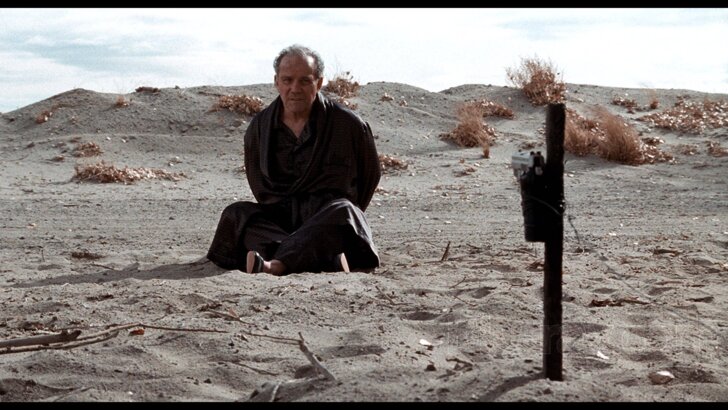
- Featurette - a short EPK with clips from cast and crew interviews as well as raw footage from the shooting of Brother. In English. (3 min).
- Cast and Crew Interviews - in this archival program, Beat Takeshi explains how Brother came to exist and why it was necessary to shoot in Los Angeles, and discusses his character. Producers Masayuki Mori and Jeremy Thomas, and Omar Epps also discuss their collaboration with Beat Takeshi on Brother. In Japanese and English, with English subtitles where necessary. (16 min).
- Behind the Scenes - this archival program features footage with Beat Takeshi directing different sequences from Brother. In Japanese and English. (5 min).
- "Scenes by the Sea": The Life and Cinema of Beat Takeshi - this archival documentary takes a closer look at the working methods and cinematic legacy of Beat Takeshi. Included in it are clips from interviews with Beat Takeshi, film critic John Powers, author Mark Schilling, Omar Epps, and producers Masayuki Mori and Jeremy Thomas, amongst others. Also included is raw footage from the shooting of Brother. In English. (49 min).
- The Green Flash (1988) - presented here is a short film directed by Adam Davis about an encounter between a homeless orphan and an injured gangster, featuring a young Omar Epps in his first screen role. In English. (26 min).
- Trailer - a vintage trailer for Brother. In English, with optional English subtitles. (2 min).
- Booklet - 34-page illustrated booklet featuring new essays by Jennifer Coates, Adam Bingham and James-Masaki Ryan, an archival interview with Beat Kitano by Tony Rayns and writing on The Green Flash by its director Adam Davis, as well as techncial credits.
Brother Blu-ray Movie, Overall Score and Recommendation
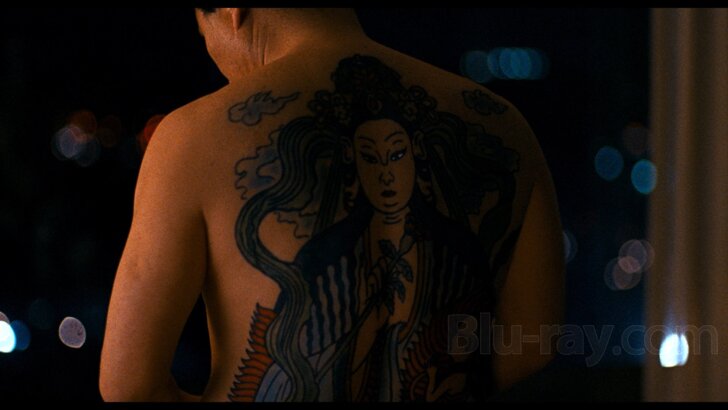
One can successfully argue that Brother is the strangest film in Beat Takeshi's cinematic oeuvre. It blends conventional crime material, neo-noir aesthetics, dark humor, drama, and even top quality jazz music. But it works, perhaps even better than some of Beat Takeshi's big box office hits. I like it and have always kept a copy of it in my library. This recent release from BFI is a bit of a mixed bag. I thought that its presentation of Brother will be identical to that of Australian label Imprint Films' release, but it is not. If possible, I suggest that you find a way to test it first.
Similar titles
Similar titles you might also like

Hana-bi
はなび / Fireworks
1997

Outrage
2010

Suburra
2015

Ghost Dog: The Way of the Samurai 4K
1999

Gangs of Wasseypur I - II
2012

Game of Death 4K
死亡遊戲 | Limited Edition
1978

Easy Money
Snabba Cash
2010

Black Rain
Special Collector's Edition
1989

A Prophet
Un prophète
2009

Le Doulos
1962

Friend
Chingoo / Chingu / 친구
2001

The Shinjuku Incident
新宿事件 / San suk si gin
2009

The Irishman
2019
Pusher
1996

Bullhead
Rundskop
2011

Cold Fish
冷たい熱帯魚 / Tsumetai Nettaigyo
2010

Choice of Arms
Le choix des armes | Limited Edition
1981

The Long Goodbye
Arrow Academy
1973

The Yakuza
1974

The Stone Killer
Indicator Series
1973