Blood Orange 4K Blu-ray Movie
HomeBlood Orange 4K Blu-ray Movie 
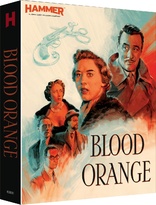
Limited Collector's Edition / 4K Ultra HD + Blu-rayHammer Films | 1953 | 76 min | Rated BBFC: 12 | Aug 11, 2025

Movie rating
6.9 | / 10 |
Blu-ray rating
| Users |  | 0.0 |
| Reviewer |  | 4.5 |
| Overall | | 4.5 |
Overview
Blood Orange 4K (1953)
Discharged by his employer, a private eye stays on a jewel theft case after a model with information for him is murdered.
Starring: Tom Conway, Mila Parély, Naomi Chance, Eric Pohlmann, Andrew OsbornDirector: Terence Fisher
| Drama | Uncertain |
| Crime | Uncertain |
Specifications
Video
Video codec: HEVC / H.265
Video resolution: 4K (2160p)
Aspect ratio: 1.37:1
Original aspect ratio: 1.37:1
Audio
English: LPCM 2.0 Mono
English: DTS-HD 5.1
Subtitles
English SDH, French, German, Italian, Spanish
Discs
Blu-ray Disc
Two-disc set (2 BDs)
4K Ultra HD
Playback
Region B, A (C untested)
Review
Rating summary
| Movie |  | 3.5 |
| Video |  | 4.0 |
| Audio | | 4.0 |
| Extras |  | 5.0 |
| Overall | | 4.5 |
Blood Orange 4K Blu-ray Movie Review
Reviewed by Justin Dekker September 5, 2025Directed by Terence Fisher, 1953's 'Blood Orange' (AKA - 3 Stops to Murder') arrives on 4K UHD disc in this Limited Collector's Edition courtesy of
Hammer Films. Under the Exclusive Films banner, the film stars Tom Conway ('Cat People (1942)', playing a private investigator named "Tom
Conway") alongside Mila Parély ('Beauty and the Beast (1946)', as fashion house owner Helen Pascal), and Naomi Chance ('The Newcomers', Gina,
one of the house's top models or "mannequins"). A crime film with noirish flourishes, this captivating caper features solid technical merits
accompanied by Hammer's usual compliment of on-disc and printed supplemental material. A region-free Blu-ray disc is also included, and all contents
are housed in an attractive slipcase.
Working for the shady Mr. Mercedes (Eric Pohlmann, The Return of the Pink Panther), Tom Conway arrives at an upscale fashion house,
Pascal's in London, to investigate a jewel theft. Before he can conclude his investigation, a suspicious death involving a model wearing a dress called
"Blood Orange" occurs. Can Tom Conway get to the bottom of things before any more lives are lost?
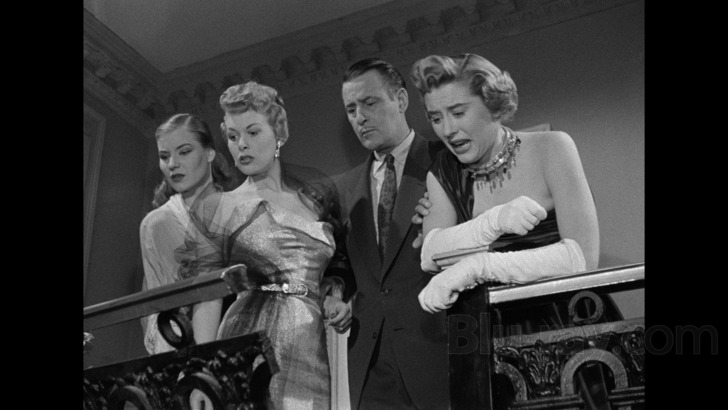
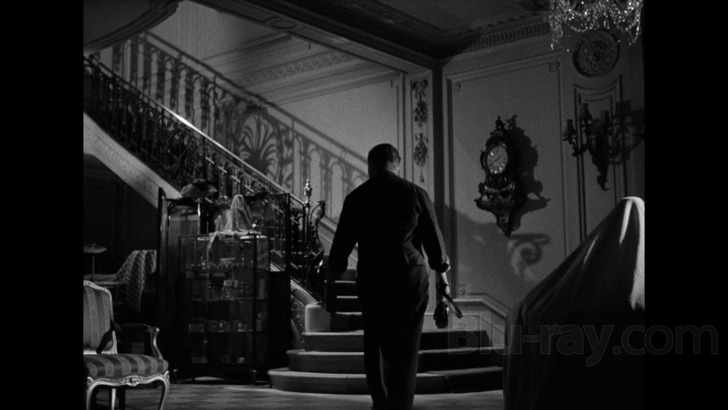
Lensed by Walter Harvey, the on-screen image is strikingly beautiful long before the camera focuses on a single fashionable dress or one of the lovely mannequins who model them. As the film opens, a bobby makes his rounds, thinking all is safe and secure at Pascal's as he strides away from the front door and passes by the fashion house's sign that hangs from a wrought iron fence. No sooner has he departed than two suspicious-looking characters dressed in trench coats silently emerge from the shadows, and quickly make their way into the house through an unlocked back door. The interplay of light and and shadow here is gorgeous. The two men emerge from the shadows just long enough for the the viewer to get catch a quick glimpse of them before submerging back into the darkness and heading up the crude stairs. On the floor above them, as a guard wanders the dimly- lit main floor, the shadow of the grand staircase's ornate railing splashes onto the impeccably trimmed wall before he, too ascends the stairs while moving in and out of the scattered shadows. The light clinging to a chandelier further hints at the building's opulence. The unavoidable violence that and the theft follow likewise occur in similarly carefully and strikingly constructed shots, as Fisher and Harvey play with light and shadow. Along with the location that is home to so much of the film's action, the camerawork on display here elevates the film from the very start.
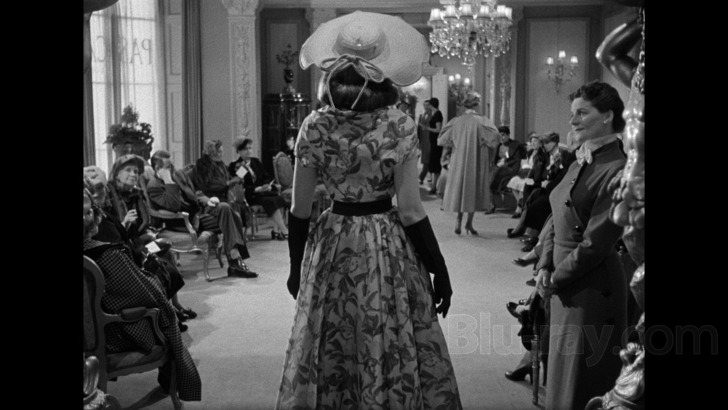
Though Blood Orange, spends a fair amount of it's 76-minute runtime on investigation of PI Tom Conway and Mr. Mercedes' machinations, almost equal time is given to the female cast. While one might expect that to mostly consist of the leering gaze of the camera's eye capturing the models in various states of undress, this is largely not the case. While occasional glimpses are caught of the models in the more substantial garments that fashionable women wore under their dresses at the time, such shots are hardly the rule. Instead, Fisher wisely opts to leverage the female cast to more fully define and realize the world of the upscale fashion house. Though the mannequins might appear quite glamourous, backstage they are petty, jealous, and cut-throat. Rivalries over men and work are commonplace and well-known, with the women maneuvering to advance their own careers, even the expense of others when necessary. The well-to-do clients also earn their wrath and disparagement, with some bitterly stating that the only reason some clients are tolerated is due to their vast wealth. At Pascal's all is certainly not always what it seems, and ugliness lurks behind the beauty. All of this also aids the plot, providing a lengthy list of suspects as the film builds to its final act with some unexpected nastiness and melodrama.
There is little doubt that director Terence Fisher is best loved and remembered for his horror outings with Hammer which included The Horror of Dracula the forthcoming The Curse of Frankenstein, and The Devil Rides Out. Blood Orange, and the recently released and newly reassessed Four Sided Triangle, serve to demonstrate his versatility and adaptability, proving him to be as effective in a crime picture and with science fiction as he was with horror. Here, the pacing is taut and tension is high as the affable Tom Conway glides through the picture. He's never portrayed as the smartest, the strongest, or the most astute, but his presence and his efforts are enough to rattle those at fault and gain enough clues to ultimately be in the right place at the right time and resolve the case in a satisfactory manner.
Hammer fans will want to keep an eye out for the seemingly ever-present Michael Ripper who appears here in a small role, looking both younger and slimmer than fans of the studio's horror output may remember him. His role is similar to and on par with with the various landlords, barkeepers, sergeants, drivers, and the the like, out of which he crafted a career and landed in numerous noteworthy films. Doctor Who fans will also be delighted to spot Roger Delgado in a very early role in Blood Orange. His clean-shaven appearance may not make him instantly recognizable, but the man whom many will always associate with character of The Master is unmistakable even with his face scarcely visible behind the upturned collar of his trench coat and pulled down brim of his fedora.
Blood Orange 4K Blu-ray Movie, Video Quality
As per the included notes on the restoration, the original 35mm film elements were acquired from the British Film Institute and scanned in 4K on an
ARRI scanner. Dirt and debris were removed, and defects were resolved. After eliminating issues with flickering, an HDR grade with Dolby Vision was
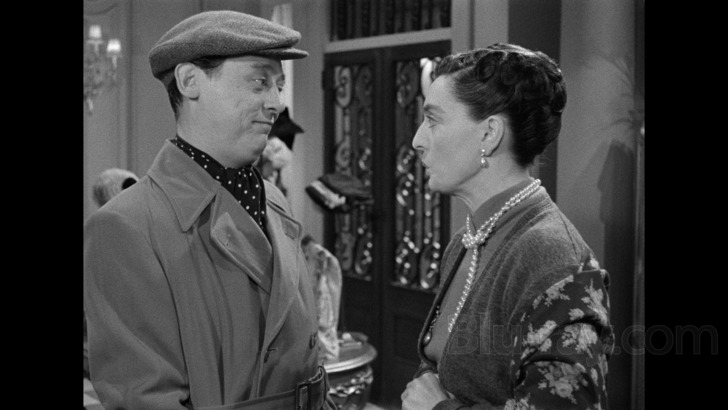
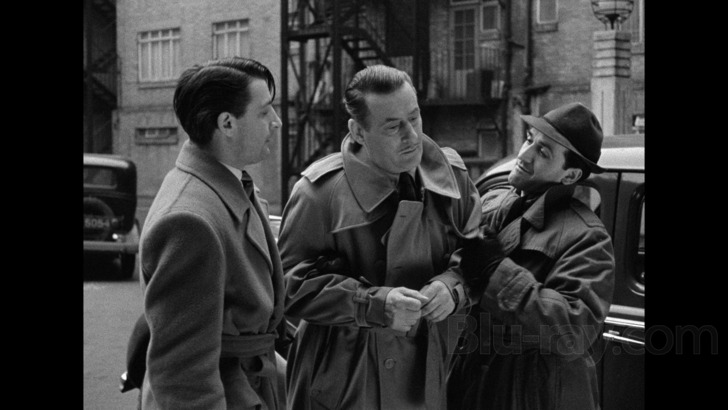
performed. The results seen on the screen are quite good, with Blood Orange looking delightfully filmic. Fine grain is present and resolves
naturally, never creating issues with noise or blockiness. Fine detail levels are generally pleasing, with hairstyles and costuming elements revealing a
fair amount of specifics for viewers to enjoy, such as the light and delicate paisley pattern on one of the model's dressing gowns and the numerous
lacey accents on dresses and slips. Likewise, the images in the stained glass found in Mr. Mercedes' office present with a solid level of precision, as does
the pattern and fringed trim on his wing-back chair. The image never rises to the pinpoint levels of precision found in modern films; a certain slight
softness remains, depriving viewers of the opportunity to see every wrinkle on Tom Conway's face and count every hair in his thin mustache. Whites
never rise to the level of brilliance, remaining a bit grey, but, more importantly, blacks are deep and absorbing. It's these inky blacks and various
gradations of the shadows inside the fashion house that make the opening sequence so effective, stylish, and memorable, and the same holds true
elsewhere. The image presented here is stable, absent any significant density fluctuations, and looks very good in motion. It's a solid presentation.
All screenshots are sourced from the included 1080p disc.
Blood Orange 4K Blu-ray Movie, Audio Quality
The Original Mono track listed here is an LPCM 2.0 mono mix, and is an enjoyable companion to the film. Dialogue is clear and intelligible, though at
times Tom Conway's smooth voice can feel a bit muffled. This is more intermittent than persistent. Music is well-handled when keeping one's
expectations in check, given the era in which the film was made, the technology of the time, and the limitations of the source. Absent any LFE presence,
music tends to be treble-heavy, with mid-range instrumentation being a bit thin. The track does a fine job reproducing the sound effects it's required to
handle, such as rustling fabric, footsteps, car doors, and the occasional short bursts of physical violence such as slaps and punches. Again, these lack
modern depth but are era-appropriate. Not as flashy as anything at Pascal's, it's nonetheless effective.
The included notes state that the DTS-HD 5.1 audio mix was crafted by using AI to strip the dialogue out of the original mono mix and pushing music
and effects into the surrounds. Dialogue remains almost exclusively in the front. Using the surrounds to push music into the room does little to improve
precision and can, at times, make the soundtrack seem muddier. This is the case during the opening, as the theme song is allowed to dominate. To my
ear, when viewing the film with this audio option selected, dialogue often seems too quiet in relation to the rest of the elements in the track. For a film
that is extremely dialogue-heavy, this is a bit of an issue. While I appreciate Hammer's efforts to create a second audio option for those who look for
more modern mixes on older films, the results here are less than ideal. But as many film fans are most concerned with having the original audio track
available, happily the 2.0 Mono track yields very good results here. Whenever I revisit Blood Orange, I will always select the 2.0 Mono
mix.
Blood Orange 4K Blu-ray Movie, Special Features and Extras
Hammer has once again outfitted this release with a rich assortment of on-disc and printed supplemental material.
- Commentary Featuring Kim Newman and Barry Forshaw (UK Theatrical Version) (1.16:36) - The two authors begin with a lengthy conversation about star Tom Conway, Hammer's early crime films and the push to have billed talent in their films who would be recognizable to US audiences. Some time is given to a discussion of the family atmosphere of Hammer productions, and locations used, and Jimmy Sangster. They give a bit of history on the film's screenwriter Jan Reed, and his film and television output, before theorizing on why the British didn't see to hold their actors and directors of the era in quite the same esteem as those located in the US. Forshaw and Newman offer a good mix of comments that are based on the on-screen action and other topics that they feel are relevant. As is the case with other commentary tracks with which Newman is involved, this track is conversational, entertaining, and immensely informative.
- Commentary Featuring Lucy Bolton, Film Scholar from Queen Mary University of London, and Film Critic Phuong Le (US Theatrical Version) (1.16:38) - After a quick discussion of the opening scene, the pair shift to star Tom Conway, who they point out as making some sexist comments toward the women who work in the fashion house. As with the Newman and Forshaw commentary, Conway's overcoat receives a fair amount of focus which the pair returns to from time to time. They discuss the fashions, the fashion show, and the set of much of the film's action. The cinematography, shot composition, and Fisher's use of tracking shots also comes into focus. They also take time top point out the appearance of Michael Ripper, a character actor well-known to Hammer fans. The pair also discuss the performances of the film's stars, set dressing, and the project's production value. It's a great track, and as Bolton and Le cover largely different material than Newman and Forshaw, both commentary tracks are worthwhile.
- Dressed to Kill (27.13) - Authors Wayne Kinsey and David Pirie sit down to discuss James Carreras and his son Michael, their relationship, and their personal and professional lives before getting into Blood Orange. They cover the origins of the project, the cast, Director Terence Fisher, and Michael's approach to producing. Moving on, they converse about Michael's career immediately after the film.
- I'm Just a Girl!: Alice Lowe on 'Blood Orange' & Women in Film (22.02) - The Director and Actor discusses the sensibilities of post-war films and the shift in female roles. She sees Blood Orange as unusual as it is set in a female world with a larger number of female characters. Lowe spends a fair amount of time discussing the symbolism and importance of clothing in this and other films from Hammer's library. She shares that film still has a way to go in creating more interesting and realistic female characters, and the importance of seeing stories from a woman's perspective, the problem of agism, and the relatively small percentage of female directors.
- The ABC of British B! (28.49) - Artist and film Scholar Cathy Lomax, Film Historian Richard Holliss, and Author Gavin Collinson participate in this discussion of British B movies, beginning with Hammer's film-noir thrillers from the late 1940s. They cover films of the era set in the world of fashion, the misogynistic elements of the films, women's roles in them, and common tropes and stereotypes.
- The House of Glamour (19.02) - Liz Tregenza shares her thoughts on the fashion of Blood Orange, which she believes to be accurate to the typical Mayfair fashion houses of the time (early 1950s). She begins by discussing the structures of the fashion houses themselves, how they're appointed, and how the different spaces are used. She points out that few women were at the heads of these houses, it being a male-dominated industry. She finds Blood Orange to be largely accurate, but she points out various incongruities. Tregenza also spends a fair amount of time discussing the man behind the fashions in the film, and how colors read in black-and-white.
- UK Trailer (Mute) (1.50)
- UK Censor Card (0.15)
- Image Gallery (1.17) - Posters, stills, and lobby cards advance automatically and are set to the film's score.
- The Hammer Crime Files: 'Blood Orange' - This 116-page perfect bound book consists of a number of essays and dozens of photographs and stills. I found "Exclusive Films: A Short History" by Robert JE Simpson, ""Leave Her to Hammer" by Nora Fiore, and "The Men Who Ran Hammer: James Carreras" by Denis Meikle to be among the most enjoyable, but each of the included essays is worth a read.
Blood Orange 4K Blu-ray Movie, Overall Score and Recommendation
Director Terence Fisher's most revered and popular films may well be those involving Frankenstein, Dracula, and the other horror films he directed for Hammer, but Blood Orange documents a director who was already working at a high level years before those films would reach the screen. Boasting high production values, excellent cinematography, and brisk pacing, this film is ripe for rediscovery thanks to the treatment it's been given by Hammer, which result in a filmic 2160p presentation and an enjoyable 2.0 mono track. Blood Orange may well be bloodless, but it's never less than engaging, the cast is excellent, and tension escalates nicely. Loaded with on-disc and printed supplemental features, the Blood Orange 4K Limited Collector's Edition comes highly recommended.
Similar titles
Similar titles you might also like
Just for the Hell of It
1968

The Dirty Dolls
1973
The Hooked Generation
1968

Willie Dynamite
1974

River's Edge
1986

Man of Violence / The Big Switch
BFI Flipside
1970

Who Killed Teddy Bear
1965

Pets
Submission
1973

Hounds of Love
2016

Wake Up and Kill
Svegliati e Uccidi
1966

Die Screaming, Marianne
1971

The Boys Next Door
Black Label 022 | Special Edition
1985

Toys Are Not for Children
Virgin Dolls
1972

Home Before Midnight
1979

Ms .45
Limited Edition
1981

Blastfighter
The Force of Vengeance / The Italian Collection #04
1984

The Annihilators
1985

Broadcast Signal Intrusion
2021

Electric Shades of Grey
1971

Truck Stop Women
1974