Blind Faith Blu-ray Movie
HomeBlind Faith Blu-ray Movie 
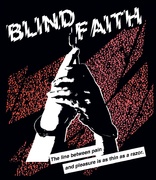
Slipcover in Original PressingVHSHitfest | 1989 | 86 min | Not rated | Mar 26, 2024
Price
List price:Listed on Amazon marketplace

Movie rating
6.9 | / 10 |
Blu-ray rating
| Users |  | 0.0 |
| Reviewer |  | 4.0 |
| Overall | | 4.0 |
Overview
Blind Faith (1989)
Director: Dean Wilson| Horror | Uncertain |
| War | Uncertain |
| Crime | Uncertain |
Specifications
Video
Video codec: MPEG-4 AVC
Video resolution: 1080p
Aspect ratio: 1.31:1
Original aspect ratio: 1.33:1
Audio
English: DTS-HD Master Audio 2.0
Subtitles
English SDH
Discs
Blu-ray Disc
Single disc (1 BD)
Packaging
Slipcover in original pressing
Playback
Region A (B, C untested)
Review
Rating summary
| Movie |  | 2.0 |
| Video |  | 3.5 |
| Audio | | 4.0 |
| Extras |  | 5.0 |
| Overall | | 4.0 |
Blind Faith Blu-ray Movie Review
Reviewed by Brian Orndorf March 18, 20241989’s “Blind Faith” has the initial appearance of an erotic thriller from the era, watching a cop and his partner engage in rough sex after dabbling in drugs, putting on a display of disease that’s meant to disturb and titillate. And then writer/director Dean Wilson moves away from such atmosphere, replacing exploitation interests with a psychology game, and a talky one at that. “Blind Faith” is basically a filmed play, with Wilson using his run time to study the levels of irritability and monologuing skills of the characters, who are dealing with murder, manipulation, and intimidation, but the feature would rather remain static. The helmer is attempting to create something uneasy with unsavory turns of plot, but he doesn’t earn viewer interest with this glacial examination of police interrogation.
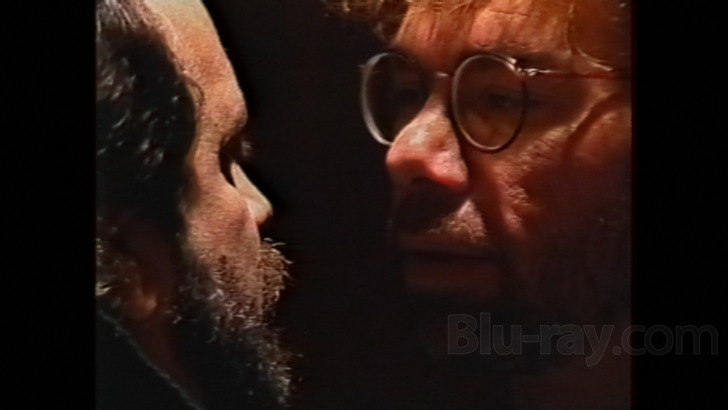
William (Eric Gunn) is a cop on the edge, enjoying risky sex with partner Lindsay (Doris Quest), but work is quick to ruin an evening of dangerous pleasures. He’s been called in to handle a murder case, joined by Richard (Kevin Yon), a psychiatrist who’s also an alcoholic, dealing with problems at home involving his wife, Megan (Mary Keith Roe), and his teen daughter, Leia (Rebecca Winick). The men are facing a mess involving a possible cult, with leader Ted (David Winick) arrested for multiple murders, brought in for interrogation as the remains of four women remain a mystery. Instead of directly confronting Ted, William and Richard elect to work their way into the case, first questioning Sandy (Lynne Browne), a member of the “church” who’s accused of helping Ted with all kinds of ghastly business. And there’s Cliff (Kirk Swenk), Ted’s right-hand man, who struggles to mentally process all that’s happened to him and the cult. As the day carries on, William and Richard deal with their thinning patience as they try to crack the case, eventually taking on Ted and his practiced way with mind games.
“Blind Faith” takes time establishing the worlds William and Richard live in. For the cop, sex challenges aren’t strong enough for his coked-up partner, who openly complains when a game of rape is interrupted by a phone call. Richard drinks to make the world go away, refusing to deal with household tensions, perhaps happy in some way to be pulled into duty when arrests have occurred in a case of cult worship and possible murder. “Blind Faith” transforms into three interrogation sequences, with the first involving Sandy, and she’s not in the mood to deliver information. She’s testy, initially unwilling to cooperate, but she begins to paint a portrait of life inside the “church,” detailing how she met up with Ted and became part of his flock. Cliff’s tale makes up the second act of the picture, and he seems to be struggling with some sort of intellectual disability, presenting an erratic and hesitant overview of Ted’s power plays, going deeper into his violent rule, which includes use of “graves” in the basement of the building.
Ted’s part in the crime is examined in the final act, which finds the cult leader openly resisting William and Richard’s intimidation tactics, eager to lead the conversation in his own way. Wilson aims for tension in these confrontations, but “Blind Faith” finds extraordinarily little suspense in what’s basically lengthy conversations about crime, with some footage of horror mixed into the movie to help understand the threatening situation.
Blind Faith Blu-ray Movie, Video Quality
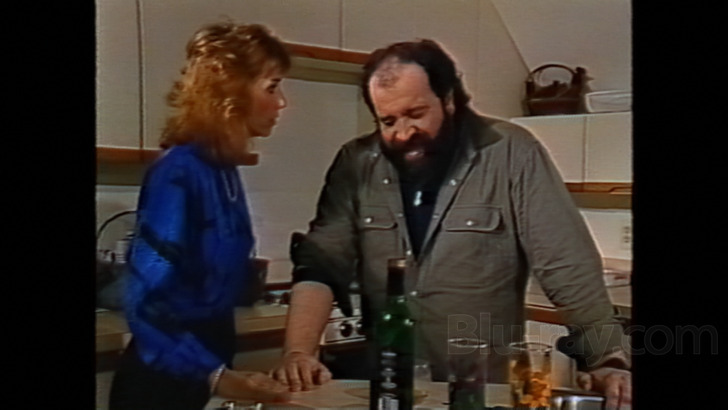
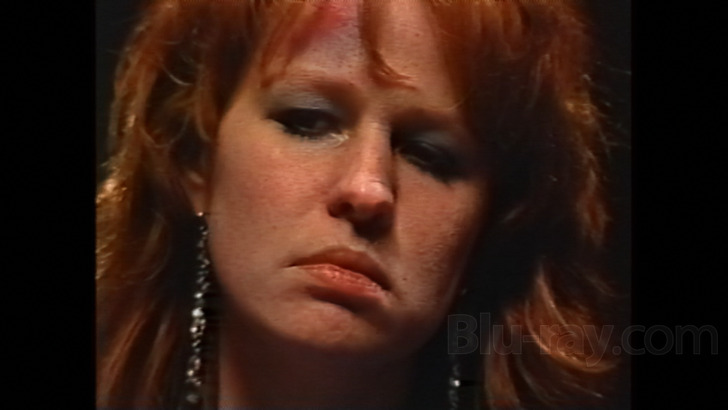
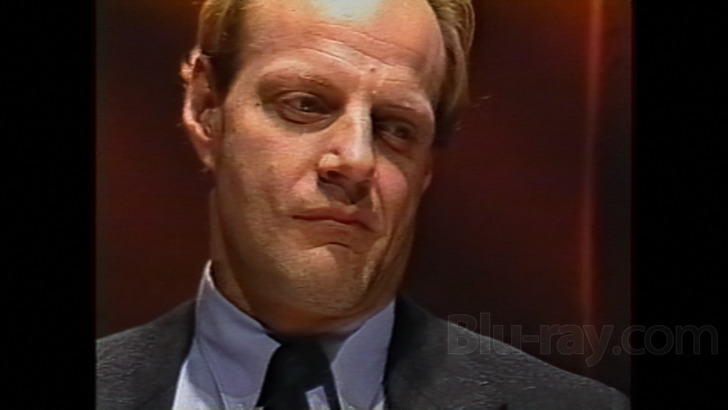
The AVC encoded image (1.31:1 aspect ratio) presentation deals with the shot-on-video look of the feature, which doesn't welcome fine detail. Frame information is soft but appreciable, including character appearances, with most of the endeavor captured in tight close-ups. Sets are also passably highlighted, especially during brief tours of the "church" and its extreme decoration. Colors are satisfactory, handling primaries on costuming, and hair color has some presence. Skin tones are natural. Source is in decent condition, with a few points of damage detected.
Blind Faith Blu-ray Movie, Audio Quality
The 2.0 DTS-HD MA mix provides a clear understanding of dialogue exchanges, retaining performance choices and balance. Scoring supplies basic synth support, exploring suspenseful moods with satisfactory instrumentation.
Blind Faith Blu-ray Movie, Special Features and Extras
- Commentary features writer/director Dean Wilson.
- Interview (55:14, HD) is a discussion of "Blind Faith" with writer/director Dean Wilson. Developing an early love for cinema, Wilson set out to create short films with limited resources, eventually graduating to more complete efforts during his college years. Work led to the creation of 1976's "My Father's Gun," clearing the way to a steady stream of endeavors used to develop the helmer's capabilities and storytelling interests. The interviewee explores the growth of his career during the 1980s, with exposure to "The Evil Dead" inspiring the push to make "Blind Faith." The road to production was long, putting Wilson into contact with various investors and industry players, eventually choosing to go the independent way to make sure the movie happened. Production tales are shared, focusing on technical and makeup challenges, also highlighting the horrors of working with real sheep intestines for one gore shot. Distribution tales are shared, finding Wilson laboring to get the picture to potential viewers, dealing with even more shady business people.
- Interview (11:24, HD) is a conversation with actor Gary Winick, who recalls his initial friendship with Dean Wilson, which grew into a role in one of the filmmaker's short movies. Wilson was eventually hired for "Blind Faith," recalling his time and respect for co-stars. Winick closes with a few thoughts on other endeavors he worked on after his time on "Blind Faith."
- Interview (13:35, HD) is a chat with "Aide-de-Camp" Michael Heniz, who became friends with Dean Wilson in college, joining him on his moviemaking journey. The interviewee offers his memories concerning the short films he participated in the making of, and he examines his many jobs on "Blind Faith," including the wrangling of sheep intestines and the hiring of exotic dancers.
- Image Gallery (15:20) collects cover art, BTS snaps, publicity shots, and newspaper articles.
- And a Trailer (1:04, SD) is included.
- Short Films (SD) include 1976's "My Father's Gun" (22:24), 1978's "Clayton County Line" (73:01), 1981's "Boots MacAllistar" (12:06), 1981's "Free Amerika Broadcasting" (44:04), and "North County War" (6:32).
- "Director's Copy: The Making of 'Free Amerika Broadcasting'" (8:29, SD) is offered.
- Image Gallery (5:35) collects BTS snaps from "North County War."
Blind Faith Blu-ray Movie, Overall Score and Recommendation
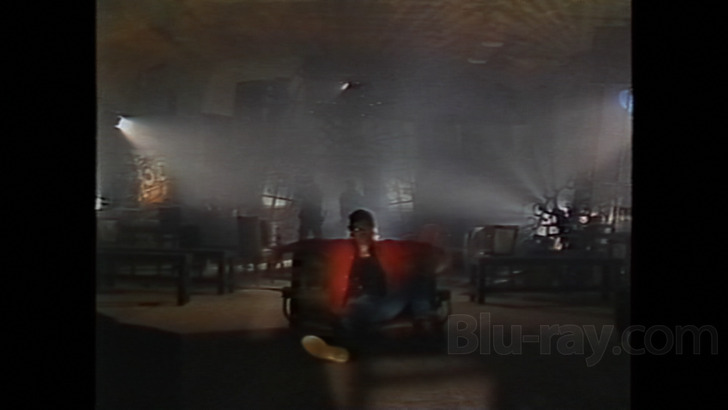
"Blind Faith" is capable when it comes to technical achievements. Cinematography aims higher than the average SOV offering, and performances are mostly engaging, working to feel out characterization and play with confrontations as details of the cult are gradually uncovered. Wilson has some skill with production achievements, but his command of pace is lacking, as too much of the picture is primarily focused on the players trading questions and speeches, which doesn't result in riveting cinema. And there's an issue with the finale, with the last ten minutes of the feature finally stepping out of the interrogation room to explore the crime scene, and Wilson goes the brain-bleeder route as a way to provide a jolt of an ending. It doesn't work, feeling like a desperate move in the final moments to wake up a mostly sleepy tale of police work and criminal intent.
Similar titles
Similar titles you might also like

The Sinful Dwarf
Dværgen / also includes The Blue Balloon
1973

Pig Killer
[Slipcover Edition Exclusive on Retailer]
2022

America's Deadliest Home Video
1993

Julie Darling
1983

Killer's Moon
Remastered Edition
1978

Duck! the Carbine High Massacre
Standard Edition
1999
Human Beasts
The Beasts' Carnival / El carnaval de las bestias
1980

Sometimes Aunt Martha Does Dreadful Things
Standard Edition
1971

Torment
1986

The Oracle
1985
Crypt of Dark Secrets
1976

The Town That Dreaded Sundown
1976
The Black Room
1935

The Haunting of Sharon Tate
2019

Bones
2001

The Limehouse Golem
2016

The Beast in Heat
La bestia in calore / SS Hell Camp
1977

Atroz
2015

Corruption
Last House on Dead End Street
1977-1983

Sorority Slaughter
1994