Blank City Blu-ray Movie
HomeBlank City Blu-ray Movie 
Kino Lorber | 2010 | 94 min | Not rated | Feb 21, 2012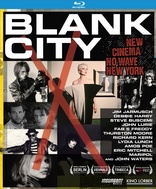
Price
List price:Amazon: $24.40 (Save 30%)
Third party: $24.40 (Save 30%)
Only 2 left in stock - order soon.

Movie rating
7.2 | / 10 |
Blu-ray rating
| Users |  | 0.0 |
| Reviewer |  | 3.5 |
| Overall | | 3.5 |
Overview
Blank City (2010)
During the punk rock stage in the late '70s, downtown New York experienced a wave of "Do it yourself" independent filmmaking.
Starring: Amos Poe, Ann Magnuson, Becky JohnstonDirector: Celine Danhier
| Documentary | 100% |
Specifications
Video
Video codec: MPEG-4 AVC
Video resolution: 1080p
Aspect ratio: 1.78:1
Original aspect ratio: 1.78:1
Audio
English: DTS-HD Master Audio 5.1
Subtitles
None
Discs
50GB Blu-ray Disc
Single disc (1 BD)
Playback
Region free
Review
Rating summary
| Movie | | 3.5 |
| Video | | 3.5 |
| Audio | | 3.5 |
| Extras |  | 3.0 |
| Overall | | 3.5 |
Blank City Blu-ray Movie Review
They shoot movies, don't they?
Reviewed by Casey Broadwater February 15, 2012For a group of poor DIY filmmakers, musicians, and scenesters, it was the best of times and the worst of times: New York's
Lower East Side in the late 1970s and early '80s, when rents were down, crime was up, and all it took to be an artist was a
modicum of talent and whole lot of spontaneous, let's just go out and do it ambition. Out of the city's squalor of run-down
tenements and garbage-strewn streets came No Wave, punk rock's bastard child--arty and abrasive, dissonant and nihilistic--
and the music went on to spawn a short-lived art and cinema movement that nested rat-like below 14th Street and east of
Broadway, only to be exterminated by AIDS, the Wall Street boom, and eventual gentrification.
Documentarian Celine Danhier's Blank City charts the rise and fall of No Wave, specifically focusing on the ultra low-budget Super-8 and
16mm movies made by and starring the movement's key figures, some of whom are fairly famous today--Jim Jarmusch, Steve Buscemi, John Lurie--
while others have continued on in relative obscurity, cult figures known only to a
few especially hardcore cinephiles. Mixing oral history-type interviews with duped footage from several grainy No Wave films,
Danhier has created an impeccably researched evocation of a New York that is no more.
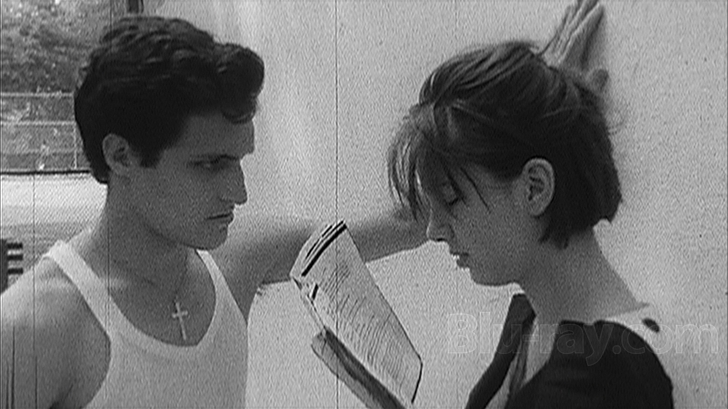
It's been called The Rotten Apple. This was the near-bankrupt New York of the late '70s, when Times Square was still porn-ified, blackouts loosed anarchy on the streets, and artists could live on next to nothing, squatting in abandoned buildings or renting rooms for a measly hundred bucks a month. Punk was the underground musical genre du jour, but the straight- forward style of bands like The Ramones was already starting to fracture into clanging post-punk via Television, Blondie's proto-New Wave danciness, and art-rock from The Talking Heads. In 1976, filmmaker Amos Poe--who had been documenting the scene with home movie cameras--rented an editing booth from the Maysles brothers, took some speed, and in 24 hours cut together The Blank Generation, the first real punk rock film, which premiered at the famed mecca for musical anarchy: CBGB's.
Soon after, the Lower East Side's own brand of stripped-down, often atonal and angular punk--which the local press came to call No Wave--would emerge with bands like Teenage Jesus and the Jerks, DNA, and The Contortions. Musical proficiency wasn't particularly valued, and if anything, being especially good at your instrument was suspect. In many ways, the No Wave aesthetic--for music and film--was built around limitations. Can't play guitar? Start a band anyway. Can't afford a camera? Buy a stolen one for cheap from the guy down the block. The point was simply to make art, on the fly and with a cavalier and confrontational attitude. As Teenage Jesus frontwoman Lydia Lunch says here, "If you don't think it's any good, well, f--k you."
Lunch is underground punk rock royalty, a singer and actress who was basically No Wave's Anna Karina, the movement's ingenue and a muse for no-budget directors like Vivienne Dick, James Nares, and the husband and wife team of Scott and Beth B. (All of whom sit down here to reminisce about the period.) Blank City gives us a sense of how collaborative and cross-medium the scene was; musicians were in movies, filmmakers were in bands, and everyone pitched in on everyone else's projects.
Some of the early films that came out of the movement--Amos Poe's in particular--drew on the avant-garde influences of Jonas Mekas and Andy Warhol, along with the more narrative-but-still-conceptual styles of directors like Godard, Antonioni, and John Cassavetes. This sounds high-brow, but there's an unavoidably amateurish quality to nearly all of the No Wave movies, partly because they were shot cheaply on 8mm stock--16mm if they were lucky--but mostly because they were shot by actual amateurs, who valued personal and political expression over technique. This was certainly the case when No Wave morphed gradually into the so-called Cinema of Transgression--a term coined by the brooding Nick Zedd, director of They Eat Scum and Geek Maggot Bingo--which sought to shock audiences with taboo-busting obscenity and coal-black humor. One of the few exceptions to the amateur aesthetic is Jim Jarmusch, who was trained at NYU and was an assistant to legendary director Nicholas Ray (Bigger Than Life) before making his breakthrough feature, 1984's Stranger Than Paradise, using leftover film stock donated by Wim Wenders.
Most of the No Wave films have been forgotten, and for good reason: they weren't much good to begin with. But that's beside the point. Blank City doesn't really champion the No Wave directors unduly or make them out to be more important to cinema history than they actually are. The documentary is really just an appreciation of a punk scene that briefly grew like a mold in a particularly dank corner of New York, where the conditions were right for unbridled art and filmmaking. The tone is of aging hipsters reminiscing about the good old days before Times Square was Disneyfied, when artists could live and work in the city on a few dollars a day. If nothing else, they've got some impossibly cool stories to tell. Like Jarmusch recounting how he had to drag a sleeping Jean-Michel Basquiat out of his shots when he was making Permanent Vacation. Or Sonic Youth's Thurston Moore detailing his first nervous high school trips to CBGB's. Or John Lurie faking a break in at his apartment so he could claim insurance money on his "stolen" saxophones. Now that's punk rock.
Blank City Blu-ray Movie, Video Quality
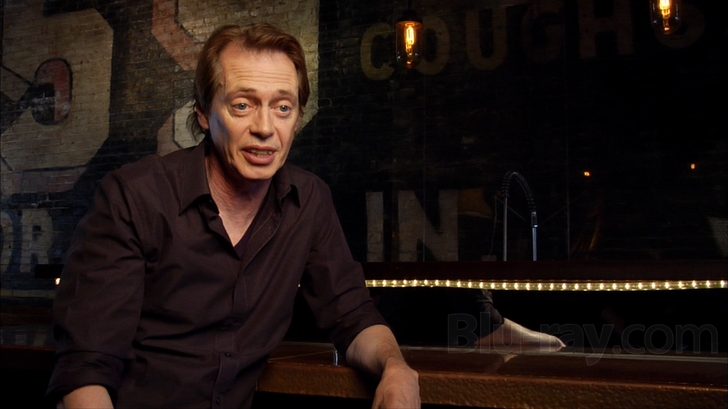
Blank City isn't the disc you'll reach for when you want to demo your home theater system, but you knew that already. This 1080p/AVC-encoded Blu-ray presentation is one of those this is is as good as it's ever going to look scenarios. The documentary is split almost equally between recently recorded interview sequences--which were shot digitally, with what looks to be prosumer-model cameras--and the No Wave films themselves, which vary greatly in picture quality, as you might imagine.You'll see ultra-grainy Super-8 material and smeary, repeatedly duped VHS video footage. Some clips are fairly clean, others scratched and murky; and while some are mastered in HD, most appear to have been transferred in standard definition. Color, contrast, tonality, clarity--all over the place. But that's part of the charm; the no-budget No Wave films are loveably grimy. As for the "talking head" interviews, they suffer from some chroma source noise and are never exactly sharp sharp, but they get the job done. No real distractions here.
Blank City Blu-ray Movie, Audio Quality
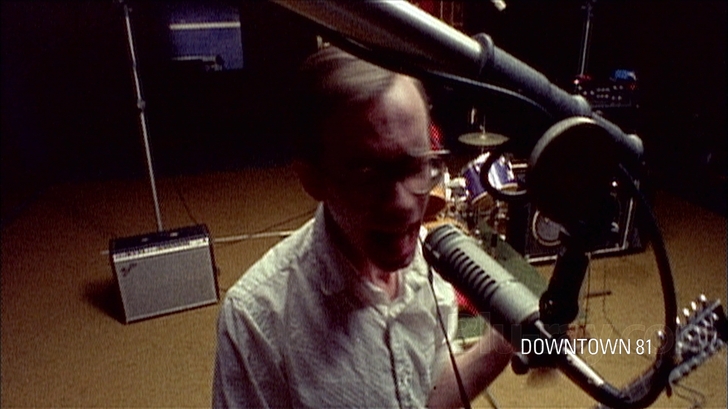
Ditto for the film's lossless DTS-HD Master Audio 5.1 surround track, which does what it needs to do and not much more. Like
the picture quality, the audio for the film clips is all over the place--usually slightly muffled and thin--but that's unavoidable
when you're dealing with such D.I.Y. source material. What's most important is that the vocals during the interviews are always
clean, balanced in the mix, and easily understood. The rear channels probably aren't used enough to justify the use of a full 5.1
presentation, but occasionally music from one of the No Wave bands is bled into the surround speakers. It would be
amazing if Kino-Lorber had included a CD with songs from the film, but I get that licensing issues are tricky. If you really want
to own some No Wave music, a good place to start is No New York a Brian Eno-curated album from 1978 that has
tracks from The Contortions, Teenage Jesus and the Jerks, Mars, and D.N.A. It's still in print on CD and vinyl.
Do note that there are no subtitle options on the disc for those that might need or want them.
Blank City Blu-ray Movie, Special Features and Extras
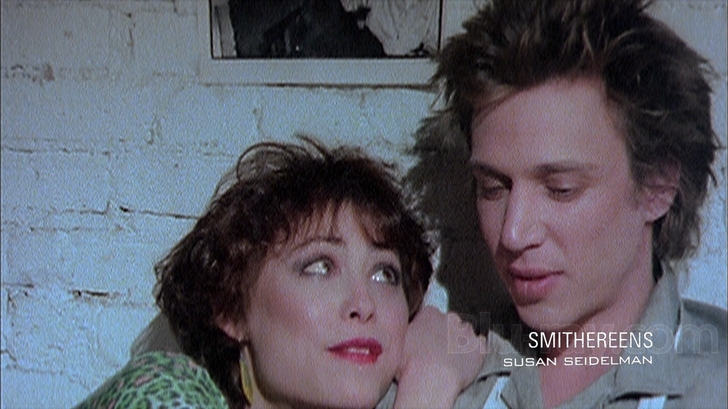
- Celine Danhier Interview (1080p, 6:23): The film's director, Celine Danhier--who's exceptionally attractive, by the way--discusses how she came to make the film.
- Deleted/Extended Scenes (1080p, 40:46): There's nearly a second documentary's worth of deleted material here, mostly consisting of extended interviews.
- Outtakes (1080p, 4:09): A few funny moments from the interviews, including Nick Zedd spotting a cockroach crawling across the floor.
- Trailer (1080p, 2:18)
Blank City Blu-ray Movie, Overall Score and Recommendation
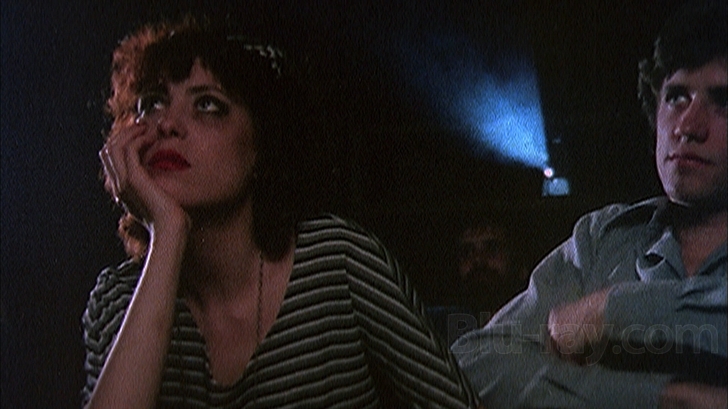
Blank City is a fond account of the no-rent, no-budget cinema being made in New York in the late '70s and early '80s, told by the artists themselves--including Jim Jarmusch, John Lurie, Lydia Lunch, and Amos Poe. It's a great primer for the No Wave movement--which was short-lived but burned brightly--and if nothing else, it might inspire you to pick up a camera and go make some art. Recommended!
Similar titles
Similar titles you might also like

Soundtrack to a Coup d'Etat
2024

Burden of Dreams 4K
1982

Scala!!!
Or, The Incredibly Strange Rise And Fall Of The World's Wildest Cinema And How It Influenced A Mixed-up Generation Of Weirdos And Misfits
2023

The American Dreamer
1971

Hollywood Chinese
2007

A Bigger Splash
1973
Divine Horsemen: The Living Gods of Haiti
1985

Notfilm
2015

Leviathan
2012

Portrait of a Young Man
Portrait of a Young Man in Three Movements
1931

Women Make Film: A New Road Movie Through Cinema
2018
Wheel of Time
2003

Mur Murs
Mural Murals
1981

No Home Movie
2015

Symbiopsychotaxiplasm: Take One
1968

Heart of a Dog
2015

Kanehsatake: 270 Years of Resistance
Slipcover in Original Pressing
1993

Hookers on Davie 4K
Slipcover in Original Pressing
1984

The Look of Silence
2014

Helicopter Canada
1966