Black Tea Blu-ray Movie
HomeBlack Tea Blu-ray Movie 
Cohen Media Group | 2024 | 111 min | Not rated | Jul 15, 2025

Movie rating
Movie has not been rated yetBlu-ray rating
| Users |  | 0.0 |
| Reviewer |  | 3.0 |
| Overall | | 3.0 |
Overview
Black Tea (2024)
After saying "no" on her wedding day, Joice leaves the Ivory Coast to start a new life in Guangzhou, China.
Starring: Nina Melo, Han Chang, Ke-Xi Wu, Michael Chang (XXXI)Director: Abderrahmane Sissako
| Drama | Uncertain |
| Foreign | Uncertain |
| Romance | Uncertain |
Specifications
Video
Video codec: MPEG-4 AVC
Video resolution: 1080p
Aspect ratio: 1.85:1
Original aspect ratio: 1.85:1
Audio
Mandarin: DTS-HD Master Audio 5.1
Mandarin: DTS-HD Master Audio 2.0
Subtitles
English
Discs
Blu-ray Disc
Single disc (1 BD)
Playback
Region A (B, C untested)
Review
Rating summary
| Movie | | 3.0 |
| Video |  | 4.5 |
| Audio | | 4.5 |
| Extras |  | 1.0 |
| Overall | | 3.0 |
Black Tea Blu-ray Movie Review
Reviewed by Jeffrey Kauffman July 24, 2025Abderrahmane Sissako offered so-called "discerning cineastes" the rather remarkable Timbuktu several years ago (also released on Blu-ray by Cohen), and had that film been Sissako's debut effort as a director and writer, one might be prone to saying that Black Tea might be suffering from that infamous "sophomore slump". The fact is, though, that Sissako had several relatively high profile outings even before Timbuktu, though it's perhaps salient to note that among them only Bamako has made it into our database as of the writing of this review. One way or the other, Black Tea is a rather startling departure (in more ways than one) from Timbuktu and/or Timbuktu, documenting the unique story of an Ivory Coast "bride to be" named Aya (Nina Mélo) who shocks the assembled multitudes on her wedding day by announcing she's not going through with it. The film then segues forward to find Aya having transplanted herself to Guangzhou, China, where she finds work in a tea shop.
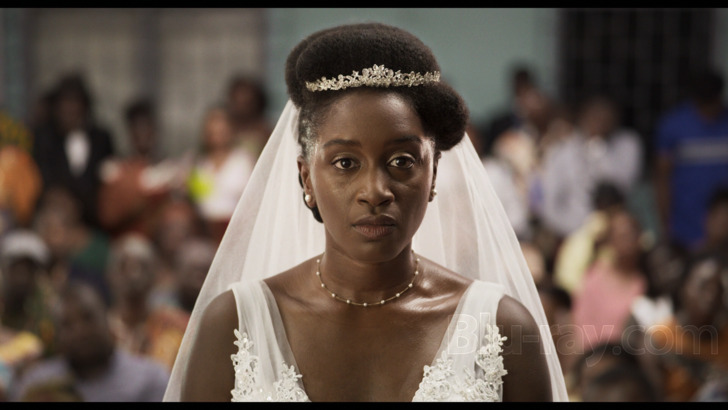
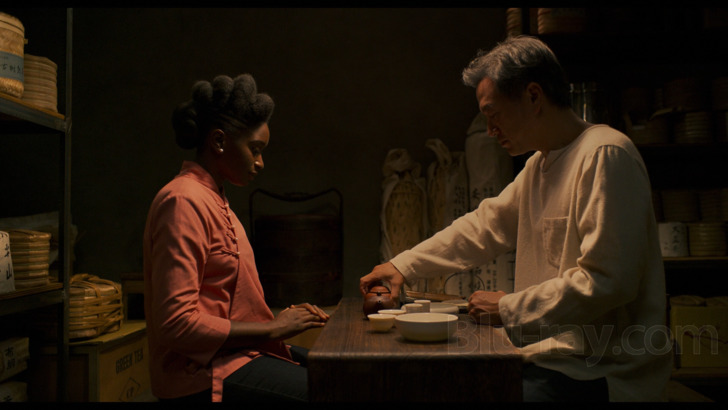
What ensues is a clash of cultures on both professional and personal fronts as Aya begins a romantic relationship with Cai (Chang Han), the owner of the tea shop. The story here has elements of a traditional "fish out of water" tale, as well as a certain Romeo and Juliet-esque subtext involving at least one family not especially happy about the relationship, but things may be hobbled somewhat by some at least intermittently unclear writing that sees Aya strong enough to simply walk away from her about to be married life, but then kind of curiously almost more of an observer rather than a participant as she attempts to matriculate into her new existence. The film is incredibly strong in evoking a mood and in presenting some luscious vignettes involving "tea ceremonies", not to mention a simply scenic environment which Sissako ably exploits, but the story here never develops much momentum, and there are some rather odd detours into what might be imagination or fantasy that further obfuscate any straightforward presentational proclivities.
Black Tea Blu-ray Movie, Video Quality
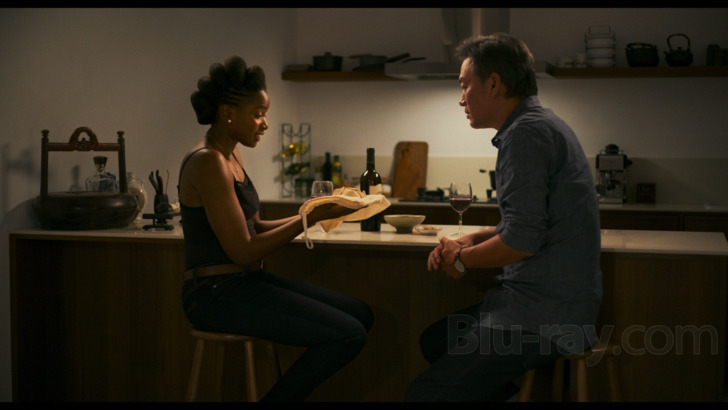
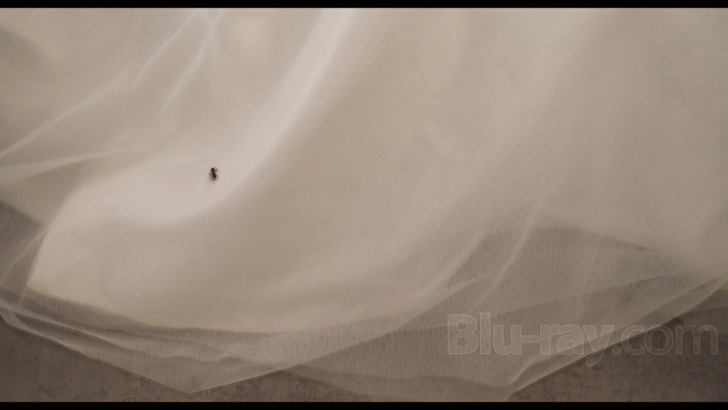
Black Tea is presented on Blu-ray courtesy of Cohen Media Group's Contemporary Classics imprint with an AVC encoded 1080p transfer in 1.85:1. As of the writing of this review, the IMDb doesn't really have any technical information imparted, but I was able to find some online interviews with cinematographer Aymerick Pilarski where he mentions using the Sony Venice (along with some vintage Cooke lenses), though I'm still uncertain of the resolution of the DI. This is an often stunning looking presentation, despite the fact that rather large swaths of the film play out in less than fulsome lighting. Even with that kind of intentional "interior" aesthetic, the palette is regularly gorgeously suffused, and detail levels remain strong throughout. There are some obvious "arty" moments where, for example, Aya may be imagining or fantasizing and things get deliberately hazy with imagery that almost looks like it's being refracted through a prism.
Black Tea Blu-ray Movie, Audio Quality
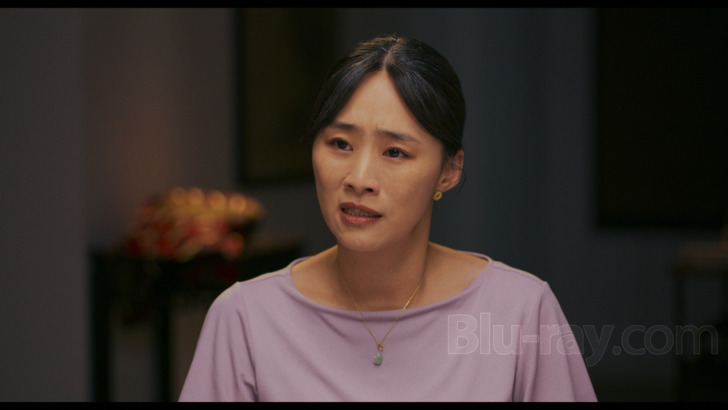
Our language specs only allow for one main language to be listed, and in this particular case that may be something of an incomplete nature, as the film offers a variety of languages including English, French and Portuguese in addition to the Mandarin listed above, available in either DTS-HD Master Audio 5.1 or DTS-HD Master Audio 2.0. While that surplus of various languages gives Black Tea some really interesting variety in terms of the spoken material, it's really in the gorgeously evocative score by Armand Amar, along with a glut of (sometimes rather subtle) ambient environmental effects where the surround track really opens things up. Both tracks deliver all elements, including dialogue, without any issues. Optional English subtitles are available (and, yes, they are optional). For those interested, especially those who appreciate Amar's score in this film, if you can find it, I highly recommend Amar's score for Earth from Above, available on CD.
Black Tea Blu-ray Movie, Special Features and Extras
- Berlin Film Festival Press Conference (HD; 44:06) features the principal cast and Sissako in what looks like a fairly sparsely attended event. Several languages are spoken, with English voiceover translating.
- Theatrical Trailer (HD; 1:37)
Black Tea Blu-ray Movie, Overall Score and Recommendation
Black Tea is gorgeous to look at and beautiful to listen to, but its narrative never really delivers on any significant emotional level, which is really kind of surprising given the extremely unique story being told. The key art as shown on the cover of this release probably can't help but recall a certain similar image from Ghost, but perhaps ironically this film may be a bit lifeless itself. Technical merits are solid and the included Q & A session interesting, for anyone who may be considering making a purchase.