Black Roots Blu-ray Movie
HomeBlack Roots Blu-ray Movie 
Milestone | 1970 | 62 min | Not rated | No Release Date
Price
Movie rating
7.2 | / 10 |
Blu-ray rating
| Users |  | 0.0 |
| Reviewer |  | 4.0 |
| Overall | | 4.0 |
Overview
Black Roots (1970)
As black leaders recall individual incidents of racial oppression, mostly in the South, black musicians provide blues accompaniment. Included is footage of urban street life.
Director: Lionel Rogosin| Documentary | 100% |
Specifications
Video
Video codec: MPEG-4 AVC
Video resolution: 1080p
Aspect ratio: 1.34:1
Original aspect ratio: 1.37:1
Audio
English: LPCM 2.0 Mono (48kHz, 16-bit)
Subtitles
English SDH
Discs
25GB Blu-ray Disc
Single disc (1 BD)
Playback
Region free
Review
Rating summary
| Movie | | 4.0 |
| Video |  | 3.5 |
| Audio | | 3.5 |
| Extras |  | 3.0 |
| Overall | | 4.0 |
Black Roots Blu-ray Movie Review
Telling Tales
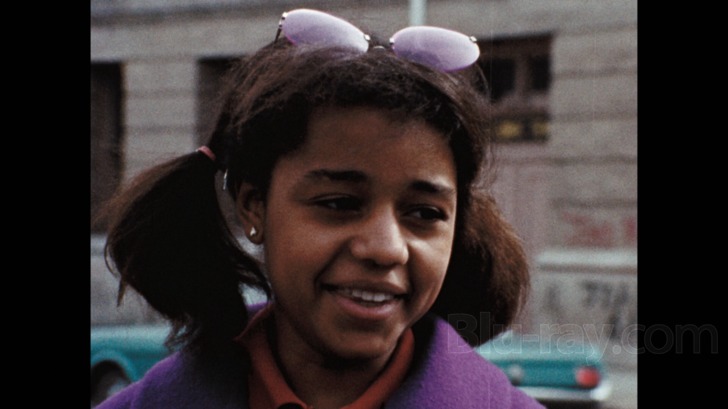
Reviewed by Michael Reuben February 24, 2014Lionel Rogosin's brief notoriety for On the Bowery may have helped him get Come Back, Africa made, but his long struggle to obtain financing for the anti-war film Good Times, Wonderful Times, along with that film's association with movements perceived to be naive at best and pro-communist at worst, closed most doors to him. It would be four years before Rogosin could raise funds for another feature documentary, and it had to be a concept stripped to the bare minimum. Having chronicled apartheid in South Africa, Rogosin now chose to make his contribution to the civil rights movement in his own country. Rogosin didn't have the money for a story, multiple locations or even a lengthy shoot, but he did have the gift he had first deployed in On the Bowery, which was an uncanny ability to engender trust in people with whom, on the surface, he had nothing in common. In Black Roots, he did little more than persuade a group of African-Americans to tell stories about themselves and their experiences to the camera and each other, but Rogosin was able to get them to speak in a way they normally would not in the presence of a white man, at least in that era. This may be difficult for anyone who wasn't alive then to imagine, but such conversations simply did not occur in such a polarized and tense age—or if they did, they quickly turned ugly. Through careful editing with faces in crowds, set to the rhythm of blues and African music, Rogosin created both a cultural collage and a window into what had previously been a world invisible to mainstream America.
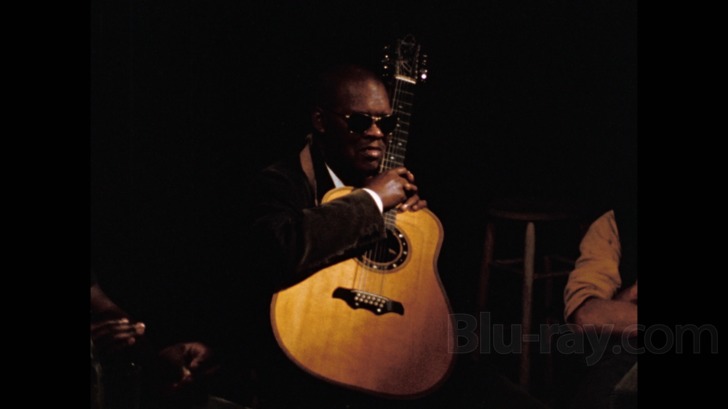
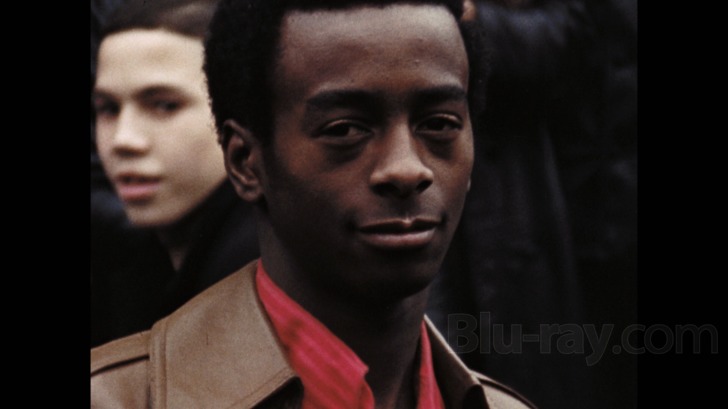
Black Roots consists of three alternating strands, the first of which begins with the extended opening credit sequence where impassive faces of unidentified African-Americans slide past the camera in closeup, usually pausing to look back for a moment. Throughout Black Roots, Rogosin's camera ventures into unidentified locations to focus on individual faces in crowds. They are young, old, happy, sad, all types, but they have one thing in common, which is that they are everyday people. No doubt, many messages could be taken from these sections, but certainly one of them is that the stories we hear in the other two portions of the film are legion. In the second strand, a group of African-Americans sit at tables and chairs in what resembles a bar or coffee house. Some talk, others listen, and a few play music. One of them is the Reverend Gary Davis (sometimes known as "Blind Gary Davis"), a renowned gospel and blues singer, generally seen with a guitar in his hands, as he is here. They tell stories from their past, some from personal experience, some passed down. Not all of the stories have clear-cut heros and villains. Indeed, the most shocking, which is told by Reverend Davis, is awash in moral contradictions. A third strand involves Florence Kennedy, who appears in the tavern scenes but does not speak there. She is interviewed separately by Rogosin, because her style lends itself to a more traditional interview format. (As we learn in the accompanying documentary about the making of the film, Kennedy was the first black woman to graduate from Columbia Law School.) With wit and insight, she describes how she and her sisters were chased after school, until the day they realized that they could turn around, form a group and fight back against the white bullies. She also relates how her father faced down a group of Klansmen on their front lawn and describes her mild-mannered mother, who was slow to anger but fierce and terrifying when pushed over the edge. Kennedy's observations provide the explicit intellectual underpinnings of Black Roots. The rest arises through montage and music. In 1970, James Brown's "Say It Loud (I'm Black and I'm Proud)" still made some people nervous; so of course Rogosin, ever the agitator, ends the film with that song playing on the soundtrack. But he bookends Brown's song with Sly and the Family Stone's "Thank You (Falettinme Be Mice Elf Agin)" and Jimi Hendrix' "Purple Haze", major crossover hits that add significant layers of meaning to Brown's message that are both hopeful and prescient.
Black Roots Blu-ray Movie, Video Quality
A note preceding the Blu-ray presentation states as follows:
The restoration of Black Roots has been supported by Rogosin Heritage Inc. and carried out by Fondazione Cineteca di Bologna. The restoration is based on the original negatives preserved at the Anthology Film Archives in New York. The restoration was carried out at L'Immagine Ritrovata laboratory in 2012.By all appearances, Black Roots was shot on 16mm film. The cinematographer was J. Robert Waggoner, who would reunite with Rogosin two years later for Black Fantasy, his film on interracial marriage. Given the excellent work achieved by the Cineteca di Bologna on the two Rogosin films included on Milestone's Vol. 1 set, one can only assume that the negative for Black Roots was in poor shape before restoration. Although obvious dirt, speckles and spots have been largely removed, the locations of the many repaired vertical scratches ("gashes" might be a better word) are still evident, although the scratches themselves have been filled in. I can happily report that the film's natural grain pattern has been preserved intact, without filtering or artificial sharpening. However, portions of the image on Milestone Film's 1080p, AVC-encoded Blu-ray will strike some Blu-ray viewers as excessively grainy, which is not a fault in the transfer but a function of low-light conditions. The grainiest portions are consistently those shot on the makeshift soundstage housing the bar/coffee house set. The outdoor shots and the Florence Kennedy interviews have far less noticeable grain. Blacks are solid and deep. Colors are decently saturated, but they do not leap off the screen. Rogosin wanted to capture the everyday world, and he did not boost color for additional glossiness. Milestone has achieved a relatively high average bitrate of 29.07 Mbps, which is certainly desirable given the grainy nature of the image in large portions of the film. No compression artifacts were in evidence. The video grade assigned to this presentation will undoubtedly provoke complaints, but I believe that video grades should be based, at least in large part, on accuracy rather than eye appeal.
Black Roots Blu-ray Movie, Audio Quality
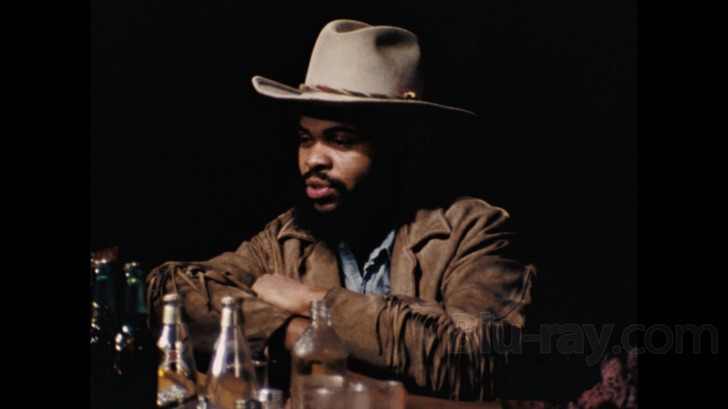
The film's original mono soundtrack is presented as PCM 2.0, and it probably sounds about as good as it can, which isn't great. Florence Kennedy's interviews were well-miked, but the conversations on the bar/coffee house set sound like they were recorded from a distance. As a result, the voices are flat and muddy. Speakers can be understood, but one must strain to hear them. Fortunately, there are optional subtitles. The musical selections, both pop recordings and live performance, are also just adequate. They sound better than AM radio of the era but are nothing compared to what a contemporary mono recording might offer in terms of fidelity and dynamic range. Here again, this is probably as good as they can sound.
Black Roots Blu-ray Movie, Special Features and Extras
- Bitter Sweet Stories (1080p; 1.78:1; 28:24): Directed by Michael Rogosin, this documentary on the making of Black Roots includes revealing contemporary interviews with Jim Collier (who appears in the film) and editor Ruth Schell. Lionel Rogosin himself is heard in a recorded lecture delivered in 1972. The documentary also fills in the biography of Florence Kennedy, whose incisive comments and insightful anecdotes are interspersed throughout Black Roots without any information about her background. In fact, she was a trailblazing attorney, who history is told by noted criminal attorney, Gerald Lefcourt, whom she mentored and who remained her friend until her death. Also interviewed is Alan Evans, described in the film's credits as "Arbiter of Cultural Traditions", which is a roundabout way of saying that he was an expert on the music heard in the film.
- Have You Seen Drum Recently? (480i; 1.33:1; 1:14:19): This 1998 documentary focuses on Drum Magazine, a South African "lifestyle" magazine that enjoyed a surge in popularity during the Fifties for its focus on blacks. The director of the film, Jürgen Schadeberg, was a photographer for Drum. The documentary quickly shifts into the early, naively hopeful days of the anti-apartheid movement and the increasingly brutal response from the white South African government. Rogosin became familiar with Drum while making Come Back, Africa.
Black Roots Blu-ray Movie, Overall Score and Recommendation
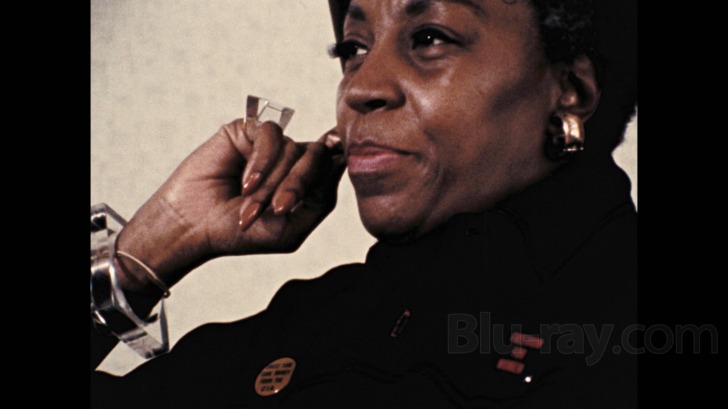
Rogosin's Black Roots is very much a film of its time, both in cinematic style and in subject matter. With today's technology, a budding filmmaker could do far more logistically on Rogosin's limited budget, but few would have Rogosin's eye or his ability to get people to speak openly. Besides, Rogosin captured a socio-psychological landscape that has changed dramatically, just as New York's Bowery has evolved since the filmmaker spent weeks in its back alleys making friends with the regulars. Black Roots captures an essential perspective on America at the height of the civil rights movement. For that alone, it is worth seeing.
Similar titles
Similar titles you might also like
(Still not reliable for this title)

Rivers & Tides
2001

Heartworn Highways
1976

Adventures on the New Frontier
1961

Cameraperson
2016

Streetwise
1984

Nudist Life
10 Days in a Nudist Camp / Shangri-La Forbidden Fruit: The Golden Age of the Exploitation Picture, Vol. 14
1961

Tiny: The Life of Erin Blackwell
2016

The Beales of Grey Gardens
included with "Grey Gardens" release
2006

On the Bowery
1956
My Generation
2017
Regrouping
included with "Born in Flames" release
1976

Minding the Gap
2018

F for Fake
1973

Color Adjustment
1992

American Boy
included with "Scorsese Shorts" release
1978

Vernon, Florida
1981

Tokyo-ga
included with "Late Spring" release
1985

Pavements 4K
Slipcover in Original Pressing
2024

Paris Is Burning
1990

Black Is... Black Ain't
1995