Australia's First 4 Billion Years Blu-ray Movie
HomeAustralia's First 4 Billion Years Blu-ray Movie 
Nova: Australia's First 4 Billion YearsPBS | 2013 | 217 min | Not rated | Jun 25, 2013
Price
List price:Listed on Amazon marketplace

Movie rating
5.8 | / 10 |
Blu-ray rating
| Users |  | 2.5 |
| Reviewer |  | 3.5 |
| Overall |  | 3.0 |
Overview
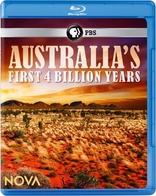
Australia's First 4 Billion Years (2013)
Of all the continents on Earth, none preserves a more spectacular story of our planet's origins than Australia. NOVA's four-part "Australia's First 4 Billion Years" takes viewers on a rollicking adventure from the birth of the Earth to the emergence of the world we know today.
Starring: Richard Smith (LIII), Jim Gehling| Documentary | 100% |
| Nature | 58% |
Specifications
Video
Video codec: MPEG-4 AVC
Video resolution: 1080i
Aspect ratio: 1.78:1
Original aspect ratio: 1.78:1
Audio
English: DTS-HD Master Audio 2.0
Subtitles
English SDH
Discs
25GB Blu-ray Disc
Two-disc set (2 BDs)
Playback
Region A (B, C untested)
Review
Rating summary
| Movie |  | 4.0 |
| Video | | 4.0 |
| Audio | | 3.5 |
| Extras |  | 0.0 |
| Overall | | 3.5 |
Australia's First 4 Billion Years Blu-ray Movie Review
You call that history? Now THAT'S history.
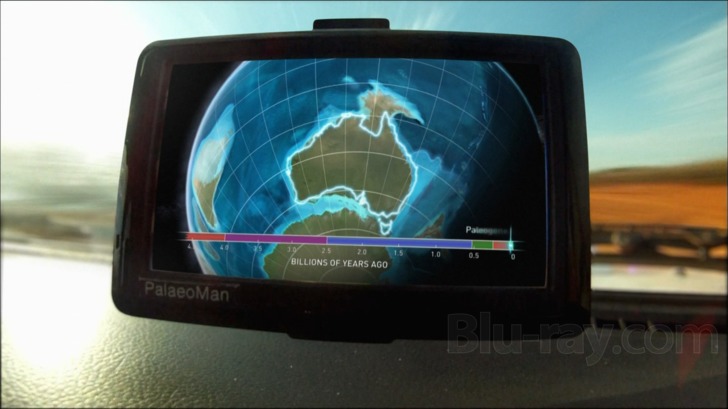
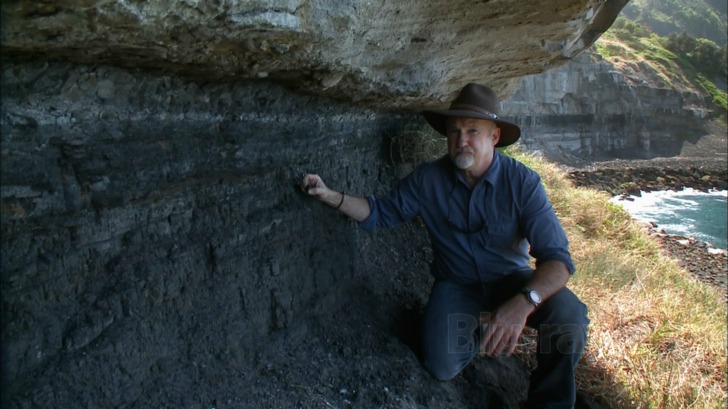
Reviewed by Brian Orndorf June 26, 2013Dr. Richard Smith is a scientist craving an opportunity to share his beloved home continent of Australia with the viewing audience. A jubilant Aussie with profound knowledge of the natural world, Dr. Smith isn’t looking explore recent developments in the land, but desires to whisk the audience back over four billion years to witness Australia’s birth and development into a land of fascinating creatures and unimaginable beauty and wonder. And how does one travel back in time these days? By a magical GPS device that guides Dr. Smith down a rocky road of existence, watching the terrain transform right in front of his eyes as he details changes encountered while his jeep rockets into the past.
Armed with only a modest budget to captures the leaps in time, “Australia’s First 4 Billion Years” is actually quite ambitious. The bulk of the series is devoted to Dr. Smith’s wild chase around Australia, spending mere minutes at different locations as the host isolates the importance of the stopovers, presenting remarkable land formations, evidence of dinosaur and early animals, and puzzles of fungus and minerals, all of which contribute to a deeper appreciation of Australia’s debut and chaotic path to the continent we all know and love today. Unfortunately, CGI isn’t quite up the challenge of creating evocative windows to the past, carrying a budget appearance that could use a great deal more texture and fluid movement, but the basic points of appearance and behavior are made. After all, there’s really no need for visual effects with Dr. Smith on the case, with his supercharged gestures and baffling verbal emphasis generating enough energy to keep the series on track.
Episodes
“Awakening” (54:17, Original Airdate: 4/10/13)
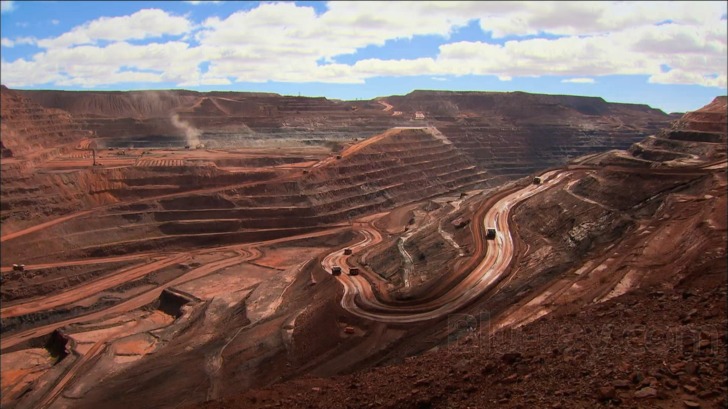
Warming up the magical time-travel GPS, Dr. Smith begins this journey driving along the roads of history, speeding across Australia as he takes the viewer back four billion years, before life as we know it was even a possibility. He visits the birth of plate tectonics, which formed the Earth, leaving a map of development in zircon crystals, used by scientists to acquire an understanding of planetary construction. We visit Milena Station and greet Patrick Walsh, who shares the importance of the crystal with Dr. Smith. Time spent at the Wolfe Creek Crater surveys the violence of Australia’s early days. Shark Bay in Western Australia introduces the importance of stromatolites, built up through billions of years of bacterial activity, while David Flannery discusses the delicate guide of life found in fungal layers, again reinforcing the theme of growth. In the Karijini National Park, a reservoir of iron remains from early waters, which has created an industry in Australia with the formation of iron ore mines. As the oxygenation of the atmosphere begins, the “boring billion” commences, plagued by a few ice ages. Dr. Smith eventually explores the development of the first animals in the Australian region, surveying fossils formed during a period ruled by the supercontinent Gondwana. Finally, the Cambrian Explosion is discussed, visiting the Kangaroo Islands for additional fossil life and consideration of the arthropod’s daily existence.
“Life Explodes” (54:22, Original Airdate: 4/17/13)
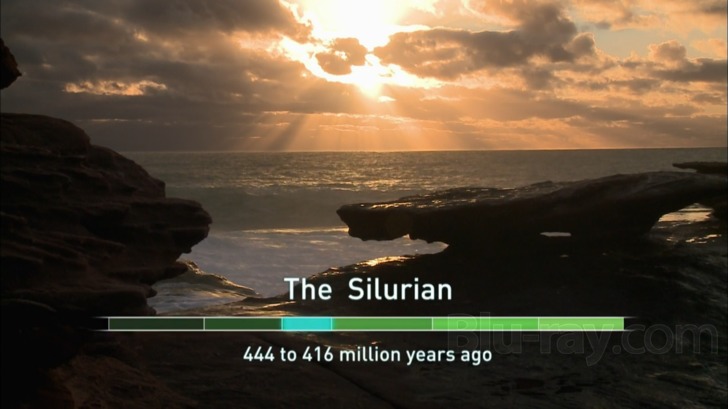
Continuing his journey on the “Roads of Time,” Dr. Smith pulls into the Simpson Desert to trace the history of the Earth’s earliest fish, the Arandaspis. A descent into the Murchison Gorge reveals various tracks from sea-based life beginning to come ashore. In Yea, Victoria, fossilized remains of baragwanathia, the world’s oldest plant, is found, while time spent with Lisa Worrall in the MacDonnall Ranges inspects a geological story of formation. At the Bungle Bungles, patterns of river flow create impressive rock formations. Greeting Kate Trinasstic, Dr. Smith recounts the saga of the Devonian Reef, studying fish fossils to achieve a greater understanding of reproductive matters during a most tumultuous time. Our host inspects the particulars of lungfish and handfish, two examples of evolution progression during the rapidly passing years. Brief time with the “Lizards of Oz” is offered, with Dr. Smith soon traveling to Maria Island to look over the remains of ancient clams, while a visit down into a coal mine located in the bowels of Sydney provides clues to the legacy of life found during the Permian era of Australia’s development.
“Monsters” (54:17, Original Airdate: 4/24/13)
It’s now the Mesozoic era, with its sweeping changes to life around Australia, taking Dr. Smith to Sydney to examine the land’s great sandstone formations with Tim Flannery. At Mount Morgan, there’s a rare opportunity to spy authentic dinosaur footprints in ancient mud, while the botanical landscape of the continent is found in rare pockets of conifers and “pineosaur” discoveries. Traveling to Gosses Bluff, Dr. Smith reveals a 13-mile-wide crater, site to an immense collision that disrupted life across the globe. The chance to spot the remnants of a dinosaur stampede remains at Lark Quarry, showcasing a floor of footprints that suggest great movement and chaos. David and Judy Elliot are sheep farmers with a passion for discovering unique dino remains, helping to provide a special Australian stamp on the creatures, with one named after the song “Waltzing Matilda.” Exploring the Great Artesian Basin, clues are left behind detailing the boundaries of the Eromanga Sea, which once covered a large portion of the land. At Coober Pedy, pockets of opal are the key to a dino past, while a trip to the Coral Sea inspects the saga of the nautilus. And as Gondwana begins to break up for good, Australia starts to take shape, beginning its movement to the landmass we know today.
“Strange Creatures” (54:22, Original Airdate: 5/1/13)
As Australia continues its progression into its most recognizable form, the Huon Pine, the continent’s oldest living organism, remains a vital connection to its past. The end of Gondwana takes shape in Tasmania, where volcanic rock outlines the force of movement. Dr. Smith covers the rise of marsupials across the land, while spotlighting the Cassowaries of Daintree, who provide waste product vital to the growth of the rainforest. With Australia’s drift comes an expansion of life, highlighting the rise of the kangaroo. In Tahune Forest, eucalyptus trees are investigated, and Dr. Smith visits a subterranean megafauna graveyard. Finally, the first people begin to arrive, and with such an introduction comes a cruel reminder of the area’s immediate dangers, challenging the newcomers. In Lake Mungo, Nicola Stern unearths ancient tools and skeletons, and on Lizard Island, the changing face of the Great Barrier Reef provides a sobering reminder that humanity is in charge of the next four billion years, and they aren’t doing a particularly good job of environmental protection.
Australia's First 4 Billion Years Blu-ray Movie, Video Quality
The AVC encoded image (1.78:1 aspect ratio) presentation is almost a throwback to HD-shot nature documentaries of recent memory. Refusing filmic filters, the cinematography is video-like and clean, capturing the exact feel of the locations, boasting fresh colors that make blue skies and red rocks pop. Disparate environments are rich with stable, purposeful hues, while skintones run naturally, often absorbing the brightness of the surroundings. Minor banding, ringing, and aliasing are detected, but seldom distract. Blacks are generally deep and communicative, allowing the viewer to study distances and the particulars of rock formations and bacterial layers. In all, it's a very vivid show that makes its presence felt on BD.
Australia's First 4 Billion Years Blu-ray Movie, Audio Quality
The 2.0 DTS-HD MA sound mix makes a thudding first impression, with the percussive score announcing itself via a solid bass presence, woven suitably into the main program, keeping the musical mood buoyant enough to compete with Dr. Smith's animated gestures. The host's voice is presented with clarity and crisp pronunciation, easing the burden of heavy accents from Dr. Smith and his various guests. Atmospherics are cooked, making an immediate impression with gurgling waters and whipping winds, roaring animals and the sting of heat, with the track attempting to communicate naturalistic events without the benefit of live sound. While it seems to hunger for a more circular listening experience, the mix satisfies without distortion.
Australia's First 4 Billion Years Blu-ray Movie, Special Features and Extras
There is no supplementary material on this disc.
Australia's First 4 Billion Years Blu-ray Movie, Overall Score and Recommendation
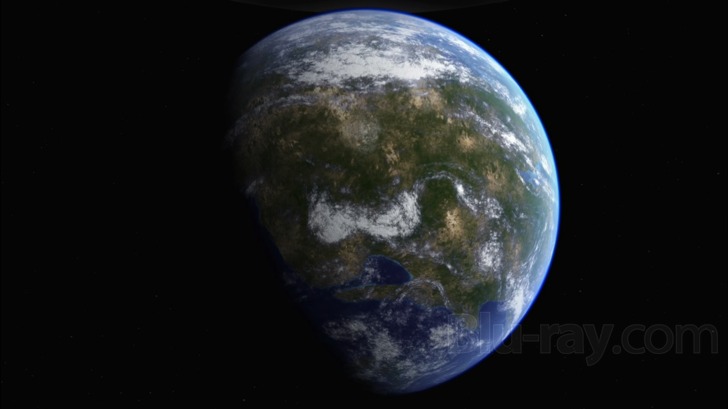
As with most "Nova" programming, the commitment to scientific study is outstanding, treating the subject with the authenticity it deserves, while still leaving room for the layperson to grasp the magnitude of Australia's history as it's recalled brick-by-brick by a most enthusiastic host. "Australia's First 4 Billion Years" is dutifully educational and exhaustive, but what's most invigorating about the series is how determined it's to convey the breadth of life on the continent, singling out remarkable minutiae to spotlight a history of monumental growth and peculiarity, paving the way for the next four billion years.