Artie Shaw: Time Is All You've Got Blu-ray Movie
HomeArtie Shaw: Time Is All You've Got Blu-ray Movie 
Slipcover in Original PressingFilm Movement | 1985 | 115 min | Not rated | May 27, 2025


Movie rating
Movie has not been rated yetBlu-ray rating
| Users |  | 0.0 |
| Reviewer |  | 4.5 |
| Overall | | 4.5 |
Overview
Artie Shaw: Time Is All You've Got (1985)
Biography of clarinetist and bandleader Artie Shaw, one of the principal figures of the big band/jazz era of the late 1930s and 1940s. He discusses his constant need to seek new challenges, which led to numerous retirements and career changes including his foray into writing, which had long been his primary intention. He speaks about his difficulty in reconciling his fans' popular expectations with his personal, more esoteric musical ambitions. His many years of retreat from public life are also discussed, as well as his notorious series of unsuccessful marriages.
Starring: Artie Shaw, Mel Tormé, Lana Turner, Helen Forrest (I)Director: Brigitte Berman
| Documentary | Uncertain |
| Music | Uncertain |
| Biography | Uncertain |
Specifications
Video
Video codec: MPEG-4 AVC
Video resolution: 1080p
Aspect ratio: 1.29:1
Original aspect ratio: 1.33:1
Audio
English: LPCM 2.0 Mono
Subtitles
English
Discs
Blu-ray Disc
Single disc (1 BD)
Packaging
Slipcover in original pressing
Playback
Region A (B, C untested)
Review
Rating summary
| Movie | | 4.5 |
| Video | | 4.5 |
| Audio |  | 4.0 |
| Extras |  | 2.0 |
| Overall | | 4.5 |
Artie Shaw: Time Is All You've Got Blu-ray Movie Review
Reviewed by Jeffrey Kauffman May 25, 2025The oft quoted adage (and/or memorable tune title) states "video killed the radio star", but what tended to make radio stars back in the day, at least before the blandishments (?) of television came along, was: talent. And in the case of instrumentalists who hit it big during the Big Band Era, that "talent" was often virtuosity on whatever their chosen instrument might be. In that regard the Swing Era had two ace clarinet players in the forms of Benny Goodman, famously dubbed the King of Swing, and Artie Shaw, a guy who had labored (quite successfully) as a session player and (less successfully) band leader before hitting it big (huge, actually) in 1938 with his epochal recording of Cole Porter's "Begin the Beguine". It's at least arguable that Shaw was at least the technician that Goodman was, and perhaps even more so, but he had a somewhat troubled persona that at least interstitially led to some problems both personally and professionally.
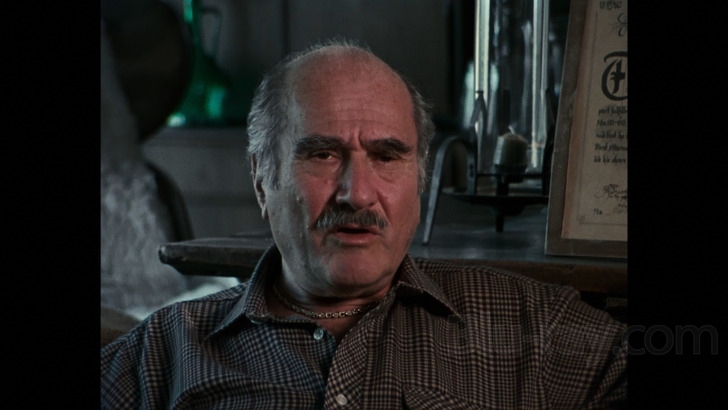
Shaw's evidently quite contentious personality may have one of its prime examples courtesy of a lawsuit he brought against co-producer, writer, director and narrator Brigitte Berman after the film won (actually tied for, interestingly) that year's Best Documentary Feature at the Academy Awards. But there are plenty of other examples liberally on display throughout this really captivating biography, including Shaw's series of eight marriages, often followed by very quick divorces (including at least three "celebrity" marriages to the likes of Lana Turner, Ava Gardner and Evelyn Keyes, as well as with several others to women of considerable note if perhaps somewhat less immediate name recognition). But he was even volatile on a purely career level, outright "quitting" more than once in a kind of protest to being a wheel in some kind of marketing cog.
To use a recording term, on the flip side Shaw was considerably forward thinking in any number of ways. He utilized a string quartet with a jazz ensemble at least a decade before so-called Third Stream efforts, and later blended symphonic and jazz idioms in much the same way Third Streamers did. He also rather incredibly not only hired Billie Holiday as one of his featured vocalists in his band, he took her on tour with him throughout the southern United States, where things got at least occasionally on the dangerous side.
Artie Shaw: Time Is All You've Got Blu-ray Movie, Video Quality
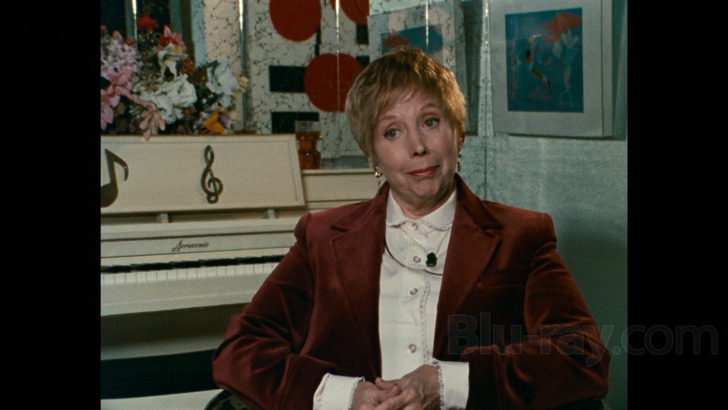
Artie Shaw: Time Is All You've Got is presented on Blu-ray courtesy of Film Movement's Film Movement Classics imprint with an AVC encoded 1080p transfer in 1.29:1. The film's 4K restoration (evidently done a few years ago) is advertised in some prefatory text cards, and while undeniably heterogeneous looking at times due to the wide variety of source material utilized, there's a really appealing organic appearance and the (then) contemporary interview sequences have nicely suffused color. Those same interview sequences also tend to offer the most secure detail levels, probably understandably, and fine detail on things like Shaw's ribbed sweaters is quite precise looking. Some of the archival material doesn't fare nearly as well, and it certainly looks like some of Shaw's film appearances were sourced off of pretty shoddy videotape.
Artie Shaw: Time Is All You've Got Blu-ray Movie, Audio Quality

Artie Shaw: Time Is All You've Got features a nice sounding LPCM 2.0 Mono track. This is by and large either a talking head or narrated (by Brigitte Berman) affair, with Shaw's memorable music tending to be utilized either interstitially or as quasi-underscore. All spoken material is delivered cleanly and clearly. Optional English subtitles are available.
Artie Shaw: Time Is All You've Got Blu-ray Movie, Special Features and Extras
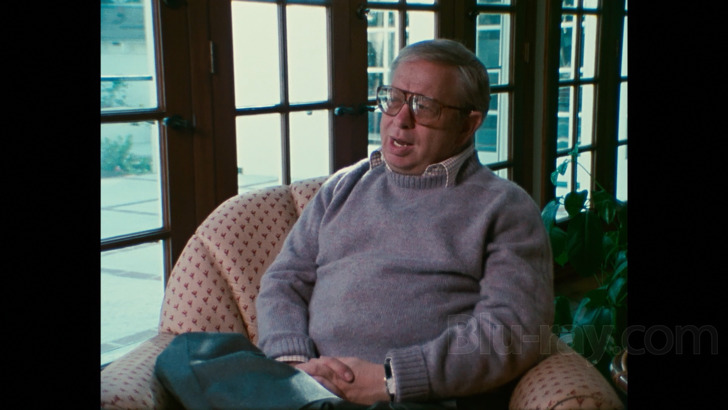
- Audio Commentary with Director Brigitte Berman
Artie Shaw: Time Is All You've Got Blu-ray Movie, Overall Score and Recommendation
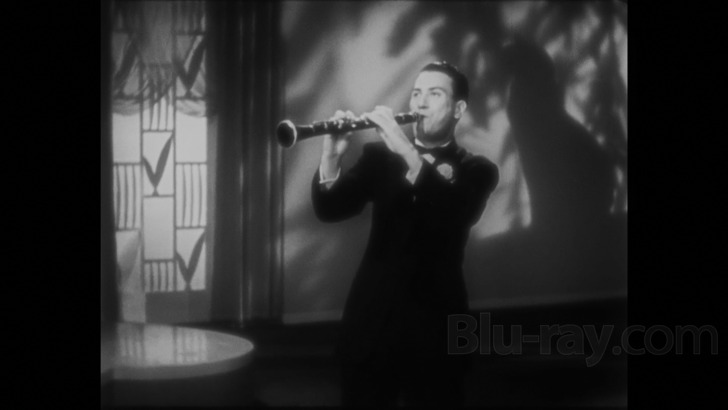
One of the really beneficial things about this documentary, even if it later went sour, is Shaw's own involvement in it. He seems at least passingly aware of some of his own faults and/or peccadilloes, but some of the actually most moving moments in this piece are when he listens to some of his old recordings, and you can just see him getting transported by the music again. Technical merits are generally solid and the commentary and insert essay are enjoyable. Highly recommended.