Amityville: The Cursed Collection Blu-ray Movie
HomeAmityville: The Cursed Collection Blu-ray Movie 
Vinegar Syndrome | 1989-1996 | 4 Movies | 379 min | Not rated | Oct 29, 2019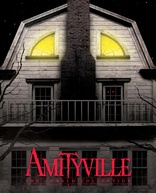
Price
Movie rating
Movie has not been rated yetBlu-ray rating
| Users |  | 4.5 |
| Reviewer | | 4.5 |
| Overall | | 4.5 |
Overview
Amityville: The Cursed Collection (1989-1996)
One of the most popular horror franchises of the 80s and 90s, THE AMITYVILLE HORROR series was given new life by producer Steve White who moved the narrative from dreary Long Island to sunny California, with his four ‘cursed objects' themed installments, collected here on home video for the very first time in Amityville: The Cursed Collection!
| Horror | 100% |
Specifications
Video
Video codec: MPEG-4 AVC
Video resolution: 1080p
Aspect ratio: 1.85:1
Original aspect ratio: 1.33:1
Audio
English: DTS-HD Master Audio 2.0 (96kHz, 24-bit)
Subtitles
English SDH
Discs
Blu-ray Disc
Four-disc set (4 BDs)
Playback
Region A (C untested)
Review
Rating summary
| Movie |  | 3.5 |
| Video | | 4.5 |
| Audio |  | 4.0 |
| Extras | | 4.5 |
| Overall | | 4.5 |
Amityville: The Cursed Collection Blu-ray Movie Review
Reviewed by Brian Orndorf November 9, 2019For obvious reasons, producers have spent the last 40 years trying to cash-in on the “Amityville” brand name. The frenzy began with the 1977 publication of Jay Anson’s “The Amityville Horror,” which detailed the experiences of the Lutz family as they encountered paranormal problems after moving into a house that was previously the site of a mass murder. The book was turned into a movie, with the 1979 release becoming one of the biggest hits of its release year. And the feeding frenzy began. There’s an “Amityville” movie for every star in the sky, and Vinegar Syndrome has delivered four sequels to Blu-ray, with “Amityville: The Cursed Collection” offering “Amityville Horror: The Evil Escapes,” “Amityville 1992: It’s About Time,” “Amityville: A New Generation,” and “Amityville Dollhouse.”
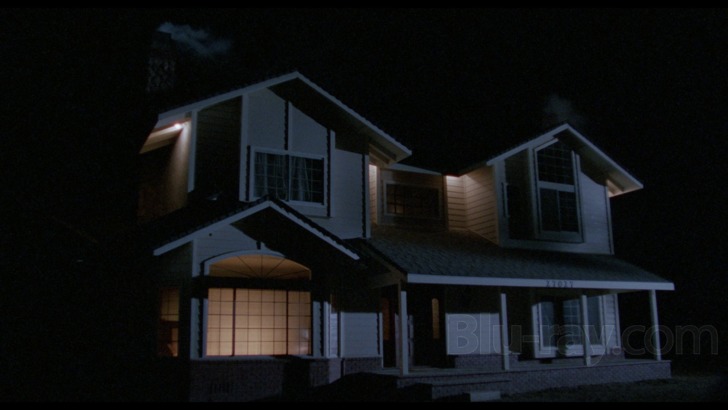
Click here for a review of Amityville: The Evil Escapes
Click here for a review of Amityville: It's About Time
Click here for a review of Amityville: A New Generation
Click here for a review of Amityville Dollhouse
Amityville: The Cursed Collection Blu-ray Movie, Video Quality
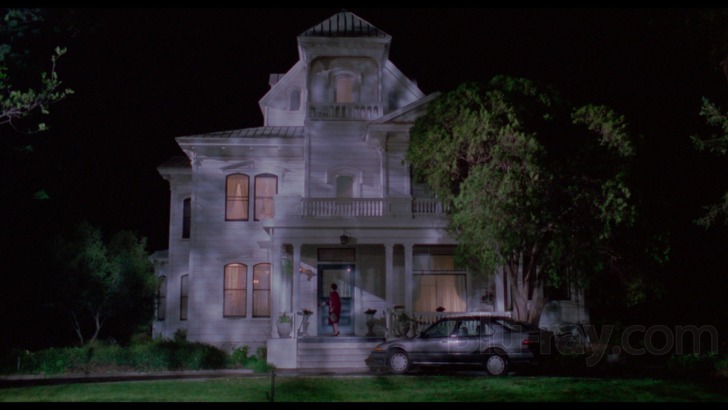
Click here for a video review of Amityville: The
Evil Escapes
Click here for a video review of Amityville: It's
About Time
Click here for a video review of Amityville: A
New Generation
Click here for a video review of Amityville
Dollhouse
Amityville: The Cursed Collection Blu-ray Movie, Audio Quality
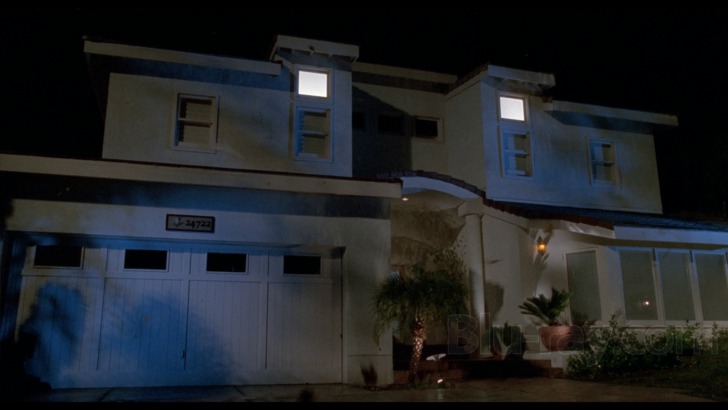
Click here for an audio review of Amityville:
The Evil Escapes
Click here for an audio review of Amityville: It's
About Time
Click here for an audio review of Amityville: A
New Generation
Click here for an audio review of Amityville
Dollhouse
Amityville: The Cursed Collection Blu-ray Movie, Special Features and Extras
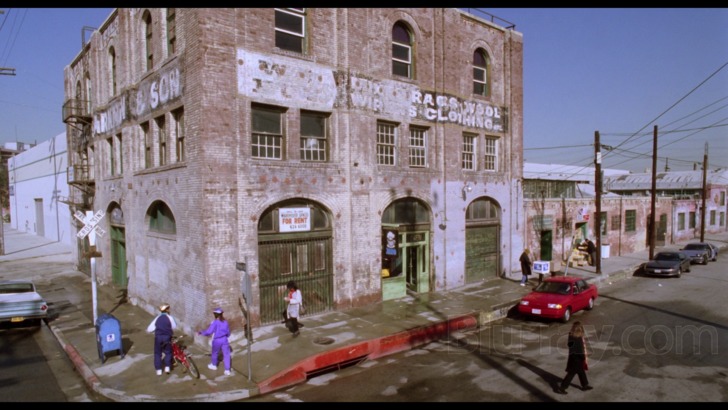
Amityville: The Evil Escapes
- "The Return to Amityville" (14:51, HD) is an interview with Sandor Stern, who found himself returning to the "Amityville Horror" series after writing the original 1979 movie. Stern discusses his history with the franchise and his experience piecing together the first installment, working with author Jay Anson. Originally, Stern was involved with medicine in Canada, leaving the medical world behind to make features, eventually offered a shot to put his own stamp on the brand name with "The Evil Escapes," which was made for television. Managing a small budget and limitations on intensity, Stern explores the hunt for the house, eventually settling on two locations to sell one evil dwelling, and casting is examined. Stern doesn't have the strongest memory of the shoot, unsure if he was responsible for the bloodshed in the effort, but he discusses technical challenges and homeowner concerns, and he seems a little bummed that the producers ignored the opening for another sequel he left behind. The interviewee closes with his thoughts on a horror series he helped to create, with special attention paid to the 2005 "Amityville Horror" remake.
- "Televised Terror" (14:28, HD) sits down with cinematographer Tom Richmond, who really has mixed feelings about his experience working on "The Evil Escapes." He offers some background information, tracking his early work (including "Chopping Mall" and "Straight to Hell"), which led him to the television project, only to understand he wouldn't be operating the camera during the shoot, only in charge of lighting. Without control or feedback from his bosses, Richmond admits he was "lost" while making "The Evil Escapes," explaining why the feature is so brightly illuminated, and he criticizes costuming choices, which provided ugly colors to work with. Richmond also dismisses the use of zooms in the picture, and offers a reflection on the movie.
- A Trailer has not been included.
- "Time Pieces" (13:30, HD) sits down with director Tony Randel to work through the "Amityville 1992: It's About Time" experience, beginning with his employment as an executive at New World Pictures, where he eventually was hired to helm "Hellbound: Hellraiser II." Building off this success, Randel reworked the "It's About Time" screenplay, trying to give it a little more meaning. Casting stories are recounted, including time guiding Dick Miller through a scene, and the shoot in Calabasas, California inspired the filmmaker to use the scourge of tract housing to his advantage. Celebrations of production design, cinematography, and storyboard art are offered, and Randel goes into the production process, detailing a brief rehearsal period and the incorporation of ideas from his actors. Work from special effects company KNB is highlighted, as are editing and scoring achievements. Randel is proud of the feature, watching it play big with the few public screenings it's had, but he shares slight bewilderment that he's never asked about the endeavor. His storytelling goals for the material are provided as well.
- "Clockwork" (7:29, HD) is a conversation with co-screenwriter Christopher DeFaria, who discusses the challenge of adapting ideas from a book by John G. Jones, who also provided the source material for 1989's "The Evil Escapes." Receiving the job after working his way around the industry, DeFaria eventually paired up with Antonio Toro, who brought a darker edge to "It's About Time." The interviewee explores the business model of Republic Pictures in the 1990s, churning out DTV product for video stores, and he recalls time with Tony Randel. DeFaria happily shares a few mistakes made during the shoot, including a bad decision to overfill a bathtub during the feature's climax. He's also eager to point out the movie's success, doing well financially and scoring with viewers.
- A Trailer has not been included.
- Commentary features director John Murlowski.
- "Through the Looking Glass" (13:08, HD) returns to Murlowski, who recounts his childhood interest in making movies, growing up in Minnesota. Making his way into the industry, the young man developed his style through commercials and music videos, giving him the filmmaking education required to make "Amityville: A New Generation." Preparation was critical to the interviewee, who discusses his work with storyboards and hiring of eager professionals, including now-famous cinematographer, Wally Pfister. Practical effects are examined, with Murlowski working hard to give the effort an old-fashioned appearance, avoiding CGI to create haunting imagery on-set, and dedication to makeup effects is highlighted. To capture the professional event, Murlowski kept a camera rolling during production, giving the featurette plenty of interesting BTS footage. The conversation closes with Murlowski's advice for young directors, including the necessity of having opinions on everything and wearing comfortable shoes.
- "Malevolent Reflections" (4:32, HD) reunites with co-writer Christopher DeFaria, who shares the Republic Pictures mandate to get this "Amityville" out of suburbia, inspiring the producers to turn to the artist loft as a proper playground for evil. DeFaria describes the process for choosing the cursed object for the film, and he covers the pressures of the short shoot (24 days), though he only has happy memories of the job, delighted with the technical achievements of the effort.
- A Trailer has not been included.
- "Welcome to the Dollhouse" (9:25, HD) sits down with director Steve White, who details his longtime association with the "Amityville Horror" series and his fandom of the first movie, recounting its origin story. Connecting with screenwriter Joshua Michael Stern, White elected to step away from producing to helm "Dollhouse," a decision he quickly regretted, unable to keep up with the pace of the low-budget shoot. Casting is recounted, including his experience working with children. White also explore remake rights, with his plans to revisit another "Amityville" feature stopped by Harvey Weinstein, who bought out the producer for his 2005 remake. The interviewee also examines the directorial experience, sharing its challenges and demands.
- "Jump into the Fire" (15:11, HD) is an interview with cinematographer Thomas Callaway, who shares his childhood interest in moviemaking, which he developed after moving to Los Angeles, quickly acquiring a series of jobs, including the mounting of his own production, 1987's "Ghost Riders." Finding a proper home for "Dollhouse" in Santa Clarita, California, Callaway shares his intricate lighting schemes for the house and his work with the titular dwelling. The interviewee explores his relationship with White, who pulled back from professional duties, and goes in-depth with his efforts to pull off a 360 degree shot, work with monster makeup, and orchestrate a climatic explosion. Callaway also reflects on his history with the genre, and the legacy of "Dollhouse."
- "Demons in the Dollhouse" (11:30, HD) is a conversation with Roy Knyrim, the special makeup effects artist on the picture. The interviewee recalls his initial hiring, working with White to design characters and the dollhouse. Knyrim offers insight into the creation of the "Dead Dad" monster, also supplying memories of working with Lisa Robin Kelly and Thomas Callaway, who had the ability to make quick work come alive onscreen. Knyrim provides some professional history, charting the improvement of his technique, and discusses the fanbase for "Dollhouse," with some once paying a fortune for the feature on laserdisc.
- A Trailer has not been included.
Amityville: The Cursed Collection Blu-ray Movie, Overall Score and Recommendation
Presented with excellent new scans and a surprising amount of supplementary material, "Amityville: The Cursed Collection" reunites the fanbase with mid-tier sequels that embrace traditional frights and remain on-brand with horror that connects to the original "Amityville" concept.