Africa's Lost Eden Blu-ray Movie
HomeAfrica's Lost Eden Blu-ray Movie 
National Geographic | 2010 | 50 min | Not rated | Apr 13, 2010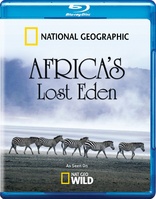

Movie rating
Movie has not been rated yetBlu-ray rating
| Users |  | 0.0 |
| Reviewer |  | 4.5 |
| Overall | | 4.5 |
Overview
Africa's Lost Eden (2010)
This National Geographic documentary journeys deep into the heart of Mozambique to chronicle the resurgence of Gorongosa National Park, a formerly idyllic wildlife sanctuary devastated by the country's long civil war. Charting the efforts of conservationists to revitalize the park, the film gets up close and personal with zebras, wildebeests, elephants, hippos and other critters as they roam Gorongosa's breathtaking landscape.
| Documentary | Uncertain |
| Nature | Uncertain |
Specifications
Video
Video codec: VC-1
Video resolution: 1080i
Aspect ratio: 1.78:1
Audio
English: Dolby Digital 5.1
Subtitles
English
Discs
25GB Blu-ray Disc
Single disc (1 BD)
Playback
Region A (B, C untested)
Review
Rating summary
| Movie | | 4.5 |
| Video |  | 4.0 |
| Audio |  | 3.5 |
| Extras |  | 3.0 |
| Overall | | 4.5 |
Africa's Lost Eden Blu-ray Movie Review
Man's chilling stupidity has decimated one of Mozambique's crown jewel National Parks. Can it be healed?
Reviewed by Jeffrey Kauffman April 18, 2010The statistics rattled off by narrator Keith David at the beginning of Africa’s Lost Eden are truly astounding. Mozambique’s Gorongosa National Park, nicknamed “the place where Noah left his ark,” had literally fallen prey to the vagaries of an ugly war and a rampant need for easy food (and easily poached items like ivory tusks), leading to the decimation of virtually every species which once inhabited the area. David recounts in chilling detail the “before and after” counts of several varieties of wildlife. Buffalo once numbered 14,000, and were reduced to only six, as incredible as that may seem. Zebras declined from 3,000 to five. Hippopotamuses and Elephants were similarly devastated. On and on David continues the horrific list, revealing that this Eden wasn’t really lost per se but rather ruined by the stupidity of human beings trampling over an ecosystem until it neared complete annihilation.

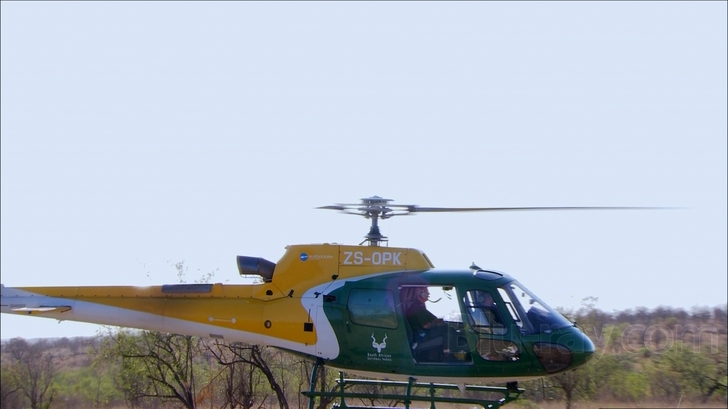
Mozambique's stunning Gorongosa National Park.
A tragic civil war which lasted for well over a decade in Mozambique was the ostensible reason so much of Gorongosa suffered so horribly, and yet there’s no doubt that a mindless subset of humankind had existed in the region for generations, not really thinking twice about killing any given animal for the “products,” including food, it offered. Really, though, the reason for the decimation of so many species matters less than the actual result, which is a gorgeous region, as amply documented in this often very affecting National Geographic piece, largely empty of the many species which once roamed its lovely savannahs and rivers. In fact it seems only the wily crocodile managed to escape the ignominious fate of so many other wildlife varieties, managing to keep their population relatively stable and in a somewhat ironic sidebar, keeping the population of one of their main sources of food, catfish, also in check. Otherwise, though, Gorongosa was pretty much akin to a ghost town, with the occasional lone lion or elephant seen wandering through its vast expanses.
This National Geographic special documents the nascent efforts to restore various species to the park, starting with elephants and hippos. The challenges of moving such gargantuan beasts are shown in some detail, and may actually make some more touchy-feely animal lovers squirm a bit as an elephant is hunted down and shot with an immobilizing drug, and then kept artificially tranquilized for a 30 hour drive from South Africa north to central Mozambique. Unfortunately for the main elephant focused on in this episode, nicknamed G5 after the radio collar it is shackled with, rampant fires the year at the Park the year it is transported there lead it to run away in panic, necessitating a redrugging, which tragically leads to the animal’s demise.
Such dichotomies are unfortunately necessary in this valiant attempt to repopulate a decimated region, and the documentary does not shy from the sad fact of animal mortality while also emphasizing the noble intent of the people hoping to make Gorongosa a real Eden once more. The process is necessarily slow and deliberate, starting with large species like the elephants and hippos and then moving onto varieties like zebras before finally upping the populations of the predators like lions. While Africa’s Lost Eden documents what is really only the first chapter, or even the Introduction, to what will probably end up being a decade or more project, it is a valuable lesson in both Man’s stupidity and his ultimate reckoning with that very stupidity, resulting in hopefully successful attempts to ameliorate the problem.
This is both an unusually emotional and also thrillingly visual National Geographic outing that is in the best tradition of these specials. We’re offered up close and personal looks at both an involved Park Ranger as well as a humanitarian (animalarian?) entrepreneur who is helping to fund the repopulation efforts, giving us two heroes to root for and keeping the goings from being too abstract. The footage of Gorongosa, filmed over the course of a year and a half, offer some absolutely jaw droppingly beautiful shots of an area that is probably largely unfamiliar to most viewers. As is almost always the case with these National Geographic specials, the wildlife footage is truly exceptional, capturing everything from a somewhat humorously mud covered crocodile to an “out of practice” lion trying desperately to bring down a wildebeest for dinner.
Africa’s Lost Eden starts in real tragedy, and actually visits the tragic at least once more in the episode, and yet it’s by and large a hopeful, even inspirational, piece. Yes, there are incredibly stupid humans. Luckily, there are also incredibly noble, helpful ones who attempt to fix the problems caused by the stupid. Africa’s Lost Eden may indeed be found again by virtue of the efforts of this second class of people.
Africa's Lost Eden Blu-ray Movie, Video Quality
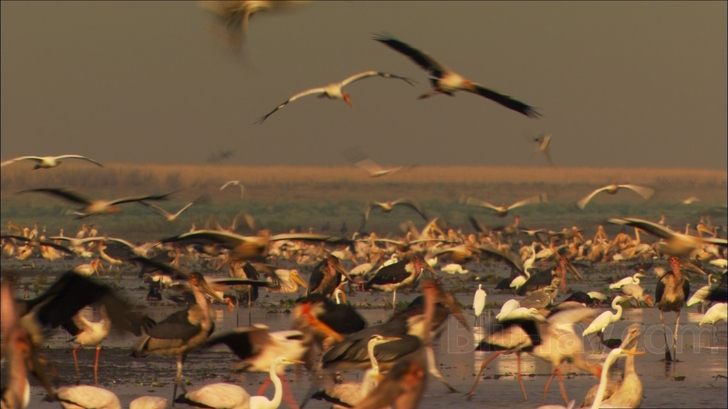
National Geographic routinely has some of the best looking documentaries around, and Africa's Lost Eden is no exception. Appearing on Blu-ray with a VC-1 encode in 1080i and a 1.78:1 aspect ratio, this piece offers and abundance of color and detail, especially in the many thrilling close-ups of the animals. We get so close to some of the crocodiles, for instance, that you can literally count the scales surrounding those bizarre looking eyes of theirs. Colors are excellent throughout, if occasionally more monochromatic, tending towards brown and beiges, than you might expect. Depth of field is often awesome, with vistas that go on for miles and miles with every detail perfectly clear toward the horizon. Despite being a 1080i presentation, I noticed no egregious artifacting of any kind on this presentation.
Africa's Lost Eden Blu-ray Movie, Audio Quality
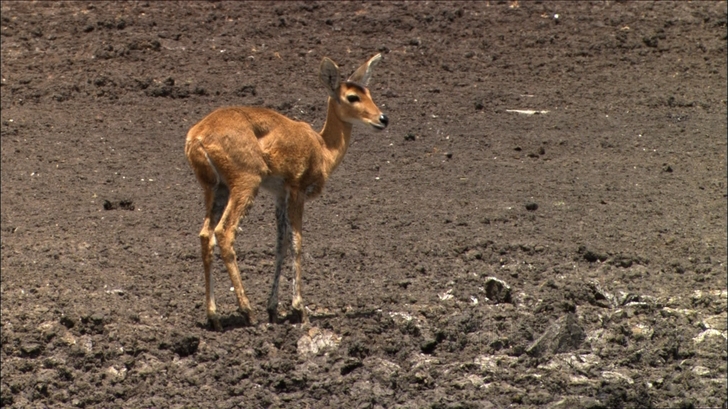
I was a little underwhelmed with Africa's Lost Eden's standard Dolby Digital 5.1 mix, if only because as a mostly narrated piece, there was a relative dearth of surround channel activity. When discrete channels do kick in, they do so with a wonderfully immersive quality, as when a frantic crocodile scurries through the water and across the sand to protect her hatchlings. Occasional ambient sounds waft into the rear soundfield, but for the most part this is a resolutely front-centric sonic experience. Fidelity is uniformly excellent, with all dialogue and narration completely clear. No dropouts, hiss or other anomalies are present at all.
Africa's Lost Eden Blu-ray Movie, Special Features and Extras
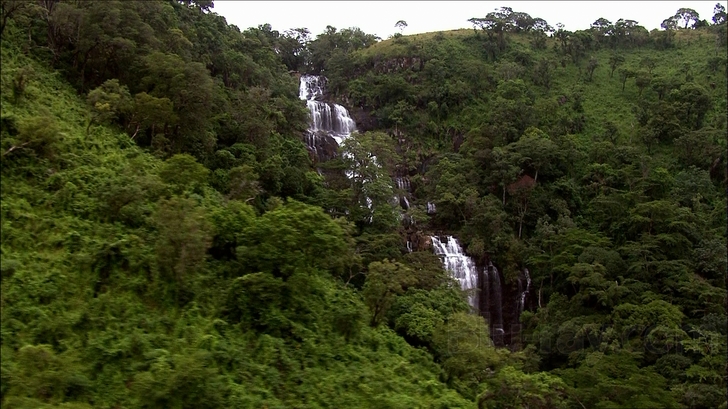
A decent if unexceptional fifty minute NatGeo episode entitled Stalking Leopards follows the life cycle of one of the spotted beasts.
Africa's Lost Eden Blu-ray Movie, Overall Score and Recommendation
As a cautionary tale, Africa's Lost Eden is both instructive and often haunting. As an inspirational beacon of hope, it may fall a little short, if only because the devastation is so wide ranging these early efforts have only begun to pay dividends. Nonetheless, this follows admirably in the excellent tradition of National Geographic documentaries and highlights one of the nobler preservation efforts underway currently on our planet.