Adieu Philippine Blu-ray Movie
HomeAdieu Philippine Blu-ray Movie 
Radiance Films | 1962 | 106 min | Not rated | No Release Date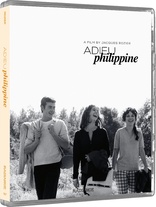
Price
Movie rating
7 | / 10 |
Blu-ray rating
| Users |  | 0.0 |
| Reviewer |  | 4.5 |
| Overall | | 4.5 |
Overview
Adieu Philippine (1962)
During the Algerian War, a young TV technician two months away from mandatory military service begins dating two best friends.
Starring: Vittorio Caprioli, Maurice Garrel, Edmond Ardisson, Marco Perrin, Michel PiccoliDirector: Jacques Rozier
| Foreign | Uncertain |
| Drama | Uncertain |
| Romance | Uncertain |
Specifications
Video
Video codec: MPEG-4 AVC
Video resolution: 1080p
Aspect ratio: 1.66:1
Original aspect ratio: 1.66:1
Audio
French: LPCM Mono
Subtitles
English
Discs
Blu-ray Disc
Single disc (1 BD)
Playback
Region B (A, C untested)
Review
Rating summary
| Movie | | 4.5 |
| Video |  | 5.0 |
| Audio |  | 4.0 |
| Extras |  | 3.0 |
| Overall | | 4.5 |
Adieu Philippine Blu-ray Movie Review
Reviewed by Jeffrey Kauffman April 16, 2026 Note: This film is available on Blu-ray as part of Time to Play: Films by Jacques Rozier from Radiance Films.
Blu-ray sets offering the complete filmographies of any given creator can tend to be pretty huge, even overwhelming, affairs, like Ingmar Bergman's Cinema and/or The Complete Films of Agnès Varda.
That Varda set may be particularly a propos when discussing this (much smaller) set, since both Varda and Jacques Rozier were
both prominent members of the French New Wave, even if neither arguably rose to the global fame heights of, say, Jean-Luc Godard or François
Truffaut. If Varda either fairly or unfairly got some reflected glow from her long marriage to Jacques Demy, one way or the other even she, as
arguably
underappreciated as she's been, was probably better known internationally than Rozier, who has continued to kind of be the "bastard stepchild" of
the
movement, consigned by fate and (sorry) critical assessments to what is perceived as a lower echelon, even if that perception is manifestly
undeserved. Rozier is a fascinating figure one way or the other, as his approach toward Nouvelle Vague was decidedly different than his
contemporaries (notably Varda, in fact), and despite a decades long career, he only ended up making five feature films, all of which Radiance has
aggregated for this new collection.
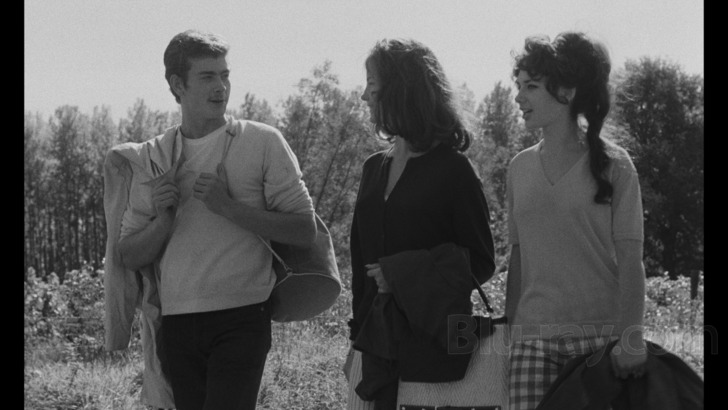
Vis a vis differences between Rozier and Varda in particular, there may be no better place to start than with Rozier's first feature, Adieu Philippine. If Varda was known for her so-called cinécriture, a term which may not be widely known but which in a way is simply another way of describing Varda as an auteur, i.e., a filmmaker in charge of everything that makes it onto celluloid, though Varda's term also implies that the "writing" (not necessarily just words in a screenplay) of a film was an organic process that unfolded during production. While Rozier may have been partial to the second half of that formulation, his ostensible "control" over the process was arguably less structured, giving his films a loose, improvisational quality that, yes, is very much in the French New Wave general idiom, but which has its own very distinct and distinctive "flavor".
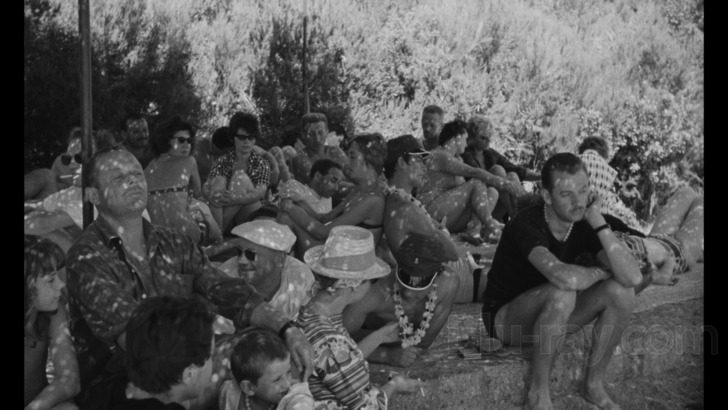
As with many of Rozier's films, then, "plot" per se may take a back seat to mood and characterization. Here a trio, a man named Michel (Jean-Claude Aimini) two women named Liliane (Yveline Cery) and Juliette (Stefania Sabatini) are in a kinda sorta ménage à trois, in what might be thought of as a reverse image of another notable 1962 French film, Jules and Jim. The semi-roiling relationships eventually lead to a supposedly carefree summer holiday, albeit against the backdrop of France's long conflict in Algeria, which the young man may be seeing soon from the front lines due to the draft. Petty jealousies between the women and Michel also intrude, but none of this is frankly all that important, as the film coasts (no seaside pun intended) on considerable charm and the unaffected naturalness of a non professional cast.
Adieu Philippine Blu-ray Movie, Video Quality
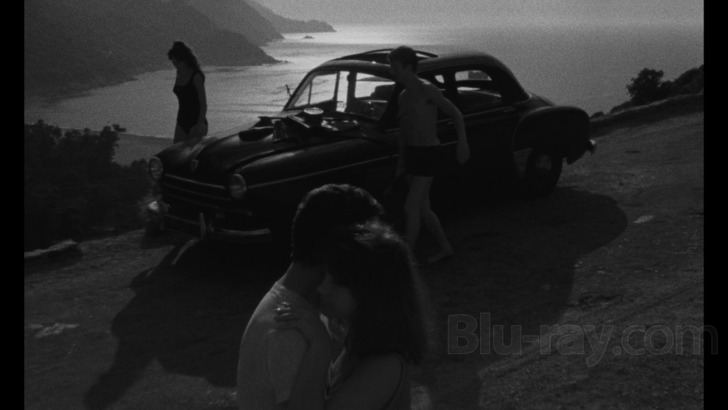
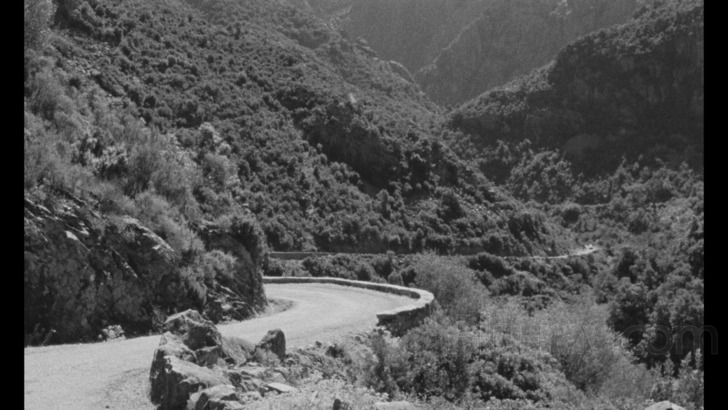
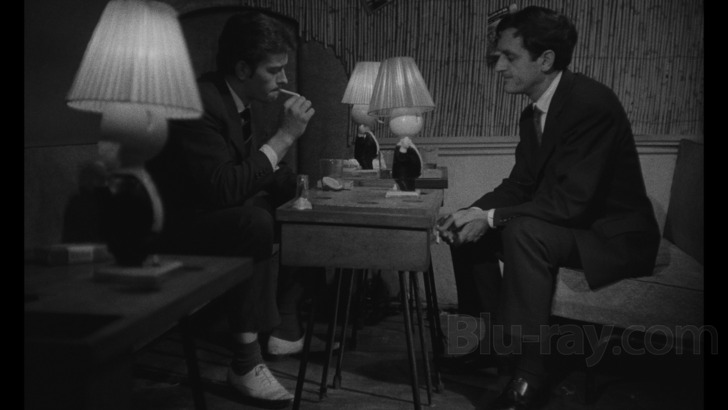
Adieu Philippine is presented on Blu-ray courtesy of Radiance Films with an AVC encoded 1080p transfer in 1.66:1. Radiance sent check discs for purposes of this review, and so I'm not privy to any information contained in an insert booklet, though some prefatory text cards before the presentation state that this was "digitised in 4K and restored in 2K from the original image negative and sound negative by Hiventy" in collaboration with others. This is the only black and white feature in the set, and it boasts some really appealing contrast and nicely modulated gray scale. The opening in a television studio has an optically printed credits sequence which affects clarity slightly, but once the film moves on, things improve markedly and detail levels are typically excellent, with an understanding that Rozier kind of shoots "on the fly" quite a bit of the time which can lead to some variances in both clarity and detail levels. The outdoor material looks great, with an understanding that both nighttime and what looks like some day for night moments don't offer the same levels of fine detail in particular. Grain resolves naturally throughout.
Adieu Philippine Blu-ray Movie, Audio Quality
Adieu Philippine features an LPCM Mono track in the original French, though some may be more instantly affected by the jaunty jazz inflected score than by anything that's being said. The music really helps to propel this admittedly languid story, and some of the Stephane Grappelli like cues are especially fun and sound bright and fluid. There is no damage or problematic wear and tear to report. Dialogue is rendered cleanly and clearly throughout. Optional English subtitles are available.
Adieu Philippine Blu-ray Movie, Special Features and Extras
- Yveline Céry (HD; 10:49) is featured in this 2024 interview. Subtitled in English.
- Trailer (HD; 6:56) features Francois Truffaut!
- Blue Jeans (HD; 23:35) is a 1958 short by Rozier.
Adieu Philippine Blu-ray Movie, Overall Score and Recommendation
If you've never really explored the minimal but in its own way vast filmography of Jacques Rozier, there's probably no better place to start than at the very beginning, with this charming if admittedly languorous journey. Technical merits are solid and the interview and Rozier short are very enjoyable. Highly recommended.
Similar titles
Similar titles you might also like
(Still not reliable for this title)

Une femme douce
A Gentle Woman | Limited Edition
1969

Faithless
Trolösa
2000

Le Combat dans l'île
Fire and Ice | Limited Edition
1962

César et Rosalie
Cesar & Rosalie
1972

Tale of Cinema
극장전 / Geuk jang jeon
2005

L' amour fou
Mad Love | Standard Edition
1969

Merry-Go-Round
Körhinta
1956

Girl with a Suitcase
La ragazza con la valigia | Limited Edition
1961

The Story of the Last Chrysanthemums
Zangiku monogatari
1939

Floating Clouds
浮雲 / Ukigumo
1955

Torment
L'enfer
1994

Romancing in Thin Air
高海拔之戀 II / Gāo hǎi bá zhī liàn II | Limited Edition
2012

Torment
Hets
1944
La captive
The Captive
2000

Cléo from 5 to 7
Cléo de 5 à 7
1962

Falbalas
Vintage World Cinema
1945

The Lovers
Les amants
1958
Fox and His Friends
Faustrecht der Freiheit
1975

Le Bonheur
1965

Él 4K
This Strange Passion
1953