A Hyena in the Safe Blu-ray Movie
HomeA Hyena in the Safe Blu-ray Movie 
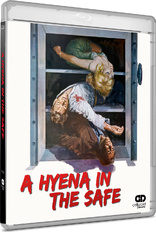
Una Iena in CassaforteCelluloid Dreams | 1968 | 93 min | Not rated | Nov 25, 2025

Movie rating
7.2 | / 10 |
Blu-ray rating
| Users |  | 0.0 |
| Reviewer |  | 4.5 |
| Overall | | 4.5 |
Overview
A Hyena in the Safe (1968)
One safe. Six keys. Six robbers, each expecting their cut of a diamond heist when they finally meet to divide their spoils after months in hiding. But before they can open the safe that guards their glittering hoard, they are mysteriously killed, one by one.
Starring: Cristina Gaioni, Maria Luisa Geisberger, Dimitri Nabokov, Ben SalvadorDirector: Cesare Canevari
| Foreign | Uncertain |
| Thriller | Uncertain |
| Crime | Uncertain |
Specifications
Video
Video codec: MPEG-4 AVC
Video resolution: 1080p
Aspect ratio: 1.33:1
Original aspect ratio: 1.85:1
Audio
Italian: DTS-HD Master Audio 2.0 Mono (48kHz, 24-bit)
Subtitles
English
Discs
Blu-ray Disc
Single disc (1 BD)
Packaging
Slipcover in original pressing
Playback
Region A (locked)
Review
Rating summary
| Movie |  | 4.0 |
| Video | | 4.0 |
| Audio |  | 3.5 |
| Extras | | 4.5 |
| Overall | | 4.5 |
A Hyena in the Safe Blu-ray Movie Review
Reviewed by Justin Dekker January 19, 2026Little seen outside of its native Italy, and never released in the United States, Cesare Canevari's 'A Hyena in the Safe' (or, 'Una Jena in
Cassaforte'), makes it Blu-ray debut in this release from Celluloid Dreams. Shot in 1968 and having only a brief theatrical run, this caper-giallo mix
with Agatha Christie-like flourishes stars a largely inexperienced and unknown cast that includes Cristina Gaioni ('Flesh for Frankenstein', Women in
Cell Block 7), Maria Luisa Geisberger, and Dimitri Nabokov. The release provides the film a pleasing restoration, and features the original Italian mono
track with English subtitles. On-disc supplemental features are substantive, and provide for several additional hours of exploration. The release comes
with a slipcover, reversable cover art, and orders placed via Celluloid Dreams' website include eight 12″x8.25″ color reproductions of the original
Italian fotobuste (lobby cards).
Six thieves assemble at a glamourous villa with expansive grounds after the completion of a lucrative job. Each has a key needed to open the safe so
that the loot can be divided and they can go their separate ways. However, before the safe can be opened, the international amalgamation of thieves
begin meeting with mysterious and violent deaths. Who is behind the killings, and who will survive to claim the prize?
Before watching 1968's A Hyena in the Safe, I recalled the two other films directed by Cesare Canevari, both very different from each other, that I had seen. I hadn't yet done much digging into the broader body of his directorial work, which, in matter of fact, isn't that large. Considering the two films of his I had seen, as I'll discuss later, seemingly anything could be fair game. A quick examination of the cast list left me somewhat puzzled as well. As much as I enjoy European cinema from this era, especially anything from Italy even remotely smacking of having poliziotteschi or giallo qualities, there was only a single name, Cristina Gaioni, that sparked even a glimmer of recognition. The rest, nothing. This film, though, carved it's own path relative to both my other touchstones of the director's work and to the broader genre to which the film belongs. Suffice it to say I was more than a little surprised by this caper/giallo with a small budget and a story of stolen diamonds at its heart. To play off of the film's plot, it really is a lost gem.
There is sense of capturing lightning in a bottle with A Hyena in the Safe. The central conceit is simple, and certainly there have been innumerable films about thieves gathering after a job to collect their payday. It's how the story unfolds in A Hyena in the Safe that makes all of the difference. The no doubt frantic and thrilling action of the job is already complete by the time we meet these characters. And over the span of several wordless minutes, each member of the cast is physically introduced in a manner that enables the viewer to deduce, infer, or assume certain "facts" about who they are. When the dialogue commences and we are able to watch the characters begin interact with each other, we learn more, and are better able to discard errant suppositions and craft new ones. But as is the case with the best mysteries, this is a tale with a foundation built on ever-shifting sand. The truth of who these people are and their legitimate motivations seem to change from scene to scene. Once the bodies start to drop, a more urgent element is added. Who is doing the killing? Why? And who, if any of these people, has the skill and ability to sort out the killer's identity before it's too late. Meticulously and purposefully paced, Canevari doesn't rush anything, preferring to increase doubt and build tension gradually with each new reveal or death.
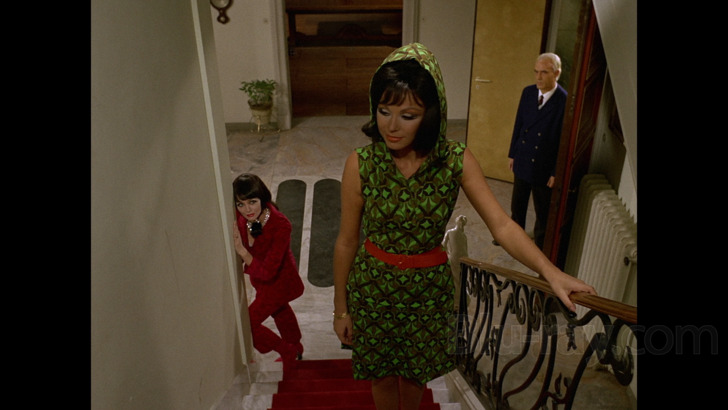
While this film certainly sits neatly within the confines of what is considered a giallo, there are a few elements that the film does not leverage as strongly as other entrants in the genre. First, often known for graphic violence and bloody, gory deaths, A Hyena in the Safe exercises remarkable restraint. Considering one of the director's other films, again, more on that in a moment, it's more than a little shocking. Blood is certainly shed, and several of the murder set pieces are unusual if not inventive, but there seems to be not a drop more than the absolute minimum of the red stuff on display. Second, in a genre known for its sexual content, and which sometimes plays with the limits of what softcore erotica will allow, Canevari doesn't seem that interested in exploring that material here. He keeps his eye on the story line and that actions and dialogue that are essential to it, never letting himself or the audience get distracted by gratuitous amounts of flesh on display or various amorous pairings and dalliances. Almost chaste, the film has but one scene which features a "blind and you'll miss it" dash of nudity, though I won't spoil when it occurs or who is responsible. Later, when the same cast member might have exposed too much as she climbs the stairs in clad only in a short loose-knit wrap, another character quickly falls in step behind her for the ascent, thereby preserving her modesty. Thirdly, and somewhat tongue-in-cheek, while there is some drinking and inferred drug use (or the the very least drug possession) at the villa, and a dramatically used drinks cart, there's not a single bottle of the normally ubiquitous J&B to found.
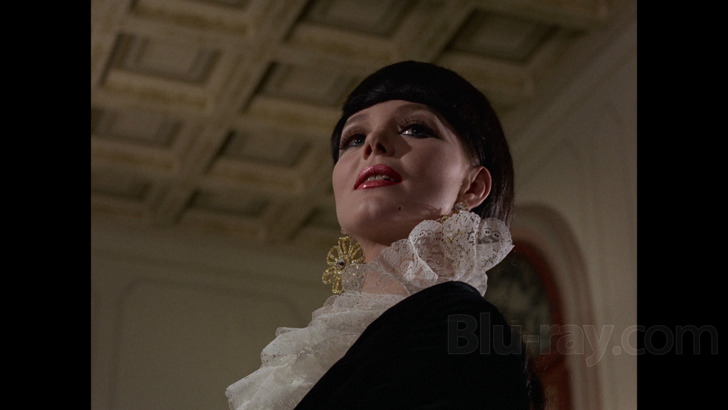
Given the fact that Canevari, the crew, and the cast, hadn't had many films under their collective belts at the time the film was made, there is an astonishing artfulness and style to the film. While the film has many such scenes, two instances, in particular, caught my eye and attention on my first and all subsequent viewings. The primary scene that informed me I was in for something well beyond my expectations occurs early in the film; it's the scene that introduces us to Anna. After listening to the commentary track, it's evident that Celluloid Dreams' Guido Henkel was as struck by it as I was. When we first meet Anna, she's initially seen very briefly in a small mirror, without any context as to her true location. We're only allowed to see her face. Then the camera switches. She's at the top of the stairs. We see her from a moderate distance, but now with the camera focused on objects in the foreground, she's entirely out of focus. More of a suggestion, really. A ghost. Before we're allowed to gaze or study her blurry form too long, Karina's (Karina Kar) booted feet and legs pop up over the end of a couch, shielding her like a curtain as she descends the stairs, and moving away to reveal her as she nears the bottom. Quickly, the camera switches again, catching her in profile as she dismounts the stairs and crosses the hall to enter the room where the other characters are gathered. A deft pan to a mirror allows us to observe her from another angle as she does so, and we see every character has their eyes trained upon her. She's perfectly put together. Her entrance is dramatic. And, the attention she garners from the characters and the camera tells us this is the person for whom we've been waiting. This is the person that is somehow in control. Another moment that had me captivated occurred a short while later, as Sandro Pizzochero's Albert is visibly struggling due to his drug problem. As he grows from agitated to frantic, the score that accompanies his increasing desperation and "madness" becomes more and more jarring, almost like something from a horror film. It's both delicate and sinister. What makes it extraordinary is that fact that the music is actually being played by another member of the cast in the scene who is seated at the piano. Juan's (Ben Salvador) bizarre playing is the soundtrack to Albert being pushed to his breaking point, and the camera cuts quickly between the casually sadistic Juan and sweating and crumbling Albert. Ultimately shattered, Albert collapses on the piano and Juan's playing stops instantly. Juan may have started scoring Albert's breakdown with a rhythmic striking of the gong, but it is his piano work that finishes him.
Cesare Canevari helmed two other cult classics over the course of his short directorial career; 1969's difficult to see A Man for Emmanuelle, included in Severin's recent Saga Erotica: The Emmanuelle Collection 4K under its alternate title I, Emmanuelle, and the notorious Nazisploitation sleazefest that is The Gestapo's Last Orgy . Both of these films were lensed by the Claudio Catozzo, who also serves as the cinematographer here. A Man for Emmanuelle also features some very artistic cinematographic flourishes, though not in the volume or possessing the level of impact we see here. Still, Canevari's Emmanuelle film is more sensitive and emotionally evocative than the more straightforward softcore films with the unforgettable Sylvia Kristel in the titular role which were based on the same source novel and followed beginning in 1974. The film' star, Erika Blanc, is probably best known to genre fans for her roles in various horror and giallo outings of the 1970s such as The Devil's Nightmare and The Night Evelyn Came Out of the Grave, and she turns in a riveting performance. In The Gestapo's Last Orgy, Canevari's Nazis are not as fallible and almost cartoonish as they are in other entrants in the subgenre. Instead, his film takes a more serious and unflinching approach to the dark action, mixing liberal doses of graphic nudity and brutal violence resulting in a film that is more impactful, challenging, and definitely more controversial. The merit and artistic value of that particular film likely resides in the eye of the beholder.
A Hyena in the Safe Blu-ray Movie, Video Quality
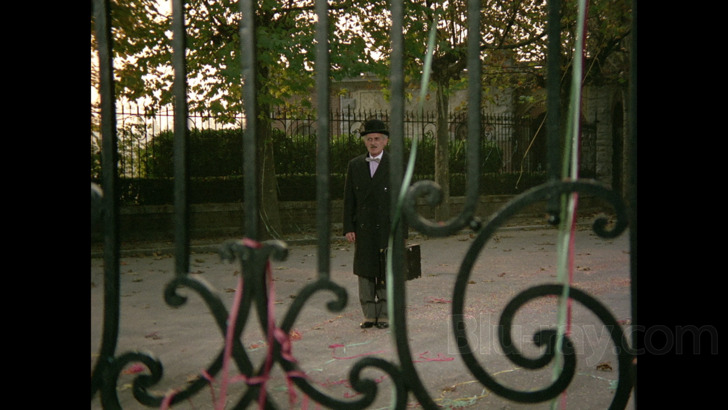
Celluloid Dreams has provided A Hyena in the Safe with a lovely filmic transfer. Fine film grain is present throughout, but resolves naturally and is never problematic. From the start, the bright and richly saturated colors of the fireworks and the bold primaries in the costumes of the revelers catch the eye. The greens of the grounds are lush. Once inside the villa and we see the primary characters in a more static attitude, there is a greater opportunity to appreciate the high level of fine detail. Costuming particulars are easy to appreciate, such as the chunky, loose knit of Janice's wrap, the weave of Albert's colorful jacket, and the well-worn bottom of Steve's shoes. The lace trim on Anna's blouse is suitably delicate and well- defined, and Juan's cigar presents with terrific tactile realism as well. Facial particulars are likewise observable, with fine lines, wrinkles and stubble all being observable. Every wayward strand of Janice's tousled hair is able to be accounted for, and Anna's perfectly controlled hair reveals its secrets as well. Contrast is solid, and blacks can be quite deep and inky. Depth and dimensionality are pleasing. Skin tones are typically healthy and realistic, with only a few instances, such as the initial reveal of the safe, where Juan's complexion turns slightly ruddier and Steve and Albert, for example, appear a bit pale and washed out. The odd intrusion of occasional damage is also detectable. These moments, however, are short-lived and aren't a significant distraction, with moments of damage usually being instantaneous. On the whole, this "forgotten" film looks remarkable.
A Hyena in the Safe Blu-ray Movie, Audio Quality
The original Italian mono DTS-HD Master Audio 2.0 track that accompanies the film has an aesthetic that is typical of mono tracks from the era. As Guido Henkel points out in the on-disc supplements, since the film never received widespread distribution outside of it's native Italy, an English track was never created at or around the time the film was made. The optional English subtitles, however, do their job well, remaining on-screen for a sufficient amount of time for those who are reading the movie to keep up, but will require viewers to give the film their full attention so as not to miss important exchanges or lines. Dialogue is crip and clean. Gian Piero Reverberi's score is well-rendered given the limitations of the mono track. Keys are bouncy, horns are bright, and woodwinds are smooth. Juan's striking of the gong presents with pleasing brassy reverberations, and his keyboarding is alternately delicate and pounding. The track isn't flashy or fancy, but it's free from defect and effectively performs the task at hand.
A Hyena in the Safe Blu-ray Movie, Special Features and Extras
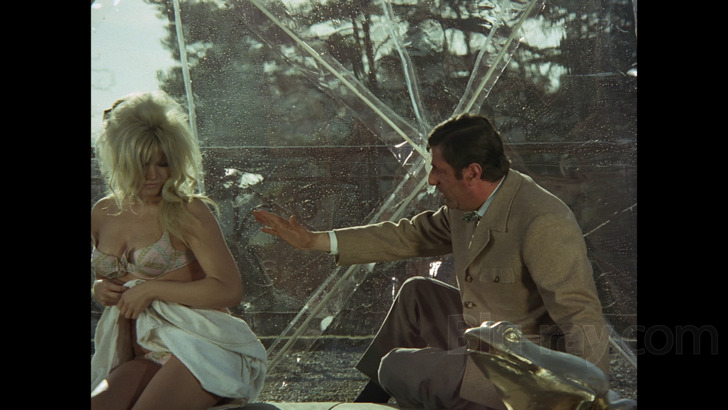
A Hyena in the Safe is accompanied by a solid assortment of on-disc extras as detailed below.
- "7 Ghosts for a Massacre" Featurette (51.10) - Part One sees director Cesare Canevari gets this lengthy segment started with a discussion of the projects origins and his introduction to filmmaking. He goes on to share how he was influenced by French cinema of the era and the throughlines to Hyena. He shares several anecdotes about location shooting for this film and references other films he worked on such as A Man for Emmanuelle and The Gestapo's Last Orgy. Part Two is all about locations, with General Organizer Nini' Della Misericordia discussing finding Villa Toeplitz as the location for the film, before La Provincia's Adriana Morlacchi and others provide information and context of the villa's history, including how the film was rediscovered. The featurette includes a number of stills and clips from the film that may serve as spoilers for those who have not yet seen it, and there is a warning to that effect at the segment's start. She also speaks of her efforts to find the "lost" film. The various location-related problems that needed to be solved during filming are also discussed.
- "Schrödinger's Cat" Featurette (36.04) - More correctly titled "Schrödinger's Diamonds: The Duplicitous Mysteries of A Hyena in the Safe" and narrated by Andy Marshall-Roberts, this featurette begins with a quick assessment of the lucrative giallo genre, and A Hyena in the Safe's uniqueness in a crowded market. Turning it's attention to the film, it's origins are traced, and the key members of the cast are discussed, before focusing on the atmosphere of untrustworthiness, and character studies of Albert (Sandro Pizzochero), Janine (Cristina Gaioni), and Anna (Maria Luisa Geisberger), and the rest of those involved in the heist. The segment closes with a look at the trickery involved in certain locations, and camerawork.
- "The Mysteries of Villa Toeplitz" Featurette (7.52) - Produced for this release, Francesco Pollanetti takes views on a walking tour of the grounds of the grand villa, once a private residence, but now its grounds are a park and the main building is a university. He begins by providing some background information on the film's director before providing a brief synopsis of the film. He then leads viewers through the front gate used by the characters to enter the grounds prior to taking us to the settings of others scenes The segment is intercut with clips from the film, and it's wonderful to be able to see the gorgeous property as it exists today. He provides as much other information about the film as he is able to during the featurette's short runtime.
- Commentary by Guido Henkel - Guido Henkel is a man on mission in this commentary track. He is possessing of an extensive body of knowledge as it pertains to the film and many aspects of its production, and through the use of what must be carefully prepared notes, he manages to share a wealth of information from the mundane to the fascinating during the film's runtime. It's an enjoyable listen that is densely packed with data and perspective, so much so that it feels like a master's-level class dedicated to this film, and I mean that in the best possible way. For as much information as there is, it still feels conversational. Having watched the film with the commentary track all the way through to the end, I believe I should be able to send in for a degree or certificate of some sort. Kidding aside, preparing for and recording the track must have consumed a great deal of time, but I sincerely hope that all of the label's future releases feature a commentary track of similar depth and quality.
- Image Gallery - A collection of lobby cards and posters from the film's release.
- Italian Trailer (4.10) - The trailer shows obvious signs of age and wear, but it's still extremely watchable. In Italian with English subtitles.
A Hyena in the Safe Blu-ray Movie, Overall Score and Recommendation
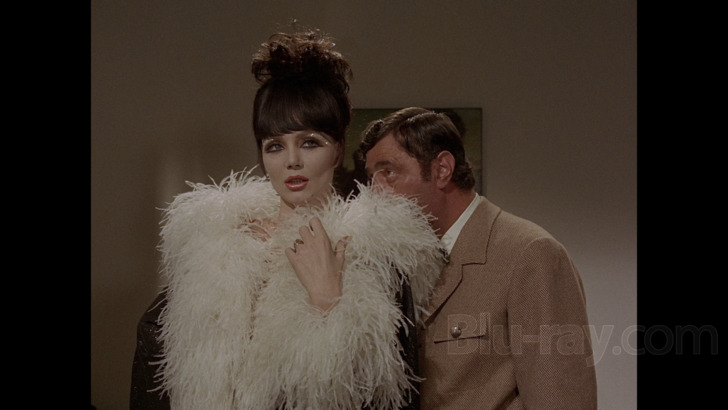
One of the more exciting elements of this particular hobby/lifestyle is that in addition to providing stellar home versions of the latest and the greatest and beloved classics of yesteryear, every so often a film is plucked from obscurity, unearthed from the sands of time, and is presented to a new audience for rediscovery. A Hyena in the Safe is one such film. It deserved a much longer run and broader theatrical distribution than what it received in a crowded Italian film market at the time of it's original release. Had that been the case, one can only wonder how many of the cast and crew could have leveraged their work here into more substantial and successful film careers. Graced with a unique and almost otherworldly setting, the film defies genre expectations while focusing on it's duplicitous and layered characters in a relentlessly focused pursuit of the storyline. In what is probably a "blind buy" for many, if not most, Celluloid Dreams' latest, A Hyena in the Safe, comes highly recommended