3 Ninjas: 4 Film Collection Blu-ray Movie
Home3 Ninjas: 4 Film Collection Blu-ray Movie 
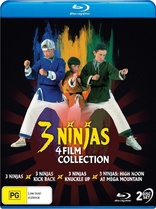
3 Ninjas / Kick Back / Knuckle Up / High Noon at Mega MountainVia Vision Entertainment | 1992-1998 | 4 Movies | 300 min | Rated ACB: PG | Jan 12, 2024
Price
List price:Listed on Amazon marketplace

Movie rating
Movie has not been rated yetBlu-ray rating
| Users |  | 0.0 |
| Reviewer |  | 3.0 |
| Overall | | 3.0 |
Overview
3 Ninjas: 4 Film Collection (1992-1998)
See individual titles for details.
| Comedy | 100% |
| Family | 47% |
| Martial arts | 24% |
| Action | 1% |
Specifications
Video
Video codec: MPEG-4 AVC
Video resolution: 1080p
Aspect ratio: 1.85:1, 1.78:1
Original aspect ratio: 1.85:1, 1.78:1
Audio
English: LPCM 2.0
Subtitles
None
Discs
Blu-ray Disc
Two-disc set (2 BDs)
Playback
Region A (B, C untested)
Review
Rating summary
| Movie | | 3.0 |
| Video | | 3.0 |
| Audio | | 3.0 |
| Extras |  | 0.5 |
| Overall | | 3.0 |
3 Ninjas: 4 Film Collection Blu-ray Movie Review
Reviewed by Justin Dekker October 31, 2024Bringing the four of the films from the '3 Ninjas' franchise together, '3 Ninjas', '3 Ninjas: Kick Back', '3 Ninjas: Knuckle Up', and '3 Ninjas: High
Noon at Mega Mountain' arrive on Blu-ray in the '3 Ninjas: 4-Film Collection' courtesy of Via Vision Entertainment. The four films are spread across
two Blu-ray discs, with two films per disc. Only the 96-minute extended international cut of the first film is included. Special features are limited,
but technical merits are solid. Neither a slipcover nor a Digital Code are
included.
Nostalgia is a powerful thing. Certain foods, places, songs, television shows, and movies, in spite of (and sometimes because of) their questionable
quality and dubious cultural significance, can transport us back to a simpler time, improving our moods and allowing us to reclaim our youth, even
if
for only 90 minutes at a time. Saturday morning's Super Friends! in all of their incarnations fills that role for me, with each flaw only
making the episodes more endearing. My sense is how much one enjoys the four films of the 3 Ninjas franchise found in this release will be
directly related to how much those films help the viewer experience those positive emotions and memories of days gone by. By way of full
disclosure, these films landed at the wrong time in my movie-going and video-renting past for me to ever have given them so much as a glance
when they were new. As a result, I do not view these films through nostalgia-powered rose-colored glasses.
As with many franchises, some sort of formula is often employed in the crafting of subsequent entries after a successful first feature. That is
especially true with 3 Ninjas. Beginning each film with training under the direction of their grandfather is a must. And in the first several
films, a trio of bumbling bad guys for the boys to repeatedly square off against, confound, and defeat becomes essential as well, though it should
be noted these adversaries are full-grown men. Some other elements of the trio's day-to-day life is included whether it be sports, dealing with
bullies, or (increasingly) making time for various young ladies. A great deal of time and energy is given to present these three as being kids like
any others. The outfits the trio wear make it simple for them to be doubled in the more aggressive and impressive stuntwork, sometimes handled
with subtlety, while other times it's quite obvious. Also as a matter of the formula, despite their young age, they succeed in thwarting foes far more
experienced and with significantly greater resources than they possess. All the while, they are free to move about without any parental supervision
or involvement. Another key component to the films' formula is continuously borrowing from other more successful films such as Home
Alone, The Karate Kid, The Bad News Bears, and television's Power Rangers just to name a few "influences", but the
list is long. Through them all, viewers will hear "hi-yah" yelled more times per minute than in any other film, accompanied by an incalculable
number of kicks to the groin.
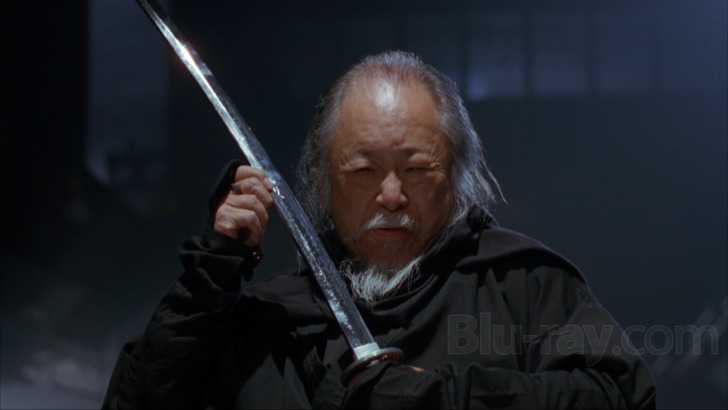
Actor Vincent Wong (Big Trouble in Little China, Tremors) serves as the strongest piece of connective tissue between the four films as the
rest of the core cast would flux around him. The Japanese grandfather of the three boys, it is his task to train the youngsters to be ninja masters
over
summer vacation. Imbuing his role with genuine energy and an ever-present mischievous glint in his eye, he shepherds the boys through training
with a mix of technical instruction and paternal care and compassion by way of Pat Morita's Mr. Miyagi and the Teenage Mutant Ninja
Turtles's Splinter. His screen time is reduced over the course of the franchise, with him clearly being doubled for any physically ambitious on-
screen action in the third film, and absent for the vast majority of 3 Ninjas: High Noon at Mega Mountain. That film would capture his last
role before his death in 2001.
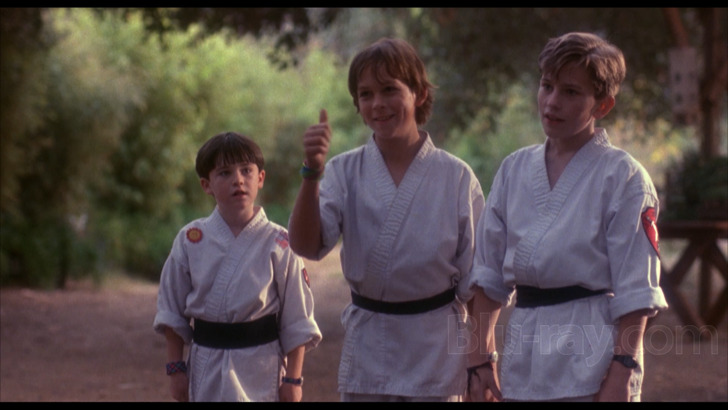
The four films of the 3 Ninjas franchise, consist of the following:
- Three Ninjas (1992 - 96 minutes) - In the first film, three boys, instructed in the ways of the ninja by their grandfather, help take down a dangerous criminal being pursued by their FBI agent father. Directed by John Turteltaub (National Treasure), and certainly the best of the four films, the first 3 Ninjas film, is, as they all are to some degree, a bit of a time capsule. Not so much as for showing landmarks or slices of daily life now gone, but for depicting things once thought acceptable or harmless that now take on a completely different tone in today's world. As the kids ride with their grandfather, they sing "On Top of Spaghetti", one of those songs that seemed harmless at the time, but in a post-Columbine era where school and mass shootings occur with alarming frequency and regularity in the United States, it is rather uncomfortable to listen to a group of children sing about perpetrating bloody violence toward a teacher. It's one of the elements of the film that hasn't aged particularly well. A more benign moment is spotted when the trio bike to school with the girl who lives nearby and there's nary a bike helmet to be seen as they pedal across town. The acting here ranges from wooden to unrestrained and over-the-top, oftentimes diving headlong into camp. Rating: 3.0/5.0
- Three Ninjas: Kick Back (1994 - 93 minutes) - Again back at their grandfather's house for further ninja training over the summer, they still have time to play baseball in a fairly light-hearted game where grandfather shouts fortune cookie-like advice to his young wards and fart jokes rule the day. However, poor behavior on the field results in the game being suspended for one week and puts the trio's trip to Japan with their grandfather in jeopardy. Disappointed, but compelled to bring an ancient dagger back to Japan to award to the winner of a competition, Grandpa Mori leaves without them. But when a mix-up in baggage is discovered, the young trio brings the item to their grandfather in Japan, which may also hold the secret to the fabled Cave of Gold. Just as basketball is featured in the first film, here the boys display their baseball skills, again working hard to ground them as normal children. Obligatory training montages pop up with numerous elements normally found in Shaw Brothers films modified for a younger audience and group of actors, and several fast-motion scenes are employed as the boys race to the airport and as one of the baddies is forced to run on a treadmill as punishment for failure. As with the first film, the bad guys struggle to be as bad as they should be, and more often than not simply display cartoonish incompetence. Rating: 2.0/5.0
- 3 Ninjas: Knuckle Up (1995 - 88 minutes) - In what is easily, for me at least, the most difficult of the four to watch, the film begins on a much darker note. The trio of young martial artists and their grandfather stumble upon a protest to stop tribal lands from being used as a landfill. Soon after, they find themselves in a local restaurant where they quickly take action to defend a pre-teen Indigenous girl who is being physically assaulted and verbally harassed by a group of adult "good ol' boys". While the toxic adults are dispatched quickly enough, it's an odd and disturbing scene to witness fully grown men treat a girl who looks to be about twelve the way they are, especially when the ensuing fight is played partially for laughs. Starting even before these scenes and continuing for the entirety of its runtime, the film is awash with racial stereotypes, cultural appropriation, slurs, hate crimes, and other reprehensible behavior all packaged up for our thrills, laughs, jeers, and cheers. Rating: 1.0/5.0
- 3 Ninjas: High Noon at Mega Mountain (1998 - 94 minutes) - The last film of the franchise has its work cut out for from the very beginning as the actors playing Colt, Tum-Tum, and Rocky have all been recast. It's also unique in the fact that it adds known stars to the roster: 1970s-1980s blond bombshell Loni Anderson stars as the villainous Medusa and is assisted by funnyman Jom Varney in one of his final film roles as Lothar Zogg. Here, Medusa and her evil gang seek to ransom the safety of a theme park's guests for $10 million. Wrestler and aspiring actor Hulk Hogan also shows up in a small supporting role as Dave Dragon, the star of a recently canceled television show and leader of a small stunt show team at Mega Mountain that is clearly inspired by thePower Rangers. The most dastardly deeds Medusa's team can muster are to increase the speed of one of the rides by 30% and to stop a roller coaster when the cars are upside down. True, Medusa does threaten to disengage the safety harnesses, but in a movie where not even a single drop of blood is spilled and bullets can only ever seem to find car windows and tires, we know it will never happen. But truly, the oddest thing about the film is that even after the heavily armed baddies seal off the park and engage in a brief firefight with the police (who have the park surrounded), life goes on as normal for everyone in the park. People queue for and enjoy rides, play midway games, and so on. Despite the park being crowded, no one runs for cover when the villains fire machine guns at a Dave Dragon who ziplines through a crowd or seems worried in any way. As the bulk of the film is confined to the theme park, the production feels smaller than its predecessors and also affords Victor Wong his smallest amount of screen time in the quadrilogy. Performances, again, are all over the map, with Varney in fine form as a cartoon villain, Hogan seeming consistently uncomfortable, and Anderson chewing scenery in an outfit that must be seen to be believed. Rating: 2.5/5.0
3 Ninjas: 4 Film Collection Blu-ray Movie, Video Quality
The films feature a largely consistent appearance across the four installments of the series. Each possesses a fairly healthy grain structure which generally resolves naturally, but at times can seem a bit chunky. Fine detail can rise to a point, and is best in interior shots but is never truly ever quite impressive. Exteriors can fair a bit worse, especially in the earlier films, sporting a softer, less precise look. Still, it is fair to say that facial and environmental particulars rarely rise to the point where they would rival modern films or those having undergone a more recent scan and restoration work. Foliage in exterior shots can at times appear smeary. Overall, the image is stable, but colors aren't as well-saturated as they should be, with much of the film having a slightly washed-out look and primaries rarely pop. Skin tones are typically very healthy, but can at times take on a reddish hue. Blacks can be satisfying but crush is a noticeable issue. By the time the fourth film arrives, colors fair somewhat better, with reds, in particular, being a bit punchier, but fine detail is not significantly improved over what was seen in the previous films in the set. They are perfectly watchable presentations overall, but far from stellar.
3 Ninjas: 4 Film Collection Blu-ray Movie, Audio Quality
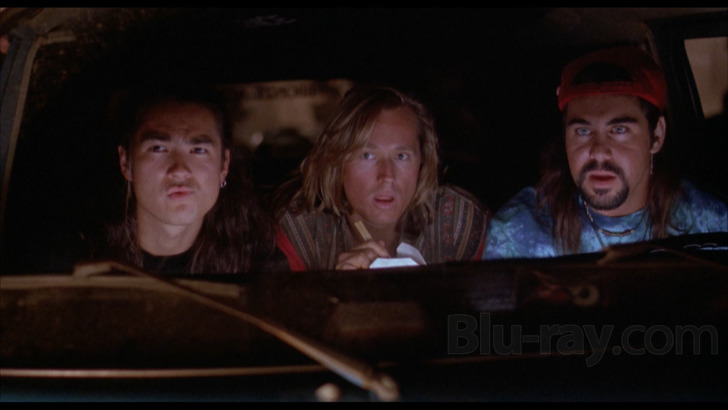
The 3 Ninjas films sport an English LPCM 2.0 audio track which is serviceable but not impressive. Dialogue is clean and clear, being centrally focused and properly prioritized. Sound effects are handled well, typically consisting of punches, kicks, incessant cries of "hi-yah!", and comedic flourishes that accompany fight sequences. Absent any real bass presence, such blows can sound a bit thin to modern ears. Music is handled well enough, but again it lacks anything approaching an adequate bottom end. Directionality is at times suggested and is somewhat less than convincing, though this is to some degree expected. While not reference material, it is an adequate accompaniment for these pint-sized pugilists.
3 Ninjas: 4 Film Collection Blu-ray Movie, Special Features and Extras

The lone special feature included with these four films is a theatrical trailer (SD) for the first film, 3 Ninjas, found on Disc One (1.51).
3 Ninjas: 4 Film Collection Blu-ray Movie, Overall Score and Recommendation

Films aimed at the young and tween viewers of yesteryear, the 3 Ninjas: 4 Film Collection is best appreciated by those who grew-up with and loved the films during their initial releases. Lacking the pacing and sensibilities found in modern films aimed at that age group, they may struggle to find a footing with today's audiences the way they did in the 1990s. Campy, unafraid to borrow from other successful films, and typically action-oriented in a good-natured way (save for the third film), adult fans revisiting the films are in for a healthy dose of nostalgia, though they will no doubt long for slightly better technical merits and more supplemental material. While those not familiar with the franchise should proceed with caution, the 3 Ninjas: 4 Film Collection comes recommended to its fans as long as expectations are held in check.