We're in the Movies: Palace of Silents & Itinerant Filmmaking Blu-ray Movie
HomeWe're in the Movies: Palace of Silents & Itinerant Filmmaking Blu-ray Movie 
Blu-ray + DVDFlicker Alley | 1983-2010 | 2 Movies | 217 min | Not rated | Jul 22, 2014

Price
List price:Amazon: $33.78 (Save 44%)
Third party: $33.78 (Save 44%)
Temporarily out of stock.

Movie rating
Movie has not been rated yetBlu-ray rating
| Users |  | 0.0 |
| Reviewer |  | 4.0 |
| Overall | | 4.0 |
Overview
We're in the Movies: Palace of Silents & Itinerant Filmmaking (1983-2010)
See individual titles for their synopses.
| Documentary | 100% |
Specifications
Video
Video codec: MPEG-4 AVC
Video resolution: 1080p
Aspect ratio: 1.78:1, 1.34:1
Original aspect ratio: 1.37:1, 1.85:1
Audio
English: Dolby Digital 5.1
English: Dolby Digital 2.0
Subtitles
None
Discs
50GB Blu-ray Disc
Two-disc set (1 BD, 1 DVD)
DVD copy
Playback
Region free
Review
Rating summary
| Movie | | 4.0 |
| Video | | 4.0 |
| Audio | | 4.0 |
| Extras |  | 3.5 |
| Overall | | 4.0 |
We're in the Movies: Palace of Silents & Itinerant Filmmaking Blu-ray Movie Review
Reviewed by Dr. Svet Atanasov August 2, 2014"We're in the Movies: Palace of Silents & Itinerant Filmmaking" arrives on Blu-ray courtesy of independent distributors Flicker Alley. The set features two documentaries never before seen on home video, Stephen Schaller’s "When You Wore a Tulip and I Wore a Big Red Rose" (1983) and Iain Kennedy’s "Palace of Silents" (2010), as well as five bonus films from early itinerant and local filmmakers. In English, without optional English SDH subtitles for the main features. Region-Free.
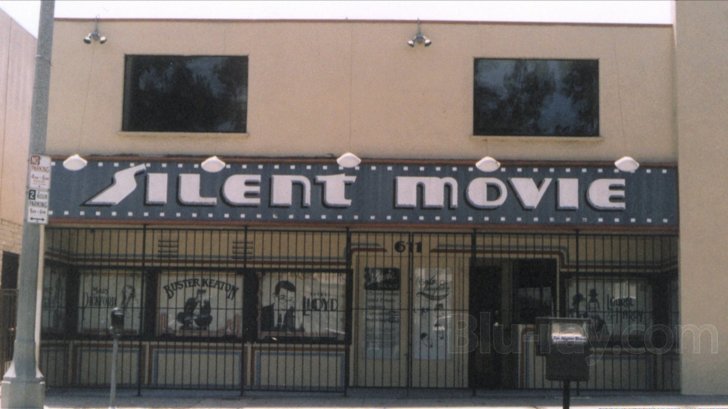
The Silent Movie Theatre
The latest addition to Flicker Alley’s catalog is a two-disc set (Blu-ray and DVD) which features two documentary films, When You Wore a Tulip and I Wore a Big Red Rose (1983) and Palace of Silents: The Silent Movie Theatre in Los Angeles (2010).
Stephen Schaller’s When You Wore a Tulip and I Wore a Big Red Rose chronicles the history of the oldest surviving silent film made in Wassau, Wisconsin, The Lumberjack, which was produced by a small independent company in 1914. It features clips from the The Lumberjack as well as excerpts from various archival interviews with folks that either appeared in the film or were present at the time when the film was shot in Wassau.
The interviewees, all of whom are no longer with us, recall how Wassau evolved throughout the years and specifically how a number of the locations seen in The Lumberjack changed. A few also discuss the specific attitudes folks had towards silent films and film production at the time when The Lumberjack was completed, as well as the business climate in which the producers of these films had to operate. Apparently, The Lumberjack was part of a popular trend -- in the beginning of the century, various groups of filmmakers were contracted to travel around the country and capture with their cameras the daily routines of people from all sorts of different social backgrounds.
The most enlightening comments in the documentary, however, come from a brilliant pianist who did the background music for countless silent films that were screened in the state of Wisconsin. Louise Elster explains in great detail how she had to match with her playing the actions and emotions on display in the silent films that were screened (apparently she even did a wide range of sound effects to imitate the sounds and noises of cars, trains, etc.), how the audiences reacted to the music and the films they were watching, and how the theater owners planned their advertizing strategies.
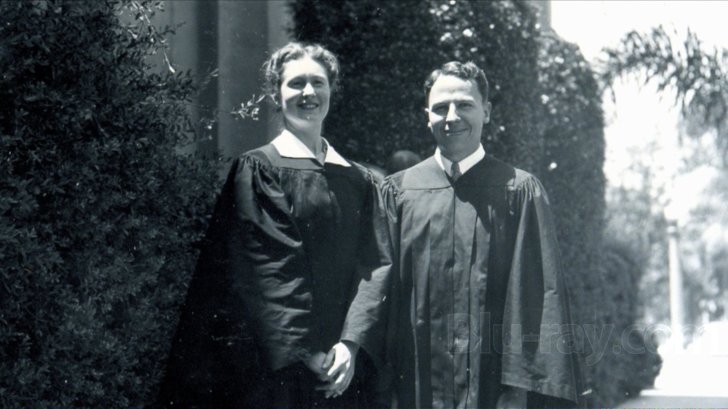
Iain Kennedy’s documentary Palace of Silents chronicles the fascinating history of the iconic Silent Movie Theatre in Los Angeles, which was founded by Dorothy and John Hampton in 1942. Kennedy goes in great detail explaining how Hampton amassed an impressive collection of silent films, restored many of them at a time when film restoration was still a rather exotic practice, and struggled to promote them in the Silent Movie Theatre without bankrupting himself.
A good portion of the film is also dedicated to the people who continued operating the Silent Movie Theatre after Hampton passed away. Lawrence Austin reopened it with the blessing of Hampton’s widow in 1991, and for a while it seemed like silent films had once again found a safe home. His rather unique business dealings, however, seriously complicated his personal life and eventually led to his murder in 1997. (Austin was murdered by Christian Rodriguez, a hit man, who was hired by James Van Sickle, a projectionist who worked for the late theatre owner and became his business partner).
The Silent Movie Theatre was reopened for a third time on November 5th, 1999, with the screening of Charlie Chaplin’s Modern Times. The new owner, Charlie Lustman, was very much an outsider who knew little about silent films -- or so the various people Kennedy interviews in his documentary claim. However, Lustman’s energy and willingness to experiment with different business ideas quickly made the tiny theatre profitable.
The Silent Movie Theatre changed owners yet again after Lustman became seriously ill in 2006. Lustman sold it to Dan and Sammy Harkham, its present owners, who further expanded the range of films that are currently screened in it.
*The Lumberjack is included as a bonus feature on this release.
We're in the Movies: Palace of Silents & Itinerant Filmmaking Blu-ray Movie, Video Quality
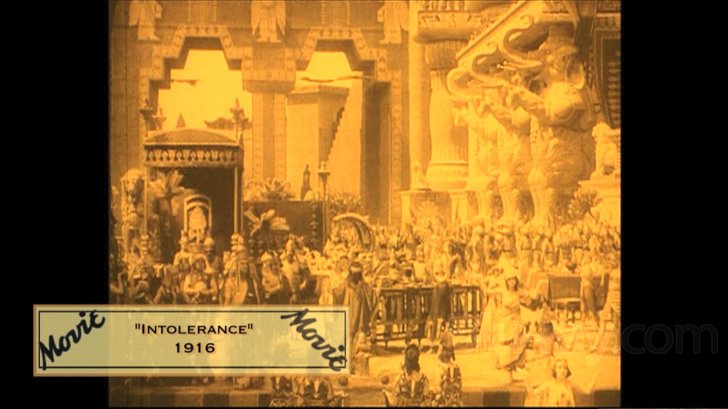
Both films transition to Blu-ray with MPEG-4 AVC encoded high-definition transfers (both 1080p). Stephen Schaller's When You Wore a Tulip and I Wore a Big Red Rose appears in an aspect ratio of 1.34:1, while Iain Kennedy's Palace of Silents is presented in an aspect ratio of 1.78:1.
Because both film feature plenty of archival footage, some of which is sourced from standard-definition sources, clarity and depth occasionally fluctuate. When You Wore a Tulip and I Wore a Big Red Rose looks better in high-definition, but there are some native fluctuations. Overall image stability is very good. There are no scratches, cuts, debris, or damage marks on the two films. Obviously, the quality of the clips from the classic silent films varies.
The short films in the bonus section of the release look very good. The Lumberjack and Huntingdon's Hero, in particular, come with very strong high-definition transfers. Some small scratches and damage marks are visible, but detail is very good. The Kidnappers Foil has some minor stability issues. Three Short Films from the Country obviously come from the best surviving elements available. (Note: This is a Region-Free Blu-ray release. Therefore, you will be able to play it on your PS3 or SA regardless of your geographical location).
We're in the Movies: Palace of Silents & Itinerant Filmmaking Blu-ray Movie, Audio Quality
There are two standard audio tracks on this Blu-ray release: English Dolby Digital 5.1 (for Palace of Silents) and English Dolby Digital 2.0 (for When You Wore a Tulip and I Wore a Big Red Rose). There are no optional English subtitles.
Since both films have various clips from archival interviews, dynamic intensity is fairly limited. However, the dialog is always clean, stable, and very easy to follow. The bits of music that are heard from time to time, such as Louise Elster's piano excerpts, sound great. For the record, there are no pops or audio dropouts to report in this review.
We're in the Movies: Palace of Silents & Itinerant Filmmaking Blu-ray Movie, Special Features and Extras
- The Lumberjack - presented here is Oliver W. Lamb's film, which was produced by Paragon Feature Film, Co. in 1914. Music by The Ragtime Skedaddlers. Tinted. Music only. (16 min, 1080p).
- Huntingdon's Hero - this short film was produced by The Consolidated Film Producers of California in 1934. It is about an older man who might be cheating on his wife with a younger woman. In English, not subtitled. (21 min, 1080p).
- The Kidnappers Foil - this short film was directed by Melton Barker in 1937. A young girl is kidnapped in a small Texas town. In English, not subtitled. (18 min, 1080p).
- Three Short Films from the Country - with music by The Ragtime Skedaddlers. (12 min, 480/60i).
1. Our Southern Mountaineers (1918).
2. In the Moonshine Country (1918).
3. Mountain Life (unknown).
- Booklet - 12-page illustrated booklet featuring essay by David Shepard and David John Slaughter.
We're in the Movies: Palace of Silents & Itinerant Filmmaking Blu-ray Movie, Overall Score and Recommendation
I liked the two documentaries included in Flicker Alley's latest release quite a lot. Louise Elster's comments and demonstrations in When You Wore a Tulip and I Wore a Big Red Rose were particularly interesting as they reveal how important pianists were during the silent film era. Palace of Silents chronicles the fascinating history of what is undoubtedly one of the most remarkable movie theaters in Los Angeles. RECOMMENDED.