The Himalayan Blu-ray Movie
HomeThe Himalayan Blu-ray Movie 
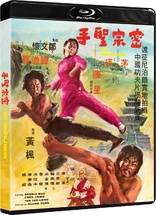
Mi zong sheng shou / Mat chung sing sau / 密宗圣手88 Films | 1976 | 117 min | Not rated | May 12, 2026

Price
List price:Amazon: $17.99 (Save 40%)
Third party: $17.99 (Save 40%)
Only 17 left in stock (more on the way).

Movie rating
7 | / 10 |
Blu-ray rating
| Users |  | 0.0 |
| Reviewer |  | 3.5 |
| Overall | | 3.5 |
Overview
The Himalayan (1976)
The patriarch of the Tseng family wants to marry off his daughter Ching Lan into the Kao clan. However, the cunning and deceitful eldest brother Kao Chu only wants his younger sibling Kao I-Fan to marry Lan so he can gain access to the Tseng family's considerable wealth and power. -Woodyanders, imdb
Starring: Angela Mao, Sing Chen, Tao-liang Tan, Shan Kwan, Billy ChanDirector: Feng Huang
| Foreign | Uncertain |
| Action | Uncertain |
| Drama | Uncertain |
Specifications
Video
Video codec: MPEG-4 AVC
Video resolution: 1080p
Aspect ratio: 1.85:1
Original aspect ratio: 1.85:1
Audio
Mandarin: LPCM 2.0 Mono
English: LPCM 2.0 Mono
Subtitles
English
Discs
Blu-ray Disc
Single disc (1 BD)
Packaging
Slipcover in original pressing
Playback
Region A (B, C untested)
Review
Rating summary
| Movie | | 3.5 |
| Video |  | 4.0 |
| Audio | | 4.0 |
| Extras |  | 2.0 |
| Overall | | 3.5 |
The Himalayan Blu-ray Movie Review
Reviewed by Jeffrey Kauffman May 13, 2026 Note: There's perhaps a bit of a cinematic analog to the old conundrum, "Which came first, the chicken or the egg?" with regard to at
least
two of the three offerings 88 Films is releasing in tandem, namely The Angry River and The
Invincible Eight, though 88 Films is also including this somewhat later film as part of the trio. See below for details.
The Angry River and The Invincible Eight are among the very first productions undertaken by the then brand spanking new Golden
Harvest, with both coming out within weeks of each other in 1971. The Himalayan came out several years later, but it has at least a few
tethers to the other two films, including star Angela Mao and fight choreographer Sammo Hung (who also appears in a small role). While certain
aspects of The Himalayan are definitely old hat, the film's very title may point out one of its more distinctive characteristics, namely that a
lot of the film was shot in Nepal (commentators Frank Djeng and Michael Worth discount the possibility that there may have been some location
shooting in Tibet as well, as the film's PR advertised, as political realities circa 1976 would have probably prevented a Hong Kong crew from filming
there).
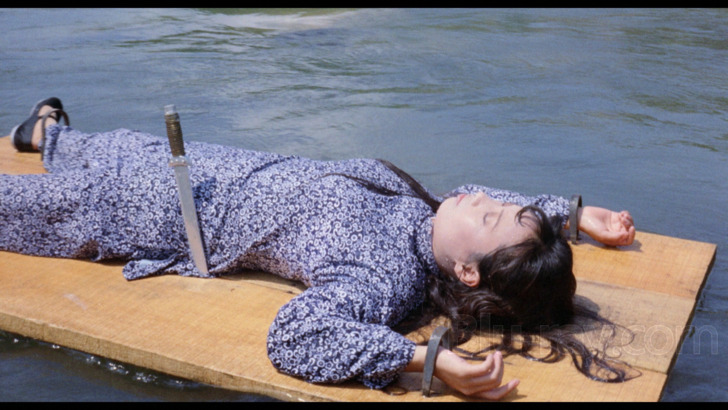
Worth and Djeng also mention in an amused fashion how The Himalayan announces that aforementioned location work with both on screen subtitles and portentous voiceover, though some of the supposed "native" festival behavior is probably pretty fanciful, as the commentary also addresses. One way or the other, along with some truly horrifying footage of chickens being speared by men on horseback (including Sammo Hung), several introductions are more or less made, including focal character Tseng Ching Lam (Angela Mao). That "more or less" quality comes courtesy of opening vignettes that just kind of dump various people together, with clarifications about interrelationships offered somewhat later.
Suffice it to say like many of the characters Mao plays, Lam is able to both figuratively and literally fight The Man, in this case main villain Kao Chu (Chan Sing). Along with the ostensible exotic locations The Himalayan utilizes, another supposed "local" technique, a Tibetan fighting art called Mi, also becomes part of the story as Lam masters it in order to vanquish her enemies. There's an interesting feminist subplot in any case with regard to the predicament Lam finds herself in that propels the story forward. There's a certain rote quality to the storytelling, especially with regard to a secondary love story, but there's one arguably surprising character shift and some fun vignettes revolving around supposedly learning Mi, which includes some pretty incredible breath control.
The Himalayan Blu-ray Movie, Video Quality
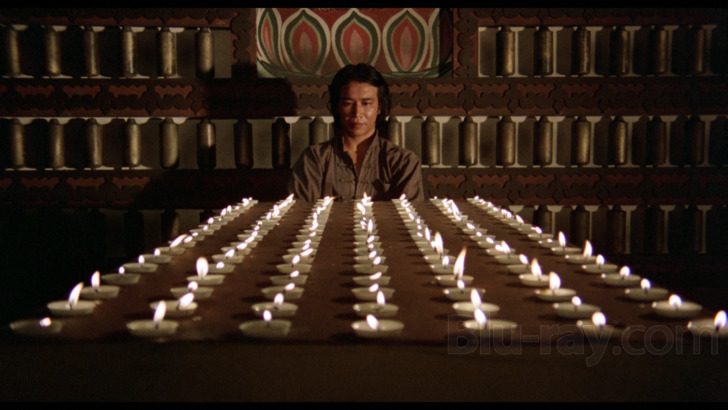
The Himalayan is presented on Blu-ray courtesy of 88 Films with an AVC encoded 1080p transfer in 1.85:1. The back cover of this release states that this is a new 2K restoration from the original negative. I'd rate this as certainly more consistently clear and well detailed looking than the intermittently blurry The Invincible Eight, but maybe not quite at the eye popping saturation levels of The Angry River. There are certainly moments here, especially the renderings of ubiquitous red tones, where the palette can be close to as vivid as that seen in The Angry River, but perhaps a bit more than in that film there's a tendency toward somewhat degraded, more brown looking, material where grain can be grittier and fine detail levels ebb a bit. There's a very slight digital looking quality to some of the lesser quality material which may disclose some attempts at correction or homogenization.
The Himalayan Blu-ray Movie, Audio Quality
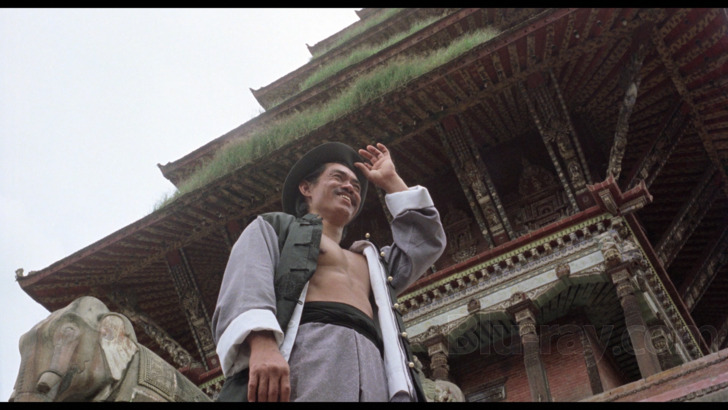
The Himalayan features LPCM 2.0 Mono tracks in either Mandarin or English. While the overall sound of these is largely interchangeable, rather interestingly, the two don't always mirror each other in terms of where underscore and even some ambient environmental effects are used. While I wouldn't argue there are any huge differences in amplitude or overall ambience between the two tracks, certain isolated moments like the opening narration sounded more full bodied to me in the English version than in the Mandarin. Dialogue is rendered cleanly and clearly throughout. Optional English subtitles are available.
The Himalayan Blu-ray Movie, Special Features and Extras

- Audio Commentary by Frank Djeng and Michael Worth
- Tales from the Monastery (HD; 9:37) is an interview with Dorian Tan, who kind of hilariously initially can't remember the name of this film. Subtitled in English.
- English Opening and Closing Credits (HD; 3:07)
- Image Gallery (HD; 3:10)
- Mandarin Trailer (HD; 4:35)
The Himalayan Blu-ray Movie, Overall Score and Recommendation
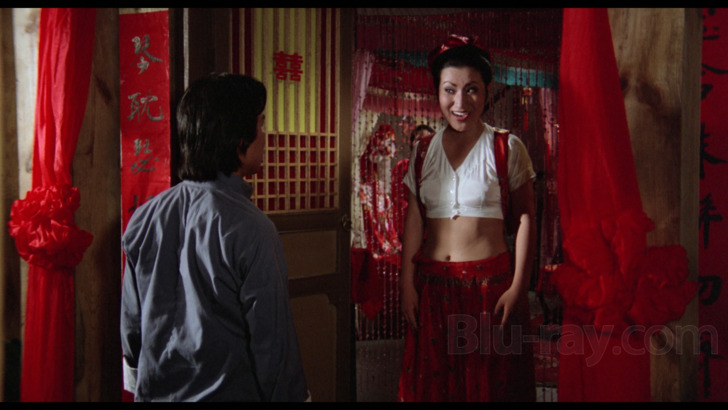
Perhaps slightly hilariously given the fact that Golden Harvest was created as an "answer" to Shaw Brothers, this film, like the two others 88 Films is releasing in tandem, isn't shy about "borrowing" from the ostensible rival studio, albeit in this instance perhaps in terms of some of the mid to late seventies' emphasis on more salacious sexual material and flashes of full frontal nudity. You'd think the Himalayas might be too cold for stuff like that, but joking aside, those very moments of prurient interest (and maybe a disturbing moment or two) may point out how divergent The Himalayan is in terms of content and tone. Technical merits are generally solid, and both the commentary and interview very enjoyable. Recommended.