The Breakfast Club 4K Blu-ray Movie
HomeThe Breakfast Club 4K Blu-ray Movie 
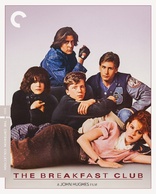
4K Ultra HD + Blu-rayCriterion | 1985 | 97 min | Rated R | Nov 04, 2025

Movie rating
8.1 | / 10 |
Blu-ray rating
| Users |  | 5.0 |
| Reviewer | | 5.0 |
| Overall | | 5.0 |
Overview
The Breakfast Club 4K (1985)
Five high school students meet in Saturday detention and discover they have a lot more in common than they thought.
Starring: Emilio Estevez, Paul Gleason, Anthony Michael Hall, John Kapelos, Judd NelsonDirector: John Hughes
| Comedy | Uncertain |
| Teen | Uncertain |
| Coming of age | Uncertain |
| Drama | Uncertain |
Specifications
Video
Video codec: HEVC / H.265
Video resolution: 4K (2160p)
Aspect ratio: 1.85:1
Original aspect ratio: 1.85:1
Audio
English: LPCM Mono (48kHz, 24-bit)
English: DTS-HD Master Audio 5.1 (48kHz, 24-bit)
Subtitles
English SDH
Discs
Blu-ray Disc
Two-disc set (2 BDs)
4K Ultra HD
Playback
Region A (locked)
Review
Rating summary
| Movie |  | 4.5 |
| Video | | 5.0 |
| Audio | | 5.0 |
| Extras | | 5.0 |
| Overall | | 5.0 |
The Breakfast Club 4K Blu-ray Movie Review
Reviewed by Dr. Svet Atanasov November 14, 2025John Hughes' "The Breakfast Club" (1985) arrives on 4K Blu-ray courtesy of Criterion. The supplemental features on the release include archival cast and crew interviews; archival audio commentary by Anthony Michael Hall and Judd Nelson; rare deleted and extended scenes; archival promotional materials; and more. In English, with optional English SDH subtitles for the main feature. Region-Free.
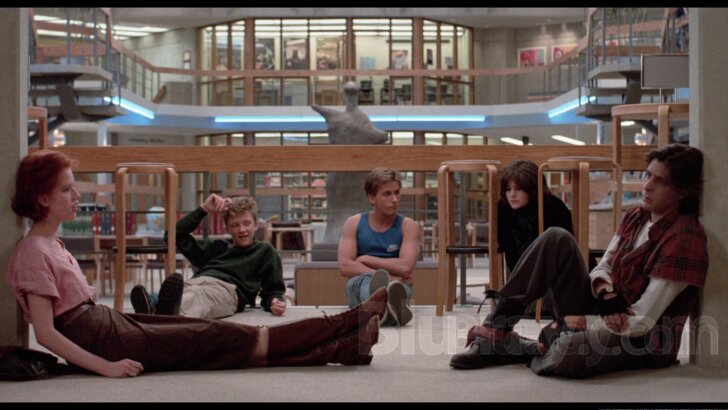
The troublemakers
John Hughes directed a total of eight films during his career and the first four -- Sixteen Candles, The Breakfast Club, Weird Science, and Ferris Bueller's Day Off -- sum up perfectly just about everything that most folks believe made the ‘80s such a special decade. There is a very distinctive energy in these films and a type of authentic chemistry between their young characters that instantly make them irresistibly attractive.
There is a rather long list of directors who were greatly influenced by Hughes’ work. During the early ‘90s, many set out to produce similar films while operating in a different sociocultural environment -- Cameron Crowe and Richard Linklater are at the very top of this list -- but the new films had only bits of what they needed to be equally good. There are two big reasons why this happened, and they are interconnected. The first is that the proper setting for them essentially disappeared as the ‘80s ended. Indeed, as MTV grew larger, many producers with deep pockets realized that the TV business now offered new and lucrative opportunities to target teens and create commercial products that would fill the gaps left by films like those directed by Hughes, and they reacted quickly. The wild overcommercialization of MTV that ensued initiated a truly vicious cycle, and less than a decade later, many of the same producers actually completely reshaped its identity. So instead of promoting music videos and other content that focused on trends that originated within the music industry, MTV became a big platform for ‘reality’-based shows and ‘educational' programming, and in the process lost its role as a mirror that aimed to reflect the colorful world of its audience, which is precisely what Hughes’ early films did. The second reason is the more obvious one, which is that no one could do what Hughes knew how to do so well. Hughes -- and this is arguably the biggest secret behind the brilliance of The Breakfast Club -- had a genuine connection with the characters of his films and understood perfectly their dilemmas, so he shot them in a way that made their experiences entertaining but also incredibly convincing. In fact, he did it so well that the same connection then became the foundation for a lasting bond between these characters and the folks who went to their local theater to see his films. Not convinced? Engage in a conversation with anyone who saw The Breakfast Club when it opened theatrically, and you will soon discover that this person vividly remembers how at least one of its characters accurately described most, if not everything, that he/she had experienced or was still going through in his/her life. By the early ‘90s, however, the commercial shift that is highlighted above had already produced an entirely different sociocultural environment and with it manufactured demand for a completely different crop of teen films, and once this became obvious, the roles that Hughes and a few others like him had during the '80s were basically forfeited to the typical dull Hollywood-based network-contracted scriptwriters and show producers. It is what ignited the ‘reality’-based TV craze.
Instead of rehashing yet again the many big and small reasons why The Breakfast Club is rightfully considered one of the very best teen films to emerge from the ‘80s, let’s just quickly mention a couple of reasons why it might be great to revisit as this year comes to an end. At a time when so many young people are taught to retreat in ‘safe spaces’ where they can only hear the soothing echo of their own thoughts, this film actually very effectively argues that it is in their best interest to go in the exact opposite direction and, in the process, routinely reexamine their perceived strengths and weaknesses. There is also a wonderful, very appropriate for the current social climate, message about true love and happiness, and how they can be discovered only by those who dare to drop the masks they have used throughout their lives to hide real or fictional insecurities.
The Breakfast Club 4K Blu-ray Movie, Video Quality
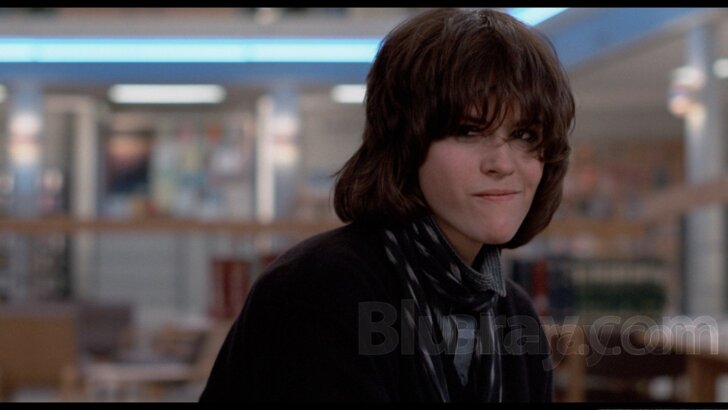
Criterion's release of The Breakfast Club is a 4K Blu-ray/Blu-ray combo pack. The 4K Blu-ray is Region-Free. However, the Blu-ray is Region-A "locked".
Please note that some of the screencaptures included with this article are taken from the 4K Blu-ray and downscaled to 1080p. Therefore, they do not accurately reflect the quality of the 4K content on the 4K Blu-ray disc.
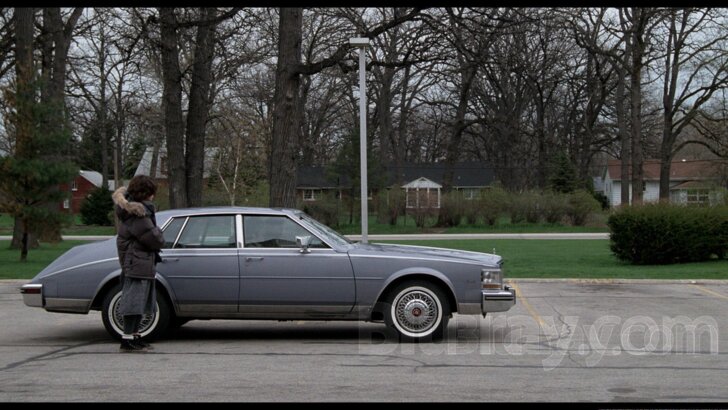
Screencaptures #1-5 are from the Blu-ray.
Screencaptures #6-19 are from the 4K Blu-ray.
The 4K Blu-ray makes it possible to view the recent 4K restoration of The Breakfast Club in native 4K, either with Dolby Vision or HDR. I chose to view it with HDR.
The 4K restoration is done right and looks great, and I have upscaled it to 4K several times since 2018. I expected that it would look terrific in native 4K, but I did not know what areas of the 1080p presentation on this Blu-ray release would benefit the most.
On my system, two areas of the native 4K presentation produced the most meaningful improvements. First, the HDR grade gives all visuals an undeniably richer, more vibrant appearance. While I like how the film looks on the 1080p presentation a lot, it does not have the same appearance there. Also, this superiority remains consistent because virtually the entire film is set in an environment with very good, controlled lighting. Second, the native 4K presentation produces sharper visuals, and on a larger screen, the uptick in quality is unmissable. On my system, I could easily notice and appreciate the difference, and not only during close-ups. All remaining discrepancies and improvements I would describe as insignificant. For example, I did not observe any meaningful improvements in the density levels of the visuals, which is hardly surprising because the 1080p visuals already look fantastic. Additionally, in darker areas, the HDR grade does not enhance and/or expand shadow nuances in any meaningful way. All visuals move as smoothly and evenly as they do on the 1080p presentation, so fluidity remains identical, too. In summary, I think that the 4K Blu-ray offers a superior presentation of The Breakfast Club, and the larger your screen is, the easier it will be for you to appreciate its strength.
The Breakfast Club 4K Blu-ray Movie, Audio Quality
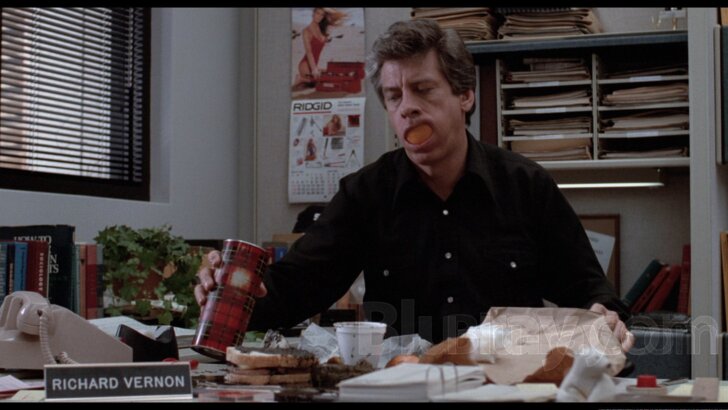
There are two standard audio tracks on this Blu-ray release: English LPCM 1.0 and English DTS-HD Master Audio 5.1. Optional English SDH subtitles are provided for the main feature.
When the 4K restoration of The Breakfast Club was released on Blu-ray in 2018, I frequently switched from the Mono track to the 5.1 and back, so this time I decided to revisit the film with the 5.1 track. This track has been around for a while, and I think that it is fantastic. It is very easy to tell that it has been optimized to make certain areas of the film more dynamic, but the absence of intense action material makes it difficult for it to impress. I still feel that the Mono track is probably preferable, but I definitely like how the 5.1 track handles various areas where the music has a prominent role to play.
The Breakfast Club 4K Blu-ray Movie, Special Features and Extras
4K BLU-RAY DISC
- Commentary - this archival audio commentary features actors Anthony Michael Hall and Judd Nelson. It was recorded in 2008 and initially appeared on the Flashback DVD Edition of The Breakfast Club
1. Automated dialogue replacement
2. "Like shooting a play"
3. "Talk to the actor, not the role"
4. Leading the rebel charge
5. "Freedom for All"
6. Depth of lighting
7. Soft-rock vibe
8. "Your own pathetic lives"
9. The truth comes out
10. Group therapy
11. Brian's mission
12. Mr. Hughes
- Commentary - this archival audio commentary features actors Anthony Michael Hall and Judd Nelson. It was recorded in 2008 and initially appeared on the Flashback DVD Edition of The Breakfast Club
- Deleted and Extended Scenes - presented here is a very large selection of scenes that were cut from the 150-minute rough cut of The Breakfast Club. The content was sourced from analog masters displaying a "Property of MCA" label. In English, not subtitled. (52 min).
- Sincerely Yours - this archival documentary focuses on the original cinematic style of director John Hughes, the making of The Breakfast Club and its characters. Included in it are clips from interviews with costume designer Marilyn Vance, writer Diablo Cody (Juno), director Amy Heckerling (Clueless), actors John Kapelos, Ally Sheedy Anthony Michael Hall and Judd Nelson, and director Marco Siega (TV's Dexter), amongst others. In English, not subtitled. (51 min).
- Cast and Crew - presented here is a collection of recent and archival interviews with cast and crew members.
1. Molly Ringwald and Ally Sheedy - in these recent video interviews, the two actresses explain how they entered the film business and recall their first encounters with John Hughes as well as the moments when they were cast to play their characters in The Breakfast Club. (Apparently, some very curious changes were made). There are additional very interesting observations about the success of the film and the director's working methods. The two interviews were conducted exclusively for Criterion in New York City in 2017. In English, not subtitled. (19 min).
2. Judd Nelson - in this archival interview, Judd Nelson explains how he became involved with The Breakfast Club and discusses the importance of freedom in the creative process favored by John Hughes. The interview was conducted on the set of The Breakfast Club in 1984. In English, not subtitled. (13 min).
3. Ally Sheedy - in this archival interview, Ally Sheedy explains what is special about The Breakfast Club and discusses her interactions with the rest of the cast members as well as director John Hughes. There are also very interesting observations about the strengths of the script and its main characters. The interview was conducted on the set of The Breakfast Club in 1984. In English, not subtitled. (16 min).
4. Irene Brafstein - in this archival interview, studio teacher Irene Brafstein discusses her work with the young actors that play the main characters in The Breakfast Club. The interview was conducted in 1984. In English, not subtitled. (9 min).
5. Paul Gleason - in this archival interview, Paul Gleason explains why he became involved with The Breakfast Club and discusses his work with his young colleagues and John Hughes' instincts and working methods. The interview was conducted on the set of The Breakfast Club in 1984. In English, not subtitled. (12 min).
- John Hughes - presented here are two archival audio interviews with director John Hughes.
1. American Film Institute, 1985 - this is a recorded seminar in which John Hughes discusses the evolution of his career in the film business as a writer and director, the original script for The Breakfast Club and various edits that he made to it, the relationships between the five characters, the film's atmosphere, etc. In English, not subtitled. (48 min).
2. Sound Opinions, 1999 - some of the best observations in this archival interview address the use of music in John Hughes' films and the sound design/soundtrack of The Breakfast Club. The interview was conducted by Jim DeRogatis (Chicago Sun-Times) and Greg Kot (Chicago Tribune) for Chicago-based Sound Opinions. In English, not subtitled. (17 min).
- Electronic Press Kit - presented here is an archival press kit with promotional studio material featuring clips from various cast and crew interviews as well as raw footage from the shooting of The Breakfast Club. In English, not subtitled. (24 min).
1. Ensemble profile
2. John Hughes profile
3. Dede Allen profile
4. "Youth Picture"
5. "Roller-Coaster"
6. Featurette
7. Original trailer
- Today - presented here is an excerpt from a 1985 episode of NBC's Today show featuring interviews with actors Molly Ringwald, Judd Nelson, Anthony Michael Hall, Emilio Estevez, and Ally Sheedy. The bulk of the comments address the preparation work that each actor did and the relationships between the main characters. The interviews were conducted by Jane Pauley. In English, not subtitled. (10 min).
- Describe the Ruckus - this archival video essay features actor Judd Nelson reading from director John Hughes' production notes for The Breakfast Club. The essay was produced exclusively for Criterion in 2017. In English, not subtitled. (13 min).
- This American Life - presented here is an episode of the Chicago Public Media radio program This American Life in which actress Molly Ringwald explains what it feels like to reexperience The Breakfast Club many years later and this time as a parent. In English, not subtitled. (16 min).
- Booklet - 22-page illustrated booklet featuring David Kamp's essay "Smells Like Teen Realness" and technical credits.
The Breakfast Club 4K Blu-ray Movie, Overall Score and Recommendation

The '80s left us a lot of good teen films, but the ones that most people keep coming back to are John Hughes' films. It is because he shot them as if he personally knew their young characters, and because they connect with people in ways that can create very special bonds. In fact, I think that many of their characters remained the best 'forever young' friends that plenty of people simply refused to forget.
This combo pack release brings a native 4K presentation of the excellent 4K restoration of The Breakfast Club that was introduced on Blu-ray in 2018. I liked how the native 4K presentation looked on my system a lot and think that it is a meaningful upgrade in quality. If The Breakfast Club is one of your favorite films, give yourself an early Christmas present. VERY HIGHLY RECOMMENDED.
Other editions
The Breakfast Club: Other Editions

The Breakfast Club
Pop Art | 30th Anniversary Edition Disc | with Pitch Perfect 3 Fandango Movie Cash
1985

The Breakfast Club
30th Anniversary Edition + Pitch Perfect 2 Fandango Cash
1985

The Breakfast Club
30th Anniversary Edition
1985
The Breakfast Club
1985

The Breakfast Club
1980s Best of the Decade
1985

The Breakfast Club
1985

The Breakfast Club
35th Anniversary Edition
1985

The Breakfast Club
Pop Art | 30th Anniversary Edition Disc
1985

The Breakfast Club
30th Anniversary Edition
1985

The Breakfast Club
Universal 100th Anniversary
1985

The Breakfast Club
25th Anniversary Edition
1985

The Breakfast Club
30th Anniversary Edition | Remastered
1985

The Breakfast Club
1985
Similar titles
Similar titles you might also like

Sixteen Candles
Remastered
1984

The DUFF
2015

Mean Girls 4K
20th Anniversary Limited Edition Packaging
2004

Fast Times at Ridgemont High
1982

Napoleon Dynamite
2004

Ferris Bueller's Day Off 4K
1986

Love, Simon
2018

Some Kind of Wonderful
1987

Not Another Teen Movie
Choice Collection
2001

Pretty in Pink 4K
1986

Adventureland
2009

Easy A
2010

Bring It On: All or Nothing
2006

Prom
2011

Freaks and Geeks: The Complete Series
New Widescreen Presentation
1999-2000

Struck by Lightning
2012

She's All That
1999

Drillbit Taylor
Extended Survival Edition
2008

Whip It
2009

Clueless 4K
30th Anniversary Edition
1995