The American Revolution Blu-ray Movie
HomeThe American Revolution Blu-ray Movie 
PBS | 2025 | 698 min | Rated TV-PG | Nov 18, 2025

Movie rating
6.4 | / 10 |
Blu-ray rating
| Users |  | 0.0 |
| Reviewer |  | 3.5 |
| Overall | | 3.5 |
Overview
The American Revolution (2025)
The American Revolution was at once a war for independence, a war of conquest, a civil war, and a world war, fought by neighbors on American farms and between global powers an ocean or more away. It impacted millions from Vermont’s Green Mountains to the swamps of South Carolina, from Indian Country to the Iberian Peninsula. In defeating the British Empire and giving birth to a new nation, the American Revolution turned the world upside-down. Thirteen colonies on the Atlantic Coast united in rebellion, won their independence, and established a republic that still endures. The American Revolution, will present the story of the men and women of the Revolutionary generation, their humanity in victory and defeat, and the crisis that they lived through.
Starring: Adam Arkin, Kenneth Branagh, Josh Brolin, Hugh Dancy, Claire DanesNarrator: Peter Coyote
Director: Ken Burns, Sarah Botstein
| Documentary | Uncertain |
| History | Uncertain |
Specifications
Video
Video codec: MPEG-4 AVC
Video resolution: 1080p
Aspect ratio: 1.78:1
Original aspect ratio: 1.78:1
Audio
English: DTS-HD Master Audio 5.1
Spanish: DTS-HD Master Audio 2.0
Subtitles
English SDH, Spanish SDH
Discs
Blu-ray Disc
Six-disc set (6 BDs)
Playback
Region A (locked)
Review
Rating summary
| Movie |  | 4.5 |
| Video | | 3.5 |
| Audio |  | 4.0 |
| Extras | | 0.0 |
| Overall | | 3.5 |
The American Revolution Blu-ray Movie Review
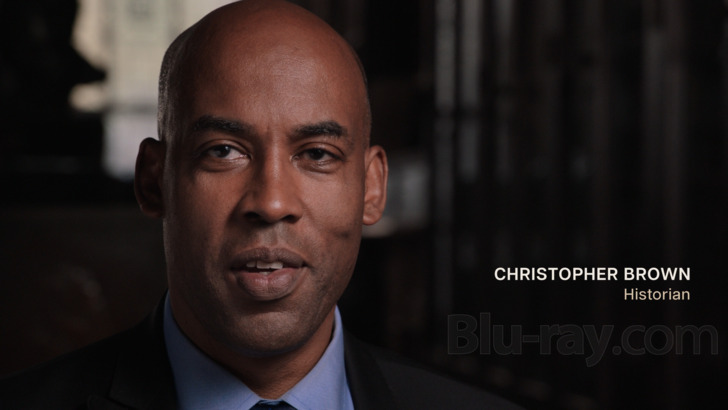
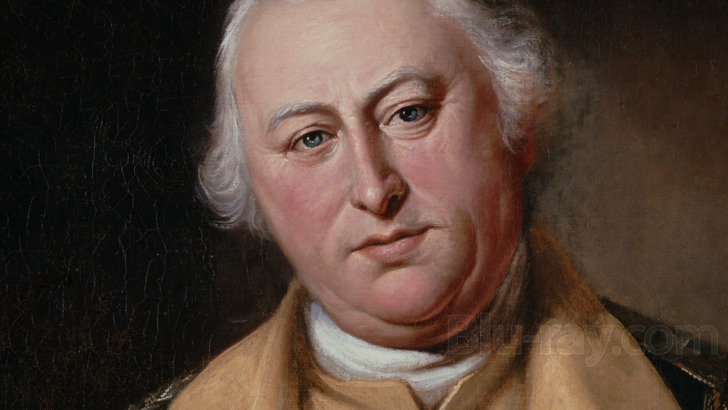
Reviewed by Brian Orndorf December 16, 2025As the United States of America prepares to experience its semiquincentennial in 2026, directors Ken Burns, Sarah Botstein, and David Schmidt look to return to the formation of the states in “The American Revolution.” The six-part documentary means to walk viewers through years of conflict, taking the development of war almost one step at a time while examining rising tensions between Colonists and British occupation, creating a path to a prolonged and bloody battle. The production remains in line with previous projects from Burns, electing to pore over the details of the era and its personalities to present a richer understanding of motivations. And without the benefit of film footage and photographs, the series turns to paintings, documents, and brief recreations to best bring viewers into this march of history. “The American Revolution” is a reliable offering of information, tastefully organized as always, but it also aims to be a timely remembrance of sacrifice, betrayals, and various survival challenges, physically, mentally, and politically, putting viewers into contact with the scope of the war and the ragged formation of a nation.
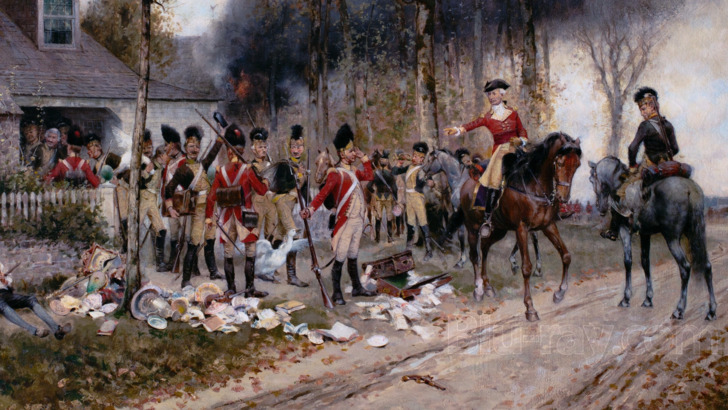
Episodes
“In Order to be Free (May 1754 – May 1775)” (113:04): In the aftermath of the Seven Years’ War, The British Empire acquires control of the 13 Colonies, eliminating French occupation. With such expansion comes significant war debts, triggering rises in taxes, including The Stamp Act in 1765, which inspires talk of rebellion from the colonists. As the years pass, opposition begins to take form, including the development of the Sons of Liberty and the Minutemen, while a heavy tax on tea triggers revolt in Boston. The Massachusetts town becomes a hotbed of troubling activity, culminating in the Boston Massacre. As Britian looks to tighten control over the colonies, communication among the residents strengthens, leading to the first Continental Congress in 1774. The idea of resistance gradually becomes a reality, and in 1775, a bloody showdown between colonial militiamen and British Redcoats on Lexington Green provides the spark for revolution.
“An Asylum for Mankind (May 1775 – July 1776)” (121:12): As untrained militiamen assemble to form some type of army, trouble brews in Boston, leading to a conflict between the colonists and the British Army at Breed’s Hill, leaving behind a bloody battlefield. George Washington is pulled out of civilian life to lead the early formation of the Continental Army, trying to make sense of his soldiers and deal with the rising issue of slavery, watching as British leaders offer freedom to those who fight alongside the Redcoats. A plan to take Canada is made, putting Benedict Arnold into action, soon facing the punishment of a winter trek in the Great White North. With colonies growing divided over the burgeoning revolution, the publication of the “Common Sense” pamphlet manages to unite the colonies against King George III. While taking hits from disease and despair, leaders manage to come together for the new United States of America, and Thomas Jefferson goes to work creating the Declaration of Independence, inspiring the new nation.
“The Times That Try Men’s Souls (July 1776 - January 1777)” (111:29): New York becomes a target for British troops, who manage to defeat American forces, including the Battle of Long Island. British war efforts are boosted by the arrival of the Hessians, with these German men helping to generate victories and overwhelm the enemy. Loyalists begin to organize, creating the Declaration of Dependency, while the Articles of Confederation start to take shape, generating wild plans of freedom throughout the states as the formation of democracy commences. Benedict Arnold takes part in the rise of naval warfare, and growing barbarity and despondency sets in as plundering and sexual assault increases as the Redcoats cross the land. Working with limited resources and soldiers, George Washington remains steadfast in his leadership, looking to pull off an attack on New Jersey, which requires battling freezing conditions across an icy Delaware River.
“Conquer by a Drawn Game (January 1777 – February 1778)” (112:33): Under George Washington’s leadership, the Continental Army manages to sustain throughout the year, managing issues with recruitment and drafting, while a choice to inoculate against smallpox clearly saves lives. The British Army begins to focus on capturing Philadelphia, making decisions to keep their forces trained on the target. Concerns and division develop in the Six Nations, putting strain on Native American relationships, while disaster strikes at the Battle of Oriskany. And major defeats at Brandywine and Germantown threaten American morale, while a victory at Saratoga restores momentum for Washington. In 1778, the Treaty of Alliance is created between the Americans and the French, helping to boost funding for the war.
“The Soul of All America (December 1777 – May 1780)” (110:48): Harsh days come for the Patriots, as George Washington faces dwindling numbers in his armies, while hunger and currency devaluation generate bleak times. Building a camp at Valley Forge, Washington looks to reawaken the fighting spirit with training and supplies. The British take Philadelphia, which clears the way for the rise of General Henry Clinton, who achieves a major battlefield victory at Monmouth. The French arrive to help support the American fight, and both sides begin to take interest in the Southern Colonies. Native America interests are repeatedly betrayed, forcing them to escape as settler plans expand. And the war travels from New York to South Carolina, with the Siege of Charleston hurting the American effort as the British claim another triumph.
“The Most Sacred Thing (May 1780 – Onward)” (127:35): The British occupation of South Carolina becomes a major war event, pitting the Americans against British and Loyalists, resulting in heavy casualties. The saga of Benedict Arnold takes a turn when he abandons the Continental Army, joining the British as they continue to cross the nation. Morale remains low and supplies limited, but George Washington and other leaders create a plan to focus effort on the Chesapeake Bay, eventually launching the Battle of Yorktown, which is the beginning of the end for British military efforts. With war winding down, new concerns grow in the states, necessitating the formation of a Federal Government and the election of Washington as the first President of the United States.
The American Revolution Blu-ray Movie, Video Quality

The image presentation (1.78:1 aspect ratio) for "The American Revolution" wrestles with compression issues throughout the series. Banding is common, with severe flare-ups periodic. Some blockiness is encountered as well. Detail is acceptable, supplying a texture look at skin particulars on the interviewees, who range in age. Recreated action provides decently deep exteriors and dimensional interiors, surveying all kinds of decorative additions. Costuming is passably fibrous. Color is appealing, with a rich sense of art displays and maps. Atmospheric shots contribute sharp greenery and golden sunshine, and the brownness of Colonial life is secured as woodworking displays and housing is toured. Skin tones are natural. Delineation is satisfactory.
The American Revolution Blu-ray Movie, Audio Quality

The 5.1 DTS-HD MA mix maintains sharp interviews throughout the listening event, joined by defined narration contributions from a variety of performers. Scoring supports with a gentle presence, maintaining crisp instrumentation. Surrounds are sparingly used, but some sound effects deliver movement, and conflict inspires atmospherics. Low-end isn't particularly challenged, but more aggressive acts of war welcome heaviness.
The American Revolution Blu-ray Movie, Special Features and Extras
There is no supplementary material on this release.
The American Revolution Blu-ray Movie, Overall Score and Recommendation
"The American Revolution" is a long haul, and there are a few moments where it feels a bit distracted in its attempt to explore multiple POVs during years of battle and suffering. However, the core message of "The American Experiment" registers crisply throughout the viewing experience, and Burns, Botstein, and Schmidt arrive fully prepared to track numerous battles and changes in power. It's people that interest them the most, examining famous historical figures and those on the sidelines, also making sure to understand different kinds of wars fought over Native American land and the Black Experience, especially slavery. The program doesn't offer a sanitized version of events, working to highlight true motivations and trials, even extending to George Washington and the complexity of his wartime participation. "The American Revolution" is expansive and, at times, intimate, always on the hunt for nuggets of information and illumination to help grasp the enormity of this world-changing event, gracefully assembled by the production. And in 2025, especially in 2025, it's fascinating to revisit a study of defiance and revolt against tyrannical leadership.