Television's Lost Classics Volume One Blu-ray Movie
HomeTelevision's Lost Classics Volume One Blu-ray Movie 
VCI | 1955-1956 | 2 Movies | 120 min | Not rated | Sep 11, 2018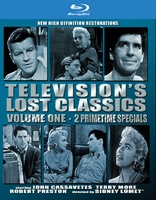
Price
List price:Amazon: $16.20 (Save 12%)
Third party: $16.20 (Save 12%)
Only 1 left in stock (more on the way).

Movie rating
7.1 | / 10 |
Blu-ray rating
| Users |  | 0.0 |
| Reviewer |  | 3.0 |
| Overall | | 3.0 |
Overview
Television's Lost Classics Volume One (1955-1956)
This is a special series of lost classic programs from the Golden Age of TV. The series has been restored by SabuCat Productions from the best archival film elements available in high definition, some of the programs have not been seen since they were originally broadcast. Volume One features 2 one-hour dramatic programs that feature John Cassavetes.
Starring: John Cassavetes, Robert Preston, Terry Moore (I), Robert H. HarrisDirector: Sidney Lumet
Specifications
Video
Video codec: MPEG-4 AVC
Video resolution: 1080p
Aspect ratio: 1.33:1
Original aspect ratio: 1.33:1
Audio
English: LPCM 2.0 (48kHz, 16-bit)
Subtitles
English
Discs
Blu-ray Disc
Single disc (1 BD)
Playback
Region A (B, C untested)
Review
Rating summary
| Movie | | 3.0 |
| Video |  | 2.5 |
| Audio | | 2.5 |
| Extras |  | 0.5 |
| Overall | | 3.0 |
Television's Lost Classics Volume One Blu-ray Movie Review
Reviewed by Jeffrey Kauffman September 21, 2018Mention the name of John Cassavetes to any self respecting Art House film fan, and chances are you’ll get a litany of well remembered outings (to some, anyway) he directed like Faces, Husbands or A Woman Under the Influence. Mentioning Cassavetes’ name to those not particularly attuned to independent filmmaking might bring up another litany, namely of films Cassavetes memorably performed in, including his Academy Award nominated stint as one of The Dirty Dozen, or perhaps as the scheming Guy Woodhouse in Roman Polanski’s legendary Rosemary's Baby, a performance that is arguably his best remembered turn as an actor in a feature film. But as with many actors who were “up and comers” in the post-World War II era, and specifically in the 1950s, Cassavetes had a regular presence in the early days of television, including a number of “one shot” dramas in what was the quite popular anthology genre back in those days. (Trivia fans may know that Cassavetes starred in a short-lived detective show called Johnny Staccato, where he was rather improbably both a jazz pianist and a private eye. It’s one of the few series I can think of that began its broadcast run on one network, but then switched to a second for reruns, before being canceled after just one season. For music fans, the series contains a fantastic score by Elmer Bernstein.) Now VCI has collected two early Cassavetes television performances together in what is being touted as just the first volume in what may be a rather intriguing set of Television’s Lost Classics.
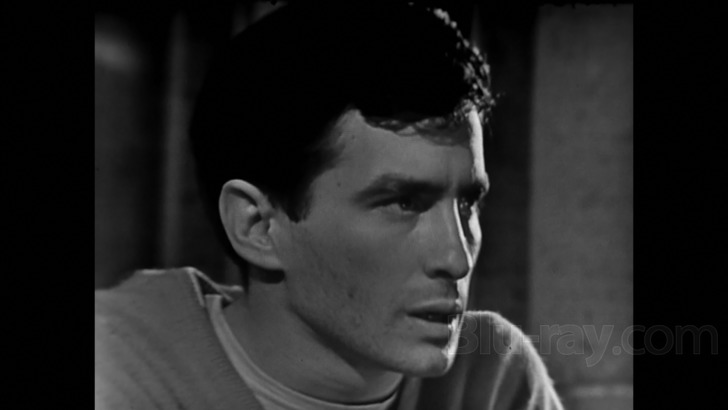
The 1950s are often called “The Golden Age of Television”, and it’s notable in that regard how lionized various writers were during this time period. In fact, both of the dramas included on this release advertise the blandishments of their scribes, including a celebratory voiceover at the end of Crime in the Streets mentioning Reginald Rose’s recent Emmy win, and both an introduction and some interstitial announcements to No Right to Kill which repeatedly mention Victor Wolfson, this despite the somewhat hilarious fact that No Right to Kill is actually an “update” of sorts of a little tome called Crime and Punishment by some guy named Fyodor Dostoevsky. Both of these television dramas arguably suffer from being overly earnest (probably most especially Crime in the Streets), but they’re fascinating “live” dramas that are good examples of the kind of “kitchen sink” realism that tended to offer a counterpart to more fanciful (if that’s the right word) depictions that were often the provenance of series television during the mid-fifties, courtesy of sitcoms like I Love Lucy or westerns like Gunsmoke.
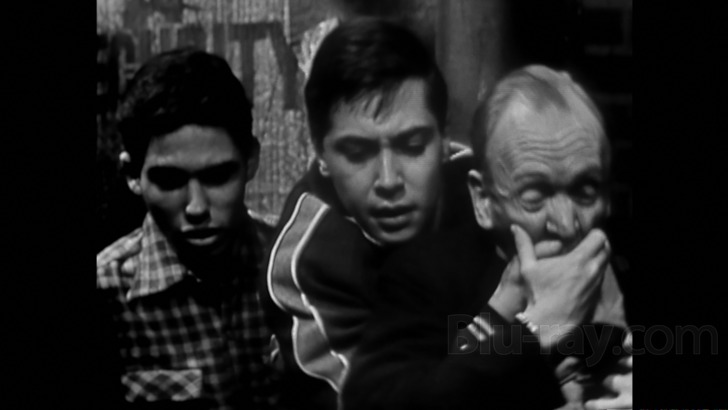
Crime in the Streets (1080p; 59:44) stems from a March 5, 1955 broadcast of The Elgin Hour on ABC (see screenshot 23), and is arguably the better known of the two entries included on this set, in part because, like many other dramas that originated on television, it went on to a subsequent life as a feature film. Crime in the Streets is squarely in the then trendy "juvenile delinquent" genre that seemed to almost well up as part of the cultural zeitgeist of that era, as perhaps best evidenced by a feature film that would appear some months after Crime in the Streets was broadcast, Rebel Without a Cause. Cassavetes portrays street tough Frankie Dane, who in this television version, is kind of discursively revealed to be a gang member (in reading about the feature film adaptation, evidently a few more background elements were more overtly delivered in a substantially fleshed out screenplay).
Frankie is on a quest for revenge against an older neighborhood man who lives in the same squalid tenement building he, his put upon mother (Glenda Farrell), and little brother Richie (Van Dyke Parks — yes, that Van Dyke Parks!) also inhabit. The old guy has fingered one of Frankie’s gang members, and the teleplay begins kind of shockingly with Frankie’s no nonsense instructions to two of his other gang members (including one played by future directing luminary Mark Rydell) of how they’re going to kill the old guy.
There’s a lot of interstitial hand wringing and philosophizing, some of it courtesy of local social worker Ben Wagner (Robert Preston), who has taken a special interest in Frankie, but the core of this story turns out to be the sibling relationship between Frankie and Richie. There are some rather odd elements that Rose has added to this story, including Frankie’s phobia about being touched, but the story has a nice grittiness to it that plays somewhat similarly to the Nicholas Ray film. (Interestingly, Sal Mineo appeared in the feature film version of Crime in the Streets.)
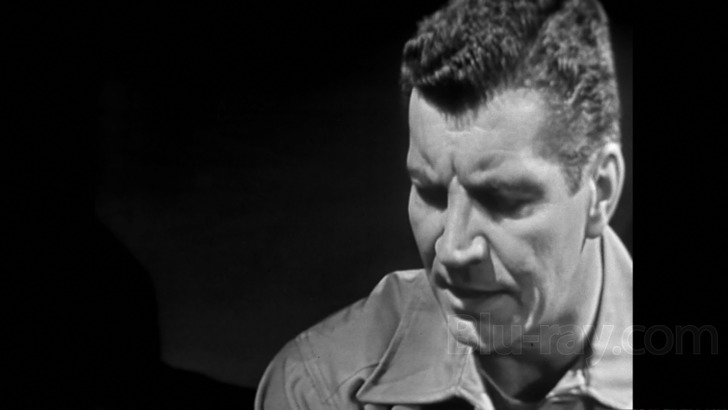
No Right to Kill (1080p; 59:49) was part of CBS' Climax! anthology series and was originally broadcast on August 9, 1956 (see screenshot 24). While interesting, this kinda sorta version of Dostoevsky's iconic Crime and Punishment perhaps isn't able to weather the change to a contemporary New York setting, once again with a kind of teeming tenement subtext.
While the names have been changed, evidently to protect the guilty in this instance, No Right to Kill focuses on impoverished writer McCloud (John Cassavetes), this version’s Raskolnikov, who, as in the original novel, is at least flirting with killing the local pawnbroker whom he perceives as adding to his already miserable lot. This version also provides a romantic interest of sorts in the form of Lisa (Terry Moore, whom the host singles out as a 20th Century Fox star), but the episode tends to spend more time on anguished dialogue scenes than on any horrific murders. The often sinister seeming Robert H. Harris is also on hand as a character named Porfear, who may be aiding McCloud in ways even he doesn’t realize.
Television's Lost Classics Volume One Blu-ray Movie, Video Quality
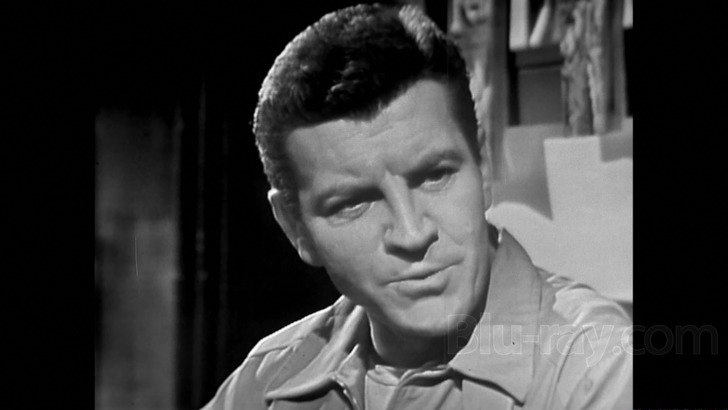
Television's Lost Classics Volume One is presented on Blu-ray courtesy of VCI with AVC encoded 1080p transfers in 1.33:1. While screenshots
25 and 26 provide a bit of "provenance data", indicating both of these were sourced from kinescopes, I would have loved to have a bit more
information, specifically as to what intermediary medium things might have been transferred to, since No Right to Kill at least occasionally has
a rather pronounced grain field (especially in some of the Chrysler advertisements). If you're familiar with how kinescopes can look, this release
probably won't surprise you too much, and in fact it looks somewhat better in motion than some of the screenshots accompanying this review might
suggest. As with many kinescopes, there's some odd stretching and warping that goes on within the frame, meaning things like widths of heads can
suddenly morph kind of oddly. As can quite clearly be seen in virtually all of the screenshots accompanying this review, there's quite evident horizontal
scan lines, and at times these can spike quite a bit (at around the 30 minute mark in No Right to Kill, for example, they get significantly more
pronounced). The instability of early television broadcast signals combined with the technological limitations of the kinescope can mean that individual
scan lines are slightly out of whack, leading to what almost looks like stairstepping at times. Contrast is a bit wonky as well, as again tends to be the
case with many kinescopes, though on the whole things look acceptable if not optimal. While there are some chroma anomalies and smearing when
some fast motion occurs, detail levels are actually pretty good in a number of close-ups, as again can be discerned in some of the screenshots
accompanying this review. The bottom line is the encoding here doesn't look like it has any significant issues (in a nice development for those who
have been following VCI Blu-ray releases), but the sources here simply have a lot of technical limitations that are probably only exacerbated by a high
definition treatment. If you've seen a kinescope before, you'll most likely find these more than watchable.
Note: Screenshots 1 - 9 are from Crime in the Streets. Screenshots 10 - 18 are from No Right to Kill. Both broadcasts
include the sometimes quite charming vintage commercials, and I've included two screenshots of those in positions 21 and 22.
Television's Lost Classics Volume One Blu-ray Movie, Audio Quality
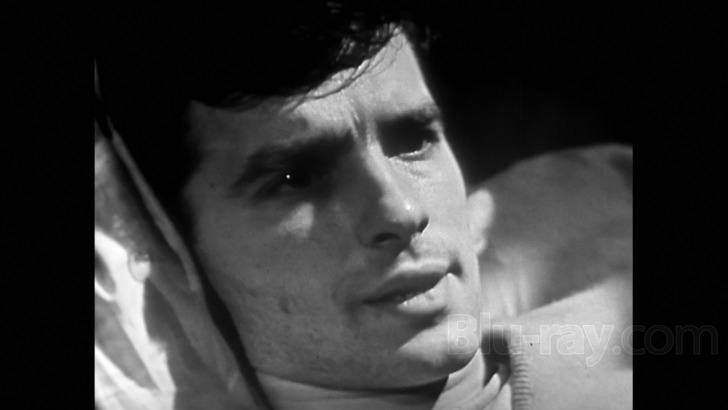
Both dramas feature LPCM 2.0 mono tracks which, like their video counterparts, have some "baked in" quality issues that the remastering process hasn't been able to completely overcome. Therefore, while never really that significant or even overly distracting, there are minor fluctuations in amplitude, and at times little snippets of dialogue have pretty dramatic dropoffs, if not outright dropouts. Both dramas feature interesting music scores which sound relatively full bodied. Despite occasional and passing iffy moments, the bulk of the dialogue is rendered cleanly and clearly. There are English subtitles included on this Blu-ray, even if I'm not quite sure they're 100% accurate.
Television's Lost Classics Volume One Blu-ray Movie, Special Features and Extras
- Defenders Bloopers (1080p; 10:38) I think might more accurately be called a compilation of bloopers from various Herbert Brodkin productions, perhaps assembled as a tribute or even a roast. In addition to The Defenders, there are snippets from other shows like The Nurses, and a number of fun and notable guest star appearances. If you've ever wanted to see/hear noted character actor E.G. Marshall drop the "f bomb", this is your chance.
Television's Lost Classics Volume One Blu-ray Movie, Overall Score and Recommendation
These are two rather interesting early television dramas, with Cassavetes sympathetic if a bit troubling as two young men with murder on their minds. Both dramas feature iconic directors (Sidney Lumet and Buzz Kulik) and some really fun supporting turns from rather eclectic casts. This is one release where the obvious technical limitations of both the video and audio presentations shouldn't necessarily be a deal killer, at least for those who are appreciative of the historical importance of these pieces. I, for one, am looking forward to future volumes of Television's Lost Classics.
Similar titles
Similar titles you might also like
(Still not reliable for this title)

Rafferty and the Gold Dust Twins
Rafferty and the Highway Hustlers / Warner Archive Collection
1975

Soundies: The Ultimate Collection
1940

The Smallest Show on Earth
1957

Pressure Point
1962

For the Love of Spock
2016

The One and Only
1978

Prohibition
2011

Filmworker
2018

Going Berserk
1983

The Ballad of Wallis Island
2025

Who Done It? The Clue Documentary
Slipcover in Original Pressing
2022

Bwana Devil 3D
1952

Cinerama Holiday
1955

This Is Cinerama
Deluxe Edition
1952
When the Levees Broke: A Requiem In Four Acts
2006

More Than Honey
2012

Armstrong
2019

The Kid Stays in the Picture
2002

Whisky Galore!
1949

The Great Buster: A Celebration
2018