Stray Cat Rock: The Collection Blu-ray Movie
HomeStray Cat Rock: The Collection Blu-ray Movie 
Delinquent Girl Boss / Wild Jumbo / Sex Hunter / Machine Animal / Beat '71Arrow | 1970-1971 | 5 Movies | 417 min | Not rated | Apr 14, 2020



Movie rating
Movie has not been rated yetBlu-ray rating
| Users |  | 0.0 |
| Reviewer |  | 3.0 |
| Overall | | 3.0 |
Overview
Stray Cat Rock: The Collection (1970-1971)
See individual titles for their synopses.
| Foreign | 100% |
| Crime | 17% |
Specifications
Video
Video codec: MPEG-4 AVC
Video resolution: 1080p
Aspect ratio: 2.35:1
Original aspect ratio: 2.35:1
Audio
See individual releases
Subtitles
English
Discs
Blu-ray Disc
Two-disc set (2 BDs)
Playback
Region A (B, C untested)
Review
Rating summary
| Movie | | 3.0 |
| Video |  | 3.5 |
| Audio |  | 4.0 |
| Extras |  | 2.0 |
| Overall | | 3.0 |
Stray Cat Rock: The Collection Blu-ray Movie Review
Reviewed by Jeffrey Kauffman October 27, 2020If you're a fan of "happened on this day" trivia, here's a little example, though I'm just a few days late as this review is going live. There was a (very) little remembered musical that opened almost exactly 53 years ago to the day on October 23, 1967, called Henry, Sweet Henry, which was based on the charming Peter Sellers film The World of Henry Orient. Though it only ran for 80 official performances, it was ironically one of the more successful musicals in a disastrous year on Broadway which was documented in William Goldman’s book The Season. Goldman spends an entire chapter on Henry, Sweet Henry, and while he lays the blame of the failure of the show on critics (one in particular), he also brings up an interesting datapoint which is perhaps directly relevant to the Stray Cat Rock series of films. The creative staff behind Henry, Sweet Henry fashioned the show to highlight the talents of a young singer-actress named Robin Wilson, but when the show opened it was a featured player named Alice Playten who attracted all the attention and who ultimately received the musical’s only Tony nomination in a performance category. (Trivia fans will recognize Playten as the less than successful wife whose cooking creates digestive problems for her husband in some old Alka Seltzer commercials). At least somewhat similarly, the creative staff at Nikkatsu, reeling (with the rest of the Japanese film industry) from financial issues, attempted to “guarantee” box office for a planned series of films by fashioning them around singing star Akiko Wada. However, when the first Stray Cat Rock film opened, it was actually supporting player Meiko Kaji who attracted a lot of the attention and who in fact went on to arguably become the “face” of the franchise. The quintet of films attempted to cater to the so-called "youth market", and have a number of cinematic progenitors, but which might be compared at least somewhat to some of Roger Corman's biker films or even some of the Al Adamson "gang" efforts from more or less the same period. This is a re-release of an earlier Arrow release which also included DVD copies as well as a booklet, neither of which are included in this version.
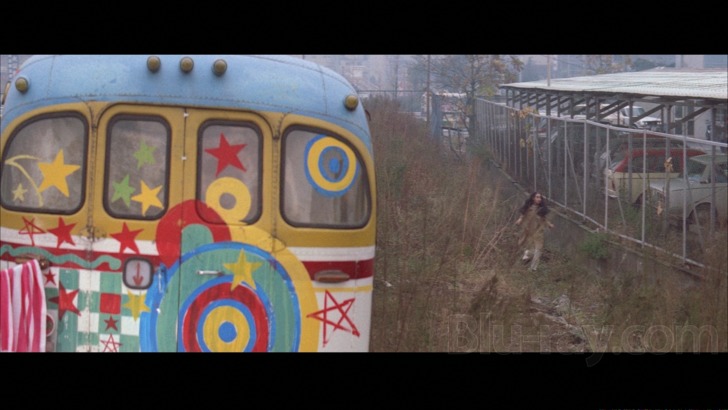
For reviews of the five films in this set, please click on the following links:
Stray Cat Rock: Delinquent Girl Boss Blu- ray review
Stray Cat Rock: Wild Jumbo Blu-ray review
Stray Cat Rock: Sex Hunter Blu-ray review
Stray Cat Rock: Machine Animal Blu-ray review
Stray Cat Rock: Beat '71 Blu-ray review
Stray Cat Rock: The Collection Blu-ray Movie, Video Quality
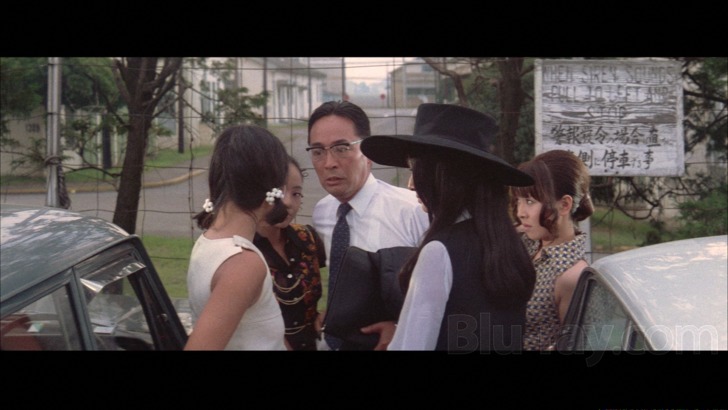
Video quality of each film is assessed in the above linked reviews.
Stray Cat Rock: The Collection Blu-ray Movie, Audio Quality

Audio quality of each film is assessed in the above linked reviews.
Stray Cat Rock: The Collection Blu-ray Movie, Special Features and Extras
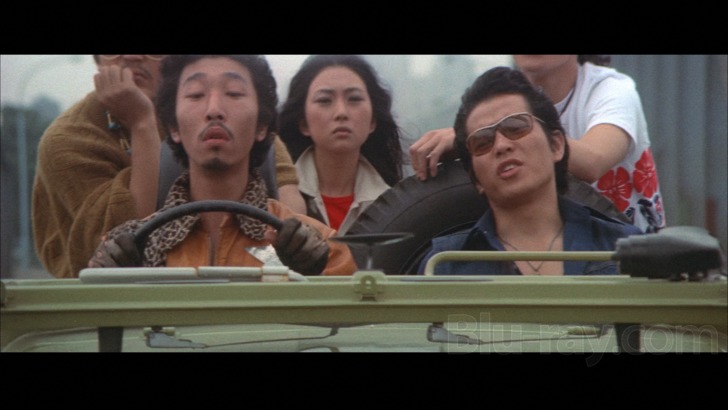
Arrow has packaged this with Delinquent Girl Boss, Wild Jumbo, and Sex Hunter on Disc One and Machine Animal
and Beat '71 on Disc Two.
Disc One
- Wild Jumbo Trailer (1080p; 2:42)
- Sex Hunter Trailer (1080p; 3:16)
- Interviews are in Japanese with English subtitles:
- Yasuharu Hasebe (1080i; 28:37)
- Tatsuya Fuji (1080i; 30:06)
- Yoshio Harada (1080i; 33:06)
- Trailers
- Machine Animal (1080p; 2:48)
- Beat '71 (1080p; 2:37)
Stray Cat Rock: The Collection Blu-ray Movie, Overall Score and Recommendation
Arrow's first release of this collection is going for insane amounts of money, so if you're a fan of these films and missed out on the first go 'round, this should be a no brainer. These films are definitely the Japanese equivalent of exploitation fare, and so may not be everyone's cup of saké, but they're rather goofily enjoyable in their own way. Technical merits are generally solid and the supplementary package is enjoyable, if slight. Recommended.