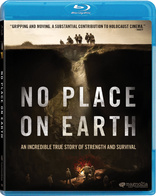
No Place On Earth Blu-ray Movie
HomeNo Place On Earth Blu-ray Movie 
Magnolia Pictures | 2012 | 83 min | Rated PG-13 | Aug 20, 2013
Price
List price:Amazon: $8.49 (Save 50%)
Third party: $8.49 (Save 50%)
Usually ships within 1 to 2 months

Movie rating
6.9 | / 10 |
Blu-ray rating
| Users |  | 4.5 |
| Reviewer | | 4.5 |
| Overall | | 4.5 |
Overview
No Place On Earth (2012)
A cave exploration in Ukraine leads to the unearthing of a story of World War II survivors who once found shelter in the same cave.
Starring: Saul Stermer, Sam Stermer, Sonia Dodyk, Sima Dodyk, Yetta StermerDirector: Janet Tobias
| Documentary | Uncertain |
| War | Uncertain |
| Drama | Uncertain |
Specifications
Video
Video codec: MPEG-4 AVC
Video resolution: 1080p
Aspect ratio: 1.78:1
Original aspect ratio: 1.85:1
Audio
English: DTS-HD Master Audio 5.1 (48kHz, 16-bit)
Subtitles
English SDH, Spanish
Discs
25GB Blu-ray Disc
Single disc (1 BD)
BD-Live
Playback
Region A (locked)
Review
Rating summary
| Movie | | 4.5 |
| Video | | 4.5 |
| Audio |  | 4.0 |
| Extras |  | 3.0 |
| Overall | | 4.5 |
No Place On Earth Blu-ray Movie Review
A Long Time Underground
Reviewed by Michael Reuben August 19, 2013The year 1993 saw the release of Steven Spielberg's Schindler's List, which, despite minor criticisms, remains the greatest American film about the Holocaust. By coincidence, that same year saw the beginning of the lengthy inquiry that resulted in No Place on Earth, a documentary film that tells a story just as extraordinary as Schindler, though on a smaller and more intimate scale. It was in 1993 that a New York caving enthusiast named Chris Nicola took advantage of new opportunities afforded by the collapse of the Soviet Union to explore massive gypsum caves in the Ukraine, where he made a startling discovery: People had lived in the caves. There were buttons, shoes, combs, keys and other indicia of modern civilization. Nicola spent ten years trying to find who had lived in those caves near the town of Korolowka. He concluded that the cave must have served as a refuge for Ukrainian Jews, nearly all of whom were wiped out by either the Nazis or the Ukrainian authorities who did their bidding. Eventually Nicola found the descendants of Esther Stermer, an iron-willed Jewish matriarch who had led her family and several others through what turned out to be the longest underground sojourn in recorded history—an incredible eighteen months, in two different caves. Even more remarkably, Esther had kept a written journal of the experience, which her two surviving sons, Saul and Sam, had preserved. Nicola's account of his discovery first appeared in National Geographic in 2004. The article came to the attention of documentary producer Janet Tobias, a veteran of 60 Minutes, Prime Time Live and Frontline. After meeting with Nicola and members of the Stermer family, and then accompanying Nicola on a repeat visit to the caves in the Ukraine, Tobias became determined to tell their story.
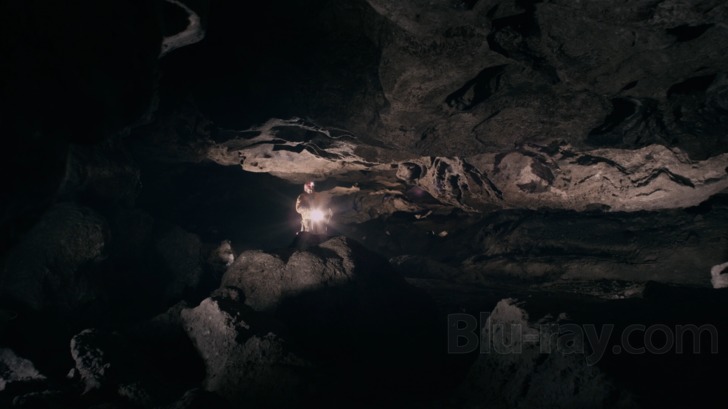
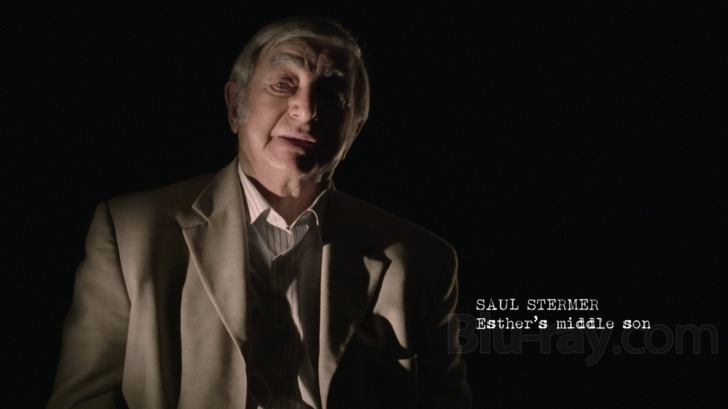
The title No Place on Earth (hereafter, "NPOE") comes from Esther Stermer's journal, where she notes that there is "no place on earth" for her family to hide. The film NPOE unfolds in three distinct strands that have been seamlessly woven together by a first-rate editing team (Alexander Berner and Claus Wehlisch, who did Cloud Atlas, and Deirdre Slevin, who is Wayne Wang's editor, most recently on Snow Flower and the Secret Fan.) The initial strand is Chris Nicola's discovery of remnants of civilization in the Ukraine caves, dubbed "Priest's Grotto" and "Verteba", followed by his long and often frustrating quest to discover the story behind them. Nicola, who is a former member of the NYPD and now works as an investigator for New York State, is a voluble and enthusiastic interview subject, who clearly relishes a mystery. He is equally enthusiastic about "caving", and the footage of him dragging himself through narrow tunnels and suspended on ropes like an underground mountain climber is visually dramatic in and of itself. The film's second strand is a series of interviews with members of the Stermer family. Two of Edith's sons were still alive: Saul, who was 91, and Sam, who was 86. They are joined by two nieces, the daughters of their sister, Henia Stermer: Sonia Dodyk, 79, and Sima Dodyk, 74, both of whom were young children during their time underground. The detailed recall of each of these four speakers is extraordinary, and they are all gifted storytellers. Some of the incidents they recount are harrowing, and others are tragic, but many have the flavor of a triumphant adventure, in part because the people involved were so young at the time, but primarily because the outcome was their miraculous survival. A prime example is Saul Stermer's account of how he and his older brother Nissel, whom Saul idolized, slipped above ground on Christmas Eve to steal provisions at a time when they knew the Ukrainian police and the German soldiers would be otherwise engaged. Saul, a talented carpenter, constructs a sled that can be assembled without a single nail, but the brothers are too weak to pull it with a full load. Nissel tells his younger brother to wait, then disappears, only to return with a horse—but no harness. It's Saul, the craftsman, who creates a makeshift harness from their shirts, and the brothers hitch the horse to the sled and return in triumph. Saul's account is made more vivid by the third strand of NPOE, which is an impeccably cast and meticulously staged reenactment of the events described in the interviews, in Esther Stermer's journal and in journals kept by several others from the group. Careful research yielded a location in Hungary that resembled the area near Korolowka and a cave in Slovakia that was accessible to film crews (unlike those where the Stermers hid) but sufficiently resembled those in the Ukraine to recreate the wartime experience. Both professional actors and non-professionals were cast, with the key criterion being whether they would look natural on camera. The goal was to convey as realistically as possible the experience of living in perpetual darkness, damp and mud, and to demonstrate the logistical challenges of such basic operations as grinding corn or wheat into flour. The strands knit together, and NPOE reaches its dramatic climax, when Saul and Sam Stermer and Sonia and Sima Dodyk, along with members of their extended family, accompany Nicola in 2010 on an emotional visit to the caves 67 years after they hid there from the Nazis and the local authorities. Contrary to what one might expect, the expedition is not an outpouring of tears. Sadness certainly colors the experience, because many family members were lost along the way. Some were shot by the Ukrainian police, while others fell victim to anti-Jewish violence following the Allied victory. But the Stermers' memories of the caves are not ones of oppression, despite the many privations. Within those dark spaces, the 38 members of the small community were free people, masters of their own fate and not subject to the whims of guards or the arbitrary rules of distant bureaucrats. A distinct sense of accomplishment radiates through the group, a pride in the family's success at evading the powerful forces arrayed against them. It is especially palpable as Saul Stermer shows his granddaughter and the grandson of his brother Nissel the place where, as young men, they managed to achieve what should have been impossible.
No Place On Earth Blu-ray Movie, Video Quality
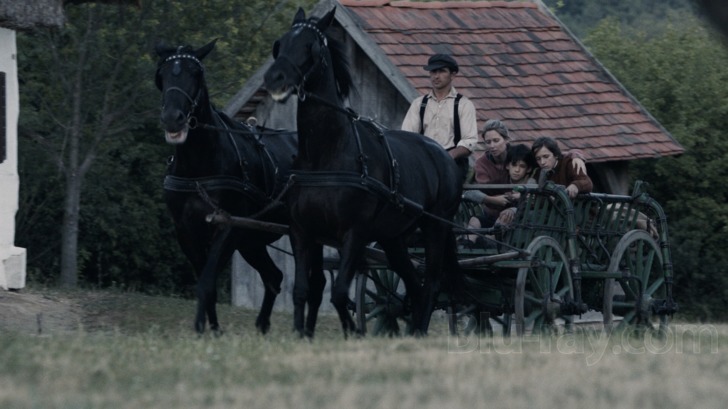
No Place on Earth was shot on digital video with a variety of cameras by four different cinematographers: César Charlone (City of God ), Sean Kirby (The Tillman Story), Eduard Grau (Buried), and Peter Simonite (second unit on The Tree of Life). Charlone and Kirby shot the return visit by the Stermers; Kirby shot the interviews; and Grau and Simonite shot the re-creations. The result, thanks to the magic of a digital intermediate, has been harmonized into a seamless whole that is beautifully represented on Magnolia Pictures' 1080p, AVC-encoded Blu-ray. Digital cinema excels at capturing detail in conditions with low light, and the historical re-creations of cave life are remarkable in their depiction of textures, even with minor illumination. All of the re-creations, whether above or below ground, have a desaturated palette that instantly marks them as historical, but this does not come at the expense of detail in clothing, faces, landscape or period decor. The present-day sequences with Chris Nicola have natural color with a broad spectrum intended to convey a sense of normalcy. Even when Nicola is "caving", his image is more colorful than anything in the historical re-creations. He goes into caves for fun, not out of necessity, and the image is tinted accordingly. The interviews with the Stermer family have been lit like Rembrandt paintings, with deep and solid black backgrounds framing the speakers. The ironic effect, however, is to bring these spirited storytellers even more vividly to life, as their undimmed energy shines against the dark background. (Director Tobias made the inspired decision to defer filming the interviews until after the Stermers had made their pilgrimage to the Ukraine to revisit the caves, on the theory that the trip would awaken even more memories.) The 83-minute film fits comfortably on a BD-25, with a small collection of extras. If there were compression errors, I missed them (although I admit that I was sufficiently entranced by the viewing experience that I wasn't looking as hard as I might have been).
No Place On Earth Blu-ray Movie, Audio Quality
No Place on Earth's lossless DTS-HD MA 5.1 track is a solid, serviceable affair that concentrates on rendering the narration and interviews with clarity and fidelity. There are precise changes in tonality and localization when a speaker switches from being onscreen to narrating in voiceover. The main use of the surround channels is to give "air" to the restrained, poignant and classical score by John Piscitello.
No Place On Earth Blu-ray Movie, Special Features and Extras
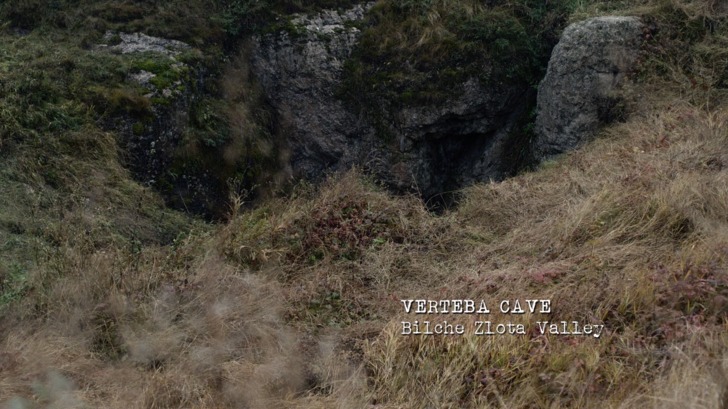
Most of the extras could be described as "deleted scenes". They are short segments composed of additional interviews or other footage that would have detoured No Place on Earth too far from its narrative path. The titles provided by the Blu-ray's producers are accurate descriptions.
- The Stermers After the War (1080p; 1.78:1; 5:37)
- Korolowka Before the War (1080p; 1.78:1; 1:12)
- More About Life in the Cave (1080p; 1.78:1; 2:25)
- Food (1080p; 1.78:1; 1:34)
- The Children (1080p; 1.78:1; 1:30)
- David Blitzer (Sima's Husband): His Holocaust Story (1080p; 1.78:1; 3:22)
- Harold Hochman (Sonya's Husband): His Holocaust Story (1080p; 1.78:1; 2:23)
- Chris Nicola Adventure Caving in Slovakia (1080p; 1.78:1; 2:44)
- Chris Nicola Adventure Caving in the USA (1080p; 1.78:1; 4:44)
- Photo Galleries (1080p)
- Prepping the Cave
- Adventure Shooting
- The Objects
- Ukraine Then and Now
- Survivors Return to Ukraine
- Theatrical Trailer (1080p; 1.78:1; 2:27)
- Also from Magnolia Home Entertainment: Trailers are available (in 1080p except where noted) for To the Wonder, Shadow Dancer, Venus and Serena and AXS TV (1080i). These also play at startup, where they can be skipped with the chapter forward button.
- BD-Live: As of this writing, the Blu-ray's BD-Live function was not enabled.
No Place On Earth Blu-ray Movie, Overall Score and Recommendation
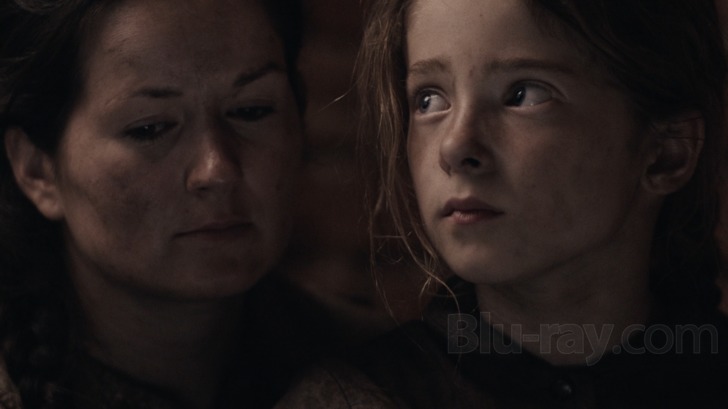
We only told this story within the family, one of the Dodyk sisters explains, because it was so incredible we didn't think anyone would believe it. But Chris Nicola believed it; he had seen the proof with his own eyes, including the names "Stermer", "Dodyk" and others written on a wall of Priest's Grotto. Thanks to the combined efforts of Nicola, Tobias and her filmmaking team, viewers can now experience the adventure of these involuntary explorers who, as Nicola observes, exceeded the accomplishments of most professional cavers without the benefit of training or equipment. It was a simple matter of survival. Highly recommended.
Similar titles
Similar titles you might also like
(Still not reliable for this title)

Meru
2015

More Than Honey
2012

Why We Fight
2005
Voyage of Time
2016

Let There Be Light
1946

The Fog of War: Eleven Lessons from the Life of Robert S. McNamara
2003

Blackfish
2013

Island of Lemurs: Madagascar 3D
2014

To the Arctic 3D
IMAX
2012

Icons Unearthed: Star Wars
2022

A Disturbance in the Force: How the Star Wars Holiday Special Happened
2023

Ken Burns: Benjamin Franklin
2022

Cleanin' Up the Town: Remembering Ghostbusters
2019

The Cold Blue
2018

In Search of the Last Action Heroes
2019

The Queen
1968

Turtle Odyssey 4K
IMAX Enhanced
2018

Armstrong
2019

NOVA: The Planets
2019

Amazing Grace
Aretha Franklin
2018