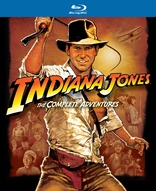
Indiana Jones: The Complete Adventures Blu-ray Movie
HomeIndiana Jones: The Complete Adventures Blu-ray Movie 
Indiana Jones and the Raiders of the Lost Ark / Indiana Jones and the Temple of Doom / Indiana Jones and the Last Crusade / Indiana Jones and the Kingdom of the Crystal SkullParamount Pictures | 1981-2008 | 4 Movies | 482 min | Rated PG-13 | Sep 18, 2012

Movie rating
Movie has not been rated yetBlu-ray rating
| Users |  | 4.6 |
| Reviewer | | 4.5 |
| Overall | | 4.6 |
Overview
Indiana Jones: The Complete Adventures (1981-2008)
See individual titles for their synopses.
| Adventure | 100% |
| Action | 91% |
| Period | 36% |
| Supernatural | 21% |
Specifications
Video
Video codec: MPEG-4 AVC
Video resolution: 1080p
Aspect ratio: 2.35:1
Original aspect ratio: 2.39:1
Audio
See individual releases
Subtitles
English, English SDH, French, Portuguese, Spanish
Discs
50GB Blu-ray Disc
Five-disc set (5 BDs)
Playback
Region free
Review
Rating summary
| Movie | | 4.5 |
| Video | | 4.5 |
| Audio |  | 5.0 |
| Extras | | 4.5 |
| Overall | | 4.5 |
Indiana Jones: The Complete Adventures Blu-ray Movie Review
You have chosen wisely.
Reviewed by Martin Liebman September 15, 2012Professor of archaeology, expert in the occult, and...obtainer of rare antiquities. A man of many talents!
A worn leather jacket. A prized fedora. A cracking whip. A million-dollar smile. A feel for adventure and a knack for getting out of trouble. A
cinema icon. Indiana Jones is the quintessential movie hero, a rugged all-American sort with an appreciation for history, a love for molding the
minds of tomorrow, a penchant for foiling Nazis, a willingness to rescue enslaved children, and he always gets the girl, unless the girl gets
him first. From the creative mind of George Lucas and the directorial eye of Steven Spielberg comes a character who grows on the audience from
the first
moment he appears on the screen, whipping away a revolver from the hands of a would-be assassin, heroically emerging from the shadows and
proceeding to outwit centuries-old traps in
the pursuit of fortune and glory. But the movies aren't about unearthing treasures and finding fame in the present through the discovery of the
past. The movies showcase an unmissable spirit for life. They tell tall tales of everyday people doing extraordinary things. They're about love,
friendship,
family, and the value of self and others over even the most prized possession of the greatest historical significance. They're about about finding
what matters in
the here and now through the prism of the past rather than the total mind, body, and soul consumption of it -- that's what separates the heroes
from the
villains. From Raiders of the Lost Ark's perfect representation of cinema adventure,
characterization, and filmmaking brilliance on to the franchise rebirth and full-circle satisfaction of The Kingdom of the Crystal Skull, from
the dark yet playful and
over-the-top nature of The Temple of Doom to the heartfelt bonding of The Last Crusade, the series represents all there is to love
about the movies, evident in every frame, each crack of that whip, and all of Indy's smirks that light up the screen like no character ever has
before.
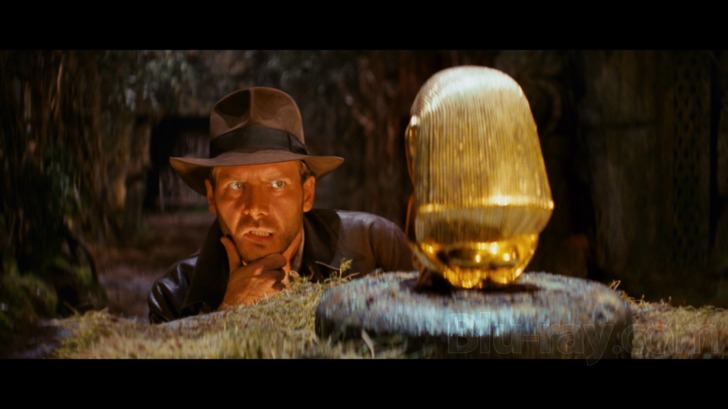
Throw me the idol I'll throw you the Blu-ray!
Raiders of the Lost Ark (1981)
Score: 5/5
That thing represents everything we got into archaeology for in the first place.
Indiana Jones (Harrison Ford) is a full-time professor of Archaeology and a part-time adventurer and treasure hunter. Or maybe it's the other way around. Needless to say he lives a fast-paced life, risking life and limb in the name of the next find and adding to the museum's extensive collection of rare antiquities, many of which he's unearthed himself, generating the proceeds necessary to embark on his next adventure. Following a nearly successful expedition in which a prized Peruvian idol was taken forcibly from him at the last moment from his chief rival, a French archaeologist working for the Nazis by the name of Belloq (Paul Freeman), Indy and his elder university colleague Marcus Brody (Denholm Elliott) are approached by Army intelligence with news that the Nazis have ramped up their efforts to discover the legendary Ark of the Covenant, home to the original Ten Commandments tablets inscribed by God Himself and brought down from Mount Sinai by Moses. The Ark is said to contain unbelievable powers, making it a prized possession for Hitler's war machine. An intercepted communique reveals that Nazi diggers have unearthed the ancient city of Tanis, supposed final resting place of the Ark and long ago buried in a yearlong sand storm. Indy accepts the Army's challenge to locate the Ark before the Nazis. To do so, he must first turn to Marion Ravenwood (Karen Allen), daughter of his mentor Abner and keeper of an artifact critical in pinpointing the Ark's precise resting place within the city of Tanis. Marion, bitter from the failings of their romantic relationship, doesn't hand over the artifact. The Nazis make a house call to her bar, too, and they're not quite as forgiving as Indy or willing to leave empty-handed. The ruthless Gestapo agent Toht (Ronald Lacey) cannot acquire it, either, but comes away with the next-best thing: one side of its image burned into the palm of his hand. Now, with the Nazi's nearly guaranteed to soon unearth the Ark's final resting place, Indy and Marion rush to Cairo where they meet up with the city's finest excavator and Indy's longtime friend, Sallah (John Rhys-Davies), in a race against time to keep the power of God out of the hands of the Devil's agents.
Raiders of the Lost Ark certainly stands as the consensus favorite amongst the four Indiana Jones films, and why not? The movie is magical to say the least, a picture in which the entire production gels into a spectacle of sight and sound both, a movie that succeeds not only during the watch but ingrains itself into the conscience thereafter. It's a series of unforgettable moments, lines, and events, not to mention its brilliantly catchy and adventuresome music that's every bit an icon even apart from the movie as it is within it. Raiders is pure Adventure cinema and escapist entertainment at its pinnacle, the finest in fast-paced and exhilarating movie watching whether it be one's first or one hundredth time seeing it. It's a movie overflowing with spirit and excitement, classic heroes and undeniably devious villains. It's comfortable, always thrilling, regularly humorous, consistently enthralling, and subtly emotional. It's perfect from its lead character down to the last little bit of dust and sand off in the corner of the screen. Director Steven Spielberg shoots the movie in a style that accentuates every moment, that makes the action rougher, the romance sweeter, the comedy more humorous, the spectacle larger, the intimate moments smaller, and the story more gripping. Combined with Composer John Williams' unforgettably triumphant, sweeping, and epic score, every scene is accentuated beyond the action and characterization and into something of this world but almost above it, an experience that transcends what cinema truly means and the typical experience one gains from it. It's practically a journey to another place and time, placing audiences right there with the characters in the cave and waving their fingers as Indy prepares to swap the idol for a bag of sand, under the desert floor with Indy and Marion as they effort to escape a snake-infested tomb, and tied to a pole with the heroes and witness to the power of God revealed. Perhaps no other movie so expertly blurs the line between escapist entertainment and total immersion into a movie quite like Raiders. Indeed, of the four, this is most spirited, memorable, and prized movie, but is it the overall best? Certainly, Spielberg, Lucas, and Ford could not top this...could they?

The Temple of Doom (1984)
Score: 4/5
Fortune and glory, kid. Fortune and glory.
Shanghai, 1935. Indiana Jones has discovered the sacred remains of Nurhaci, first Emperor of the Manchu dynasty. He intends to trade them to the vile gangster Lao Che in exchange for a precious stone. Unfortunately, Indy is betrayed and poisoned during the exchange, leading to an all-out brawl. He and his pint-sized side kick Short Round (Jonathan Ke Quan) escape with the antidote but also an exotic American lounge singer named Willie (Kate Capshaw) in tow. Little do they know that the plane they've boarded is operated by Lao Che's goons. The pilots depart the plane in mid-flight, leaving the threesome with precious little fuel, no parachutes, and nowhere to land the plane amongst the mountainous terrain. They manage to escape unharmed thanks to some quick thinking and an inflatable raft and find themselves on the shores of a remote Indian village. The inhabitants believe Indy and friends to be saviors sent by their god, Shiva, to retrieve sacred stones that they deem holy and critical to their way of life. Since their theft, the water has dried up, the crops have shriveled, the animals have died, and the local children have been enslaved. Indy, believing the stones may be amongst the five prized Sankara stones, is convinced to travel to the opulent Pankot Palace where, below the surface, a Thuggee cult sacrifices human beings to a deity known as "Kali" and employs child slave labor to unearth the final missing stones. The cult is led by the power-obsessed priest Mola Ram (Amrish Puri) who will stop at nothing to protect the stones in his possession and discover the final pieces to what he hopes will bring ultimate power to himself and untold pleasure to his gods.
Every top-flight movie series, it seems, needs a good whipping boy, an outlier that just doesn't get it done, at least when compared to the greatness of its companion films. There's The Godfather: Part 3, Star Wars: Episode Two: Attack of the Clones, and Alien: Resurrection. Fortunately, Indiana Jones' proverbial redheaded stepchild of a movie is more like Back to the Future 2, a highly entertaining romp that captures the same basic spirit of the other films but just doesn't have that same magic as do the others, that same gravitas, that sense of wonder and awe that make a movie go from "great" to "legendary." The Temple of Doom really is a good movie. As a standalone picture, it ranks amongst the best genre films of all time. The Spielberg magic is at work from the start, Harrison Ford's performance is pure Indy though probably the most physical of the series, and John Williams' score dazzles, even when considering movie-specific themes and not the general franchise melodies. The picture's neither as memorably exhilarating nor polished as its predecessor and it lacks the emotional core of its successor (more on that below), but in terms of raw, mostly mindless entertainment with a bit of heart and plenty of action and suspense, Temple of Doom is truly hard to beat. The opening sequence in which Indy squares off against Lao Che represents one of the series' high points in terms of excitement and structure. It's a beautifully photographed sequence, intense, and even humorous; Indy unknowingly boarding an aircraft operated by Lao Che, believing he's escaped the worst of the encounter. That might be the series' single best scene in terms of combining energy, action, humor, and dread all into one shot. It's too bad the best was saved for the beginning.
Indeed, the movie goes somewhat downhill from there. Kate Capshaw's Willie annoys more than entertains as a female who's nearly the polar opposite of Karen Allen's character, the latter a lady at heart but someone capable of taking care of herself and hanging with the guys whether with a bottle of whiskey or in the middle of a brawl. Willie, on the other hand, shrieks and whines through the entire movie. Capshaw plays the part well, but the character as scripted is more a nuisance than an asset. Short Round proves his worth as one of the series' finest characters. He's no Sallah, not Indy's best sidekick, but he might be the most memorable if only for his spirit and energy level and the actor's fantastic performance. Unfortunately, the film goes way overboard on the nasties -- rather than merely snakes or rats or ants in a scene or two, there are bugs, bugs, monkey brains, bugs, bugs, snakes slithering out of other snakes, bugs, bugs, and of course, plenty of bugs. There's also people lowered into lava, still-beating hearts ripped from chests, and ravenous alligators looking for a bite or twenty of human flesh. The villain Mola Ram appears sinister yet lacks the personality of a Belloq or Donovan. Fortunately, his look and screen presence, in conjunction with the frighteningly hellish ceremonial chambers, are together enough to send a shiver down the spine. The Temple of Doom proves to be far more than serviceable entertainment, and considering flaws and all and compared to the rest of the series -- no matter how bad Raiders and Last Crusade make it look -- this is still rock-solid entertainment that benefits a great deal from Ford's charm and effortless habitation of the character, not to mention Spielberg's eye for cinema magic and his uncanny ability to elevate even lesser projects into something special and memorable. The Temple of Doom represents a textbook case study in pure talent overcoming a thematically hollow and emotionally vacant story.

The Last Crusade (1989)
Score: 5/5
We're about to complete a great quest.
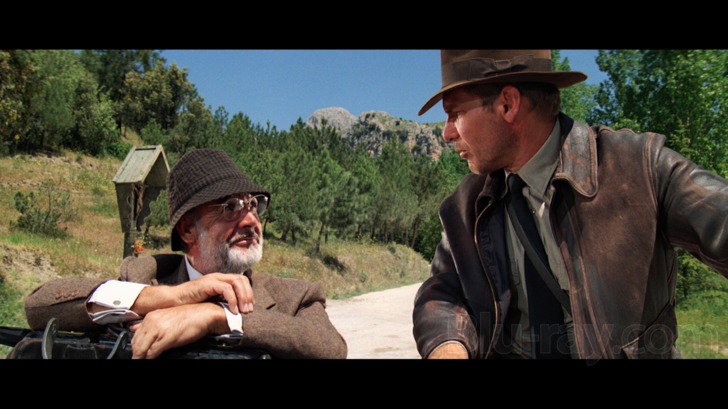
Indiana Jones has recently taken possession of the Cross of Coronado, an artifact he's been chasing for nearly his entire life. It's a valuable piece, perhaps second only to the Ark in terms of historical significance, but it pales to what he's tasked with discovering next. Enter Walter Donovan (Julian Glover), a man with "a passion for antiquities" and a significant contributor to the field of archaeology and the preservation of artifacts. He presents Indiana Jones with a startling find: half of an ancient stone tablet said to contain clues as to the final resting place of the Holy Grail, a challis used by none other than Christ Himself and said to guarantee eternal life to all who drink from it. Unfortunately, the tablet is not intact and it's only one half of a puzzle necessary in order to discover the exact whereabouts of what would be perhaps Archaeology's greatest find. The other half is believed to be in Venice, Italy, encased in the tomb of a long-deceased knight hailing from the Crusades. Indy isn't too keen on undertaking such an adventure; his father Henry (Sean Connery) would be the better choice, a man whose life's work has been the Grail. It turns out Henry has been on the case. He's gone missing, which means Indy and his college colleague Brody are headed to Venice after all. There, they meet the beautiful Elsa Schneider (Alison Doody) who worked with Henry on the search and now aids Indy in the quest. Of course, the Nazis are after the Grail, too, hoping to harness its power for evil and this time, they hope, without the wrath of God falling upon them. As Indy pieces together the clues, he frantically searches for his father to aid him in the quest of a lifetime.
Here it is, quite possibly the one Indy to rule them all. Topping Raiders of the Lost Ark is no easy task nor an undertaking even likely to succeed, yet The Last Crusade does just that, albeit by a smidgen because Raiders is still just that good. Still, there's really no right or wrong answer as to which is the better of the two; it's a matter of personal preference, sort of like arguing over whether Willie Mays or Babe Ruth is the best baseball player of all time -- there's no going wrong with either choice. But the argument can certainly and justifiably be made for The Last Crusade. It's just as exciting, romantic, and dramatic as Raiders, yet it's still even more. It does everything as well as a film can and a sequel in particular, upping the action and bringing together story, scope, tone, acting, music, and production to a level as complete and painstakingly thorough as the first Indiana Jones adventure. It's also relevant and even timeless, exploring deep themes of loss and forgiveness and the healing power of a word and an action, not just of holy water poured from a carpenter's cup. It's a more dramatically satisfying picture than Raiders with its father-son arc that so effortlessly captures a believable dynamic of distance and doubt, lost time and regrets that all go away with a look and a gentle "Indiana...let it go" plea at film's end, the moment essentially summing up the film and life, really, in its statement that life isn't fortunate and glory but family and friendship first above all else, not foregoing the adventure and the discovery and even the fame and fortune but prioritizing even when within a fingertip's reach of immortality. It's a tale of discovery of a long-buried relationship, not simply of a long-lost treasure. Perhaps it's the treasure of family, the film says, that's the most important a man could ever find, a pursuit more worthy of a life's journey than any historical relic. It's the most powerful dramatic arc in the series, the single scene pushes the film above Raiders in terms of emotional power and lasting significance, all other pieces being largely equal.
Just as important, this is the Indiana Jones series not only returning to its roots and exorcising the bad taste some might have been fighting after Temple of Doom, but extending beyond the established realm and achieving what seems like the impossible, weaving together a movie that's all at once an origins story, a here-and-now adventure, and the perfect final touch to a legendary trio of films. Only Steven Spielberg could take the grossly cliché "ride into the sunset" and make it one of the best movie endings ever. The scene captures a spirit of adventure, togetherness, camaraderie, and humor that encapsulates everything that's good about the series and cinema, even taken within the context that is the entire series and not only within the film's own rhythm and purpose. In a way, it's a shame there's another movie that largely nullifies Crusade's ending scene, yet it's so much a fabric of the film and series that nothing could truly stand in the way of its emotional impact, even with the knowledge that the 1950s are going to come-a-calling to Dr. Jones sooner or later. For action, romance, humor, and heart, it's impossible to top The Last Crusade in the series or even, really, considering the larger cinema landscape. It's almost eerily faultless and considering that a single franchise has in four movies produced two of the finest films of all time is a testament to the excellence that is the entire package, including Lucas' stories, Spielberg's direction, and Ford's effortless submersion into the character.

The Kingdom of the Crystal Skull (2008)
Score: 3.5/5
You seem to have reached the age where life stops giving us things and starts taking them away.
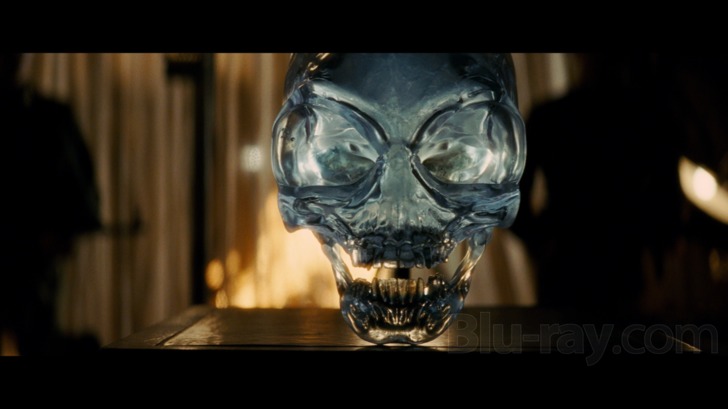
An elder Indiana Jones and his longtime companion Mac (Ray Winstone) are forcibly taken to a secret U.S. military installation. Russian agents and soldiers dressed in Army uniforms murder the Americans at the checkpoint. Indy and Mac are released from the trunk of a car and greeted by the ruthless Irina Spalko (Cate Blanchett) who tasks Indy with entering a secret warehouse and locating an artifact with which he's all too familiar. No, it's not the Ark of the Covenant but rather a mysterious, magnetic box that's drawn more than merely metal its way. Spalko believes it to contain a great power that could turn the tide of the Cold War and give the Soviet Union the upper hand against the United States. Jones discovers its whereabouts -- cleverly, as ever -- but stages a daring escape, even when Mac makes a surprise turn to the other side. Indy subsequently finds himself in another sticky situation, the closest brush with death he's ever had, but his heroics aren't spun in a positive light after he's debriefed by American agents. He's accused of aiding the enemy and is let go from his position at Marshall College. It seems like the end of the road, but he's tracked down by a young motorcycle-riding "greaser" who goes by the name of "Mutt" (Shia LaBeouf). It turns out Mutt knows Indy's old friend and colleague "Ox" (John Hurt), a man who has spent much of his life obsessing over a mysterious artifact known as the "Crystal Skull." Mutt and Indy begin a search for Ox, a search that can only lead to trouble, surprise revelations, and consequences and contacts once deemed only within the purview of the fantastic.
Much like The Temple of Doom, The Kingdom of the Crystal Skull is something of a series outlier, but not to such a dramatic extent. The film captures the same Indy spirit, recognizable almost immediately. It reunites the old team and introduces a few new faces -- maybe even the franchise's future, for better or for worse -- for a fun and fundamentally sound adventure packed with the same trademark style humor and excitement of the previous films. It foregoes the grossly over-the-top elements of The Temple of Doom for a more balanced picture in-line with the series' best, but it feels the slightest bit stale, even if it's the slickest and most technologically polished of all the movies. Here, older doesn't necessarily mean wiser and it certainly doesn't mean a better movie. Make no mistake, Crystal Skull is filmed entertainment as it should be. The story's fine, the action robust, the humor subtle but solid, and the essence of the series remains intact, even if digital insects and beings not of this world don't exactly fit the classic 1980s Indy mold. But they do fit that ever-present spirit nicely. As the older films -- Raiders in particular -- captured that 1930s serial sensation, Crystal Skull is neck-deep in 1950s B-movie fun, amped up to 21st century standards and largely perfected under the well-trained eye of one of Hollywood's finest directors.
The movie takes full advantage of its setting, lucky to have the 1950s fit into the series' timeline and allowing the Mutt-Indy relationship to parallel that decade's changes, sort of the rebel Rock 'N' Roller versus the traditional rough and gruff all-around Teddy Roosevelt sort of American. The picture seems like it's all about the "out with the old and in with the new" angle, the hot young Hollywood face versus its face of two decades past. Ford's rougher around the edges, gray up top now, too, and his voice more guttural and aged in this go-round, but the series isn't quite ready to pass the torch, not if the final shot has anything to say about it, anyway. Crystal Skull's last minutes make it worth the watch alone. The ending doesn't top The Last Crusade, but it's the perfect finish to this movie, making a statement that nicely ties it all together, rounds up the themes, and seems to state that gray hair and the advancement of time doesn't have to mean the end of an icon even if there is a hint to the beginning of something else. It respects series tradition, acknowledges its current state, and hints towards the future all at once, ending on a playful note that begs the question: "where and when will Indiana Jones appear on-screen again, and where does such a legendary series go from here?"
Indiana Jones: The Complete Adventures Blu-ray Movie, Video Quality

Raiders of the Lost Ark (1981)
Score: 4.5/5
Replace the original production year of 1981 with 2012, show the Blu-ray, and those not in-the-know would not be any the wiser. Raiders of the
Lost Ark looks like a brand-new movie. The frame-by-frame restoration is nothing short of a minor miracle for film fans and, if there was ever a
list compiled of movies deserving -- demanding, even -- of the purest, most precise restoration possible, Raiders would be amongst them.
The
restoration, and its presentation on Blu-ray, does wonders for the film. Those who grew up watching it on television or on VHS in particular will be in
for a treat, and even fans who purchased the DVD trilogy set from a few years back will instantly recognize the gargantuan improvement in picture
quality. The movie plays even better with a clear, well-defined picture. Seeing it big and seeing it with this much attention to detail and with such a
pure film-like picture quality is nearly akin to seeing it for the first time. The movie begins with arguably its weakest visual sequence. The
adventurers traverse through dense jungle defined by bright green foliage and dark, sometimes overwhelmingly so, shadows. Blacks fluctuate a bit,
appearing a bit too overpowering in some places and a touch too gray in others, but the push towards either side is minimal. Low-light detail isn't
extraordinary, but the image is crisp and accurate, despite some soft-focus shots. Errant noise is introduced into a few shots. The cave interior
offers
some fabulous textures as seen on stone floors and
walls, natural woods, and the crisp lines of the idol itself. The subsequent chase scene -- Indy running from the Hovitos -- reveals the film's brightest
and most well-defined shots yet; the clarity and colors dazzle, and the crispness and definition of grasses, leaves, and even the plane will startle
longtime viewers. The following stateside classroom scenes offer naturally warm and well-defined woods and a stability and evenness to the image
that breathes new life
into the film's calmest stretch and one of its most critical establishing sections.
It's when the movie begins its second act and the action shifts to Cairo that things truly begin to dazzle. The transfer is at its absolute demo-worthy
best as Indy runs through the city, trying to rescue Marion before she's placed in the truck packed with explosives. The intricate detailing on the
earthen colored façades, the sandy terrain, the wicker baskets, and the dusty clothes is nothing short of mesmerizing. Every last finite element is
brought to dazzling life with the sort of clarity and perfect resolution usually reserved for the newest and finest Blu-ray titles. Colors are every bit as
impressive. The aqua-colored doors and various shades of tan and white dazzle in their natural accuracy. The image springs to life like never before,
or at least not since its theatrical screenings. The interior of the map room is equally stunning; close-ups in those shots of Indy dusting off the floor
reveal every last grain of sand with a breathtaking tactile appearance, not to mention the rough stone work revealed underneath. The darkened Well
of
Souls location reveals wonderful shadow detail and stability, and the final sequence displays all of the gory after-effects of the Ark's opening with
face-melting and head-exploding precision. It's a breathtaking transfer that will leave fans with a permanent smile and eager to watch it again. The
downsides are few. There's the occasional white speckle, infrequent but present and most readily evident in the film's early classroom sequence
(with
the "Love You" girl).
There's also a fingerprint-like smudge visible on the Cairo sky around the 58-minute mark, seen at the top of the screen and just center-left of the
middle of the screen. Still, despite a few minor hiccups, this is Raiders of the Lost Ark as it was meant to be seen and one of the finest
catalogue Blu-ray transfers on the market.
The Temple of Doom (1984)
Score: 4.5/5
The Temple of Doom looks just as good as Raiders of the Lost Ark. It's a warmer picture, with reddish flesh tones and a whole lot of
fiery highlights in its second half. Red is definitely the predominant color throughout -- from Willie's ornate red dress and Indy's red lapel flower in
Shanghai to the
hellish depths of Pankot -- and it can be a bit bold, but the color palette in total is quite
impressive, from the yellow raft to the blue turban riflemen seen at film's end. The palace's rich red and gold adornments and the mine's steamy
blacks and grays are represented with pure, accurate shading. Black levels are rock-solid, too, critical down in the lower depths and darker realms
and
bug-infested rooms that are so prominent in the film's second half. Detail is striking. From the beginning during Indy's lounge confrontation with Lao
Che and on through to the final action scene on the bridge with Mola Ram, the image offers dazzling clothing and facial textures that reveal every
skin
crease, bead of sweat, and clothing stitch with pinpoint precision. The decorative palace dazzles, the bugs appear sharply defined and are as shapely
and creepy as
ever, and the underground chambers offer refined and natural shapes. The film's best scene comes at the end during the battle on the bridge. The
worn-down wood and frayed rope textures are absolutely striking, never mind the sweaty and filthy and tattered clothes worn by a tired and
banged-up
archaeologist. The image enjoys a light but critical grain structure that provides the finishing touches to a superb film-like image. Transfers like this
are why Blu-ray was made!
The Last Crusade (1989)
Score: 5/5
Just as The Last Crusade might be the best movie of the bunch, its 1080p video transfer may be the finest in the collection. It's an
extraordinary example of an older film appearing on Blu-ray with the looks of a brand-new movie. There's nary a flaw to be found, save for
another random smudge or two (and these are verified on two televisions), most evident at the 5:15 mark, seen on a blue sky in a shot of young
Indy
about to jump down on his horse. Otherwise, this one's flawless. It's sharp and extraordinarily crisp, with every element supremely defined, from
the
rocky Utah mountains to the cobweb-infested final resting place of the Holy Grail. Those rocky textures are striking to say the least, complexly
detailed even at a distance and with such precision and that viewers can nearly feel the rough surface just by looking at it. Clarity is so precise, in
fact, that even close-ups of the Grail diary are easily read, and the introduction of the half-piece of the stone tablet offers startling detail across its
well-worn surface. From the streets of Venice to the shadowy underground chamber located beneath the church-turned-library where "X" actually
does mark the spot, from within the airship over Germany to the sandy beaches
below, there's not a detail that's not brilliantly captured and beautifully displayed. Colors are equally brilliant, appearing even and accurate from the
lightest
earthen hues to brightest of red Nazi flags and armbands. Black levels are wonderful and flesh tones are even. The image is solidified by a steady
layer of grain that puts
the finishing touches on one of the best-looking Blu-ray releases ever, catalogue or otherwise.
The Kingdom of the Crystal Skull (2008)
Score: 4.5/5
Once again, Indy shines on Blu-ray. This time, the results are not at all surprising. It's the newest picture in the set by nearly twenty years
and the only
one with a previously released Blu-ray to its credit. As expected, the image dazzles. Not
one
of the previous
three films yield an overpowering grain structure, but all three are a bit more obvious to the eye than the one in The Crystal Skull. The film's
grain is fine to say the
least, and the picture has a slightly smoother, sometimes overly bright and nearly blown-out sheen about it, but there's no evidence of harmful
scrubbing. Details are extraordinary throughout
the film, revealing the most complex textures this side of The Last Crusade. Facial textures are nothing short of fantastic, whether Indy's
weathered and worn mug or Spalko's ultra-smooth skin that by design reveals not a single line or pore. The image is crisp and so well defined that
some shots
are just starling in their stability and natural accuracy, from the warm wooden accents within Marshall college to the dense jungles of Peru. It's
during
a truck chase in the latter that the film finds its single-best scene. Beat-up trucks, complex vegetation, and all of the dusty clothing details come
together for a sparkling sequence that produces some of the finest film-like textures in the entire series. Colors are equally brilliant. Whether those
rich green leaves or the pastel rainbow that defines the homes and accents around the nuclear family test town, the transfer handles each and every
shade with striking realism. Even red and yellow ketchup bottles appear so natural that viewers might be momentarily mistaken into believing
they're
in a retro diner with Mutt and Indy and not in the comforts of the ultra-modern home theater. Black levels are superb and skin tones largely natural,
though sometimes slightly pushing towards a gentle red or orange shading. This ranks right up there with the rest of the Indy Blu-ray
presentations in terms of raw visual
excellence. It's a somewhat different sort of look to be sure but certainly no less impressive.
Indiana Jones: The Complete Adventures Blu-ray Movie, Audio Quality
Raiders of the Lost Ark (1981)
Score: 5/5
Raiders of the Lost Ark has never sounded so good. Paramount's DTS-HD Master Audio 5.1 lossless soundtrack dazzles with every explosion,
all the supporting sound effects, and of course each note of John Williams' acclaimed, classic, and instantly recognizable main theme. Right from the
get-go -- the Paramount logo that dissolves into a similar-looking Peruvian mountain -- the track
introduces deep bass notes into the soundstage that are potent but not unnaturally so, strong enough to give a good, steady shake but not tear the
theater's foundation apart. The audience is simultaneously immersed into the jungle environment; striking ambience gently surrounds the listener,
and
the cacophony is made complete with the precise inclusion of Williams' opening notes that are both foreboding and fun. Bass continues its even and
natural assault as the temple collapses and the boulder rolls through the soundstage, all but destroying the couch and television in its path. As Indy,
Jock, and Reggie soar into the sky in escape, so too does Williams' music soar, playing clearly, crisply, loudly, evenly, and with positive surround
support. The roar of the engine
is heard and felt as the plane carrying Indy to Nepal takes off, and the gunfire inside Marion's bar that follows explodes into the stage; automatic
weapons chatter erupts from all over the listening area and Indy's pistol shots boom with heavy authority. In Cairo, the track continues with its
excellence,
immersing the listening audience into the environment and providing clear and potent explosions and gunfire. Even subtleties such as gently blowing
wind chimes heard when Indy and Sallah take the headpiece to be translated will amaze audiences with the lifelike sound. Action scenes, even
under blaring music and heavy effects, manage to incorporate pinpoint sound elements. A squeaky door hinge during the truck chase sequence
sounds so real that listeners might turn their heads to see who's opening the door to the home theater. The swirling spirits and gusty winds at film's
end penetrate the listening area with frightening accuracy. Dialogue is even and never lost under surrounding
music or effects, though there are a few quieter moments where it could benefit from an uptick in volume, such as the scene in which Indy and
Marcus
meet with Army Intelligence in the college lecture hall. Overall, this is one impressive soundtrack, a complete and wholly satisfying listening
experience from start to finish. Like the video, it's as if it were recorded yesterday.
This is movie buff and Blu-ray audio heaven rolled into one.
The Temple of Doom (1984)
Score: 5/5
The Temple of Doom roasts sound systems with a superb DTS-HD Master Audio 5.1 lossless soundtrack. Once again, music startles with its
clarity and precise spacing. It spreads evenly and with tremendous room-filling balance, including a healthy and seamless surround sound
integration.
Williams' score is the sonic highlight in a movie with a number of wonderful sound elements, beginning with a precise and smooth dance number.
Willie's vocals aren't piercing or intrusively sharp but rather lifelike. Her singing subtly and effectively drifts off to the side when she moves towards
the right side of the
soundstage (from the audience's perspective), but the effect is short-lived and the vocals remain naturally focused in the center. The ensuing chaos
is
nicely delivered, with plenty of fast-moving sonic niceties filling the stage but doing so with a natural presence that places the listening audience in
the
middle of the night club. When the heroes escape, Lao Che's plane whirs across the stage with good power, and the coming crash and sonic assault
that sees Indy and company slide down a mountainside on an inflatable raft is met with loud but balanced and seamless power. Village exteriors and
a
nighttime camping scene offer fabulous natural ambience, the kind that effortlessly encircles the audience and perfectly recreates the natural sounds
of life. Paramount's track handles the heaviest final act action moments with the precision listeners demand. The clanking around the mining site is
true,
and the sense of power delivered by both the rushing water and the shrieking, rattly ride through the mine's cart system places listeners in the midst
of the underground action. It's a demo-worthy stretch that throws a whole lot of sound at the audience but does so with clarity even through the
most challenging sound elements. Rounded into
shape by pitch-perfect dialogue reproduction, The Temple of Doom's lossless soundtrack comes through in every scene.
The Last Crusade (1989)
Score: 5/5
It might feel like old hat to read the same sort sorts of insights into these audio tracks, but one will likely never grow tired of listening to them. In
short, this is another rip-roaring, all-in, completely satisfying DTS-HD Master Audio 5.1 soundtrack. It's
every bit as good as both Raiders and Temple in its fullness, spacing, bass, and clarity. Musical delivery is typically stunning,
whether
fast-paced action notes or more gentle dramatic elements. Spacing is true, the surrounds are used to marvelous effect, and the clarity of every note
through the entire range is perfect. The Action scenes tell the same kind of story. Every moment is energized and precise, whether something as
simple as a galloping horse across a pebbly Utah terrain or bursts of automatic weapons fire all but tearing the listening area to shreds. The heaviest
elements -- waves crashing and rain pouring and thunder booming in a nighttime, ship-top fight sequence early in the film -- offer unbeatable clarity
and precision even through the most potent and sonically intense assault in the movie. Later, a raging fire engulfs the listening area, planes zip from
one speaker to the next, and an artillery shell zooms across the stage and impacts in the rear with nearly frightening accuracy, never mind the low
end sensation that is the impact and explosion. A single gunshot near film's end that puts a bullet in one of the characters bangs with effortless
power and reverberates through the cavernous locale for some time, yielding a believable lifelike effect. Gentle ambience defines many of the quieter
scenes and always plays seamlessly and clearly, placing the listeners in each of the film's numerous locations. Lastly, dialogue is true and pure,
delivered faultlessly from the center. The Last Crusade, considering the quality of the film and its amazing video and audio presentations,
just
may
be the year's reference catalogue title.
The Kingdom of the Crystal Skull (2008)
Score: 5/5
This has been a set of revelatory audio. The Kingdom of the Crystal Skull's soundtrack is just as good, but not at all unexpectedly so. It's
made
the switch to DTS-HD Master Audio 5.1 lossless from the 5.1 Dolby TrueHD track from the film's original Blu-ray release. Both are expert sound presentations. As with
the other films, this DTS track absolutely dazzles from the opening shot to the end credits with its impressive, immersive, and infallible sound
presentation.
Music is one again brilliantly reproduced, with crisp, detailed notes through the entire range and a pleasing low end that's the right balance between
"strong" and "overpowering." Music drifts to the sides and into the backs with a natural flow that effortlessly envelops the listening audience with
John Williams' wonderful score. Gunfire is rhythmic and strong, from the opening barrage of automatic weapons fire at the military checkpoint that
sounds and
feels like it's ripping through the stage from front to back and on through to the rattling and ricocheting of the various shots heard during the
jungle chase sequence. Even the whooshing sound of a rocket-propelled grenade ripping through the listening area will leave listeners slowly
getting back off of the floor from in front of or behind the couch, having taken cover from the incoming explosive. In the nuclear test town, an alarm
klaxon blares in the distance with great strength
and sonic foreboding. The nuclear blast itself isn't quite as rumbly and potent as some listeners might expect -- it's more about strong winds than it
is
sheer
force and bass -- but the cumulative effect will leave listeners all but feeling the heat and the blast's concussive power. The track does find plenty of
energy in
the triple water fall scene, where the crashing liquid surrounds the stage and delivers so much power that the neighbors won't fall back asleep for a
week. Even better, the clarity of the moment is unbeatable; it's not just a barrage of sound but a barrage of accurate sound. Even the more
subtle effects impress in placement, spacing, and movement. Floating gunpowder (it makes sense in the movie) flies from one speaker to the next
with seamless precision. Lifelike ambient effects surround the viewer, whether the din of a hectic crowd of teenagers waiting to visit with Dr. Jones or
the cacophony of Peruvian wildlife heard in various exterior scenes. It's a wonderful track, and with its pitch-perfect dialogue reproduction, it's at the
very least as good as the rest of the Indy listens, if not the best and most finely detailed of the bunch.
Indiana Jones: The Complete Adventures Blu-ray Movie, Special Features and Extras
Indiana Jones: The Complete Adventures contains plenty of supplements, most of it older content presented in standard definition.
Nevertheless, the set includes a
wide array of extras that individually do a wonderful job of telling the behind-the-scenes stories of the making of each film and cumulatively telling a
sometimes compelling and often captivating tale of how the series has come together, from casting to music, from character origins to special effects.
Of note is that this set inexplicably does not include many of the supplements
found on the standalone Indiana Jones and the Kingdom of the Crystal Skull Blu-ray release
from 2008; fans will have to hang on to that older release if they want those extras. Also of note is the set's attractive packaging. It's reminiscent of
the Star Wars box set in that the discs are housed in thick and sturdy
cardboard sleeves bound within in a book-style presentation laden with artwork and photographs. The opening for each disc isn't quite as wide as
those
in the Star Wars set, so any time one wishes to remove the disc he or she will have to grab the top and bottom edge of the disc together. An
outer heavy-duty slipcover is also included.
Disc
five special features include optional English,
French, Spanish, and Portuguese subtitles.
Disc One: Raiders of the Lost Ark
- Teaser Trailer (1080p, 1:03).
- Theatrical Trailer (1080p, 2:33).
- Re-Issue Trailer (1080p, 1:45).
Disc Two: The Temple of Doom
- Teaser Trailer (1080p, 1:00).
- Theatrical Trailer (1080p, 1:26).
Disc Three: The Last Crusade
- Teaser Trailer (1080p, 1:28).
- Theatrical Trailer (1080p, 2:13).
Disc Four: The Kingdom of the Crystal Skull
- Theatrical Trailer 2 (1080p, 1:54).
- Theatrical Trailer 3 (1080p, 1:57).
- Theatrical Trailer 4 (1080p, 1:42).
Disc Five: Bonus Features
- On Set with Raiders of the Lost Ark:
- From Jungle to Desert (1080p, 29:35, various aspect ratios, DD 2.0): This feature begins with raw location scouting footage, intercut with a Steven Spielberg interview. The piece continues to show audiences chronological behind-the-scenes footage of the making of various scenes, intercut with remastered clips from the film. Also included are on-set interviews with Harrison Ford, Steven Spielberg, and additional cast and crew; deleted scenes; bloopers; outtakes; and more. This is a thorough, engaging supplement that practically transports viewers to the set of a major motion picture -- and a classic at that -- for a fascinating look at how it all came together.
- From Adventure to Legend (1080p, 28:17, various aspect ratios, DD 2.0): A continuation of the previous piece, beginning with a look at set construction and scene preparation while Steven Spielberg and Harrison Ford examine storyboards, all in preparation for filming the "Well of Souls" snake sequence. The supplement moves on to the making of the "flying wing" fight sequence, the truck chase, and on through to film's end. Additional discussions include the movie's scale and the importance of being thoroughly prepared on a movie set, location scouting, and more. Deleted scenes are worked into the supplement's narrative flow. The supplement concludes with outtakes and deleted scenes from The Temple of Doom, The Last Crusade, and The Kingdom of the Crystal Skull as well as a few brief looks at Composer John Williams at work.
- Making the Films:
- The Making of Raiders of the Lost Ark (1981) (480p, 57:48, 1:33:1, DD 2.0): A vintage supplement that begins with Director Steven Spielberg recounting his first memories of motion pictures. The piece promises to tell the story behind the making of a throwback Adventure film from the tandem of George Lucas and Steven Spielberg, and it delivers. Things begin with Producer Frank Marshall recounting the origins of the project and the Spielberg/Lucas collaboration. Subsequent discussions cover assembling the cast, the performances and the challenges of each part, the characters, set design and construction both on location and within the studio, working in Tunisia and under its unbearable heat and additional filmmaking challenges, crafting the "Well of Souls" sequence and adding the snakes to the set, the complexity of the shoot and the precision required to pull off the most effects-intensive and physically challenging moments, creating the special effects in the post-prduction process, training Harrison Ford to perform many of his own stunts and whip work, crafting some of the most intensive stunts with the use of Ford's stunt double, and much more. The piece is constructed with clips from the film and on-set and behind-the-scenes footage. Some of the information repeats from the previous Raiders supplement (there's that Egg McMuffin again!) but it's all so well put together that diehards shouldn't mind seeing it again.
- The Making of Raiders of the Lost Ark (480p, 50:52, 1.33:1, DD 2.0): A more modern retrospective piece that opens with George Lucas speaking on his idea for the Indiana Jones series, shelved before making Star Wars and later revived. Lucas also discusses naming the lead character after his dog, Spielberg changing the name from "Indiana Smith" to "Indiana Jones," working with Screenwriter Lawrence Kasdan, fleshing out the story, financing the film and finding a home at Paramount, and casting the lead parts (with rehearsal footage of Tom Selleck and Tim Matheson both as Indiana Jones). The supplement continues to cover shooting locales, costuming and breaking in the wardrobe, Ford's preparations for the role, and Douglas Slocombe's cinematography. Also covered is a large assortment of scene-specific chronological insight and commentary, including filming the "spider" shot with Alfred Molina, making the idol-gathering and boulder-rolling scenes, casting the secondary parts with mention that Danny DeVito was Spielberg's first choice for the role of "Sallah," shooting in Tunisia and recreating the 1930s period appearance, stories of scene development, making the snake sequence, crafting the "flying wing" sequence on the fly and an injury sustained on the set, shooting the truck chase with the second unit, using Das Boot vessels in the film, and assembling the climax. The supplement concludes with a brief look at the editing process and cast and crew reaction to the finished product. Again, information and footage is repeated in this supplement, but the wealth of new information makes it well worth watching for any Indiana Jones fan: new, casual, or lifelong.
- The Making of The Temple of Doom (480p, 41:09, 1:33:1, DD 2.0): George Lucas and Steven Spielberg open with a discussion of ideas meant for the first film but scrapped and ultimately incorporated into The Temple of Doom. Cast and crew discuss story evolution and the picture's darker and edgier style, casting Kate Capshaw and Ke Huy Quan, opening the film with a dance number, shooting in Sri Lanka, editing together the most challenging moments, working with and around the film's "wildlife," adding in all the slimy and nasty courses at the dinner sequence, working with the bugs, Spielberg's fondness for the "spike room" scene, Harrison Ford's absence from the set following surgery, constructing and shooting on the bridge seen at film's end, controversy surrounding the film's PG rating and its supposed unsuitability for children, and critical reaction.
- The Making of The Last Crusade (480p, 35:03, 1.33:1, DD 2.0): Spielberg, Lucas, Ford, Connery, and others discuss the plot's development; the father-son relationship and how it ties to the picture's themes; opening the film with a young Indiana Jones adventure and establishing character lore; returning characters from the original film and casting new roles; the Indiana Jones team camaraderie; shooting in California, Spain, and in Venice during tourist season; working with both live and robotic rats; casting Sean Connery and his development of the character beyond the original script; costuming; crafting various scenes; the picture's humor; shooting the "tank" chase sequence near the end; making the film's final stretch and the themes explored within it; and the total old-school effort that went into making the film.
- The Making of The Kingdom of the Crystal Skull (1080p, 28:49, various aspect ratios, DD 2.0): Steven Spielberg opens by addressing the fans' craving for a fourth Indiana Jones picture, the plot's origins and the 1950s B-movie and 1930s serials combination, the backdrop of the Cold War and the overhanging threat of nuclear war, incorporating a real legend into a fictional tale, Ford's ability to quickly fall back into the costume and role after nearly two decades away, reuniting the old team, keeping the plot under wraps prior to release, Indy's unique introduction in the film, casting the lead villain, training Shia LaBeouf to ride a motorcycle and photographing the bike chase sequence, shooting in Hawaii, Karen Allen's return, set design and construction, crafting the climax, and a discussion of the movie's surprise finale.
- Behind the Scenes:
- The Stunts of Indiana Jones (480p, 10:56): A brief examination of the major stunt pieces from the first three films, a look at the stunt performers, the inspirations for several scenes, one-upping the stunts from film to film, and Actor Pat Roach's appearance across all three films.
- The Sound of Indiana Jones (480p, 13:21): A detailed examination of the construction of the sound effects from Raiders of the Lost Ark, including the whip, gunshots, the rolling boulder, snakes, and the end special effects sequence. Also included are looks at the making and recording of the mine cart sounds from The Temple of Doom as well as the sound origins for the rats and the climax effects from The Last Crusade.
- The Music of Indiana Jones (480p, 12:22): John Williams, Steven Spielberg, and George Lucas discuss the history and intricacies of the famed and acclaimed score, with details surrounding specific pieces for each film. This extra offers plenty of behind-the-scenes footage of Williams at work.
- The Light and Magic of Indiana Jones (480p, 12:22): A closer look at special effects construction and subsequent integration into the films, beginning with the end effects from Raiders, moving on to examine the mine cart and flooding sequences from Temple, and concluding with the making of the plane crash sequence, the invisible bridge, and the instant human decay shot from Crusade. The piece ends with a brief final thought about the series' staying power.
- Raiders: The Melting Face! (480p, 8:12): A more in-depth look at the making of one of the series' most memorable special effects.
- Indiana Jones and the Creepy Crawlies (480p, 11:46): An overview of the snakes, bugs, and rats that infest the first three Indy films. This supplement includes an optional pop-up trivia track that offers insights ranging from Harrison Ford's real-life ease around snakes to corralling screen bugs at the end of the shooting day.
- Travel with Indiana Jones: Locations (480p, 9:58): A piece that offers audiences an overview of the worldwide locales seen throughout all four films. This supplement also includes optional pop-up trivia that offers further insight into the films, locations, effects, and more.
- Indy's Women: The American Film Institute Tribute (480p, 9:15): For the 2003 DVD release, Actresses Karen Allen, Kate Capshaw, and Alison Doody sat down for a get-together with the AFI's Jean Firstenberg. This supplement is an excerpt from the event in which the ladies discuss their characters and meet with a special friend at the end.
- Indy's Friends and Enemies (480p, 10:10): A piece dedicated to pointing out all of the side characters in the film. It delves into Indy's girls for the first half and his allies and his enemies in the final five minutes.
- Iconic Props (1080p, 9:52): This supplement focuses heavily on props from The Kingdom of the Crystal Skull and concludes with a look at the Ark, which makes a cameo appearance in the film.
- The Effects of Indy (1080p, 22:34): ILM's Paul Huston begins the supplement with a discussion of The Crystal Skull's opening shot. The piece continues on to examine in nearly exhaustive detail the specifics behind crafting computer visual effects and miniature work in the latest Indy film.
- Adventures in Post Production (1080p, 12:36): Regarding Indiana Jones and the Kingdom of the Crystal Skull: This supplement looks at shooting and editing on film, sound design, retaining the series' iconic theme, and scoring new music.
- Credits (1080p, 0:58).
Indiana Jones: The Complete Adventures Blu-ray Movie, Overall Score and Recommendation
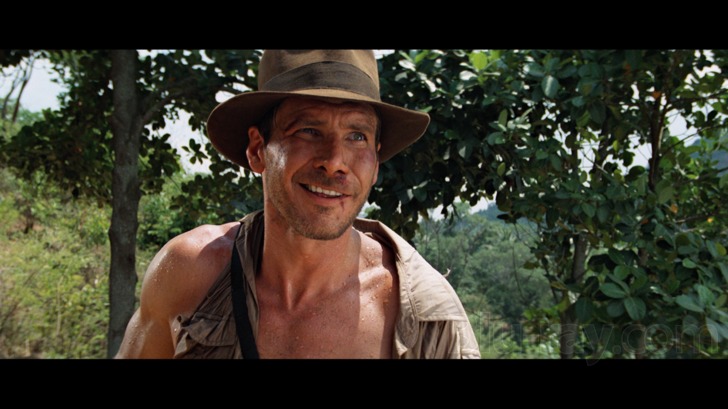
The Indiana Jones films represent cinema magic, high adventure, escapist entertainment, balanced humor, dramatic intrigue, and emotional depth all at once and, together, perhaps better than any single film or collective film series. Raiders of the Lost Ark is the quintessential movie. The Temple of Doom is the silliest but maybe the most fundamentally fun of the four. The Last Crusade is as polished and exciting as Raiders but with a heartfelt core that elevates it above the rest. Finally, The Crystal Skull represents a new era of adventure for the series yet remains in the spirit of the first and third films and promises something better in the future, even if it's the least of the four movies. Indeed, there's not a bad movie in the bunch. It's like any series, though, with its ups and downs but, fortunately, with far more ups and with low spots that still rise above most other movies, particularly compared within its genre but even considering a broader spectrum of cinema-as-entertainment. Indiana Jones -- all the movies together or any of them individually -- represents cinema at its pinnacle, demonstrating all that's good and pure about the movies. Paramount's long-awaited Blu-ray release of all four Indiana Jones films never disappoints. The movies all look and sound fantastic, all of them like they were made yesterday. The supplements are extensive but maybe not quite as thorough as some might have hoped -- there are no commentary tracks and not all of the extras from the previous Blu-ray release of The Kingdom of the Crystal Skull carry over -- but it's an impressive assortment that will take fans the better part of a day to dig through. This is one of the year's finest releases and a must-own set if ever there was one. Indiana Jones: The Complete Adventures receives my highest recommendation.