Godzilla: The Showa-Era Films, 1954-1975 Blu-ray Movie
HomeGodzilla: The Showa-Era Films, 1954-1975 Blu-ray Movie 
Criterion | 1954-1975 | 15 Movies, 17 Cuts | 1295 min | Not rated | Oct 29, 2019


Movie rating
Movie has not been rated yetBlu-ray rating
| Users |  | 3.8 |
| Reviewer |  | 5.0 |
| Overall | | 3.8 |
Overview
Godzilla: The Showa-Era Films, 1954-1975 (1954-1975)
Godzilla (1954) / Godzilla, King of the Monsters! (1956) USA / Godzilla Raids Again / King Kong vs. Godzilla (1962) / King Kong vs. Godzilla (1963) USA / Mothra vs. Godzilla / Ghidorah, the Three-Headed Monster / Invasion of Astro-Monster / Ebirah, Horror of the Deep / Son of Godzilla / Destroy All Monsters / All Monsters Attack / Godzilla vs. Hedorah / Godzilla vs. Gigan / Godzilla vs. Megalon / Godzilla vs. Mechagodzilla / Terror of Mechagodzilla See individual titles for their synopses.
| Foreign | 100% |
| Sci-Fi | 43% |
| Horror | 35% |
| Fantasy | 29% |
| Action | 16% |
| Supernatural | 9% |
| Surreal | 5% |
| Imaginary | 2% |
| Drama | 1% |
| Adventure | Insignificant |
| Epic | Insignificant |
| Family | Insignificant |
| Thriller | Insignificant |
Specifications
Video
Video codec: MPEG-4 AVC
Video resolution: 1080p
Aspect ratio: 1.33:1, 2.35:1
Original aspect ratio: 2.35:1, 2.39:1, 1.85:1
Audio
See individual releases
Subtitles
None
Discs
Blu-ray Disc
Eight-disc set (8 BDs)
Playback
Region A (locked)
Review
Rating summary
| Movie | | 4.0 |
| Video | | 4.0 |
| Audio |  | 4.5 |
| Extras |  | 0.0 |
| Overall | | 5.0 |
Godzilla: The Showa-Era Films, 1954-1975 Blu-ray Movie Review
Reviewed by Dr. Svet Atanasov October 6, 2019Criterion's Godzilla: The Showa-Era Films, 1954-1975 box set contains fifteen films and various new and archival bonus features, including interviews with director Ishiro Honda, Alex Cox, and various cast and crew members. In Japanese, with optional English subtitles for each film. Region-A "locked".
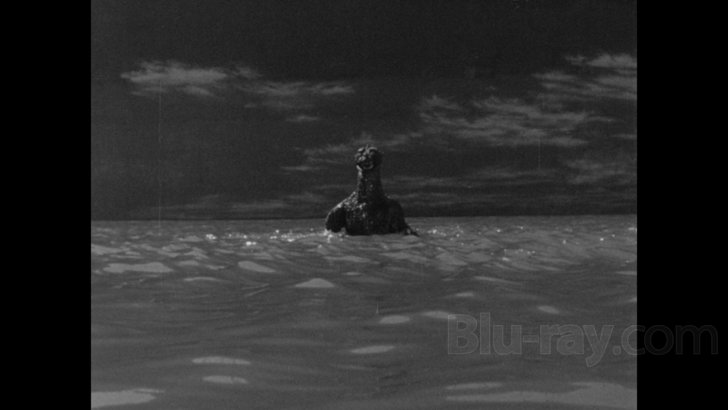
The return
GodzIlla is the greatest cinematic monster and its status as such will likely remain unchanged for as long as movies are made. However, its superiority over other famous competitors, like King Kong for instance, was only partially established by its performance on the big screen. Below, I will quickly explain why.
There are a couple of key reasons that made Godzilla a superstar, but the biggest and most significant one is its transformation into a national cultural icon. Indeed, since its legendary emergence in Ishiro Honda’s classic 1954 film, Godzilla has been Japan’s most successful and until recently most loyal global promoter, consistently and convincingly outperforming various governments and their plans to rebuild and solidify the country’s post-war image. Interestingly, this wasn’t a brilliantly crafted strategy crafted by political and cultural visionaries; the response to Honda’s film in a particular moment in time quite simply made it impossible for Godzilla to remain a one-off sensation.
Another key reason is why Godzilla instantly became a beloved monster in Japan. The most simplistic and ultimately strikingly ignorant explanation would be to credit its popularity to the local filmgoers’ notorious fondness for exotic cinematic creatures. The accurate answer is actually part of a bigger and much more complex development that had everything to do with Japanese identity. (By the way, this is precisely the reason why Godzilla also prospered away from the big screen as a manga star). Indeed, at a time when Japan was systematically being politically and culturally reshaped by domestic and foreign parties, Godzilla arrived as a genuine local original that had dared to choose its own path. The significance? Huge. Placed in the country's ‘transitional’ political and socio-cultural environment Godzilla very quickly evolved into something bigger than a loud and destructive cinematic monster -- it emerged as a statement on Japanese identity, and as international distributors and producers began showing the monster respect, its popularity became unprecedented.
The smart marketing that Godzilla enjoyed as it continued to gain admirers at home and abroad was equally important. It is not a coincidence that the various sequels that were funded after Honda's classic film quickly began expanding the monster’s playing field -- aliens from Planet X visit the earth in Invasion of Astro-Monster; female alien visitors reprogram the monsters on Earth and begin using them to wipe out the human race in Destroy All Monsters; and yet another nuclear test brings mayhem after it rocks the undersea kingdom of Seatopia -- and as they did so also introduced new and formidable opponents. Mothra, Ghidorah, Hedorah, there was always some naive new creature that was willing to enter Godzilla’s cinematic ring and challenge its authority, which was just a smart marketing ploy that eventually established an entire new industry where countless other monsters began wrecking havoc. In other words, the national cultural icon also became an undisputed economic juggernaut.
Criterion’s upcoming eight-disc box set contains fifteen Godzilla films that were produced between 1954 and 1975. (Honda’s classic film, which was previously made available on a standalone release, is included as well). These films highlight the evolution of the legendary monster as well as the expansion of its playing field and opponents. All films are presented in their original aspect ratios and with original Japanese tracks, while six can also be viewed with original international English dub tracks. They are: Invasion of Astro-Monster, Son of Godzilla, Destroy All Monsters, Godzilla vs. Megalon, Godzilla vs. Mechagodzilla, and Terror of Mechagodzilla. Finally, the U.S. version of King Kong vs. Godzilla that is featured on this release combines scenes from Honda’s 1962 Japanese release with new material filmed by Thomas Montgomery.
Godzilla: The Showa-Era Films, 1954-1975 Blu-ray Movie, Video Quality
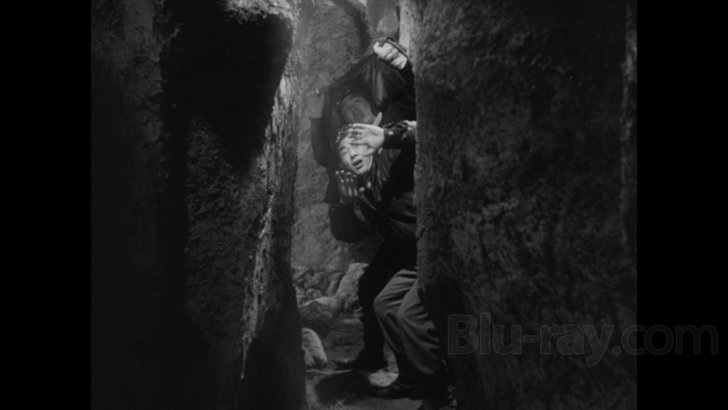
Each film in the box set is encoded with MPEG-4 and granted a 1080p transfer. However, at present our review addresses only the films that are placed on the fist six discs. (We await the final two discs and will update the review as soon as they arrive). The screencaptures that are included with our review appear in the following order:
1. Screencaptures #1-3: Godzilla Raids Again.
2. Screencaptures #4-8: King Kong vs. Godzilla.
3. Screencaptures #9-13: Mothra vs. Godzilla.
4. Screencaptures #14-16: Ghidorah, the Three-Headed Monster.
5. Screencaptures #17-19: Invasion of Astro-Monster.
6. Screencaptures #20-22: Ebirah, Horror of the Deep.
7. Screencaptures #23-25: Son of Godzilla.
8. Screencaptures #26-28: Destroy All Monsters.
9. Screencaptures #29-31: All Monsters Attack.
10. Screencaptures #32-34: Godzilla vs. Hedorah.
11. Screencaptures #35-37: Godzilla vs. Gigan.
12. Screencaptures #38-39: Godzilla vs. Megalon.
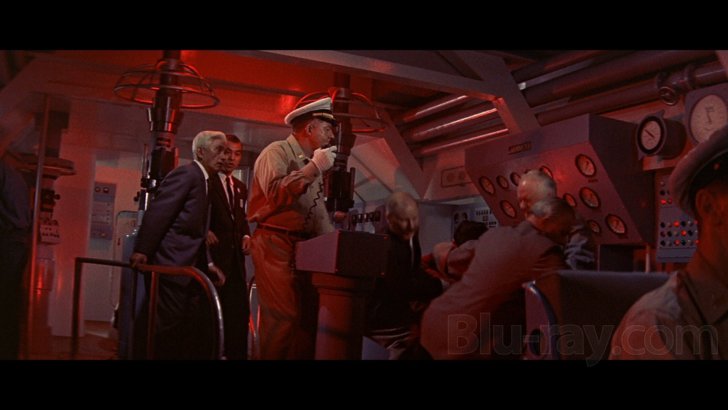
With the exception of the original 1854 film, which was more recently redone, the rest of the films in this box set appear to have been sourced from older remasters. (I don't know how old, but these are not masters that have been struck from brand new scans of original elements). Generally speaking, the quality of the presentations ranges from good to very good, but with some there are noticeable source limitations. The most obvious ones are on the three films from the third disc where it appears that there is some overexposing of the bottom end of the frame that reveals camera movement/or the reel transitions. You can see an example in screencapture #9, which was taken from Mothra vs. Godzilla. Depth, clarity, and delineation are usually very good. However, virtually all films reveal some density fluctuations, especially in areas where some major effects work was done. So, it is true that there is some room for improvement, but all films actually have native density fluctuations that not only will be retained on a new master (4K or 2K), but because of their native qualities will almost certainly be exacerbated. For example, screencapture #7 highlights a drop in density levels with special effects work that will look even rougher on a new master. Color stability is good. However, this is another area where meaningful improvements can be made. Saturation, balance, and even stability can be strengthened or enhanced. A few white flecks, minor scratches, and stains can be spotted, but overall these films look very healthy. It is just easy to see that some have a rather dated appearance. Ultimately, what is important to underscore here is the fact that all films have good organic appearances. Some look slightly better, but even when projected on a large screen they exhibit all of the important organic qualities that we expect to see retained when older films transition to Blu-ray.
Godzilla: The Showa-Era Films, 1954-1975 Blu-ray Movie, Audio Quality
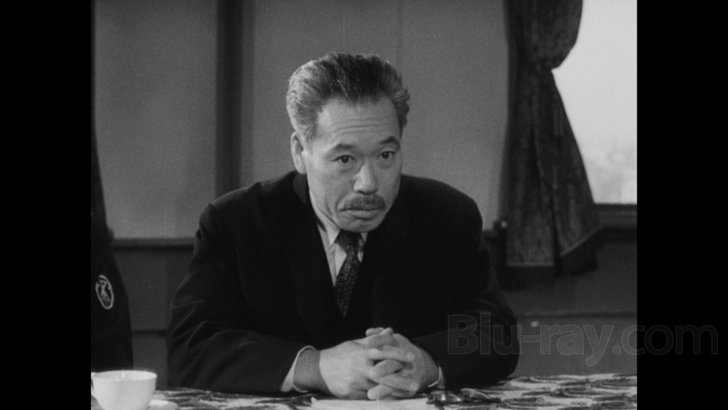
All films are presented with original Japanese tracks, while six can also be viewed with original
international English dub tracks. They are: Invasion of Astro-Monster, Son of Godzilla, Destroy All Monsters, Godzilla vs. Megalon, Godzilla vs. Mechagodzilla, and Terror of Mechagodzilla. Generally speaking, the quality of the original Japanese tracks is very good. Despite some minor dynamic fluctuations, depth and clarity are typically excellent, and this leads me to believe that when the current masters were prepared the audio tracks were cleaned up and stabilized as best as possible. On some of the later films, for instance, like Godzilla vs. Gigan, the quality of the audio is actually surprisingly strong. The music also sounds very good, though if any further improvements are to be made my guess is that some of the music tracks will be further rebalanced and optimized. But, the quality of the current audio tracks is really, really good.
DISC ONE:
1. Godzilla: Japanese LPCM 1.0.
2. Godzilla, King of the Monsters!: English LPCM 1.0.
DISC TWO:
1. Godzilla Raids Again: Japanese LPCM 1.0.
2. King Kong vs. Godzilla: English LPCM 1.0.
DISC THREE:
1. Mothra vs. Godzilla: Japanese LPCM 1.0.
2. Ghidorah, the Three-Headed Monster: Japanese LPCM 1.0.
3. Invasion of Astro-Monster: Japanese LPCM 1.0./English Dolby Digital 1.0.
DISC FOUR:
1. Ebirah, Horror of the Deep: Japanese LPCM 1.0.
2. Son of Godzilla: Japanese LPCM 1.0./English Dolby Digital 1.0.
3. Destroy All Monsters: Japanese LPCM 1.0./English Dolby Digital 1.0.
DISC FIVE:
1. All Monsters Attack: Japanese LPCM 1.0.
2. Godzilla vs. Hedorah: Japanese LPCM 1.0.
DISC SIX:
1. Godzilla vs. Gigan: Japanese LPCM 1.0.
2. Godzilla vs. Megalon: Japanese LPCM 1.0/English Dolby Digital 1.0.
Godzilla: The Showa-Era Films, 1954-1975 Blu-ray Movie, Special Features and Extras
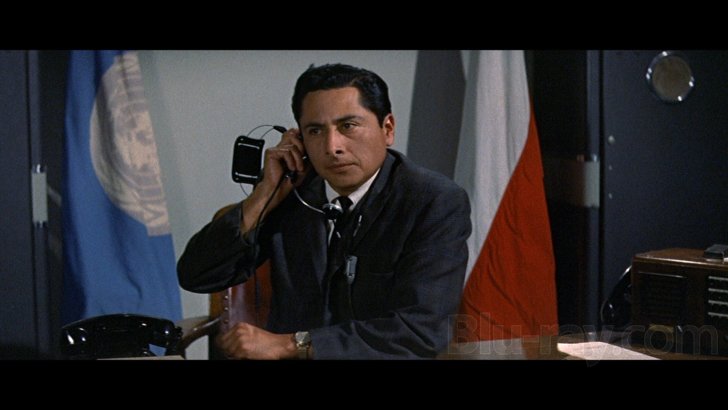
DISC ONE:
- Trailer - the original theatrical trailer for Godzilla. In Japanese, with optional English subtitles. (3 min, 1080i).
- Commentary - a new audio commentary by critic David Kalat, author of A Critical History and Filmography of Toho's Godzilla Series. Mr. Kalat's commentary is informative but admittedly too emotional and ultimately quite difficult to endure. The structural analysis and the examination of the socio-political conditions Godzilla represents, however, are very good.
- Cast and Crew - four interviews with cast and crew members recalling and discussing their contribution to Ishiro Honda's Godzilla. In Japanese, with optional English subtitles.
-- Akira Takarada (actor). Recorded in 2011. (13 min, 1080i).
-- Haruo Nakajima (actor). Recorded in 2011. (10 min, 1080i).
-- Yoshio Irie and Eizo Kaimai (effects technicians). Recorded in 2011. (31 min, 1080i).
-- Akira Ifukube (composer). (51 min, 1080i).
- Photographic Effects - a short featurette focusing on some of the unique visual tricks in Godzilla. Introduced by effects director Koichi Kawakita and SFX cameraman Motoyoshi Tomioka. In Japanese, with optional English subtitles. (10 min, 1080i).
- Tadao Sato - in this video interview, Japanese cinema expert and film critic Tadao Sato discusses Godzilla, its production history, and cultural significance. The interview was conducted in 2011. In Japanese, with optional English subtitles. (15 min, 1080i).
- The Unluckiest Dragon - a 2011 illustrated audio essay, featuring historian Gregory M. Pflugfelder of Columbia University, discussing the tragic fate of the fishing vessel Daigo fukuryu maru (Lucky Dragon No. 5), a real-life event that inspired Godzilla. In English, not subtitled. (10 min, 1080p).
- Godzilla, King of the Monsters! - the 1956 feature film codirected and edited by Terry O. Morse. In English and Japanese, with optional English subtitles. (81 min, 1080p).
- Trailer - the original theatrical trailer for Godzilla, King of the Monsters!. In English, not subtitled. (2 min, 1080p).
- Commentary - audio commentary by critic David Kalat. The audio commentary was recorded exclusively for Criterion in 2011.
- Trailer - original trailer for King Kong vs. Godzilla. In English, not subtitled. (2 min, 1080p).
- PLUS: A lavishly illustrated deluxe hardcover book featuring an essay by cinema historian Steve Ryfle, notes on the films by cinema historian Ed Godziszewski, and new illustrations by Arthur Adams, Sophie Campbell, Becky Cloonan, Jorge Coelho, Geof Darrow, Simon Gane, Robert Goodin, Benjamin Marra, Monarobot, Takashi Okazaki, Angela Rizza, Yuko Shimizu, Bill Sienkiewicz, Katsuya Terada, Ronald Wimberly, and Chris Wisnia
Godzilla: The Showa-Era Films, 1954-1975 Blu-ray Movie, Overall Score and Recommendation
At this time our review of Godzilla: The Showa-Era Films, 1954-1975 is incomplete because we are missing the last two discs where some of the new bonus features that were announced are supposed to be, but we should have them soon. (Obviously, when they arrive, we will update the review). Everything else that I have seen so far has me convinced that Godzilla fans will fall in love with this box set. Some of the bigger films I was familiar with, but the smaller and more exotic ones are actually a lot more entertaining. These films have been sourced from older masters, but they have strong organic qualities and look good in high-definition. HIGHLY RECOMMENDED.