Gluck: Orpheus und Eurydike Blu-ray Movie
HomeGluck: Orpheus und Eurydike Blu-ray Movie 
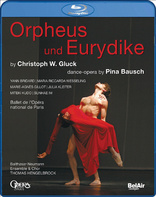
Choreography Pina BauschNaxos | 104 min | Not rated | Jan 26, 2010
Price
List price:Amazon: $33.83 (Save 15%)
Third party: $33.83 (Save 15%)
Temporarily out of stock.

Movie rating
Movie has not been rated yetBlu-ray rating
| Users |  | 0.0 |
| Reviewer |  | 4.0 |
| Overall | | 4.0 |
Overview
Gluck: Orpheus und Eurydike ()
Specifications
Video
Video codec: MPEG-4 AVC
Video resolution: 1080i
Aspect ratio: 1.78:1
Audio
German: DTS-HD Master Audio 5.1
German: LPCM 2.0
Subtitles
English, French, Spanish, German, Italian
Discs
25GB Blu-ray Disc
Single disc (1 BD)
Playback
Region free
Review
Rating summary
| Movie | | 4.0 |
| Video | | 4.0 |
| Audio |  | 4.5 |
| Extras |  | 0.5 |
| Overall | | 4.0 |
Gluck: Orpheus und Eurydike Blu-ray Movie Review
This version of Gluck's 'Orpheus and Eurydice' emphasizes the beautiful choreography of Pina Bausch, but it also contains an historically accurate representation of Gluck's gorgeous score.
Reviewed by Jeffrey Kauffman February 15, 2010Fans of classical music have a really unique and rare opportunity this month with two simultaneous releases of Christoph Willibald Gluck’s Orpheus and Eurydice. This very interesting combination of early, “reform” opera and dance has received two radically different interpretations in these two releases, both being distributed by Naxos. I just reviewed a modern dress, opera-centric production with some minor dance elements included here. The other version, released as Orpheus und Eurydike, offers a much more classically traditional production, based on a 1975 version choreographed by Pina Bausch. If the balletic elements themselves often meld into modern dance moves, this is still a very spare and reserved production that is probably much more in keeping with what audiences in the late 18th century saw when they first experienced this retelling of the famous Greek tragedy.
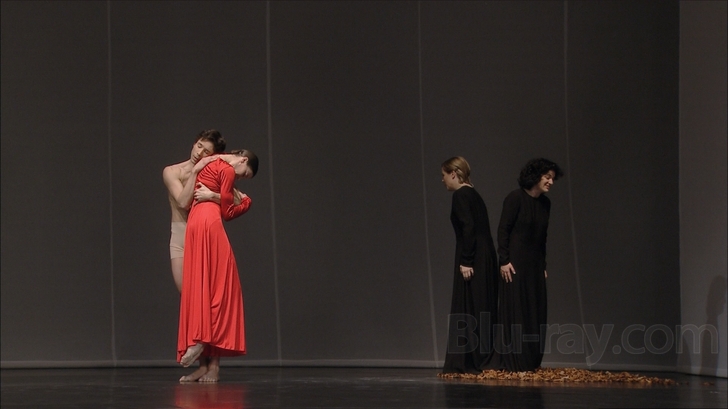
This Blu-ray release of Gluck's piece focuses more on the balletic side of things than the operatic.
This production offers both singers and dancers performing the three principal roles. Orpheus is deanced by Yann Bridard and sung by mezzo Maria Riccarda Wesseling. (Gluck’s original Viennese version of the piece had the option of Orpheus being sung by either a mezzo or a counter-tenor. Later revisions opened the role up to a variety of other registers, and in fact the other version I just reviewed had an awesome performance by Roberto Alagna, a tenor of formidable talents). Eurydice is danced by Maria-Agnes Gillot and sung by Julia Kleiter, and Amor (Love or the Guide) is danced by Miteki Kudo and sung by Sunhae Im. It may take a while to adjust sensibilities to accept this rather strange, bifurcated approach, but it does pay some rather nice dividends, as glorious vocal lines wash over some very evocative dance segments. The unusual format Gluck took in Orpheus has been the cause for several centuries of consternation by directors. Is this an opera with dance, or a ballet with sung elements? Typically one idiom wins out over the other, but this production, while definitely tilted toward the dance end of the spectrum, does seem to achieve more of an equilibrium than most.
One thing that does hamper this production is the absolute dearth of close-ups, especially in the sung sequences. While I personally always argue for camera setups which reveal the full body in filmed or televised ballet, the weird semi-dance, semi-sung nature of this Orpheus can be a little confusing at times because it’s not always clear who’s singing what. That’s especially the case in that Orpheus is being sung by a mezzo and Eurydice and Amor by sopranos, without a really clear delineation of register to clarify matters. There’s also a sort of maddening lack of good subtitles in this production, leaving large swaths of the choral sequences especially untranslated.
What does work splendidly here generally is the music and dance, if not always in tandem. This is a well sung and especially well played version, one which, unlike the other Orpheus reviewed here recently, hews to Gluck’s original concept rather closely, without the fairly radical musical reordering and interpolations that that other version presents. The Balthasar-Neumann Ensemble and Choir, under the excellent direction of Thomas Hengelbrock, plays with assurance and ease. Orpheus is in fact a largely choral piece, and the choir sounds especially lovely in this production. The period instruments of the orchestra sound rich and warm, with just that hint of dryness which is so redolent of the 18th century orchestral palette. Wesseling has a lovely and distinctive mezzo, which brings out the extreme emotional anguish of Gluck’s portrayal of his hero. While Kleiter and Im have perhaps too similar timbres, they also do well with their roles.
But the focus of this Orpheus is most certainly on the dancers, with a robust and athletic performance by Bridard that does not eschew lyricism despite its acrobatic tendencies. Gillot’s Eurydice is also impeccably graceful and the ensemble dances brilliantly in some very unusual sequences which illuminate Bausch’s choreographic ingenuity. (It should be noted that Bausch passed at the relatively young age of 68 very shortly after this version was filmed). Bausch delights not only in classical forms and idioms, she also stretches the boundaries with unique group moves which may remind some Broadway fans of the organic, at times almost Freudian, approach of Bob Fosse.
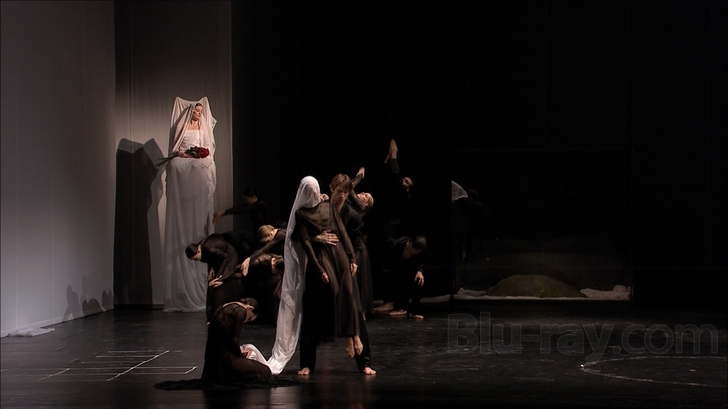
For lovers of the avant-garde and innovative, the other Orpheus will probably speak more clearly than this one, even with Bausch’s innovations. For those seeking a more historically accurate approach, this is probably the Orpheus to start with. From a musical standpoint, it’s really quite superb, and treats Gluck’s score with reverence and aplomb. The dance elements, while certainly more modern, still have a classical restraint and formalism to them that evokes the correct historical context without seeming mummified. Playing out against a minimalist set, and with costumes that are with one major exception culled from a bitonal palette consisting almost exclusively of whites and blacks, this is a lean Orpheus und Eurydike that exploits both the musical and dance potential of Gluck’s problematic piece, proving that under the right creative team, there’s really no problem at all.
Gluck: Orpheus und Eurydike Blu-ray Movie, Video Quality
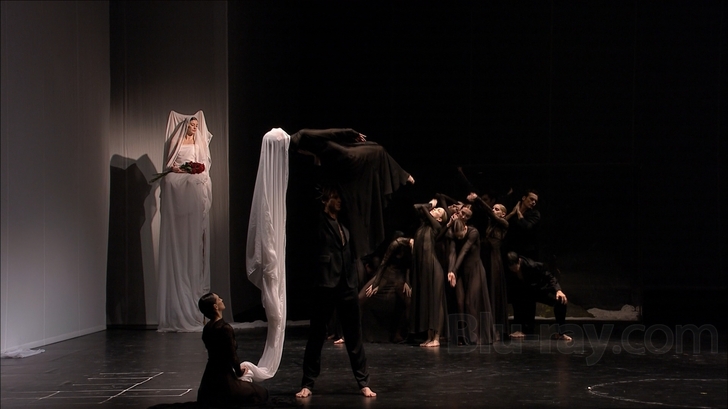
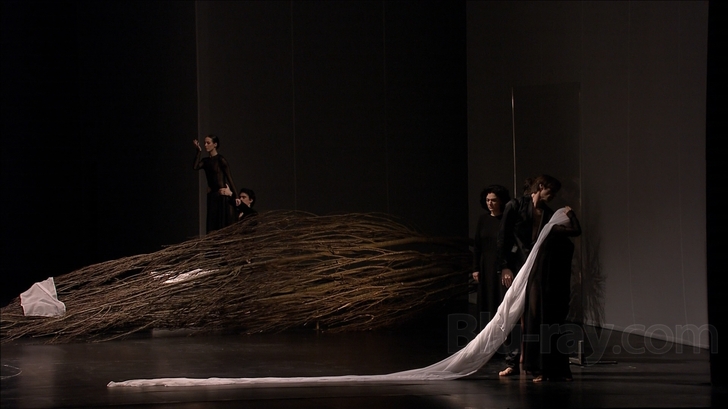
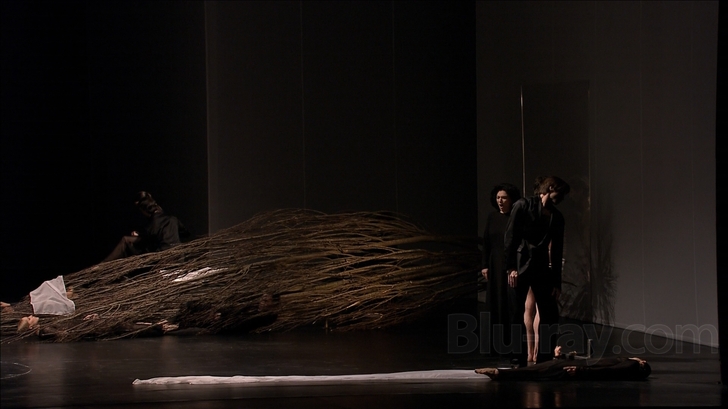
There's really not much source material here to fully exploit Blu-ray's potential. Featuring a nice AVC encoded 1080i 1.78:1 image, this Orpheus, as can be seen clearly in the screen captures included, deals almost exclusively in whites and blacks, with the one notably exception of Eurydice's eye popping red-orange gown late in the final scene. That said, we have a good, clean image here, with no artifacting, with exceptional and consistent black levels which allow the ensemble's shadowy costumes to be seen quite clearly in relief against the inky backdrops. Whites are full and robust without any blooming, and flesh tones are all accurate. This image quality is not going to "wow" most people simply because it's so restrained, but it's excellently sharp, well defined and is certainly perfectly representative of what audiences saw live with this production.
Gluck: Orpheus und Eurydike Blu-ray Movie, Audio Quality
Showing the same classical restraint as the image quality, the DTS HD-MA 5.1 soundtrack is a model of precision and clarity, reproducing the period instruments of the Blathasar-Neumann Ensemble with just the right amount of dryness. This is a lovely performance and equally lovely recording, with no overt directionality in the usually massed orchestral forces, but with some good use of discrete channels in the sung solo moments. Balance between the orchestra and solo singers is quite good. Strangely, the chorus sometimes gets just so slightly swallowed up in the overall mix, though they blend extremely well in the long run. Hengelbrock conducts with vigor and good sense of line, hitting the surprisingly emotional accents just right. Gluck purists are certainly going to want to stick with this version over the other simultaneously released Orpheus.
Gluck: Orpheus und Eurydike Blu-ray Movie, Special Features and Extras
Only a one minute or so gallery is included on the disc. The insert booklet offers a nice essay on Gluck's work, as well as a supplementary piece on Bausch.
Gluck: Orpheus und Eurydike Blu-ray Movie, Overall Score and Recommendation
Classical music lovers spent quite a few months at the dawn of the Blu-ray era wondering when their preferred genre was going to start getting the respect it deserved in the new high definition medium. We're at an exciting stage now, highlighted by a lot of interesting releases of pieces even aficionados might not be overly familiar with. The fact that we're getting two simulataneous releases of two very different interpreations of Gluck's masterpiece may indeed just be a serendipitous coincidence, but hopefully it's a harbinger that a lot of fantastic new releases are coming down the turnpike in short order. This is a wonderfully sung and played Orpheus, true to Gluck's original conception, with some very intriguing dance elements as well.